TL;DR
Prime for Young Adults — start your free trial
Fast free delivery, streaming and member deals for eligible 18–24 year olds.
Try it freeAs an affiliate, we earn on qualifying purchases.
Better hallway lighting can cut falls by half and improve safety. Modern options like LEDs, motion sensors, and smart controls make upgrades simple, affordable, and highly effective. Find out how to create a well-lit, safe passage in your home.
Picture this: you walk down a long, dim hallway at night. Shadows dance on the walls, and every step feels uncertain. You’re not alone—poor lighting turns familiar paths into hazards. Improving hallway lighting isn’t just about brightness; it’s about safety, confidence, and peace of mind. If you’ve ever felt nervous navigating your own home in the dark, this guide is for you.
In the next sections, you’ll learn how simple upgrades—like switching to LEDs, adding motion sensors, or adjusting fixture placement—can make a huge difference. Better lighting can cut your risk of falls by up to 50%, according to safety studies. And with recent tech innovations, creating a safer, more accessible hallway has never been easier or more affordable.
Switch to energy-efficient LED bulbs for long-lasting, bright light that reduces energy bills.
Layer lighting by combining ceiling fixtures with wall sconces or strips for even, shadow-free illumination.
Use motion sensors and dimmable fixtures to create adaptable lighting that’s both safe and energy-smart.
Position fixtures at strategic heights to minimize shadows and glare, especially at eye level.
Proper lighting can cut fall risks by up to 50%, making your home safer for everyone.
Why Brightness and Even Lighting Matter More Than You Think
Good hallway lighting isn’t just about making things visible; it’s about reducing hazards that often go unnoticed until they cause an accident. When lighting is too dim or uneven, shadows can obscure obstacles like a small rug or clutter, increasing the risk of trips and falls. Bright, evenly distributed light helps your eyes adapt to the space, revealing potential hazards before you stumble. This isn’t just about aesthetics; it’s about giving you reliable cues about your environment, especially in moments of low visibility or when your vision is compromised. The tradeoff is ensuring enough light without causing glare, which can lead to discomfort or temporary blindness, particularly for older adults. Achieving this balance is crucial for safety and comfort, and it requires understanding how light distribution influences perception and movement in your hallway.
As an affiliate, we earn on qualifying purchases.
5 Simple Ways to Brighten Your Hallway Without Breaking the Bank
- Switch to LED bulbs: They emit bright, clear light that enhances visibility and color accuracy, making it easier to distinguish objects and obstacles. Their longer lifespan and lower energy consumption mean fewer replacements and lower bills, but the initial cost is slightly higher. The tradeoff is that you get consistent, flicker-free lighting that’s safer for your eyes, especially important for those with visual impairments.
- Add layered lighting: Combining ceiling fixtures with wall sconces or LED strips creates a more uniform light distribution, reducing shadows and dark corners. This layered approach ensures that no area is left poorly lit, which is vital for safe navigation. The challenge is balancing brightness levels so that the space isn’t overly harsh or dim, requiring thoughtful placement and dimming options.
- Install motion sensors: Automating lighting to activate when movement is detected eliminates the need to fumble for switches, especially in the dark or for those with mobility issues. They promote safety by ensuring the hallway is always illuminated when needed, but false triggers or delayed responses can be frustrating. Proper placement and sensitivity adjustments are essential to maximize their effectiveness without causing inconvenience.
- Use dimmable fixtures: Dimming allows you to adjust brightness according to time of day or personal preference, reducing glare and eye strain. This flexibility helps create a comfortable environment for both day and night use, but it requires compatible bulbs and switches. The tradeoff is a slight increase in initial setup cost for greater control and safety.
- Place fixtures at strategic heights: Positioning lights about 5 to 6 feet from the floor minimizes shadows cast on walking surfaces and ensures even light spread. Proper height placement also reduces glare and helps illuminate the entire corridor uniformly. The challenge is that different ceiling heights or architectural features may require custom adjustments to achieve optimal lighting coverage.
motion sensor night lights for hallway
As an affiliate, we earn on qualifying purchases.
As an affiliate, we earn on qualifying purchases.
Comparing Modern Lighting Options: Which Is Best for Your Home?
| Feature | Incandescent | LED | Halogen | Smart Lighting |
|---|---|---|---|---|
| Energy Use | High | Very low | Moderate | Low to moderate |
| Lifespan | 1,000 hours | 25,000-50,000 hours | ||
| Cost | Lower initial | Higher initially, saves money long-term | ||
| Color Temperature | Warm to cool | Adjustable | Warm to cool | Adjustable via app |
As an affiliate, we earn on qualifying purchases.
How to Avoid Glare and Shadows That Make Night Navigation Risky
Glare and shadows are sneaky hazards in hallway lighting because they distort perception and can cause missteps. Excessively bright fixtures or poorly positioned lights create harsh reflections that temporarily blind or distract you. Shadows cast by objects or uneven lighting can obscure obstacles, increasing the chance of trips. The key is layered, diffuse lighting that evenly illuminates the space, reducing sharp contrasts. Using fixtures with diffusers or frosted covers softens the light, preventing glare. Positioning lights at eye level or slightly above ensures that illumination is evenly spread without creating hotspots. Avoid direct beams aimed at the floor or walls, which can produce long shadows. For example, installing wall sconces at 5-6 feet creates gentle, uniform illumination, allowing you to see every obstacle clearly. Thoughtful placement minimizes visual distortions, making nighttime navigation safer and more comfortable.
As an affiliate, we earn on qualifying purchases.
Smart and Motion-Activated Lighting: Why They’re Game Changers
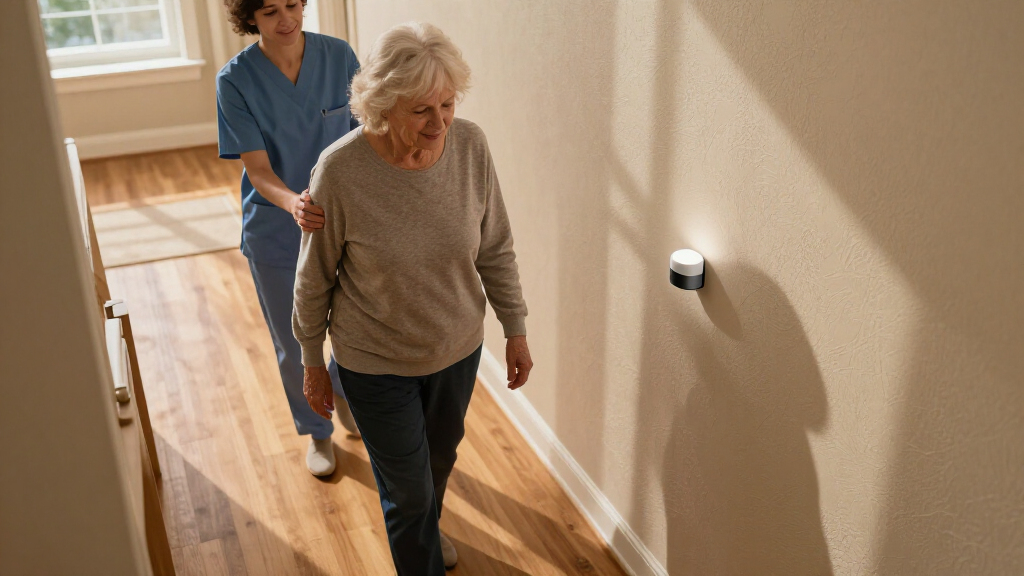
Smart and motion-activated lights are transforming hallway safety by automatically responding to your presence. They turn on when you enter, providing instant illumination, and turn off when you leave, saving energy and preventing accidental leaving of lights on. This automation reduces the risk of trips in the dark and removes the need to fumble for switches, especially beneficial for those with mobility challenges or visual impairments. For example, a family installed motion sensors in their elderly parent’s hallway, which made nighttime trips to the bathroom safer and more convenient. Additionally, these systems can be programmed to dim after a few seconds, maintaining enough visibility while reducing glare and energy use. However, improper placement or overly sensitive sensors can cause false triggers, so selecting the right system and configuring it properly is essential for maximum safety and convenience.
Safety in Numbers: What the Research Tells Us About Lighting and Falls
Research shows proper lighting can cut fall risk by up to 50%, especially among seniors. This significant reduction in accidents not only prevents injuries but also supports increased independence and confidence in daily activities. The implications are profound: well-lit hallways mean fewer emergency trips to the hospital, less long-term disability, and a higher quality of life. The reason is that good lighting provides visual cues that help you judge distances, detect obstacles, and navigate safely, especially in low-light conditions. Even small improvements, like adding a night light or upgrading to brighter bulbs, have been shown to lower accident rates. This evidence underscores that lighting isn’t just a comfort feature but a critical safety measure that can drastically improve well-being and reduce healthcare costs associated with falls.
Frequently Asked Questions
How bright should my hallway lighting be for safety?
Most experts recommend around 100-200 lux for hallways, which is bright enough to see clearly without causing glare. The exact level depends on your space and personal needs, but brighter is generally better for safety.
Are LED bulbs really the best choice for hallways?
Yes. LED bulbs are energy-efficient, last much longer—up to 50,000 hours—and provide consistent, bright light. They’re a smart upgrade for safety and cost savings in the long run.
What’s the best way to keep my hallway safe at night?
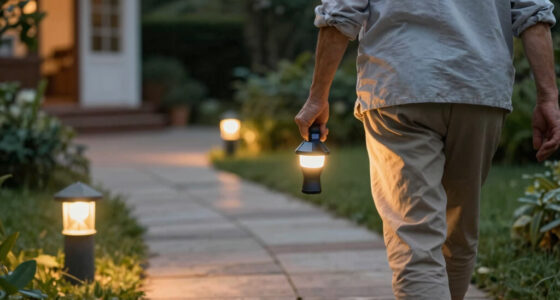
Install night lights or motion-activated fixtures. They turn on automatically when you approach, providing enough light for safe navigation without disturbing your sleep or wasting energy.
Are smart lighting systems worth the investment?
Absolutely. They offer convenience, energy savings, and enhanced safety features like adaptive brightness and remote control. Plus, they can be set to turn on automatically, reducing risks in dark hallways.
How can I prevent glare and shadows in my hallway lighting?
Use fixtures with diffusers, install lights at eye level or slightly above, and layer different types of lights. These steps create even, gentle illumination that reduces shadows and glare, making navigation safer.
Conclusion
Brighten your hallway and you brighten your safety. With a few simple upgrades—like switching to LEDs, adding motion sensors, and thoughtful fixture placement—you can create a space that’s welcoming, well-lit, and risk-free. It’s a small investment that makes a big difference.
Imagine a home where every step feels secure, every corner is clear, and nighttime trips are safe and easy. That’s a home where safety and comfort go hand in hand—starting with better lighting.
NFL season / tailgating Picks
team gear
As an affiliate, we earn on qualifying purchases.