
The right aging-in-place safety devices can mean the difference between an independent senior staying home safely and a preventable fall leading to hospitalization. After comparing 14 options across alarm reliability, ease of setup, and caregiver response capability, the Smart Caregiver Bed Alarm for Elderly Adults stands out as the best overall pick for dependable bed-exit alerts, while the CallToU Caregiver Pager offers the best value for families who just need a simple call button system. The main tradeoff in this category is between active monitoring devices, which alert you the moment something happens, and preventive planning resources, which help you fix hazards before they cause harm. Devices also vary widely in range, volume control, and whether they disturb the person they protect. Keep reading for the full breakdown of which device fits which living situation.
Complete the kit


Key Takeaways
- Alarm systems with wireless pagers consistently outperform standalone alarms because the caregiver doesn’t need to stay within earshot — this separated the Smart Caregiver and CallToU picks from single-unit options.
- Bed sensor pads and floor mat alarms solve the same problem at different points: sensor pads trigger earlier but cost more and wear out faster, while floor mats like the Smart Caregiver 24×48 cover a wider trigger zone.
- Books and checklists in this roundup aren’t filler — they’re the highest-leverage purchases because a $15 checklist can reveal hazards no alarm can fix, but they can’t summon help in an emergency.
- Volume adjustability matters more than raw loudness. Several devices default to alarm volumes that startle dementia patients, so models with adjustable volume ranked higher for cognitive impairment use cases.
- The magnet pull cord alarm (MAG-3) is the budget workaround for bed and chair exits, but it demands more precise setup than sensor pads — a real tradeoff for non-technical caregivers.
| Upgraded Bed Sensor Alarm and Fall Prevention System for Elderly and Dementia Patients |  | Best Overall for Fall Prevention | Power Source: Battery powered (3 AAA alkaline, included) | Sensor Technology: Contact/motion sensor | Maximum Range: 182 meters (open area) | VIEW LATEST PRICE | See Our Full Breakdown |
| Age in Place at Home: Adapting the Home Environment for All Generations |  | Best Big-Picture Planning Guide | Format: Print/digital book | Focus: Home environment adaptation for all generations | Content Type: Practical tips and strategies for accessible living spaces | VIEW LATEST PRICE | See Our Full Breakdown |
| Smart Caregiver Floor Mat Alarm and Pager System | 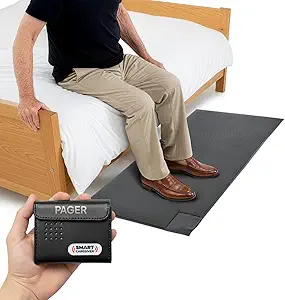 | Best for Bedside and Exit Monitoring | Mat Dimensions: 48 x 24 inches | Power Source: 2 AA batteries (not included) | Pager Range: Up to 300 feet | VIEW LATEST PRICE | See Our Full Breakdown |
| The Aging in Place Handbook for Fall & Accident Prevention |  | Best Checklist-Driven Action Guide | Format: Print/digital handbook | Focus: Fall and accident prevention at home | Content Type: Checklists, diagrams, step-by-step modifications | VIEW LATEST PRICE | See Our Full Breakdown |
| CallToU Caregiver Pager with 2 Wireless Call Buttons |  | Best Budget Call System | Power Source: Battery powered buttons; plug-in receiver | Batteries: 2 x 12V alkaline batteries (included) | Maximum Range: 500+ feet | VIEW LATEST PRICE | See Our Full Breakdown |
| A Safer Space: The Senior’s Handbook for Home Safety |  | Best Starter Guide | Format: Printed handbook | Topic: Home safety for seniors | Coverage: Room-by-room hazard tips and independence strategies | VIEW LATEST PRICE | See Our Full Breakdown |
| Smart Caregiver Bed and Chair Sensor Pad with Alarm |  | Best Full-Room Monitoring Kit | Bed Sensor Pad Size: 10″ x 30″ | Chair Sensor Pad Size: 10″ x 15″ | Pads Included: 1 bed pad, 1 chair pad | VIEW LATEST PRICE | See Our Full Breakdown |
| Smart Caregiver Bed Alarm for Elderly Adults |  | Best Bed-Only Value | Sensor Size: 10″ x 30″ | Sensor Technology: Contact pressure sensor | Alarm Volume: 80 dB, adjustable | VIEW LATEST PRICE | See Our Full Breakdown |
| Home Safety Checklist for Seniors: An Aging in Place Guide to Accessible Home Design, Fall Prevention, and Smart Home Modifications |  | Best for Smart Home Planning | Format: Printed guide with checklists | Topic: Aging in place and home safety | Coverage: Accessible design, fall prevention, smart home modifications | VIEW LATEST PRICE | See Our Full Breakdown |
| Secure Safety Solutions MAG-3 Magnet Pull Cord Bed & Chair Alarm |  | Best Portable Option | Alarm Type: Magnet pull cord exit alarm | Alarm Volume: 70 / 80 / 90 dB (3 settings) | Alert Tones: 2 options | VIEW LATEST PRICE | See Our Full Breakdown |
| Smart Caregiver Fall Prevention Monitor and Chair Pad |  | Best for Chair-Side Monitoring | Pad Size: 10in x 15in | Material: Vinyl | Sensor Type: Weight-sensing exit pad | VIEW LATEST PRICE | See Our Full Breakdown |
| Senior-Friendly Home Maintenance for Aging in Place: Safety Upgrades, Checklists, and DIY Strategies |  | Best DIY Planning Guide | Format: Guide book | Focus: Home safety upgrades and maintenance | Content Type: Checklists and DIY strategies | VIEW LATEST PRICE | See Our Full Breakdown |
| Caregiver Indoor Motion Sensor Alarm with 2 Pagers and 1 Sensor |  | Best Multi-Caregiver Alert System | Sensor Range: 16.4 feet detection | Pager Range: Up to 500 ft in open areas | Connectivity: Wireless | VIEW LATEST PRICE | See Our Full Breakdown |
| Age in Place: A Guide to Modifying, Organizing and Decluttering Mom and Dad’s Home |  | Best for Adult Children Managing a Parent’s Home | Format: Paperback guide book | Focus: Home modification, organizing, and decluttering | Primary Audience: Adult children and family caregivers | VIEW LATEST PRICE | See Our Full Breakdown |
More Details on Our Top Picks
Upgraded Bed Sensor Alarm and Fall Prevention System for Elderly and Dementia Patients
This system stands out as the most complete proactive fall-prevention setup in this roundup because it alerts the caregiver before trouble starts — when a restless sleeper or dementia patient begins moving out of bed. Compared with the Smart Caregiver Floor Mat Alarm, which only triggers once weight hits the floor, this motion-based approach buys caregivers extra seconds, and those seconds matter at 2 a.m. The 182-meter open-area range is generous for larger homes, and the wireless pager with adjustable volume means the patient isn’t startled awake by a blaring alarm. The tradeoff: it demands careful setup and testing to dial in the sensing zone, and the alkaline batteries need a replacement schedule. Still, for dementia care, this pick makes the most sense for families who want early warning rather than reaction.
Pros:- Detects movement before the patient is fully out of bed, giving caregivers earlier warning than floor mats
- Wireless pager with adjustable volume and LED alerts reduces patient disturbance
- Long 182-meter open-area signal range suits large homes or across-room monitoring
- Flexible placement under the bed or at the door for versatile monitoring
- Non-intrusive detection keeps false alarms and patient anxiety low
Cons:- Requires careful setup and testing to confirm the sensing range works in your specific room
- Battery powered with no recharge option, so batteries need a regular replacement routine
- Contact-sensor design may not suit every room layout or care environment
Best for: Families caring for dementia patients who wander or attempt unsupervised bed exits at night
Not ideal for: Caregivers who want zero setup effort — the sensor angle and range require testing before reliable use
- Power Source:Battery powered (3 AAA alkaline, included)
- Sensor Technology:Contact/motion sensor
- Maximum Range:182 meters (open area)
- Alert Type:Dual LED and sound caregiver pager
- Mounting Type:Door mount / under-bed placement
- Control Method:App, touch
- Color:White
Our verdict“The strongest choice for dementia and fall-risk care where early warning — not just after-the-fact alerts — is the priority.”
Age in Place at Home: Adapting the Home Environment for All Generations
Unlike the device-focused picks here, this book earns its slot as the planning foundation for an aging-in-place project. The Age in Place at Home guide works best read before buying anything — it helps you decide whether you need a bed sensor like the Upgraded Bed Sensor Alarm at all, or whether grab bars and layout changes solve the real problem. Its strength is whole-home thinking across generations, which narrower titles like The Aging in Place Handbook for Fall & Accident Prevention don’t attempt. The honest tradeoff: it’s a strategy book, not an implementation manual. Readers who want step-by-step instructions or product-specific advice will hit a ceiling, and you’ll likely need a second resource to execute the changes it recommends. Compared with purely checklist-driven guides, though, this one gives you the framework to prioritize spending wisely.
Pros:- Covers whole-home adaptation strategies rather than a single hazard type
- Written for all generations, useful for multigenerational households
- Helps readers prioritize spending before investing in devices
- Practical framing of accessibility and comfort alongside safety
Cons:- Light on step-by-step implementation instructions
- No product specifications or device recommendations to act on directly
Best for: Adult children and homeowners planning long-term, multi-room home modifications for aging parents or themselves
Not ideal for: Buyers who need immediate, actionable fixes — this is strategy, not a quick-start checklist
- Format:Print/digital book
- Focus:Home environment adaptation for all generations
- Content Type:Practical tips and strategies for accessible living spaces
- Audience:Seniors, caregivers, and multigenerational households
- Scope:Whole-home safety, accessibility, and comfort
- Skill Level:No prior knowledge required
Our verdict“Read this first if you’re planning a home-wide aging-in-place overhaul and want a strategy before you shop.”
Smart Caregiver Floor Mat Alarm and Pager System
This floor mat takes a simpler, more physical approach than the Upgraded Bed Sensor Alarm: place the generously sized 24×48-inch mat beside the bed or at a doorway, and the pager fires the instant weight lands on it. That size is the real differentiator — compared with smaller pads like the Smart Caregiver Bed and Chair Sensor Pad, this mat covers a wide exit path, making it harder for an unsteady senior to step around. The 300-foot pager range with both vibrate and audible modes suits caregivers doing laundry or yard work. The catch is that it’s reactive by design: it alerts after feet hit the floor, not before. Add batteries-not-included frustration at setup time, and this option is better suited to households that value simple, foolproof hardware over earliest-possible warnings.
Pros:- Extra-large 24×48-inch mat covers wide bedside or doorway zones that smaller pads miss
- 300-foot wireless pager range with vibrate and audible alert options
- Durable mat construction built for repeated foot traffic
- Straightforward setup with no app or calibration required
Cons:- Alerts only after the person steps on the mat — no early warning before weight leaves the bed
- Batteries not included, so it’s not usable out of the box
- Mat must be paired with compatible devices for full functionality
Best for: Caregivers who want a plug-and-play way to know the moment someone steps out of bed or approaches an exit door
Not ideal for: Dementia care situations where alerting before the patient is fully mobile is the goal — this mat triggers too late for that
- Mat Dimensions:48 x 24 inches
- Power Source:2 AA batteries (not included)
- Pager Range:Up to 300 feet
- Sensor Technology:Contact/pressure sensor
- Noise Level:70 dB
- Alert Modes:Vibrate and audible
- Placement:Bedside or exit door
Our verdict“A dependable, no-fuss choice for monitoring bed exits and doorways when simplicity beats early detection.”
The Aging in Place Handbook for Fall & Accident Prevention
Where Age in Place at Home gives you strategy, this handbook delivers execution tools: room-by-room checklists, diagrams, and step-by-step modifications you can start the same weekend. That makes it the more practical buy for readers who already know they have a fall risk and want to fix it now. The emphasis on affordable solutions is a genuine differentiator — it assumes you’re not renovating a bathroom from scratch, just making smart, low-cost changes. A nice touch is the emotional support angle, which device-heavy picks like the CallToU Caregiver Pager can’t address: fear of falling is itself a fall risk. The tradeoffs are real, though. There are no product specifications, no device recommendations, and with no customer reviews yet, you’re taking the author’s expertise largely on faith. Pair it with a monitoring device rather than treating it as a complete solution.
Pros:- Concrete checklists and diagrams you can act on immediately
- Focuses on affordable modifications rather than costly renovations
- Addresses the emotional side of fall fear, not just physical hazards
- Step-by-step format works for readers with no prior safety knowledge
Cons:- No product specifications or device guidance for readers shopping for alarms and sensors
- No customer reviews or track record to evaluate quality before buying
Best for: Seniors and caregivers who want an immediate, room-by-room action plan with checklists and low-cost fixes
Not ideal for: Buyers researching specific safety devices — this book contains no product specs or equipment recommendations
- Format:Print/digital handbook
- Focus:Fall and accident prevention at home
- Content Type:Checklists, diagrams, step-by-step modifications
- Special Features:Emotional support alongside practical guidance
- Budget Angle:Affordable, low-cost solutions
- Audience:Seniors living independently and their caregivers
Our verdict“The most actionable pick for turning fall-prevention intentions into completed home fixes this month.”
CallToU Caregiver Pager with 2 Wireless Call Buttons
This is the entry point of the roundup: instead of detecting movement, it puts the call button in the senior’s hands. For alert, cognitively intact seniors, that’s actually preferable — no mats, no sensors, no false alarms, just press and page. Compared with the Smart Caregiver Floor Mat Alarm, the CallToU skips calibration entirely and costs less, while its 500+ foot range and waterproof buttons outperform what most budget pagers offer. The two-button bundle means one for the bedside and one for the bathroom, the two highest-risk rooms. The limitations are structural, though: it’s reactive by definition — someone who falls and can’t reach the button gets no help — and the receiver must stay plugged into an outlet, which tethers the caregiver to wherever you’ve stationed it. This option stands out as the value pick for capable seniors, not as a substitute for sensor-based monitoring of dementia patients.
Pros:- Simplest setup in the roundup — no sensors, calibration, or placement guesswork
- Over 500 feet of range, longer than most competing pagers
- Waterproof, dustproof buttons work in bathrooms and outdoor areas
- Two buttons included for covering bedside and bathroom simultaneously
- Multiple ringtones with adjustable volume up to 110 dB
Cons:- Completely dependent on the senior being conscious and able to press the button
- Receiver must stay plugged into an outlet, limiting caregiver mobility
- No automatic detection of falls, wandering, or bed exits
Best for: Budget-conscious families with alert, mobile seniors who can reliably press a button when they need help
Not ideal for: Dementia or fall-risk patients who may not remember to press the button — sensor-based systems like the Smart Caregiver Floor Mat are the better fit there
- Power Source:Battery powered buttons; plug-in receiver
- Batteries:2 x 12V alkaline batteries (included)
- Maximum Range:500+ feet
- Alert Volume:Up to 110 dB
- Buttons Included:2 waterproof, dustproof call buttons
- Mounting Type:Tabletop receiver, portable buttons
- Control Method:Touch
- Color:White
Our verdict“The best low-cost safety net for capable seniors who just need a reliable way to summon help from across the house.”
A Safer Space: The Senior’s Handbook for Home Safety
Before buying any alarm or sensor, most families need a plan, and this handbook fills that first step at a fraction of the cost of any device. Compared with the Home Safety Checklist for Seniors, which leans heavily into smart home tech and accessible design theory, this guide reads more like a practical starting point for someone just beginning the aging-in-place conversation with a parent. It walks through room-by-room hazards and independence strategies without assuming the reader already knows the terminology. The tradeoff is depth: there are no product specs, no tool recommendations, and no step-by-step modification instructions. It tells you what to fix, not how to fix it. For buyers who plan to pair reading with actual hardware — like the Smart Caregiver Bed Alarm — this works well as the companion planning document. For hands-on DIYers, it will feel thin.
Pros:- Affordable entry point before investing in safety hardware
- Room-by-room practical safety tips written for non-experts
- Focuses on preserving independence, not just hazard removal
- Easy for seniors to read themselves rather than being done ‘to’ them
Cons:- No specific product recommendations or specifications
- Doesn’t cover how to actually implement the fixes it suggests
Best for: Adult children beginning the aging-in-place conversation with a parent who wants an affordable, non-technical overview before spending money on devices
Not ideal for: Hands-on DIY homeowners who need specific modification instructions, product specs, or code-compliant design details
- Format:Printed handbook
- Topic:Home safety for seniors
- Coverage:Room-by-room hazard tips and independence strategies
- Skill Level:Beginner, non-technical
- Includes:Practical safety and security guidance
- Excludes:Product specs, tools, and step-by-step modification instructions
Our verdict“A low-cost planning primer for families at the start of the aging-in-place journey, not a substitute for actual safety equipment or how-to instructions.”
Smart Caregiver Bed and Chair Sensor Pad with Alarm
This is the only option in this batch that covers both the bed and the chair, which matters enormously for dementia patients who wander between spots throughout the day. Compared with the Smart Caregiver Bed Alarm, which monitors a single 10″ x 30″ bed pad, this kit doubles your coverage for a modest price increase — a genuine value for full-time family caregivers. The soft vinyl pads are incontinence-resistant and wipe clean, a real outcome for anyone caring for someone with continence issues. The adjustable volume and reset button let a caregiver silence the alarm without rushing across the room in a panic. The catch: no power source is included, so budget for a 9V battery or the separately sold AC adapter. And unlike the Secure Safety Solutions MAG-3, which attaches to the person, this system depends on the patient staying on the pad.
Pros:- Both bed and chair pads included in one kit
- Incontinence-resistant, easy-clean vinyl pads
- Adjustable alarm volume with convenient reset button
- Simple setup with no app or pairing required
Cons:- 9V battery and AC adapter sold separately
- Alarm can sound continuously until weight returns, which is disruptive at night
- No wireless pager, so the caregiver must be nearby
Best for: Family caregivers of dementia or fall-risk patients who move between bed and a favorite chair during the day
Not ideal for: Caregivers who need remote alerts — there’s no wireless pager option here, so you must be within earshot of the alarm
- Bed Sensor Pad Size:10″ x 30″
- Chair Sensor Pad Size:10″ x 15″
- Pads Included:1 bed pad, 1 chair pad
- Alarm Features:Adjustable volume, reset button
- Pad Material:Soft incontinence-resistant vinyl
- Power:9V battery (not included) or AC adapter (sold separately)
- Warranty:1 year
Our verdict“The most complete wired monitoring setup in this group for patients who split their day between bed and chair — as long as the caregiver stays within earshot.”
Smart Caregiver Bed Alarm for Elderly Adults
If the risk scenario is specifically nighttime wandering from bed, this single-pad system from Smart Caregiver is the smarter buy than its own bed-and-chair sibling — same trusted sensor platform, lower price, and this time the 9V battery is actually in the box. The pad sits discreetly under the sheet, and the 80 dB alarm is loud enough to wake a sleeping caregiver in a nearby room without being brutal. Where this model pulls ahead of the Smart Caregiver Bed and Chair Sensor Pad kit is its upgrade path: it supports an optional wireless pager for caregivers who sleep on another floor. That flexibility is why it ranks higher for most bed-focused buyers. The honest tradeoff is that the wireless capability costs extra and the AC adapter doesn’t come bundled either. Compared with the MAG-3 pull cord alarm, this pad-based approach can’t false-alarm from a magnet slipping loose — but it also only protects one location.
Pros:- 9V battery included, so it works out of the box
- Optional wireless pager upgrade for remote caregivers
- Discreet pad hides under the sheet
- Battery status lights warn before power runs out
Cons:- Wireless pager and AC adapter sold separately
- Single bed pad offers no chair coverage
Best for: Caregivers monitoring nighttime bed exits who may want to add a wireless pager later for sleeping on another floor
Not ideal for: Daytime sitters and chair-bound patients — the single 10″ x 30″ bed pad leaves chairs completely unmonitored
- Sensor Size:10″ x 30″
- Sensor Technology:Contact pressure sensor
- Alarm Volume:80 dB, adjustable
- Power Source:1 x 9V battery (included) or AC-02 adapter (not included)
- Mounting Options:Wall mount, bed mount, or surface
- Extra Features:Incontinence resistant, battery status lights, optional wireless alerts
- Item Dimensions:30″ L x 0.5″ W x 10″ H
- Color:White
Our verdict“The best-value bed monitor here for nighttime fall prevention, with a wireless upgrade path the chair-less design of cheaper alternatives lacks.”
Home Safety Checklist for Seniors: An Aging in Place Guide to Accessible Home Design, Fall Prevention, and Smart Home Modifications
This guide earns its spot by being the most forward-looking book in the lineup. Where A Safer Space sticks to classic hazard-spotting, this checklist-based guide goes further into accessible home design and smart home modifications — the connected-sensor, automated-lighting side of aging in place that pairs naturally with the alarm hardware dominating this roundup. The checklist format is its real strength: a family can walk the house room by room and actually tick items off, which turns vague worry into an actionable plan before purchasing devices like the Smart Caregiver Floor Mat Alarm. The tradeoffs are real, though. There are no product specifications, no brand recommendations, and — at time of writing — no customer reviews to validate the advice. Buyers comfortable with that uncertainty get a modern planning framework; buyers who want proven, battle-tested guidance may prefer the more established general handbooks in this guide series.
Pros:- Checklist format turns home assessments into actionable steps
- Covers smart home tech most senior safety books skip
- Bridges accessible design with fall prevention in one guide
- Room-by-room structure works for caregiver walk-throughs
Cons:- No product specs or brand-level recommendations
- No customer reviews yet to validate the content
Best for: Tech-comfortable seniors and caregivers planning smart home upgrades — motion sensors, automated lighting, connected alerts — alongside traditional fall prevention
Not ideal for: Buyers who want product-specific recommendations or reassurance from verified customer feedback before acting on the advice
- Format:Printed guide with checklists
- Topic:Aging in place and home safety
- Coverage:Accessible design, fall prevention, smart home modifications
- Structure:Checklist-based, room-by-room
- Audience:Seniors and family caregivers
- Excludes:Product specifications and brand recommendations
Our verdict“The planning guide of choice for families who want smart home technology at the center of their aging-in-place strategy rather than an afterthought.”
Secure Safety Solutions MAG-3 Magnet Pull Cord Bed & Chair Alarm
The MAG-3 takes a fundamentally different approach than the pad-based systems: a magnetic cord clips to the patient’s clothing, so it travels with them to any bed, chair, or recliner — no pad to position or reposition. For caregivers who move between rooms, travel with a parent, or handle hospice care in different homes, that portability beats the fixed 10″ x 30″ pads on the Smart Caregiver Bed Alarm. AAA batteries are cheaper and easier to replace than 9Vs, and the three volume levels (70/80/90 dB) plus two alert tones give more sound customization than most rivals. The durability is genuinely better too, with a break-resistant casing built for daily handling. But the design has quirks: there’s no on/off switch, so the alarm is live whenever powered, and a poorly attached magnet triggers false alarms — frustrating at 3 a.m. It demands a more attentive caregiver than the pad systems do.
Pros:- Clips to clothing, so it works on any chair, bed, or recliner
- Three volume settings and two alert tones for customization
- Break-resistant casing built for frequent handling
- Runs on inexpensive, widely available AAA batteries
Cons:- No on/off switch — always active when batteries are in
- Loose magnet attachment can trigger false alarms
- Requires physically attaching the cord to the patient, which some resist
Best for: Traveling caregivers, hospice workers, and families who monitor a patient in multiple rooms or homes and need one alarm that moves with the person
Not ideal for: Nighttime caregivers who can’t reliably reattach the magnet each time — false alarms will disrupt sleep for everyone in the house
- Alarm Type:Magnet pull cord exit alarm
- Alarm Volume:70 / 80 / 90 dB (3 settings)
- Alert Tones:2 options
- Power Source:AAA batteries
- Mounting Options:Strap, wall bracket, adhesive hook and loop
- Attachment Method:Magnetic clip to patient clothing
- Casing:Durable, break-resistant
- Warranty:1 year
Our verdict“The most flexible alarm here for caregivers on the move, provided someone is available to keep the magnet properly attached.”
Smart Caregiver Fall Prevention Monitor and Chair Pad
Most exit alarms in this roundup are bed- or floor-based, like the Smart Caregiver Bed Alarm for Elderly Adults, but this option targets a specific gap: the patient who spends hours in a favorite chair and risks a fall standing up. The weight-sensing vinyl pad triggers the monitor the moment weight lifts, which catches wandering earlier than a floor mat placed after the fact. Volume control, low-battery chimes, and a disconnect alert make it more dependable than cheaper basic alarms that fail silently. Compared with the MAG-3 Magnet Pull Cord Alarm, this pad doesn’t depend on a cord being attached to clothing, so it works even with dementia patients who pull things off. The tradeoffs: the 10×15 inch pad runs small on recliners and wide seat chairs, and the 9V battery is not included.
Pros:- Triggers instantly when weight leaves the pad, catching falls before they happen
- Volume control plus low-battery and disconnect alerts prevent silent failures
- Wipe-clean vinyl surface handles spills and incontinence
- No cords or wearables required, so dementia patients can’t defeat it
Cons:- 9V battery sold separately, so it’s not operational out of the box
- 10×15 inch pad is too small for recliners and oversized chairs
Best for: Caregivers monitoring a senior at fall risk when rising from a chair, especially dementia patients who remove wearables or cords
Not ideal for: Households needing coverage for wandering at night in bed — a bed alarm like Smart Caregiver’s bed sensor system fits that job better
- Pad Size:10in x 15in
- Material:Vinyl
- Sensor Type:Weight-sensing exit pad
- Alerts:Low battery and disconnect warnings
- Volume:Adjustable volume control
- Battery:One 9V battery (not included)
- Warranty:1 year
Our verdict“If your biggest worry is a fall during the stand-up from a chair, this purpose-built pad beats general-purpose bed and floor alarms.”
Senior-Friendly Home Maintenance for Aging in Place: Safety Upgrades, Checklists, and DIY Strategies
Devices like the Smart Caregiver Floor Mat Alarm handle one hazard at a time; this guide attacks the whole house. Its value lies in the checklists and DIY strategies that help a senior or adult child prioritize which safety upgrades actually matter — grab bars here, lighting there — before spending money on hardware. Compared with Age in Place: A Guide to Modifying, Organizing and Decluttering Mom and Dad’s Home, this book leans harder into maintenance routines and hands-on projects rather than decluttering alone, making it the stronger pick for readers comfortable with tools. The honest limitation: it’s a planning resource, not a safety product. It won’t stop a fall tonight the way a motion sensor alarm will, and the absence of reviews or detailed specs means you’re buying on the description alone.
Pros:- Covers whole-home safety upgrades rather than a single hazard
- Checklists make it easy to prioritize projects room by room
- DIY focus saves money compared with contractor-driven modifications
- Tailored specifically to aging bodies and changing mobility needs
Cons:- A book, not a device — provides no direct protection on its own
- No customer ratings or detailed content specs available to verify quality
Best for: Handy seniors or adult children who want to plan and execute home safety upgrades themselves instead of hiring contractors
Not ideal for: Anyone needing immediate fall protection — a sensor alarm or pager system addresses tonight’s risks, not next month’s renovations
- Format:Guide book
- Focus:Home safety upgrades and maintenance
- Content Type:Checklists and DIY strategies
- Audience:Seniors and family caregivers
- Coverage Area:Whole-home safety planning
- Approach:Do-it-yourself modifications
Our verdict“Buy this before buying hardware — it tells you which safety devices your home actually needs.”
Caregiver Indoor Motion Sensor Alarm with 2 Pagers and 1 Sensor
The standout feature here isn’t the sensor — it’s the two included pagers. Where the CallToU Caregiver Pager requires the senior to press a button, this system needs no action from them at all: motion alone sends an alert to whichever caregiver is on duty, up to 500 feet away in open areas. That makes it the natural choice for tag-team caregiving, where a spouse downstairs and an adult child in the yard both need to know when Dad is heading for the stairs at 2 a.m. Adjustable volume, selectable ringtones, and vibration-friendly visual alerts let each caregiver customize their end. Compared with the Smart Caregiver Floor Mat Alarm, there’s no pad to trip over or wear out — but also no confirmation of exactly where the person is headed, just that they moved. Range shrinks with walls, and it’s indoor-only.
Pros:- Two pagers let multiple caregivers monitor simultaneously without handoffs
- No button-pressing required from the senior — motion alone triggers alerts
- Adjustable volume and ringtones plus visual alerts suit hearing-impaired caregivers
- Wireless, battery-powered setup installs in minutes with no wiring
Cons:- Advertised range drops considerably through walls and obstacles
- Batteries need periodic replacement to keep the system live
- Indoor use only — unsuitable for monitoring exits or yards
Best for: Families with two or more caregivers sharing shifts who need hands-free alerts when a senior leaves a room or bed
Not ideal for: Outdoor perimeters or large homes with many interior walls, where the effective range drops well below the open-area figure
- Sensor Range:16.4 feet detection
- Pager Range:Up to 500 ft in open areas
- Connectivity:Wireless
- Sensor Technology:Motion sensor
- Sound Level:110 dB
- Power Source:2 AAA batteries (included), USB option
- Mounting:Adjustable bracket
- Color:White
Our verdict“If two people share caregiving duties, this twin-pager motion system beats single-pager competitors by keeping everyone in the loop automatically.”
Age in Place: A Guide to Modifying, Organizing and Decluttering Mom and Dad’s Home
Written from the perspective of adult children rather than seniors themselves, this guide fills a role the other books here don’t. Where Senior-Friendly Home Maintenance focuses on DIY upgrades, this one tackles the emotional and logistical mess of decluttering a parent’s home — often the hardest part of aging-in-place projects, since parents may resist changes to a house they’ve lived in for decades. The organization strategies matter for safety: cleared hallways and accessible storage reduce trip hazards as much as any grab bar. Compared with A Safer Space: The Senior’s Handbook for Home Safety, this pick is better at family dynamics and worse at technical modification detail. Like any book in this roundup, it won’t physically prevent a fall, and readers wanting wiring diagrams or product recommendations will need a supplement.
Pros:- Addresses the family-dynamics side of modifying a resistant parent’s home
- Combines modification advice with decluttering, which reduces real trip hazards
- Practical organization strategies improve daily accessibility for seniors
- Useful as a shared reference for siblings splitting caregiving duties
Cons:- Less technical depth than guides focused purely on safety upgrades
- Limited pointers to additional tools, products, or outside resources
Best for: Adult children coordinating their parents’ home transition who need both modification advice and decluttering tactics
Not ideal for: Readers seeking technical renovation detail or specific device recommendations — the technical content here is lighter than dedicated modification guides
- Format:Paperback guide book
- Focus:Home modification, organizing, and decluttering
- Primary Audience:Adult children and family caregivers
- Coverage Area:Whole-home organization and safety
- Approach:Practical strategies and family coordination
- Content Type:Advice, planning, and decluttering tactics
Our verdict“If you’re the adult child staring at decades of accumulated belongings and wondering where to start, this is the guide built for that exact situation.”

How We Picked
I evaluated each product against five criteria that reflect how these devices actually get used in real homes. Reliability of the alert path came first: a device that fails to notify the caregiver is worse than no device at all, so I prioritized systems with wireless pagers and proven sensor mechanisms over single-room alarms. Setup burden came second, because most caregivers are family members, not medical staff — products requiring professional installation or complex programming ranked lower. Suitability for cognitive impairment was a major differentiator, since loud alarms can agitate dementia patients and cause falls in their own right.
I also weighed durability and recurring costs, since sensor pads are wear items that need replacement every 6–12 months, and preventive value, which is why planning guides and checklists earned spots alongside hardware. The ranking favors devices that cover the highest-risk moments — nighttime bed exits and bathroom trips — because that’s where most serious falls occur. Books rank lower than devices only because they can’t respond in real time, not because they lack value.
Factors to Consider When Choosing Aging-in-place Safety Devices
Choosing aging-in-place safety devices is less about buying the most technology and more about matching the device to the specific risk you’re trying to reduce. These are the factors that should shape your decision before you spend anything.Know Which Risk You’re Actually Addressing
The most common mistake families make is buying a generic “senior safety” product without identifying the specific danger. Bed and chair exit alarms address wandering and unassisted transfers, which are highest-risk for dementia patients and post-surgery recovery. Call pagers address the need to summon help for a senior who is mobile but unsteady. Motion sensors cover hallway and doorway activity at night. Before buying anything, spend one week noting when your loved one actually needs help — the answer is rarely “all of the above,” and buying the wrong device type wastes money and creates false confidence.
Wired Alarms vs. Wireless Pager Systems
A standalone alarm only works if someone is in the same room, which defeats the purpose for most family caregivers. Wireless pager systems let a caregiver in another room — or even the yard — receive the alert, and that range difference is the single biggest functional gap between cheap and mid-priced options. The tradeoff is battery management: pagers and sensors each need batteries checked monthly, and a dead sensor battery is a silent failure. If you’re a live-in caregiver, a standalone alarm may be fine. If you’re caring from another part of the house, the pager upgrade is non-negotiable.
Alarm Noise and Dementia: A Hidden Tradeoff
Loud alarms don’t just alert caregivers — they can startle the very person they protect, causing a fall or escalating agitation in dementia patients. This is why adjustable volume and silent pager modes matter more than maximum decibels. Some families disable alarms entirely after a bad reaction, leaving their loved one unprotected. If your family member has cognitive impairment, look for systems where the alarm sounds only on the caregiver’s pager, not at the bedside. Volume specs are buried in product listings, so read carefully — this detail separates genuinely senior-friendly designs from repurposed security hardware.
Sensor Pads, Floor Mats, and Pull Cords: The Real Cost Difference
The three main bed-exit technologies fail differently. Sensor pads trigger earliest but are wear items with a 6-to-12-month lifespan, so the sticker price understates the true cost. Floor mats last longer and cover a wider area but trigger later — after feet hit the floor. Pull cords cost the least but require the person to physically move away from the bed to trigger, and they need careful positioning to work at all. For high-risk patients, early triggering is worth the replacement cost. For monitoring a moderately stable senior, a floor mat’s durability often wins.
Why a $15 Checklist May Be Your Best Purchase
Hardware addresses the moment of crisis; books and checklists address the conditions that cause it. Most falls come from fixable hazards — loose rugs, poor lighting, missing grab bars, cluttered pathways — that no alarm can detect. A structured home safety guide forces a room-by-room audit that families otherwise skip. The mistake to avoid is treating books as an alternative to devices; they’re complements. A sensible budget split puts a small amount toward a good checklist and guide, then directs the rest toward the one or two devices your situation audit reveals you actually need.
Plan for the Caregiver, Not Just the Senior
Every device in this category succeeds or fails based on the human responding to it. A pager system is useless if the caregiver sleeps through the alert or is out of range every evening. Consider who is on call, when, and where before choosing range requirements. Multi-pager systems (like those with two receivers) let two caregivers share coverage, which matters for couples splitting night duty. Also think honestly about alarm fatigue: a system that alerts constantly gets ignored, so tune sensor placement to reduce false triggers rather than tolerating them.
Frequently Asked Questions
Do bed alarms actually prevent falls, or do they just tell you a fall happened?
Honest answer: they do neither on their own. A bed alarm doesn’t physically stop anyone from getting up — what it does is shrink the window between a risky bed exit and caregiver arrival, ideally to a few seconds. That window matters enormously for dementia patients who attempt unassisted transfers at night. The system only works if the caregiver can respond fast, which is why I ranked pager-equipped models higher than standalone alarms. If no one can reach the bedside within about 30 seconds of the alert, a bed alarm provides little real protection and you’d be better served by a different intervention, like scheduled nighttime checks or a bedside commode.
How often do sensor pads and floor mats need replacing?
Sensor pads are the hidden recurring cost in this category. Most manufacturers rate bed and chair sensor pads for roughly 6 to 12 months of daily use, because the pressure-sensitive material degrades with each compression. Floor mats hold up considerably longer — often several years — since they use a simpler pressure mechanism spread across a larger surface, though the cable connection point is the common failure spot. Check whether replacement pads are available for your specific monitor before buying, because proprietary connectors can lock you into one brand’s pricing. Budgeting 30 to 60 dollars per year for pad replacements is realistic for a nightly-use system.
Are these devices appropriate for someone with dementia, or will the alarms make things worse?
It depends heavily on the alarm design and the individual. Sudden loud noise can trigger agitation, fear responses, and even falls in people with dementia, which is why a loud bedside alarm can be counterproductive for this group. The better approach for dementia care is a system that alerts only the caregiver’s pager while staying silent at the bedside — several pager-based picks in this roundup support exactly that configuration. Motion sensors placed at bedroom doorways are another dementia-friendly option, since they monitor without attaching anything to the person or their bed. Test any alarm’s reaction with your loved one during the first week, and don’t hesitate to return a device that causes distress.
Can a call button pager replace a medical alert monitoring service?
Not quite, and the difference comes down to who answers the alert. A caregiver pager only works when someone holding the receiver is in range and available — typically within a few hundred feet indoors. A monitored medical alert service connects to a 24/7 response center and usually costs 25 to 50 dollars per month, but it works when family isn’t home and can dispatch emergency services directly. If your loved one is ever alone for extended periods, a pager system leaves a dangerous gap. The strongest setup for many families is a pager for routine in-home assistance layered with a monitored service for emergencies and lone hours.
Is it worth buying one of the safety guidebooks if I’m already installing devices?
Yes, and possibly more than the devices themselves. Alarms respond to risk; a good guidebook eliminates it at the source — the loose rug, the dim stairwell, the bathroom without grab bars. Most falls in older adults trace back to environmental hazards that a structured room-by-room audit would catch, but families rarely audit without a checklist forcing the process. The guides in this roundup also cover topics devices can’t touch, like when to schedule professional modifications, how to talk to a resistant parent about changes, and decluttering strategies for mobility. Spend the fifteen dollars, do the audit, then buy only the devices the audit shows you need.
Conclusion
The right choice depends less on budget and more on who needs help and when. For most families, the Smart Caregiver Bed Alarm for Elderly Adults is the best overall pick — it covers the highest-risk moment in aging in place, the nighttime bed exit, with reliable alerting and reasonable setup. Best value goes to the CallToU Caregiver Pager, which delivers genuine summon-help capability at a price that leaves room in the budget for other safety upgrades. For dementia care specifically, the motion sensor systems with dual pagers are the smarter choice, since they avoid bedside alarms that can agitate and frighten.
If you’re just starting this journey, the best beginner move is one of the home safety guidebooks — they’ll tell you which devices you actually need before you spend a dollar on hardware. For the most coverage of high-risk transfers, the Smart Caregiver Bed and Chair Sensor Pad system is the premium-tier choice, provided you budget for periodic pad replacement. Whatever you pick, remember that no single device is a safety plan: pair one alerting device with a home hazard audit, and you’ll have addressed both the moment of crisis and the conditions that create it.