
TL;DR
Handrails and grab points on porches reduce fall risk when they are well-placed, sturdy, and comfortable to grip. Their effectiveness depends on proper design, installation, and maintenance, especially in outdoor conditions.
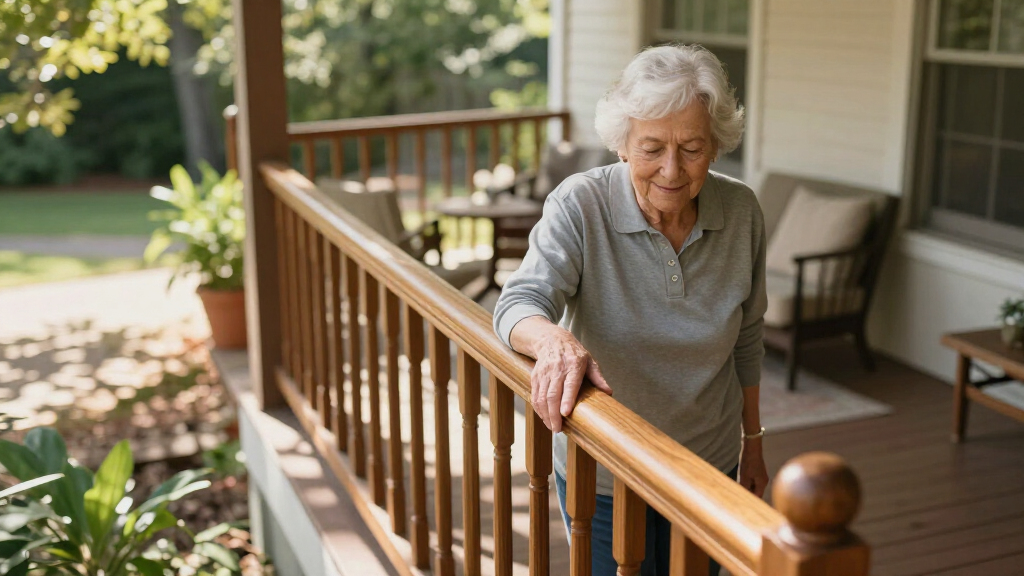
Picture this: you open your porch door, step onto the stairs, and reach for a sturdy support. That simple act can be life-changing—preventing a fall, boosting confidence, and maintaining independence. Yet, many homeowners overlook the importance of properly installed, thoughtfully placed handrails and grab points.
In this guide, you’ll learn how to select the right support features for your porch—what makes a support truly safe, where to place it, and how to keep it durable through seasons of rain, snow, and sun. Whether you’re upgrading your home or helping an aging family member stay safe, these practical insights can make a real difference.
Choose support features that are clearly visible, comfortable to grip, and properly placed along all walkways and stairs.
Securely attach handrails and grab points to structural framing, not just siding or trim, to withstand outdoor weather.
Use weather-resistant materials like powder-coated aluminum or stainless steel for durability and low maintenance.
Install adequate lighting at night to make supports visible and reduce fall risk in low-light conditions.
Design with accessibility in mind—support points at different heights, high contrast, and wide landings support everyone.
Handrails and Grab Points for the Porch
A well-placed support can prevent a fall, restore confidence, and protect independence. Safe porch access depends on a graspable shape, continuous placement, structural attachment, weather resistance, and clear nighttime visibility.
reduction in fall-related injuries associated with well-designed support features.
measured vertically above stair nosings; local requirements may vary.
Never depend on thin siding, trim, or decorative surfaces alone.
01 · Know the support
Three features, three different safety jobs
A porch guard may look substantial without offering a dependable grip. Identify the function first, then specify the support that actually performs it.
Handrail
A graspable rail used while moving along stairs or ramps. It should provide a smooth, uninterrupted gripping path through the full required run.
Guardrail
A barrier at an elevated porch, deck, or landing. Its top rail is not automatically a handrail if it is too wide, flat, or obstructed to grasp.
Grab point
A short, purpose-designed handle beside a door, threshold, or step. It supports balance during a transition but does not replace a stair handrail.
Substitution warning: decorative handles, towel bars, trim pieces, and wide porch cap rails are not reliable accessibility supports unless they are designed, positioned, and anchored for that purpose.
02 · Compare the functions
What each feature must accomplish
The safest porch often combines several support types. This comparison separates their roles and prevents a decorative element from being mistaken for a load-bearing safety feature.
| Safety feature | Continuous grip | Edge protection | Transition support | Typical location |
|---|---|---|---|---|
| Dedicated handrail | ✓ Yes | ~ Sometimes paired | ✓ Yes | Stair flight or ramp |
| Guardrail | ~ Only if graspable | ✓ Yes | ✗ Not its main role | Open elevated edge |
| Grab point | ✗ No | ✗ No | ✓ Yes | Door, threshold, or landing |
| Decorative handle | ✗ Unverified | ✗ No | ✗ Unsafe substitute | Decoration only |
4+
Stairways with four or more risers commonly require a handrail on at least one side. This is a general U.S. reference—not a universal rule.
Common handrail height band
Measured vertically above the stair nosings.
Continuous: maintain support through the required stair flight.
Returned ends: terminate at a wall, post, or walking surface to reduce snagging.
Guard threshold: guards are often required above a drop of more than 30 inches.
03 · Design for a real hand
A safe handrail must be genuinely graspable
Users should be able to wrap their fingers and thumb around the rail without releasing at posts, brackets, decorations, or awkward joints.
Round or approved contour
A tubular or ergonomic noncircular shape is easier to hold than a wide, flat porch cap.
Smooth, never slippery
Remove splinters and sharp edges; choose a finish that remains reasonably secure in rain or snow.
Leave room for fingers
Provide enough space from walls and nearby surfaces for a complete, natural grip.
Keep the path unobstructed
Brackets, posts, fasteners, and decoration should not interrupt the gripping surface.
04 · Put support where balance changes
Follow the user’s natural movement path
The highest-risk moments often occur while reaching, turning, opening a door, or moving between levels. Support should already be within reach before balance shifts.
Approach
Provide a clear, level route from the walkway or parking area.
Climb
Run the handrail continuously from the first step to the landing.
Pause
Add support near the door without blocking locks, trim, or door swing.
05 · Build for weather and load
Installation quality matters more than material alone
A beautiful rail is unsafe if it loosens, rotates, corrodes, or pulls away. Every support must transfer force into a suitable load-bearing substrate.
Find solid structure
Fasten into framing, blocking, masonry, or another verified load-bearing base—not siding or trim alone.
Control water entry
Use exterior-rated fasteners, compatible metals, sealed penetrations, and details that allow drainage.
Test for movement
Check that supports resist force without flexing, loosening, rotating, or exposing sharp hardware.
Relative outdoor durability
The porch safety chain
Final porch audit
Seven checks before calling it safe
Visible: supports contrast with their surroundings and are illuminated at night.
Reachable: support begins before the first balance-changing transition.
Graspable: the profile fits the hand and stays clear of obstructions.
Continuous: the handrail covers the required stair or ramp run.
Structural: every bracket transfers force into framing, blocking, or masonry.
Weather-ready: surfaces, fasteners, and finishes resist water and corrosion.
Maintained: seasonal checks catch looseness, ice, splinters, rust, and failed coatings.
Code-checked: local permit officials or qualified professionals confirm requirements.
Important: A grab handle cannot compensate for unsafe stairs, uneven paving, excessive thresholds, poor drainage, inadequate lighting, or missing landing space. Building requirements vary by location and project type; verify the locally adopted code before construction.
What’s the Difference? Handrails, Guardrails, and Grab Points You Need to Know
Struggling to tell apart handrails from guardrails and grab points? Here’s the quick version: handrails are graspable bars you hold onto for support when walking stairs or ramps. Guardrails are barriers that keep you from falling off an elevated porch or deck. Grab points are short handles placed where you might need a quick, extra hold—like beside a door or on a landing.
Imagine a porch with a sturdy top rail acting as a guardrail—nice to look at but not necessarily graspable. A separate, rounded handrail on the stairs offers a secure grip. A small, wall-mounted handle next to the doorway provides a quick support point for balance when opening the door or stepping out.
Remember, a guardrail isn’t automatically a handrail. The graspability, placement, and strength matter. If stairs require a handhold, you should see a dedicated, easily grasped rail—not just a decorative top rail.
Understanding these distinctions is crucial because each serves a different safety function. Using a guardrail as a handhold can be ineffective or even dangerous if it’s not designed for gripping. Conversely, adding a dedicated handrail where needed can prevent slips and falls, especially for those with limited grip strength or mobility issues. Proper placement and design directly impact how well these features serve their purpose, ensuring safety without creating obstacles or confusion.
As an affiliate, we earn on qualifying purchases.
When Does Your Porch Need a Handrail? The Simple Rules
Wondering if your porch or stairs need a handrail? Generally, it’s about the number of risers and the height. In most U.S. residential codes, stairs with four or more risers—roughly 24 inches in total—must have a handrail on at least one side.
The height of that handrail? Typically around 34-38 inches above stair nosings. This range fits most adult hands comfortably and allows a natural grip. For ramps, the height might be adjusted slightly for wheelchair compatibility, but the principle remains the same.
Why do these rules matter? Properly placed and sized handrails provide a reliable grip that can prevent slips and falls, especially for those with limited strength or balance. Installing a handrail too high or too low can make it hard to grasp, reducing its protective benefit. Conversely, a well-positioned, ergonomically designed handrail encourages users to rely on it confidently, reducing hesitation and risk during movement.
For example, if you have a porch with five steps, you’ll want a sturdy, graspable handrail that runs continuously along the entire flight. If your porch is high—more than 30 inches above ground—you probably need guardrails, too, with openings small enough to prevent a child from slipping through. These standards aren’t just about compliance—they’re about creating a safer environment that adapts to different users and situations, minimizing fall hazards in everyday use.
Always check your local codes or consult a professional because regulations can vary. But understanding the intent behind these rules helps you make informed decisions that prioritize safety and accessibility.
weather-resistant grab bars for stairs
As an affiliate, we earn on qualifying purchases.
As an affiliate, we earn on qualifying purchases.
How to Pick a Handrail That Really Grabs—Literally
- Choose a shape that fits comfortably in your hand. Rounded, tubular rails are easiest to grip, especially for older adults or those with arthritis.
- Ensure the diameter is between 1.25 and 2 inches for a secure, natural hold. Anything wider or flat can be hard to grasp, especially when your hands are wet or gloves are on.
- Check that the surface is smooth, without splinters, sharp edges, or rough spots. Matte finishes or textured coatings help prevent slips, even in rain or snow.
- Verify that the handrail runs continuously along the entire stair flight, with no gaps or abrupt changes at posts or joints.
- Make sure the support extends beyond the top and bottom of the staircase—this provides extra support during transitions.
Choosing the right handrail isn’t just about aesthetics; it’s about ensuring safety during critical moments. A poorly designed or improperly installed handrail can be a hazard instead of a help. For example, a handrail that’s too thin or too wide may slip from grasp, especially if hands are wet or gloved. Rough or splintered surfaces can cause injuries or discourage use altogether. Seamless, continuous support along the entire staircase provides a consistent, reliable grip, reducing the chance of accidental slips or falls during ascent or descent. Extending supports beyond the top and bottom helps users transition safely and confidently onto flat surfaces or into the home. In essence, selecting a handrail with careful attention to shape, size, surface, and placement maximizes its protective role, making every step safer.
As an affiliate, we earn on qualifying purchases.
Placement Matters: Where to Put Support Points for Maximum Safety
The right support is where you need it most. For porch stairs, install handrails on both sides whenever possible—especially if older adults or children use the stairs. Place the support along the entire length of the flight, reaching from the top landing to the bottom.
Key support points include:
- Along the entire stair run
- At the top and bottom of stairs
- Near high or awkward thresholds
- Next to doors where people pause or open/close
- At changes in level or step-ups
- Along accessibility ramps or between walkways and the porch
Support points should be positioned based on natural movement patterns. For instance, a grab handle installed near the door provides support during entry and exit, reducing the risk of losing balance when balancing items or managing pets. Proper placement ensures support is available exactly when and where it’s needed most, encouraging users to rely on it confidently. Poor placement—such as too high, too low, or out of reach—can lead to hesitations or unsafe attempts to stabilize. Think about how people naturally reach and move, and position supports accordingly to promote safe, confident movement in everyday tasks.
As an affiliate, we earn on qualifying purchases.
Secure Attachment: How to Make Your Porch Support Last Outdoors
Support points need to be anchored to something solid—no flimsy screws into siding! For outdoor safety, installation quality matters more than material alone.
Support should be fastened into structural framing, blocking, or load-bearing surfaces. For wood, use corrosion-resistant screws or bolts; for concrete or brick, use proper masonry anchors. Steel supports often require special brackets and fasteners designed for outdoor use.
Imagine a support mounted only to a thin siding panel—over time, it can loosen or pull out. Instead, install into solid framing behind the siding, using mounting blocks or standoffs when necessary. Proper attachment prevents wobbling, loosening, or failure over time, which can lead to falls or injuries. The durability of your support depends heavily on how well it’s anchored—poor installation can compromise safety long-term, regardless of the quality of the support material. Ensuring a secure, robust connection is essential for outdoor conditions where weather, temperature changes, and frequent use can weaken inferior attachments. Regular inspections and maintenance further extend the lifespan of your supports, preventing small issues from escalating into safety hazards.
Weatherproofing Your Porch Supports—Don’t Let Rain or Snow Ruin Safety
Outdoor porch supports face rain, snow, frost, and sun—each threatening to weaken or damage them over time. Choosing weather-resistant materials and protective features is essential.
For example, powder-coated aluminum or stainless steel resists corrosion better than untreated steel. Vinyl or composite supports are low-maintenance and don’t rot or splinter. Wood can be durable if properly sealed and inspected regularly.
In snowy areas, consider adding slip-resistant nosings or textured surfaces to stair treads. Installing drainage systems ensures water doesn’t pool around posts or on steps, which can accelerate rot or rust. Proper weatherproofing isn’t just about choosing the right materials; it’s about understanding how environmental factors affect different supports and taking proactive steps to mitigate damage. Regular cleaning, inspection, and timely repairs—such as repainting peeling coatings or replacing rusted parts—are critical. In climates with harsh winters, additional protective measures like sealants and covers can extend the lifespan of your supports, maintaining their safety and appearance for years to come.
Lighting and Weather: Brighten Your Porch for Safe Support at Night
Support points are only useful if they can be seen when it’s dark. Proper lighting enhances safety, especially during winter or in poorly lit neighborhoods.
Install lighting fixtures near stairs, landings, and doorways. Use motion-activated lights or dusk-to-dawn switches to ensure support points are visible when needed.
Contrasting colors or reflective tape on handrails and supports help users see edges and supports more clearly—crucial for those with low vision.
For example, LED strip lights mounted beneath handrails or along stair risers can illuminate steps without creating glare. Bright, consistent lighting reduces missteps and fall risk. Consider the placement and type of lighting carefully; too dim or poorly directed lights can create shadows or glare, negating safety benefits. The goal is to make support points highly visible in all conditions, encouraging their use and reducing accidental slips. Effective lighting is a simple yet powerful safety feature that complements physical supports, ensuring they fulfill their role during nighttime or low-visibility situations.
Design for All: Making Your Porch Safe and Accessible for Everyone
Good porch support isn’t just for today—it’s for everyone, especially older adults and those with mobility challenges. Thoughtful design makes your home more inclusive and reduces fall risks.
Features to consider include:
- Handrails on both sides of stairs
- Extended rails beyond top and bottom steps
- High-contrast color schemes for visibility
- Low thresholds and wide landings for easy access
- Levers on doors instead of knobs
- Level, slip-resistant surfaces and ramps where needed
- Support points at different heights for varied users
Designing with accessibility in mind ensures everyone can navigate your porch confidently and safely. For instance, installing handrails at varying heights accommodates children, seniors, and those using mobility aids. Bright contrasting colors help visually impaired individuals identify supports quickly. Wide, level landings provide resting spots and easier maneuvering for wheelchairs or walkers. These considerations don’t just meet regulations—they foster independence and dignity for all users, making your porch a truly welcoming space.
Child Safety First: Guard Your Porch from Climbing Hazards
Children love to climb, but horizontal rails or decorative patterns can turn your porch into a climbing ladder. Safe guard design is essential to prevent accidents.
Use vertical balusters spaced according to code—usually no more than 4 inches apart—to prevent children from slipping through. Avoid horizontal rails or wide decorative openings that invite climbing. These open designs can inadvertently become playground equipment for curious kids, increasing fall risk. Installing vertical pickets not only complies with safety standards but also creates a barrier that’s harder for children to climb. Additionally, adding secure gates at stair entrances and removing objects like furniture or planters from near railings reduces climbing opportunities. Regularly inspecting guard components for loose or broken parts is vital—small gaps or weak points can quickly turn into hazards. Thoughtful, safety-focused design choices help keep children safe without sacrificing style or curb appeal.
Maintaining Your Porch Supports—Because Safety Isn’t a Set-It-and-Forget-It Deal
Routine maintenance keeps your porch supports strong and safe. Regular inspections can catch issues before they become hazards.
Check annually—especially after storms or freeze-thaw cycles—for loose fasteners, rust, cracks, or rot. Tighten or replace hardware as needed.
Look for splinters, peeling paint, or corrosion. Sharp edges or loose posts are safety red flags. Clear vegetation that might obscure supports or create tripping hazards. Maintaining your supports isn’t just about appearance—it’s about ensuring ongoing safety. Small issues like rust or loose fittings can quickly escalate into structural failures if ignored. Regular inspections help you catch problems early, allowing timely repairs that prevent accidents. Applying protective coatings or sealants can extend the life of wooden supports, while replacing deteriorated components maintains the integrity of metal or composite parts. Proactive maintenance is a small effort that pays off by keeping your porch safe and reliable for years to come.
Frequently Asked Questions
When does a porch need a handrail?
Most residential codes require a handrail when stairs have four or more risers—that’s roughly 24 inches of total height. Always check local regulations, but generally, if you have steps, a handrail is a good idea for safety and compliance.Where should a grab handle be installed near the front door?
Place it where a person can easily reach while opening or closing the door, ideally on the latch side or adjacent wall. It should not interfere with the door swing or locks, and testing with actual users helps find the perfect spot.Can a top guardrail serve as a handrail?
Only if it’s graspable, with a shape, height, and surface suitable for gripping. Many guardrails are too broad or flat to be used as a handrail, so a dedicated support is usually necessary.How do I make sure my outdoor handrail lasts?
Use weather-resistant materials like stainless steel or powder-coated aluminum, secure it to structural framing, and inspect it annually for rust, cracks, or loose fittings. Regular maintenance extends safety and appearance.Are horizontal rails safe for children?
Horizontal rails can be climbable hazards for kids, so vertical balusters spaced close enough to prevent passage are safer. Always follow local code requirements for openings and consider installing child-proof gates where needed.Conclusion
Your porch is more than just an entryway—it’s a daily safety zone. Thoughtfully placed, securely attached handrails and grab points turn a simple step into a reliable support system. They make a real difference for anyone, especially older adults or those with limited mobility.
Remember, safety isn’t just about meeting code—it’s about creating a welcoming space where everyone can move confidently. With a few smart choices, your porch can become a sturdy, supportive gateway to independence and peace of mind.