TL;DR

Turn quiet afternoons into listening time
- Thousands of audiobooks, podcasts and originals
- Listen on your phone, tablet or Echo — also offline
- Cancel anytime
Using a cane correctly improves balance and reduces fall risk. Choosing the right cane, practicing proper technique, and understanding how to adapt to different environments help you feel more confident and safe in public.
Imagine strolling down a busy sidewalk, feeling steady, confident, and in control. That sense of ease doesn’t just happen—it’s built through understanding how to use your cane naturally and confidently in public.
Whether you’re new to mobility aids or looking to boost your comfort, this guide will walk you through practical steps. From choosing the right cane to mastering your stride, you’ll learn how to wear your cane like a trusted part of your daily routine. Because feeling secure and at ease isn’t just about mobility — it’s about maintaining your independence and dignity.
Proper cane fitting — matching type and height — is fundamental for comfort and safety.
Mastering the correct walking technique boosts confidence and reduces fall risk.
Good posture and body language project confidence, even if you’re nervous inside.
Adjust your cane use for different terrains — rubber tips for pavement, spikes for uneven ground.
Practice in private to build confidence, then gradually use your cane publicly with a positive attitude.
Getting Comfortable Using a Cane in Public
Steadiness, confidence, and control on busy sidewalks don’t happen by accident. Choosing the right cane, mastering proper technique, and adapting to your environment will help you wear your cane like a trusted part of your daily routine — protecting your independence and dignity.
How to Pick the Perfect Cane for Your Needs
The right cane isn’t about style — it’s about function. The best cane fits your body and walking style, giving support without feeling cumbersome.
Match the Cane Type
Standard canes are versatile; quad canes offer a broader, more stable base. For frequent travel or uneven terrain, a lightweight foldable cane makes life easier.
Get the Correct Height
Stand upright, arms relaxed at your sides — the cane should reach your wrist crease. Too short or too tall throws off balance and causes discomfort and fatigue.
Consider Ergonomic Handles
A gentle curve or padded grip reduces fatigue and improves control — especially for users with arthritis or limited hand strength. One senior found a padded handle encouraged longer, more frequent walks.
Master the Technique: Use Your Cane Like a Pro
Confidence comes from knowing how and when to use your cane. Follow this four-step walking rhythm:
Opposite Hand
Hold the cane in the hand opposite your weaker leg to create a balanced gait and distribute weight evenly.
Stride Naturally
Place the cane ~6 inches ahead, step with the weaker side, then the stronger side — mimicking a natural walking rhythm.
Stay Upright
Good posture keeps you balanced and reduces fatigue. Slouching shifts your center of gravity and raises fall risk.
Practice Turns
Slow, deliberate turns and careful navigation of uneven surfaces prevent stumbles on unpredictable terrain.
Look and Feel Confident in Public
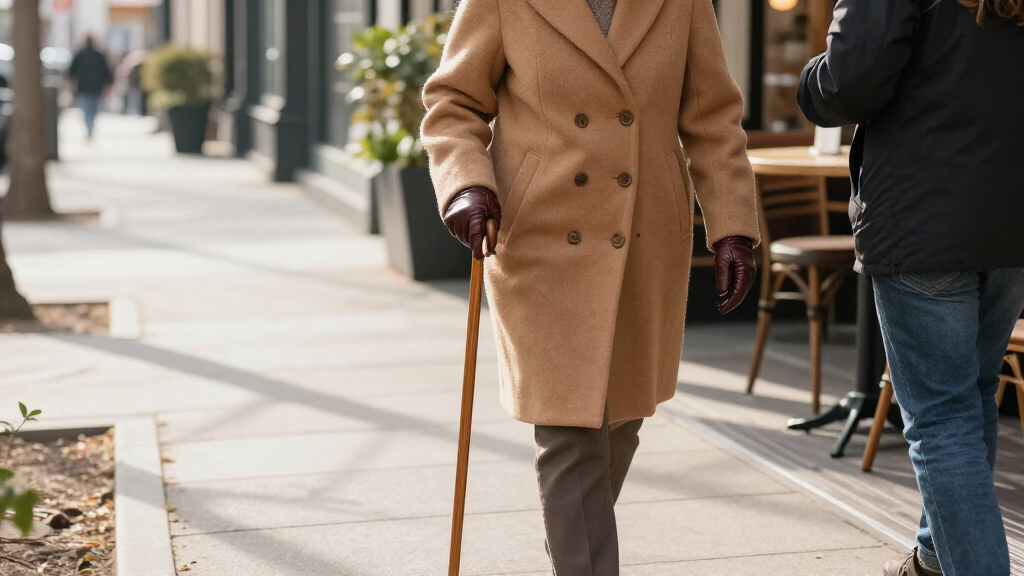
Confidence is how you carry yourself. Stand tall — shoulders back, chest open, head high — and treat your cane as a support partner, not a badge of vulnerability. Purposeful posture signals control to yourself and others, shaping how people perceive and interact with you.
Adapting Your Cane to Different Environments
Every environment demands a slightly different approach — from crowded streets to uneven sidewalks. Use your cane as a scout: tap ahead to test the ground, detect obstacles, and signal to others that you’re navigating carefully.
| Terrain | Recommended Tip | Special Feature |
|---|---|---|
| Paved sidewalks | Rubber tip for grip | Standard cane with rubber tip |
| Uneven surfaces | Spike or metal tip | Adjustable or folding cane |
| Crowded indoor spaces | Shorten stride, keep cane close | Lightweight, foldable cane |
Build Confidence & Ease Self-Consciousness
Feeling self-conscious is common — but mobility aids are tools of independence, not signs of weakness. Progress from private practice to public ease:
Practice at Home
Walk your home and yard until your gait feels natural and smooth.
Positive Body Language
Smile and stand tall — others see strength, not struggle.
Short Public Outings
Start with quiet routes, then gradually take busier paths.
Navigate Crowds
Take smaller steps and keep the cane close in tight spaces.
Own Your Routine
Your cane becomes a trusted, everyday part of your life.
How to Pick the Perfect Cane for Your Needs
Choosing the right cane isn’t just about style; it’s about function. The best cane fits your body and your walking style, giving you support without feeling cumbersome.
Start with the right type. Standard canes are versatile, but if you need more stability, a quad cane with a broad base might suit you better. For frequent travel or uneven terrain, a lightweight, foldable cane can make life easier.
Get the correct height. Stand upright, let your arms relax at your sides, and measure the cane so it reaches your wrist crease. Too short or too tall can throw off your balance and cause discomfort. Proper height ensures that your body maintains a natural posture, reducing strain and fatigue during extended use.
Consider ergonomic handles. Handles that fit comfortably in your hand, especially those with a gentle curve or padded grip, reduce fatigue and improve grip security. This can be especially important for users with arthritis or limited hand strength, as it minimizes discomfort and allows for better control.
For example, a senior with arthritis found that switching to a cane with a padded ergonomic handle reduced hand fatigue during long walks, encouraging more frequent outdoor activity and promoting independence.
Products Worth Considering

Shark IZ362H Cordless Anti-Allergen Stick Vacuum, Red

Shark Clean & Empty Cordless Stick Vacuum with Auto-Empty System, BU3521

Shark Rocket Corded Stick Vacuum for Carpet and Hard Floors, Gray/Orange, HV301
As an affiliate, we earn on qualifying purchases.
Master the Technique: Using Your Cane Like a Pro
Using your cane properly is the key to feeling confident in public. It’s not just about holding it — it’s about how and when you use it, which directly influences your stability and safety.
Follow these simple steps:
- Hold the cane in the opposite hand of your weaker leg. This creates a balanced gait, providing support exactly where you need it most. Proper placement helps distribute your weight evenly, reducing strain on your joints and improving stability.
- Stride naturally. Place the cane about 6 inches ahead of your foot, then step forward with your weaker side, followed by your stronger side. This rhythm mimics natural walking patterns, helping you conserve energy and maintain balance.
- Keep your body upright. Good posture helps you stay balanced and reduces fatigue. Leaning forward or slouching can shift your center of gravity, increasing the risk of falls and causing discomfort over time.
- Practice turning and navigating uneven surfaces. Slow, deliberate movements prevent falls and boost confidence. Mastering these maneuvers reduces the likelihood of stumbling on unpredictable terrain, which is often where falls occur most.
For instance, a person practicing in their driveway learned to shift the cane smoothly when turning, avoiding awkward stumbles on cracked pavement. This not only improved safety but also increased their confidence in navigating familiar routes.
How to Look and Feel Confident While Using a Cane
Confidence isn’t just about your physical stance — it’s how you carry yourself and what your body language communicates.
Stand tall with good posture. Keep your shoulders back, chest open, and head held high. It projects confidence and helps you maintain better balance, which can also psychologically reinforce your independence.
Use the cane as a tool, not a sign of weakness. Hold it firmly, but naturally, avoiding a hunched or tentative stance. Think of it as your support partner, not your badge of vulnerability. This mental shift can improve your body language, making you appear more self-assured even if you feel nervous inside.
Imagine walking through a busy park. Maintaining an upright posture and purposeful stride makes you look confident, which often influences how others perceive and interact with you. When you hold your head high and walk steadily, you signal to yourself and others that you’re in control, which can positively impact your experience and interactions.
Adapting Your Cane Use to Different Environments
Every environment demands a slightly different approach. From crowded streets to uneven sidewalks, knowing how to adapt keeps you safe and steady. Recognizing these differences allows you to respond proactively, reducing the likelihood of accidents and increasing your comfort in diverse settings.
Use rubber tips for smooth surfaces. They grip pavement and prevent slips. When walking on slippery floors indoors, a cane with a spike or metal tip offers better stability. Choosing the right tip for the surface minimizes the chance of slipping, which is a common cause of falls.
Adjust for crowds and tight spaces. Shortening your stride, taking smaller steps, and keeping your cane close to your body helps you maneuver efficiently without knocking over objects or bumping into others. These adjustments are vital in preventing collisions and maintaining control in confined areas.
Navigate uneven terrain carefully. Use your cane as a scout, testing the ground ahead before fully committing your weight. Moving slowly and deliberately over cracks, gravel, or uneven patches helps you anticipate hazards and react accordingly, significantly reducing the risk of slips or falls. This cautious approach is especially important in outdoor environments where terrain unpredictability is higher.
Picture walking through a crowded market. Using your cane to gently tap ahead not only helps you detect obstacles but also signals to others that you’re navigating carefully, encouraging polite space-sharing and reducing accidental bumps.
| Terrain | Recommended Tip | Special Feature |
|---|---|---|
| Paved sidewalks | Rubber tip for grip | Standard cane with rubber tip |
| Uneven surfaces | Spike or metal tip | Adjustable or folding cane |
| Crowded indoor spaces | Shorten stride, keep cane close | Lightweight, foldable cane |
Adapting your cane use based on environment isn’t just about safety; it’s about maintaining your independence and confidence in all settings. Recognizing when to switch techniques or equipment helps prevent falls and encourages a proactive attitude toward mobility challenges.
How to Build Confidence and Ease Self-Consciousness
Feeling self-conscious about using a cane is common, but it shouldn’t hold you back. Remember, mobility aids are tools that promote independence, not signs of weakness.
Practice in private first. Walk around your home or yard with your cane, get comfortable with the feel, and develop a natural gait before heading out. Building familiarity reduces nervousness and helps you develop a smooth, confident stride that feels natural.
Smile and maintain positive body language. When you walk confidently, others see strength, not struggle. People tend to respect independence and are often more supportive when you project confidence. Your attitude can influence how you feel about your mobility and how others perceive your use of a cane.
Ask a trusted friend or family member to walk with you, offering encouragement and feedback as you practice. Over time, this support helps reinforce positive habits and diminishes feelings of self-consciousness.
For example, a senior who practiced walking in front of a mirror reported feeling less awkward when stepping out into the community, leading to increased outings and social engagement.
Remember — most people are too busy with their day to notice your cane. What matters most is how you feel inside, and confidence grows with each step. Embracing your mobility aid as a part of your identity rather than a limitation is key to feeling empowered and independent in public.
Latest Tech and Design: Making Cane Use Easier and Safer
Recent innovations turn a simple cane into a smart, adaptable tool. From obstacle sensors to stylish designs, tech is making mobility aids more user-friendly.
Some canes now feature built-in sensors that detect nearby objects and gently vibrate to warn users — perfect for navigating crowded or cluttered areas. These features help prevent accidental bumps and falls, especially in unfamiliar or busy environments where attention might be divided.
Design-wise, modern canes are lighter, fold smaller, and come in customizable colors and patterns, helping you express your personality while staying supported. This personalization can boost your confidence, making cane use feel less like an aid and more like an extension of your style.
Additionally, awareness campaigns are working to normalize cane use, reducing stigma and encouraging more people to embrace mobility aids confidently. When society recognizes these tools as practical and stylish, users often feel more comfortable and proud of their mobility choices.
For example, a cane with a sleek, modern look and a built-in LED flashlight helped a user feel more stylish and prepared for dark streets, turning a necessity into a fashion statement.
With these advancements, using a cane becomes less of a chore and more of a smart, supportive choice that integrates seamlessly into daily life, encouraging independence and confidence.
Frequently Asked Questions
How do I choose the right cane for my needs?
Start by considering your mobility level and terrain. Measure your height so the cane reaches your wrist crease when standing. Decide on the type—standard, quad, or foldable—based on stability and portability needs. Comfort handles, like ergonomic grips, also make a big difference.
How can I feel more confident using a cane in public?
Practice walking with your cane at home, focusing on posture and gait. Keep your head up, shoulders back, and use positive body language. Remember, most people won’t notice or judge — confidence is about how you carry yourself.
What are the best practices for navigating uneven surfaces?
Test the ground ahead with your cane, take small, deliberate steps, and adjust your stride as needed. Use a cane with a spike or metal tip for better stability on rough terrain. Moving slowly and carefully helps prevent slips and falls.
How do I prevent falls while using a cane?
Ensure your cane fits properly and that you use the correct technique. Always look ahead, especially on uneven or slippery surfaces. Practice balance and gait exercises, and consider professional training if needed.
Can I use a cane if I have balance issues but no injury?
Yes, a cane can help improve stability even without an injury. Consult with a healthcare professional to determine the best type and fit for your needs. Proper use can significantly boost your confidence and safety.
Conclusion
Remember, your cane is more than just a support — it’s your partner in freedom. When you choose the right cane, practice your technique, and walk with confidence, you turn mobility into a statement of independence. Each step you take with assurance sends a message: you’re still in control.
So, go ahead — stride out with purpose. Your confidence is the best support you can wear, and your mobility journey is uniquely yours.