
TL;DR
Choosing an adjustable bed base requires considering motor quality, mattress compatibility, and features like smart control and health benefits. Recent models focus on quiet operation, sleek design, and customization, making them a worthwhile investment for better sleep and safety at home.
Ever wake up stiff, sore, or feeling like you just didn’t get enough rest? You’re not alone. The right adjustable bed base can transform your sleep experience — from easing pain to helping breathe easier. But with so many options out there, how do you pick the one that truly fits your needs? That’s what we’re here to explore.
This guide walks you through what matters most when choosing an adjustable bed base — from features and compatibility to recent tech advances. By the end, you’ll know exactly what to look for so you can sleep soundly and wake up refreshed.
Prioritize dual-motor bases for independent head and foot adjustments, especially if you have health needs.
Wall-hugger models keep bedside essentials within reach, ideal for reading or bedside gadgets.
Ensure mattress compatibility—memory foam and latex are top choices for adjustable bases.
Recent models feature smart controls, quieter motors, and health-enhancing modes, adding value and comfort.
Regular maintenance and proper setup extend the lifespan and safety of your adjustable bed.
Choosing an Adjustable Bed Base
The right base does more than raise a mattress. It can ease pressure, support breathing, improve bedside access and turn a familiar bed into a personalized sleep system. Start with motor quality, mattress flexibility and the positions you will actually use.
Independent head and foot movement gives you more precise comfort and positioning.
Flexible mattresses usually articulate more naturally and place less strain on the base.
Price rises with wall-hugging action, massage, smart control, presets and warranty coverage.
01 · Buying priorities
Six checks before you commit
A long feature list is useful only when the fundamentals are right. Evaluate the complete sleep system: base, mattress, room layout, user weight, controls and after-sales support.
Motor quality
Choose smooth, quiet operation. Dual motors are preferable when head and foot positions need independent control.
Mattress flexibility
Memory foam, latex and flexible hybrids usually perform best. Verify that any innerspring is specifically rated for adjustment.
Wall-hugger action
The platform shifts toward the wall as it rises, helping keep lamps, phones and bedside controls within easy reach.
Frame and capacity
Look for durable steel construction and a weight rating that covers the mattress, sleepers and bedding with room to spare.
Controls and presets
A clear wireless remote matters more than novelty. Add an app, memory settings or voice control only when they simplify routines.
Warranty and support
Compare coverage for the frame, electronics and motor separately. Responsive parts support can be as important as warranty length.
02 · Model comparison
Which design fits your life?
Wall-hugger bases prioritize bedside proximity. Standard bases offer simpler mechanics and flexible placement. Premium smart bases add automation and wellness functions at a higher cost.
| Decision factor | Wall-hugger | Standard motorized | Premium smart |
|---|---|---|---|
| Bedside access | ✓Stays close to the nightstand | ~Moves away as the head rises | ✓Often includes wall-hugging |
| Room clearance | ✓Useful in tighter layouts | ~Allow extra space near the wall | ~Check the mechanism depth |
| Head and foot control | ✓Common on dual-motor models | ✓Available across many prices | ✓Precise programmable positions |
| Smartphone or voice | ~Model dependent | ✗Uncommon on basic models | ✓Core premium feature |
| Massage and wellness | ~Optional upgrade | ~Basic vibration on some models | ✓Massage, anti-snore and zero-G |
| Relative cost | ~Mid to high | ✓Lowest entry price | ✗Highest initial investment |
✓ strong fit ~ varies by model ✗ usually absent or less favorable
A five-step route to the right base
Move from need to specification in this order. It prevents attractive extras from overshadowing compatibility, safety and daily comfort.
Define the need
Pain relief, breathing support, reading, mobility or general comfort.
Check the mattress
Confirm material, thickness and manufacturer approval for articulation.
Measure the room
Account for frame fit, wall clearance, nightstands and power access.
Prioritize features
Motor setup first; then presets, massage, ports and smart controls.
Verify ownership
Review capacity, setup, returns, warranty terms and service access.
03 · Modern comfort
What newer bases do better
Recent development is centered on quieter movement, finer positioning and controls that disappear into a normal bedtime routine. Wellness modes are increasingly paired with cleaner, less clinical design.
Connected settings
Apps, voice assistants and memory buttons make repeatable positions easier to access.
Purposeful presets
Zero-gravity, lounge and anti-snore modes create useful starting positions.
Quieter movement
Refined motors reduce disruption for partners and light sleepers during adjustment.
Sleeker profiles
Zero-clearance options and cleaner frames integrate more naturally with modern bedrooms.
04 · Compatibility and care
Protect the complete system
A flexible mattress and a correctly installed base move together. Poor compatibility can create uneven wear, restrict articulation and place unnecessary stress on motors or retaining hardware.
Typical mattress suitability
Maintenance essentials
- Inspect hardware: check bolts, brackets and mattress retainers periodically.
- Keep mechanisms clear: prevent bedding, cords and stored items from entering moving parts.
- Clean carefully: dust the frame and follow the maker’s instructions around motors and electronics.
- Test movement: listen for new noise, hesitation or uneven travel before it becomes a larger problem.
Never assume your current mattress will work. Check the mattress maker’s adjustability guidance, permitted base type and warranty conditions. A compatible frame or platform should also be confirmed before installation.
The five takeaways worth remembering
Buyer’s shortlistPrioritize independent movement
Dual motors offer precise head and foot adjustment for comfort and health-related positioning.
Choose bedside proximity
A wall-hugger is valuable when nightstand access, mobility or room size matters.
Match the mattress
Flexible foam, latex and compatible hybrids are usually the safest starting point.
Buy useful technology
Quiet motors and memory positions generally matter more than rarely used novelty features.
Plan for ownership
Correct setup, routine inspection and strong support extend comfort, safety and service life.
What makes a good adjustable bed base? Focus on these key features
When choosing an adjustable bed, your first question should be: what features truly matter? Not all bases are created equal, and understanding the must-haves helps you avoid regrets. For example, a model with dual motors lets you independently raise your head and feet — crucial if you want customized comfort or relief from health issues like acid reflux.
Other features to consider include wall-hugger designs that keep your bedside within reach, especially handy if you like reading or need quick access to your lamp. Plus, check if your mattress is compatible—memory foam and latex tend to bend easily, while traditional innerspring might need special considerations. For instance, a senior couple I know switched to a hybrid mattress and an adjustable base designed for compatibility, and the difference in comfort was immediate.
Understanding why these features matter is key: independent movement allows for precise adjustments tailored to your comfort and health needs, while wall-hugger designs prevent you from feeling distanced from your bedside essentials. Compatibility considerations influence not just comfort but also the durability of your setup—using an incompatible mattress can lead to uneven wear or mechanical stress, reducing the lifespan of your investment. Therefore, prioritizing these features ensures that your adjustable base supports your lifestyle and health goals effectively.
adjustable bed base with dual motors
As an affiliate, we earn on qualifying purchases.
As an affiliate, we earn on qualifying purchases.
How to pick the right type of adjustable bed for your lifestyle
- Identify your primary needs: Do you want relief from health issues? Better sleep quality? Or just more comfort?
- Decide on a style: Wall-hugger models keep your nightstand nearby, while non-wall-hugger models might need extra clearance.
- Choose your motor setup: Dual motors offer independent adjustments, which is great for couples or personalized comfort.
- Match your mattress: Ensure compatibility with memory foam, latex, or hybrid options.
- Set your budget: Ranges from about $500 for basic models to over $2,000 for high-end, feature-rich bases.
Deciding on the right adjustable bed involves weighing these factors: your specific health needs, room layout, and desired features. For instance, if you suffer from joint pain, a model with gentle, quiet motor operation and massage functions can provide relief and relaxation. If space is limited, a wall-hugger design ensures you don’t feel distant from your nightstand, which is important for convenience and safety. Budget considerations also influence your options—higher-end models often include advanced features like app control or zero-gravity modes, but even basic models can significantly improve sleep quality if they meet your needs. The key is understanding the tradeoffs: more features usually come at a higher cost and complexity but can offer greater comfort and health benefits, making the investment worthwhile for many users.
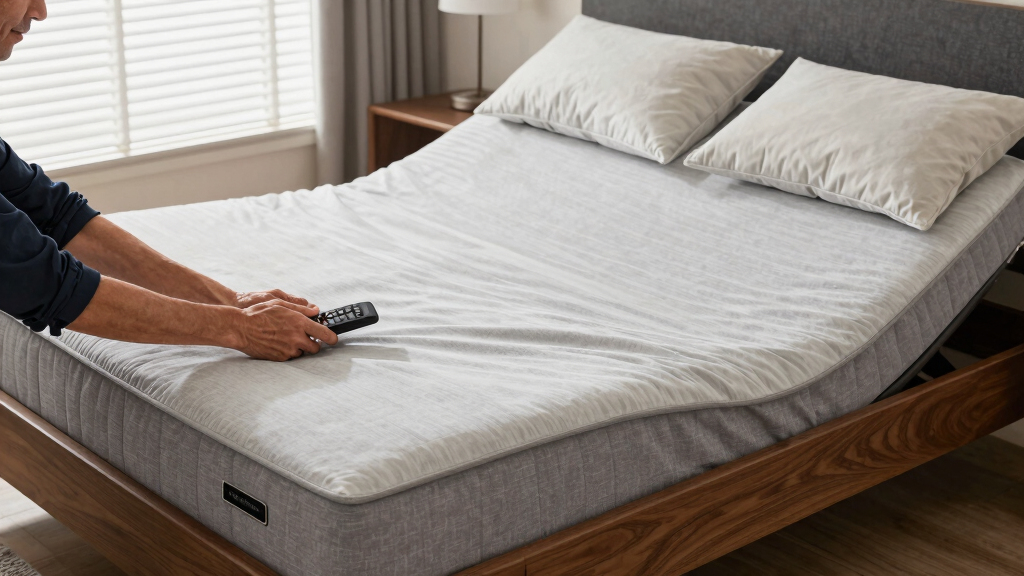
smart adjustable bed frame with remote
As an affiliate, we earn on qualifying purchases.
As an affiliate, we earn on qualifying purchases.
Comparison of popular adjustable bed features
| Feature | Wall-Hugger | Non-Wall-Hugger |
|---|---|---|
| Proximity to wall | Moves closer, keeps bedside table accessible | Requires more clearance, can be placed further from wall |
| Design | Usually slightly bulkier, but sleek | More flexible placement options |
| Ideal for | Readers, those with bedside gadgets | Spaces with limited room |
Choosing between these options depends on how you prioritize space and convenience. Wall-hugger models are designed to minimize the distance from the bed to the wall when adjusting, which prevents you from feeling distanced from your nightstand or bedside controls. This feature is especially beneficial if you have limited room or prefer to keep your essentials within arm’s reach at all times. Conversely, non-wall-hugger models provide more placement flexibility, which is advantageous in rooms where space isn’t a constraint but you might need to place the bed further from the wall or in a central position. Both types impact the room’s layout and usability, so understanding your space and daily habits helps you choose the best fit. The tradeoff is that wall-hugger bases might be slightly bulkier or more expensive, but they enhance convenience in small or shared spaces.
As an affiliate, we earn on qualifying purchases.
What’s new in adjustable beds? Latest tech and comfort features
Recent models are smarter, quieter, and more customizable. For instance, many now include smartphone apps that let you set preferred positions before you even get into bed. Voice control integration with Alexa or Google Assistant is becoming common, turning your bed into a smart device.
Manufacturers focus on reducing noise — silent motors mean you won’t wake your partner when adjusting. Plus, sleek designs blend seamlessly with modern decor, making your bedroom look stylish while improving function. Some bases even offer health perks, like anti-snore positions, zero gravity modes, and vibration massage, which can promote relaxation and better breathing.
These innovations matter because they directly influence your sleep quality and daily convenience. Smarter controls enable you to customize your sleep environment effortlessly, encouraging consistent use and better habits. Quieter motors minimize disturbances, which is vital for shared beds or light sleepers. Health-oriented features like anti-snore positions or zero gravity modes can alleviate sleep-related health issues, reducing discomfort and contributing to overall well-being. The integration of these technologies signifies a shift toward personalized, health-conscious sleep solutions, making modern adjustable beds not just more comfortable but also more aligned with holistic wellness goals.
memory foam compatible adjustable bed
As an affiliate, we earn on qualifying purchases.
As an affiliate, we earn on qualifying purchases.
How to match your mattress and avoid compatibility pitfalls
Choosing the right mattress is just as important as selecting the base. Adjustable bases work best with flexible mattresses like memory foam, latex, or hybrids. If you have an innerspring mattress, check if it’s specifically designed for adjustability or consider upgrading.
For example, a senior with a traditional innerspring mattress found it difficult to stay comfortable on her adjustable base. Switching to a memory foam mattress made her adjustment experience smoother, and she noticed less back pain. Always verify manufacturer recommendations to avoid costly mismatches.
The implications of mattress compatibility are significant: an incompatible mattress can not only diminish comfort but also put unnecessary stress on the mechanical components of your adjustable base, reducing its lifespan. Conversely, choosing a mattress designed for adjustability ensures even weight distribution, proper support, and longevity of both mattress and base. It’s essential to consider thickness, flexibility, and material composition, as these factors influence how well the mattress conforms to the movements of the base without sagging or creating pressure points. Doing thorough research and consulting manufacturer guidelines helps prevent costly mistakes and guarantees a restful, supportive sleep experience.
How to care for and maintain your adjustable bed base
Keeping your adjustable bed working smoothly is easier than you think. Regularly wipe down the frame with a damp cloth to remove dust. Check for loose bolts or screws every few months—especially if you notice any squeaking or resistance.
Test the motors periodically to ensure they move quietly and smoothly. If you notice strange noises or sluggish performance, contact customer support before it turns into a bigger issue. Proper maintenance prolongs your investment and keeps your sleep environment safe and comfortable.
Understanding the importance of maintenance helps prevent unexpected breakdowns and ensures your bed’s longevity. Regular inspections can catch loose hardware or mechanical issues early, avoiding costly repairs or replacements. Additionally, keeping your bed clean prevents dust and debris from interfering with moving parts, which can cause wear over time. Following manufacturer recommendations for cleaning and servicing, such as lubricating joints or updating firmware if applicable, maximizes performance and safety. Ultimately, proactive care ensures that your investment continues to support restful sleep and health for years to come.
Frequently Asked Questions
Will my current mattress work with an adjustable bed base?
Most memory foam, latex, and hybrid mattresses are compatible with adjustable bases. Innerspring mattresses may require specific designs or adjustments. Always check the manufacturer’s guidelines before buying.How do I choose the right adjustable bed base for my needs?
Assess your health needs, room space, and preferred features—like massage or smart controls. Set a realistic budget and verify mattress compatibility to find the best fit.Are adjustable beds noisy?
Modern adjustable beds are designed to operate quietly, often comparable to a soft hum. However, older or cheaper models may produce more noise, so check reviews or features if quiet operation is a priority.Can I use an adjustable bed base with my existing bed frame?
Most bases are standalone but can also fit into compatible frames. Check the product specifications for weight capacity and compatibility to ensure proper setup.How long do adjustable bed bases last?
With proper care, most bases last between 7 and 10 years. Investing in a quality model with a good warranty can extend its lifespan and ensure ongoing support.Conclusion
Choosing the right adjustable bed base is about matching features to your lifestyle and health needs. Focus on compatibility, comfort, and recent innovations like smart control and quiet operation. When you make an informed choice, every night becomes a chance to rest deeply, wake refreshed, and face each day with renewed energy.
Remember: your bed isn’t just furniture — it’s your sanctuary. Pick wisely, and let your sleep environment support your best life.