TL;DR
Get ready for Prime Big Deal Days — try Prime free
Exclusive member deals on October 6–7, plus fast free delivery. Cancel anytime.
Start your free trialAs an affiliate, we earn on qualifying purchases.
Using the right hoses, wands, and timers can make watering your garden easier and more effective. Modern tools save water, time, and effort, helping your plants thrive with less fuss.
Imagine watering your garden without dragging hoses around, worrying about wasting water, or rushing to finish before rain arrives. Practical watering tools like hoses, wands, and timers turn that vision into reality. They make garden chores more manageable, especially as you age or if you’re caring for loved ones.
In this guide, you’ll learn how to pick the right equipment and master simple tricks to keep your plants healthy without the hassle. Whether you’re maintaining a small flower bed or a lush vegetable patch, the right tools can save you time, conserve water, and bring peace of mind.
Choose hoses based on durability, weight, and storage needs—rubber for longevity, expandable for ease.
Adjustable nozzles and extendable wands make watering more precise and comfortable, especially for hard-to-reach spots.
Timers, especially smart models, save water and effort by automating watering schedules and adapting to weather.
Regular maintenance like draining hoses and cleaning nozzles extends equipment life and keeps watering efficient.
Investing in the right tools turns a chore into a simple, satisfying part of garden care.
Choose the Right Garden Hose for Your Space
The first step to effortless watering is selecting the best hose for your garden. Rubber hoses stand out for durability, resisting cracking and kinking. Vinyl hoses are lighter and easier to handle but may wear out faster. Expandable hoses are a favorite for their flexibility and compact storage, though they need gentle handling to avoid tears.
Consider your garden size and water pressure. A ½-inch diameter hose delivers more water than a ⅜-inch, perfect for larger beds. Length matters too—20 to 50 feet covers most yards without excess slack that causes tangles and kinks.
For example, a gardener with a medium-sized vegetable patch might choose a 50-foot, reinforced rubber hose with kink-resistant features. This setup offers reliable flow and durability, cutting down on frustration during busy watering days.
As an affiliate, we earn on qualifying purchases.
Pick a Nozzle or Wand That Makes Watering a Breeze
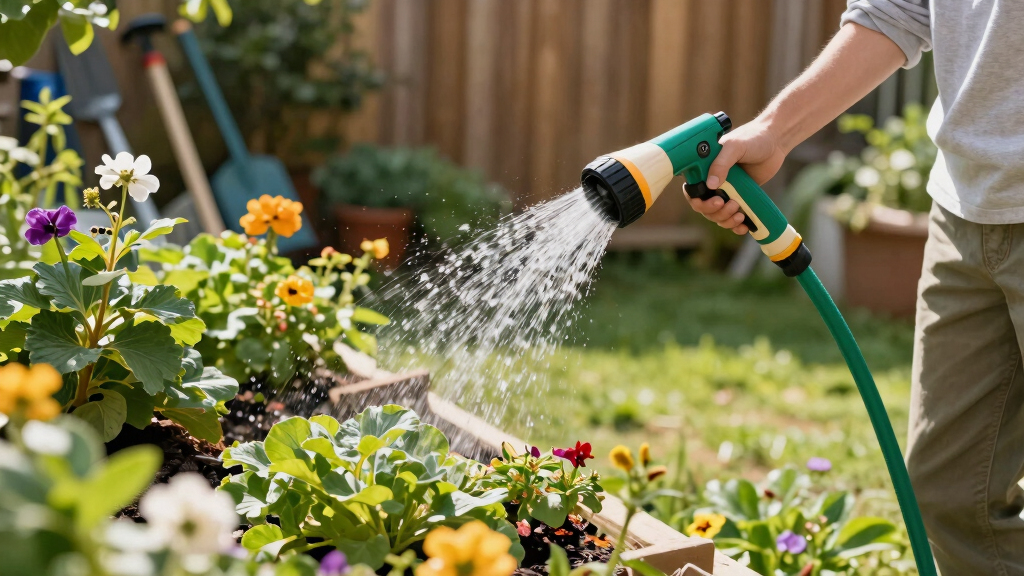
Watering wands and nozzles turn a garden hose into a versatile tool. Adjustable nozzles let you switch from a gentle mist for seedlings to a powerful jet for cleaning or tough weeds. Extendable wands help reach hanging baskets or high flower beds without straining your back.
For instance, a gardener with raised beds appreciates a wand with an ergonomic grip and multiple spray settings. It’s easier to control water flow precisely and avoid overwatering delicate plants.
Look for features like corrosion-resistant materials, lightweight design, and comfortable handles. These details keep watering effortless, especially during long sessions or in tricky spots.
As an affiliate, we earn on qualifying purchases.
Automate with Timers for Watering Without Worry
Water timers are game-changers, especially for busy days or when you’re away. Mechanical timers are simple, turning your hose on and off at set times. Digital and smart timers offer programmable schedules, rain delay features, and even remote control via apps.
For example, a homeowner with a busy schedule can set a timer to water early mornings, ensuring plants get a deep soak while saving water. Smart timers can adjust watering based on weather forecasts, preventing unnecessary runoff.
According to experts, timers can reduce water use by up to 50%, making them a smart investment for eco-conscious gardeners.
As an affiliate, we earn on qualifying purchases.
Compare Top Watering Tools to Find Your Perfect Match
| Feature | Rubber Hose | Expandable Hose | Vinyl Hose |
|---|---|---|---|
| Durability | High | Moderate | Low |
| Weight | Heavy | Light | Light |
| Kink Resistance | Excellent | Good | Fair |
| Storage | Bulkier | Compact | Compact |
This comparison helps you choose based on your priorities—whether durability, ease of storage, or weight matters most. Keep in mind that each type has trade-offs: rubber hoses are long-lasting but heavier, while expandable hoses are convenient but need gentle handling to prevent tears. Understanding these trade-offs allows you to select a tool that aligns with your gardening habits and maintenance preferences, ensuring your watering routine remains hassle-free and effective.
As an affiliate, we earn on qualifying purchases.
Keep Your Equipment in Shape with Simple Maintenance
Maintaining your watering tools prolongs their life and keeps your garden healthy. Drain hoses after use to prevent mold and bacterial growth, which can cause unpleasant odors and clogging. Regularly checking for leaks and cracks not only prevents water wastage but also ensures consistent water flow, avoiding uneven watering that can stress plants. Cleaning nozzles by soaking in vinegar dissolves mineral deposits that can clog spray patterns, maintaining even coverage. Proper storage—such as on reels or hooks—especially during winter, prevents hoses from cracking or becoming brittle from cold exposure. These maintenance habits might seem small, but over time, they significantly extend the lifespan of your equipment and keep your watering routine smooth and reliable.
Frequently Asked Questions
What is the best type of hose for my garden?
If you prioritize durability and long-term use, a rubber hose is your best bet. For ease of storage and lightweight handling, expandable hoses work well—just handle them gently to avoid tears. Match the hose to your garden size and water pressure for best results.
How do I choose the right nozzle or wand?
Look for adjustable spray patterns for versatility and ergonomic design for comfort. Extendable wands help reach high or distant plants without strain. Consider materials that resist corrosion and are lightweight for easy use during long watering sessions.
Are smart timers worth the investment?
Yes, especially if you want consistent watering without worry. Smart timers can adapt to weather changes, reduce water waste, and allow remote control. They are particularly useful for busy households or gardens with specific watering needs.
How often should I water my garden?
Early morning watering is ideal because it reduces evaporation and prepares plants for the day. Frequency depends on weather, soil, and plant type, but generally, deep infrequent watering promotes healthy roots. Keep an eye on moisture levels to avoid over- or underwatering.
What maintenance does my watering equipment need?
Drain hoses after use to prevent mold. Check for leaks and cracks periodically. Clean nozzles with vinegar to remove mineral buildup. Store hoses properly during winter, preferably on reels or hooks, to prevent damage and extend their lifespan.
Conclusion
Watering doesn’t have to be a daily chore fraught with fuss and frustration. The right combination of hoses, nozzles, and timers transforms a mundane task into a smooth, efficient routine. With just a few smart choices, you can enjoy healthier plants, conserve water, and save time.
Now, take a moment to evaluate your current setup. Could a small upgrade make your gardening life easier? Sometimes, the simplest tools lead to the biggest relief—and a more beautiful garden to enjoy.
NFL season / tailgating Picks
team gear
As an affiliate, we earn on qualifying purchases.