
TL;DR

Turn quiet afternoons into listening time
- Thousands of audiobooks, podcasts and originals
- Listen on your phone, tablet or Echo — also offline
- Cancel anytime
Gardening Know How’s October iris-care report recommends trimming only declining foliage, clearing debris, checking rhizomes for rot and dividing bearded irises only when local conditions allow. Mulch guidance differs by type: bearded iris rhizomes should generally remain exposed, while Siberian and Japanese irises can benefit from a light winter covering.
Gardening Know How has published an October care guide advising iris growers to prepare plants for winter by trimming declining leaves, clearing garden debris, inspecting rhizomes and deciding whether division is appropriate. The report focuses mainly on bearded irises, while noting that timing and mulch practices differ for Siberian and Japanese types.
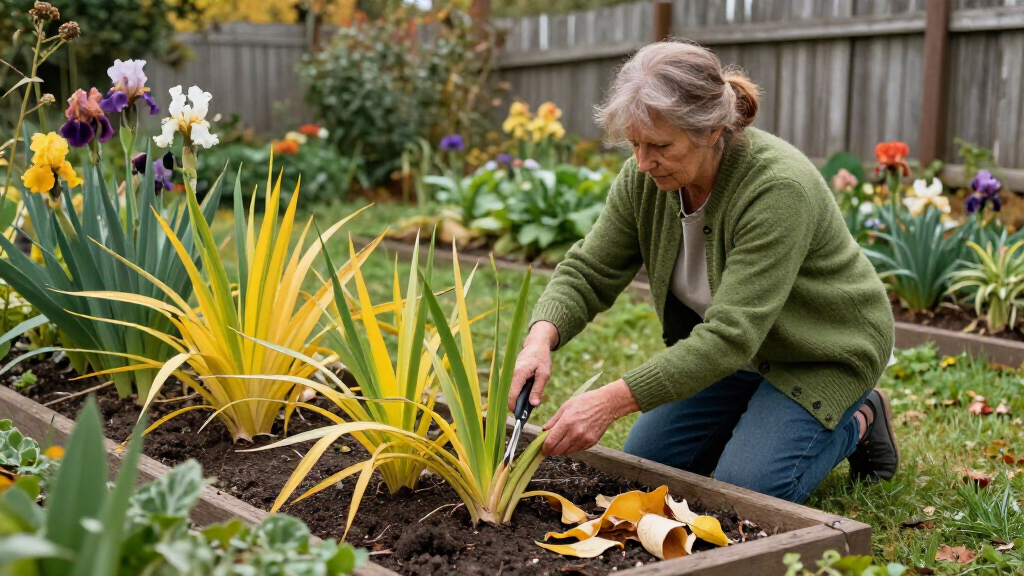
The report recommends cutting established bearded irises back to about 6 to 8 inches (15 to 20 centimeters) when foliage is yellowing or dying. It advises leaving healthy green leaves intact because they continue to gather energy for the plant. Gardeners in mild climates may need to wait longer before trimming.
It also recommends removing dead leaves, stems, weeds and other plant debris from around the plants. The article says debris can provide places for pests, including iris borer eggs, to overwinter and can restrict airflow. Diseased material should be discarded rather than composted, according to the guide.
Bearded iris rhizomes should be checked for soft, dark or foul-smelling areas that may indicate rot. The guide says to cut away affected tissue with a clean, disinfected blade, and to remove a severely rotted rhizome. It advises checking drainage if rot is widespread. Division may be possible for bearded irises in milder areas, but October may be too late in colder regions; the report recommends dividing Siberian and Japanese irises in spring.
Fall Care Can Reduce Winter Risks
These tasks address problems that can affect an iris while it is dormant and its prospects for growth the following season. Clearing plant debris and checking for rot help gardeners spot potential pest and moisture-related issues before winter. Leaving healthy foliage in place also avoids removing leaves that are still supporting the plant.
The advice is not one-size-fits-all. Bearded irises have rhizomes that sit near the soil surface and are vulnerable to excess moisture, so the guide cautions against covering them with a thick layer of mulch. Siberian and Japanese irises have different growing conditions, making iris type and local weather relevant to fall care decisions.
Products Worth Considering

Bose TV Speaker (2nd Gen) Compact Soundbar with Bluetooth and HDMI-ARC, Black

Bose S1 Pro+ Portable PA Speaker

LG C2 Series 65-Inch OLED evo 4K Smart TV (OLED65C2PUA, 2022)
As an affiliate, we earn on qualifying purchases.
Care Depends on Iris Type
Irises are early-season bloomers, and their foliage may look tired by October. The Gardening Know How report frames autumn care as preparation for dormancy, rather than a reason to remove every leaf or move every plant. Its instructions center on bearded irises, the type the article identifies as most commonly grown, and give separate timing notes for other varieties.
The report says fall can be a suitable time to divide bearded iris clumps, but the window varies by climate. It identifies zones 7 to 9 as areas where division may still be possible in October, while warning that colder regions may not leave enough time for divisions to establish before winter. Clumps with a bare center, crowded growth or fewer flowers can be marked for division after flowering next year.
For mulch, the report advises keeping bearded iris rhizomes near the surface and generally uncovered so they can stay dry. It says Siberian and Japanese irises may be covered lightly. The specific conditions of a garden, including drainage and winter severity, affect how these recommendations apply.
“October iris care is all about preparing plants for dormancy and ensuring they’ll emerge healthy and flowering next spring.”
— Gardening Know How
Local Conditions Set the Timing
The guide does not establish a single calendar date that works for every garden. The right time to trim or divide depends on local temperatures, plant condition and iris variety; the report notes that October may be too late for division in colder areas. It also does not provide a region-by-region schedule for frost or winter preparation.
The supplied source text begins its mulch discussion but ends before the full section is available. It states that bearded irises generally should not be mulched over and that Siberian and Japanese irises may be treated differently, but the full wording and any detailed qualifications are not included in the material provided. Readers should not infer further instructions from the incomplete passage.
Plan Spring Divisions Now
Gardeners can use October to remove debris, assess foliage and inspect bearded iris rhizomes, while delaying division if the local season is too advanced. The report recommends marking or photographing dense or underperforming clumps for attention after flowering next year. That gives growers a way to identify which plants may benefit from spring division without risking a late autumn move.
For the immediate winter period, the next steps are to keep bearded rhizomes from being buried under heavy mulch and to monitor drainage where rot has appeared. The source gives no later announcement or new research; its guidance is a seasonal set of gardening recommendations, not a report of a newly verified change in iris care.
Key Questions
Should I cut all iris leaves back in October?
No. Gardening Know How recommends trimming yellowing or dead foliage while leaving healthy green leaves intact. In mild climates, it may be best to wait until more leaves have declined.
Can I divide bearded irises in October?
It depends on climate. The report says division may still be possible in zones 7 to 9, but October may be too late in colder regions for plants to establish before winter.
Should irises be covered with mulch for winter?
The guide says bearded iris rhizomes should generally remain near the soil surface and not be covered with mulch, because excess moisture can contribute to rot. It says Siberian and Japanese irises may receive a light covering.
What should I do if an iris rhizome looks rotten?
The report recommends cutting away soft or dark affected tissue with a clean, disinfected blade. A severely rotted rhizome should generally be removed, and widespread rot is a reason to check whether water is pooling around the plants.
Source: rss