
TL;DR
Open a free Amazon Business account
Business pricing, bulk buying and tax-exempt orders.
Create a free accountAs an affiliate, we earn on qualifying purchases.
Transport chairs are lightweight, caregiver-operated options ideal for short trips or travel. Standard wheelchairs are sturdier, customizable, and better for daily, long-term use. Recent tech innovations make both more versatile and comfortable.
Imagine needing a quick lift into a taxi or a short trip around the mall. You might reach for a lightweight, easy-to-carry chair—something that’s designed for just that.
But if you’re planning to use a wheelchair every day, comfort, durability, and independence become more critical. Knowing the differences between a transport chair and a standard wheelchair can save you time, money, and frustration. In this guide, you’ll learn what sets these two apart, their recent innovations, and how to pick the right fit for your needs.
Transport chairs are perfect for quick trips and travel, thanks to their lightweight and foldable design.
Standard wheelchairs provide better support, comfort, and independence for everyday use.
Recent innovations like lightweight materials and power assist make both options more user-friendly.
Choosing the right wheelchair depends on your daily needs, mobility level, and travel habits.
Understand your lifestyle and priorities to pick the best fit—comfort, portability, or independence.
What exactly is a transport chair—and why does it matter?
A transport chair is a lightweight, caregiver-operated mobility aid designed for quick trips. Think of it as the lightweight sports car of wheelchairs—easy to fold, carry, and maneuver in tight spaces.
It usually features smaller rear wheels, fixed or semi-pneumatic, and no self-propulsion options. This makes it perfect for short distances, like moving through a busy airport or hopping into a friend’s car.
Understanding the importance of a transport chair lies in its ability to facilitate mobility without the bulk or complexity of a standard wheelchair. They are ideal for situations where portability and ease of use are prioritized over long-term comfort or independence. However, this tradeoff means they are less suitable for extended daily use because they lack features like adjustable support or cushioning, which can impact user comfort and safety over time.
As an affiliate, we earn on qualifying purchases.
What makes a standard wheelchair different—and why it might be your daily companion
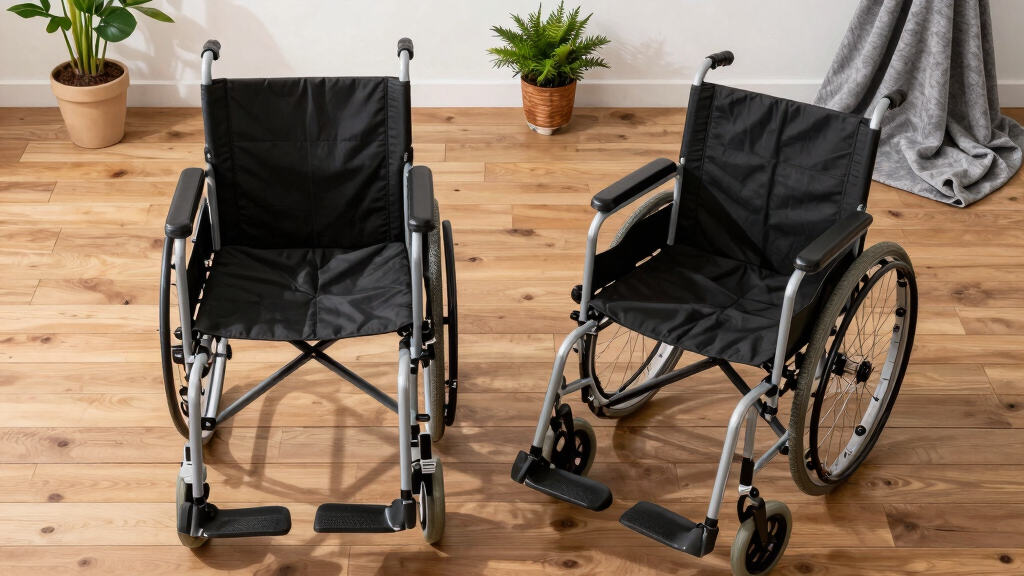
A standard wheelchair is built for longer use—more comfort, durability, and independence. It features larger rear wheels with hand rims, allowing the user to self-propel if able.
Think of it as the SUV of wheelchairs—robust, customizable, and designed for daily journeys. Many models include adjustable footrests, reclining backs, and cushioned seats for comfort during extended wear.
Choosing a standard wheelchair means investing in a device that supports sustained mobility and daily routines. Its sturdy construction translates into better weight distribution and stability, which can reduce fatigue and the risk of injury. The ability for the user to self-propel enhances independence, but it also requires a certain level of strength and coordination. The tradeoff is that standard wheelchairs are heavier and less portable, which might be a concern for those needing frequent transfers or travel. The customization options allow users to tailor their seating and support, directly impacting comfort, pressure relief, and overall health.
standard wheelchair with adjustable footrests
As an affiliate, we earn on qualifying purchases.
As an affiliate, we earn on qualifying purchases.
How to choose between a transport chair and a standard wheelchair in 3 easy steps
- Assess your lifestyle: Do you need something for quick errands or daily independence? Consider how often and in what contexts you’ll need mobility support. Frequent short trips might favor a transport chair, while daily routines may require a standard wheelchair.
- Consider portability: Will you travel frequently? Is weight a concern? Heavier chairs can be more durable but less convenient for travel. Lightweight options improve ease of handling but might sacrifice some features or durability.
- Evaluate comfort and features: Do you need adjustable support, cushions, or self-propulsion? These features can significantly affect comfort, pressure distribution, and independence. Prioritize features that align with your health needs and lifestyle goals.
For example, someone who travels often and needs a compact, easy-to-fold chair will lean toward a transport chair. Conversely, someone with mobility challenges requiring daily support and comfort might prefer a standard wheelchair, even if it’s less portable. Carefully consider these factors to ensure your choice enhances mobility and quality of life without unnecessary compromises.
As an affiliate, we earn on qualifying purchases.
Latest innovations making both options better than ever
Recent developments have transformed these mobility aids. Lightweight materials like carbon fiber reduce weight by up to 30%, making chairs easier to lift and maneuver. Foldable designs now fit comfortably into compact trunks, perfect for travel.
Some manual wheelchairs now feature power assist technology—small motors that help with self-propulsion—giving independence a boost without sacrificing portability. These innovations can reduce fatigue and extend the usability of manual chairs, making them more suitable for longer or more demanding use.
Smart features like Bluetooth connectivity and sensors are emerging, offering real-time diagnostics and enhanced safety. Imagine a lightweight chair with a built-in GPS or health monitoring—more tech, less hassle. These features can help caregivers monitor the user’s health and location, providing peace of mind and enabling timely interventions, thus improving safety and independence.
As an affiliate, we earn on qualifying purchases.
Frequently Asked Questions
Can I use a transport chair for everyday activities?
While you can, transport chairs are designed primarily for short trips and caregiver assistance. For daily use, a standard wheelchair offers more comfort, support, and independence.Are transport chairs safe for long-term use?
Transport chairs are not built for long-term daily use—they lack features like adjustable support and cushioned seats. For extended wear, a standard wheelchair is generally safer and more comfortable.How do I decide which wheelchair fits my lifestyle?
Assess your daily routine, travel frequency, and mobility needs. If you need something light and portable for quick trips, a transport chair works well. For ongoing, daily mobility and support, a standard wheelchair is a better choice.Are powered wheelchairs better than manual ones?
Powered wheelchairs provide independence without physical effort but tend to be more expensive and heavier. Manual wheelchairs, including both transport and standard types, are lighter and cheaper but require user strength or caregiver assistance.Conclusion
Picking between a transport chair and a standard wheelchair isn’t about one being better—it’s about what fits your life best. Lightweight, portable transport chairs excel for quick outings, while sturdy, customizable standard wheelchairs support daily routines with ease.
Remember, technology is making both smarter and more comfortable. Your choice should empower your independence, dignity, and safety—making mobility a part of life, not a hurdle to overcome.
NFL season / tailgating Picks
team gear
As an affiliate, we earn on qualifying purchases.