
TL;DR
Open a free Amazon Business account
Business pricing, bulk buying and tax-exempt orders.
Create a free accountAs an affiliate, we earn on qualifying purchases.
To find the right cane height, measure from the floor to the wrist crease with your arm relaxed at your side. Proper fit promotes stability and reduces fall risk. Adjustable canes offer flexibility, but individual measurement remains key.
Imagine walking with a cane that feels just right — not too tall, not too short. It’s a simple tool, but its impact on your balance and confidence can be profound. Getting the height right isn’t guesswork; it’s about understanding your body and making a few quick measurements.
Whether you’re new to using a cane or want to double-check your current one, knowing how to measure correctly can make a real difference. You’ll stand taller, move more securely, and avoid unnecessary strain. Let’s walk through how to get it just right — no fancy tools needed, just a tape measure and a mirror.
Use the wrist crease method for accurate cane height measurement—stand tall and relaxed for best results.
Adjustable canes offer flexibility, but proper initial measurement remains essential for safety.
Re-measure your cane every few months or after any change in your mobility or body to stay safe.
Avoid guessing based on height alone; arm length and posture matter more.
Regularly checking and adjusting your cane can prevent discomfort and falls.
Find the cane height that supports your balance, posture, and confidence.
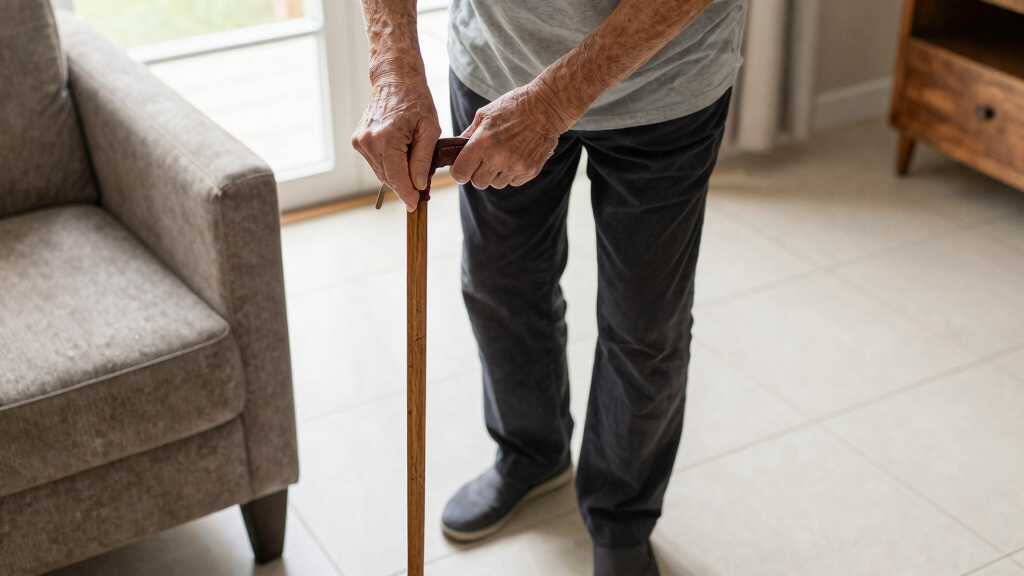
Measure from the floor to your wrist crease while standing naturally with your shoes on and your arm relaxed at your side. The top of the cane should meet that point, giving your elbow a gentle 15 to 20 degree bend.
The wrist crease is more reliable than guessing from overall height because it reflects your own arm length and posture.
A slight bend helps reduce shoulder hunching, forward leaning, and extra strain during walking.
Proper cane fit promotes stability, steadier gait, and a lower risk of falls.
Measure straight up to the natural wrist crease.
Shoes on, shoulders relaxed, arms at your sides.
Your elbow should not lock straight or over-flex.
Re-measure after mobility, pain, or posture changes.
Three moves to get the height right.
No special tools are needed. A tape measure, your regular walking shoes, and a mirror are enough to find a safe starting height.
Stand naturally
Wear your usual shoes. Keep your shoulders relaxed, arms hanging loosely, and posture upright.
Measure the wrist
Run the tape measure from the floor to the crease where your wrist naturally bends.
Set the cane
Align the handle with that wrist crease. Your elbow should bend comfortably about 15 to 20 degrees.
Why wrist height beats guesswork
Two people can share the same overall height but have different arm lengths, torso proportions, or posture. Wrist measurement personalizes the fit so the cane supports your natural stance instead of forcing you to adapt to the cane.
Small height errors can change your whole gait.
A cane that is too tall may lift your shoulder and disturb balance. A cane that is too short may pull you forward and strain your back, wrist, and arm.
What the right fit should feel like
The cane should feel like a steady extension of your arm. You should be able to stand tall, place weight through the handle smoothly, and walk without shrugging, leaning, or reaching.
- ✓Elbow stays gently bent, not locked.
- ✓Shoulder remains relaxed and level.
- ✓Stride feels smooth instead of forced.
Common measuring mistakes
Using height alone
Total body height misses arm length, torso length, and posture differences.
Slouching
Poor posture while measuring can create a cane that is too short or too tall.
Ignoring comfort
If the number feels wrong during use, recheck the fit and make a small adjustment.
Fixed height or adjustable cane?
Adjustable canes are flexible, but the first measurement still matters. Start from your wrist crease, then fine-tune for comfort and stability.
| Feature | Fixed-Height Cane | Adjustable Cane | Fit Signal |
|---|---|---|---|
| Ease of use | ~ Requires precise measurement before purchase. | ✓ Can be changed by the user as needs shift. | Best when the wrist measurement is already known. |
| Flexibility | ✗ Limited to one height after selection. | ✓ Multiple height settings allow small adjustments. | Helpful after changes in shoes, posture, pain, or mobility. |
| Ideal user | ✓ Good for stable, long-term needs once fitted. | ✓ Good for changing needs or uncertain fit. | Comfort and balance matter more than the cane type. |
| Risk if misfit | ~ Harder to correct without replacement. | ~ Easy to adjust, but still unsafe if set wrong. | Recheck if walking feels awkward or strained. |
Practical rule: if your wrist crease measures 35 inches from the floor, set the cane handle at 35 inches first. Then hold it and confirm that your elbow bends gently without shoulder lifting or forward leaning.
From measurement to safer walking.
The right cane height connects a simple body measurement to steadier movement, better alignment, and less unnecessary strain.
Measure
Floor to wrist crease while standing naturally.
Align
Cane handle meets the wrist crease.
Bend
Elbow rests at about 15 to 20 degrees.
Stabilize
Weight distributes more evenly as you walk.
Recheck
Adjust after mobility, comfort, or posture changes.
Why Your Cane’s Height Matters for Safety and Comfort
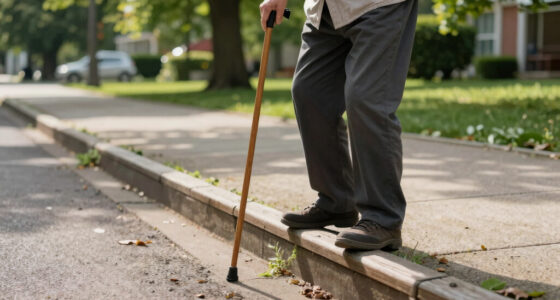
A cane that’s too tall or too short isn’t just uncomfortable — it can actually increase your risk of falling. When the cane is too high, your shoulder hunches, causing imbalance. Too low? You’ll lean forward, straining your back and arms. The right height helps you stand tall, walk steadily, and keep your weight evenly distributed.
Beyond comfort, improper cane height can lead to muscle strain, joint discomfort, and fatigue over time—especially if you’re using the cane frequently. An ill-fitting cane can also cause compensatory movements that throw off your gait, increasing the risk of trips or falls. Properly fitting your cane ensures that your body maintains natural alignment, reducing the likelihood of pain and injury. For example, a woman in her 70s noticed she felt more stable after adjusting her cane. It turned out her previous cane was a few inches too short, making her lean forward and stumble sometimes. Once she measured and adjusted it, her confidence soared.

REHAND Walking Cane – Foldable, Adjustable, Collapsible Walking Canes for Men & Women, Heavy Duty All Terrain Tip, with Travel Bag | Walking Sticks for Seniors & Adults (Natural Black)
- Adjustable Height Range: Fits users from 5' to 6'5''
- Customizable Height: 8 adjustable settings in 1-inch increments
- Ergonomic Handle Design: Longer, wider handle for comfort and support
As an affiliate, we earn on qualifying purchases.
As an affiliate, we earn on qualifying purchases.
Step-by-Step: How to Measure Your Cane Height in 3 Easy Moves
- Stand upright naturally, with your shoes on and arms relaxed at your sides. Use a mirror if needed to check your posture. Standing correctly ensures your measurements reflect your typical stance, which is crucial because posture variations can lead to improper cane height. Slouching or leaning can artificially shorten or lengthen your arm position, resulting in a cane that doesn’t support your natural balance.
- Measure from the floor to your wrist crease. Use a tape measure, and keep it straight as you measure from the ground up to where your wrist naturally bends when your arm hangs loosely. This spot reflects your arm’s true length in a relaxed, natural position, which is essential because it accounts for individual differences in arm and torso proportions. A mismatch can cause discomfort or instability, especially over extended periods of walking. For instance, if your wrist crease is at 35 inches from the floor, that’s your target height. A quick test: hold the cane at that height and see if your elbow feels comfortable and slightly bent, which indicates a good ergonomic fit.
- Set your cane. The top of the cane should align with that wrist crease, allowing your elbow to bend slightly — about 15 to 20 degrees. This slight bend is important because it provides a natural arm position that minimizes fatigue and muscle strain, especially during prolonged use. If the cane is too high or too low, you might compensate by leaning or adjusting your posture, which can lead to discomfort or imbalance over time.
For example, if your wrist crease is at 35 inches from the floor, that’s your ideal cane height. When you hold the cane at that height, your elbow should bend gently, not lock straight or be overly flexed. This balance helps maintain proper posture, distributes your weight evenly, and keeps your gait smooth, reducing the risk of falls and joint strain.

Adamson Portable Stadiometer Height Measurement Tool – Measures 8–82 in / 20–210 cm, Freestanding Height Measuring Stick for Adults & Kids, Medical & Professional Use
- Accurate Height Measurement: Precise readings from 8 to 82 inches
- Freestanding & Stable: Wide base for stability, no wall needed
- Portable & Easy to Use: Lightweight, simple assembly, ideal for various settings
As an affiliate, we earn on qualifying purchases.
As an affiliate, we earn on qualifying purchases.
Why a Simple Wrist Measurement Works Better Than Guesswork
Measuring from your wrist crease isn’t just convenient — it’s accurate because it directly relates to your body’s proportions. Unlike height-based guesses, which can be misleading due to differences in torso length, arm length, or posture, wrist measurement considers your unique anatomy. This personalized approach ensures the cane aligns with your natural stance, which is critical for maintaining balance and reducing fatigue during walking.
Imagine a man who thought his cane should be “about his height.” After measuring his wrist crease at 36 inches, he realized his previous cane was 4 inches too tall, causing him to lean forward. Correcting the length made walking smoother and safer. This method reduces the tradeoff between convenience and accuracy, allowing you to quickly find a comfortable, supportive fit without guesswork that could compromise safety or cause discomfort over time.

REHAND Walking Cane for Men & Women – Foldable, Adjustable, Lightweight, Self Standing Pivot Walking Cane, Soft Handle Grip, with Travel Bag, Walking Sticks for Seniors & Adults (Black)
- Ergonomic Handle for Comfort: Wider, longer handle reduces pressure
- Soft TPR Grip: Minimizes palm fatigue during walks
- Wrist Strap Included: Prevents cane from falling off
As an affiliate, we earn on qualifying purchases.
As an affiliate, we earn on qualifying purchases.
Adjustable Canes: Flexibility or a Fitting Challenge?
| Feature | Fixed-Height Cane | Adjustable Cane |
|---|---|---|
| Ease of Use | Requires precise measurement; no change after purchase | Can be easily adjusted by the user, offering convenience when needs change |
| Flexibility | Limited to one height, which must be measured accurately before purchase | Multiple height settings for different needs, making it adaptable as your mobility fluctuates |
| Ideal For | Stable, long-term use once measured correctly | Users with changing needs, or those unsure of their exact measurement, benefit from the adjustability |
If you’re still unsure about your perfect height, an adjustable cane offers a simple solution. You can fine-tune it at home, making small tweaks as your mobility or comfort levels shift. However, while adjustability provides convenience, the initial measurement remains critical because setting it too high or low initially can lead to discomfort or improper support, which compromises safety. Properly measuring first ensures that even when adjustable, your cane is set to the optimal starting point for your body.

CLOKTA Folding Cane, 5-Level Adjustable Height Lightweight Portable Foldable Walking Canes with Wrist Strap and T Handle for Men Women Seniors (Floral Green)
- Compact and Portable: Folds to 10.24 inches for travel
- Lightweight and Adjustable: Made of durable anodized aluminum, 5 height options
- Ergonomic Hand Grip: Contoured grip reduces fatigue and pressure
As an affiliate, we earn on qualifying purchases.
As an affiliate, we earn on qualifying purchases.
Common Mistakes to Avoid When Measuring Your Cane
- Using height alone: Your total height doesn’t tell the full story of arm length and posture. Relying solely on height ignores individual differences in torso and limb proportions, which are crucial for optimal cane fit. For example, two people of the same height can have very different arm lengths, leading to one being uncomfortable or unstable with the same cane height. Recognizing this prevents ill-fitting canes that cause discomfort or imbalance, which can increase fall risk over time.
- Measuring while slouching or leaning: Stand tall, relax your shoulders for an accurate measure. Poor posture during measurement can lead to a cane that is too long or too short, as slouching shortens your perceived arm length. This misfit may cause you to lean forward or backward during walking, increasing fatigue and reducing stability. Proper posture ensures the measurement reflects your natural stance, promoting better support and comfort.
- Ignoring comfort: If the measurement feels off when you try the cane, recheck your measurement or try a different height. Comfort isn’t just about a number; it’s about how your body responds during use. A cane that feels awkward or causes strain indicates a mismatch, which could lead to poor gait and increased fall risk. Always test the cane in a walking scenario before settling on a height, and adjust as needed to ensure natural, pain-free movement.
- Overlooking regular updates: Your needs change — re-measure every few months or if you notice discomfort. As your body changes due to aging, injury, or health conditions, your ideal cane height may shift. Ignoring these changes can result in suboptimal support and increased risk of falls. Regular re-measurement ensures your cane continues to serve its purpose effectively, maintaining safety and comfort over time.
For example, a caregiver once adjusted her mother’s cane based on height alone. It was too short, causing her to lean forward. Re-measuring with wrist method fixed the issue quickly, illustrating the importance of accurate, body-specific measurement for ongoing safety.
When Should You Re-Measure and Re-Adjust Your Cane?
Your body changes over time. If you notice increased discomfort, new pain, or your gait feels uneven, it’s time to re-measure. For example, after recovering from a minor injury, a woman found her previous cane height no longer felt right. Re-measuring restored her confidence and safety. Recognizing these signs early prevents unnecessary strain or falls and keeps your mobility safe and effective.
Typically, it’s good practice to check your cane height every 3 to 6 months, or after any significant change in your mobility or body condition. Regularly updating your measurement ensures your support device adapts to your current needs, preventing discomfort and reducing fall risk over time.
Frequently Asked Questions
How do I know if my cane fits properly?
The cane should let your elbow bend slightly (about 15-20 degrees) when you hold it at your side with a relaxed posture. You shouldn’t have to lean or hunch over to use it.
Can I measure my cane myself, or do I need help?
Measuring yourself with a tape measure and a mirror is simple and accurate. However, a professional assessment can ensure the best fit, especially if you have specific mobility concerns.
What if my height changes over time?
Body changes happen, so re-measuring every few months or after a health change helps keep your cane just right. Adjust or replace your cane as needed for ongoing safety and comfort.
Are there specific measurements for men or women?
No, the key is arm length and body proportions, which vary individually. Measure from your floor to your wrist crease for the best fit regardless of gender.
What if I experience shoulder or arm pain using my cane?
Stop using it and consult a healthcare professional. Your cane might need adjustment, or you might need an alternative mobility device that better suits your needs.
Conclusion
Getting your cane height right isn’t about guesswork — it’s about paying attention to your body’s signals. A properly fitted cane keeps you upright, balanced, and confident with every step.
Remember, a small adjustment today can lead to a safer, more comfortable tomorrow. Take a moment to measure — your stability might depend on it.
Grilling season Picks
grills
As an affiliate, we earn on qualifying purchases.