TL;DR
Open a free Amazon Business account
Business pricing, bulk buying and tax-exempt orders.
Create a free accountAs an affiliate, we earn on qualifying purchases.
Bathing assistance can be respectful and dignified by focusing on consent, privacy, communication, and safety. Tailoring help to individual preferences preserves independence and self-esteem, even during challenging times.
Bathing is one of those deeply personal routines. It’s not just about cleanliness—it’s about feeling comfortable, respected, and in control. When age, illness, or disability make bathing difficult, the challenge is helping without stripping away dignity.
This guide reveals simple, effective ways to support loved ones, keeping their independence and privacy front and center. Because everyone deserves to feel valued—even during the most intimate moments.
Always start with consent and offer choices to empower the person.
Privacy and respectful communication are essential for dignity.
Safety features like grab bars and non-slip mats protect without feeling clinical.
Use graduated assistance to support independence as much as possible.
Be aware of and adapt to cultural, personal, and trauma-related needs.
Bathing Assistance Without Losing Dignity
Bathing is more than cleanliness. It is a deeply personal routine shaped by privacy, identity, comfort, and control. The best assistance protects safety while helping the person remain an active participant in their own care.
At a glance / five essentials
Dignity is built into every small decision
When illness, disability, pain, fatigue, or cognitive change makes bathing difficult, respectful support keeps privacy and autonomy front and center.
Ask, explain, pause
Never assume agreement. Describe what will happen and ask before touching or moving.
Cover and protect
Close doors, reduce interruptions, and expose only the area being washed.
Support, not restrict
Use well-chosen equipment that reduces risk without making care feel institutional.
Help only as needed
Retained abilities matter. Let the person complete every step they safely can.
Honor preferences
Respect culture, gender, products, routines, modesty, and trauma-related needs.
Step by step / collaborative routine
A dignity-preserving bathing sequence
Preparation reduces exposure, uncertainty, and risk. Keep the person informed and involved from the first conversation through dressing and comfort afterward.
Discuss
Ask about timing, method, caregiver preference, products, and what help is wanted.
Prepare
Warm the room and place towels, clothing, soap, and equipment within reach.
Check
Assess pain, fatigue, dizziness, transfers, water temperature, and fall hazards.
Assist
Explain each action, protect coverage, and provide only the help required.
Review
Check comfort and skin, then document preferences that will improve next time.
Useful language
that returns control
“Would you prefer a shower or a sink wash?”
“Is it okay if I help with your back now?”
Core practice / human-centered care
Six ways to make help feel respectful
Good assistance is calm, predictable, discreet, and tailored to the person rather than the convenience of a routine.
Offer meaningful options
Let the person choose bath, shower, sink wash, timing, water temperature, music, products, and which tasks to do alone.
Choice must be real, not merely ceremonial.Prepare before exposure
Close doors and curtains, limit observers, use a robe or bath blanket, and keep supplies close enough that no one is left exposed.
Cover everything except the area being washed.Speak adult to adult
Use neutral language. Avoid baby talk, teasing, criticism, or discussing intimate care as though the person is absent.
Silence is not always consent.Read nonverbal cues
Freezing, pulling away, grimacing, guarding, or agitation may signal pain, fear, cold, confusion, or a wish to stop.
Pause first; investigate second.Respect personal routines
Honor modesty, gender preferences, cultural or religious washing practices, familiar products, and lifelong schedules.
Care plans should reflect the individual.Keep care predictable
Use the same trusted caregiver where possible, announce actions before they happen, and allow breaks without pressure.
Predictability lowers distress and builds cooperation.Independence scale / least intrusive first
Graduate assistance instead of taking over
Begin with the lightest safe level of support. Move up only when the person’s ability, comfort, or safety makes additional help necessary.
Safety comparison / equipment choices
Protect without making care feel clinical
Thoughtful equipment can reduce falls, burns, exhaustion, and unsafe movement while allowing the person to participate more independently.
| Measure | Safety value | Dignity value | Use with care |
|---|---|---|---|
| Wall-secured grab bar | ✓Stable support | ✓Enables self-directed movement | Install at the right height and position. |
| Shower chair or transfer bench | ✓Reduces fatigue and fall risk | ✓Supports independent washing | Check fit, stability, and transfer method. |
| Handheld showerhead | ✓Limits unnecessary movement | ✓Offers control and targeted rinsing | Confirm water pressure and temperature. |
| Non-slip flooring or mat | ✓Improves traction | ✓Unobtrusive protection | Keep flat, clean, and securely positioned. |
| Anti-scald control | ✓Reduces burn risk | ✓Supports safer self-use | Still ask the person about comfort. |
| Suction grab bar | ~May shift or detach | ~Can create false confidence | Do not assume it supports body weight. |
| Towel rail or soap dish | ✗Not designed as support | ✗Failure can cause injury and fear | Never use as a substitute for a grab bar. |
✓ Recommended benefit ~ Requires caution ✗ Unsafe as weight-bearing support
Warmth matters
A warm room, warm towels, and efficient preparation reduce discomfort, fatigue, and resistance.
Training matters
Caregivers should not attempt lifts or transfers beyond their training or physical ability.
Assessment matters
An occupational-therapy home-safety assessment can match equipment to the person and space.
Trauma-informed bathing / emotional safety
Distress is communication—not defiance
Bathing may trigger memories of abuse, assault, forced care, institutionalization, or medical trauma. A calm response protects both emotional and physical safety.
Stop and check in
Ask what feels wrong and whether the person wants a break.
Restore choice
Offer another method, time, caregiver, or level of help.
Reduce stimulation
Minimize exposure, observers, noise, and sudden movement.
Build predictability
Use familiar steps and the same trusted caregiver where possible.
If hygiene is not immediately medically necessary: pause, allow recovery, and try a different approach later. Never use threats, humiliation, or force.
Traceability / how dignity grows
Respect creates a safer care relationship
The practical actions are connected. Each one strengthens the next, turning an intimate task into a collaborative routine.
Ask
Consent establishes control.
Protect
Privacy reduces vulnerability.
Listen
Communication reveals needs.
Support
Graduated help preserves ability.
Trust
Respect improves future care.
The goal is not simply a completed bath.
The goal is safe, comfortable care in which the person remains heard, covered, involved, and valued—even when substantial assistance is necessary.
Ask permission.
Explain the step.
Offer a choice.
Watch the response.
How to Ask Permission and Give Choices Without Embarrassment
Starting with permission and offering choices puts control back into the person’s hands. It might be as simple as, “Would you like a shower or a sponge bath today?” or “Would you prefer to do part of this yourself?”
Imagine helping a parent who feels self-conscious. When you ask, “Is it okay if I help with your back now?” they feel respected. Giving options—water temperature, music, or timing—turns a task into a collaborative effort.
Research shows that when older adults retain control, they experience less distress and more dignity. It’s about shifting from ‘doing for’ to ‘doing with.’ This approach fosters cooperation, reduces feelings of helplessness, and helps maintain a sense of independence. When people feel they have a say, they’re more likely to engage willingly, which can also make the process safer and more comfortable for everyone involved.

TAILI Grab Bars for Shower,Suction Shower Handles Rails,2 Pack,16.8",Grey
- Suitable Wall Types: Works on smooth, non-porous surfaces only
- Easy Installation: Includes 2 suction cups with locking latches
- Removable and Reusable: No wall damage during installation or removal
As an affiliate, we earn on qualifying purchases.
As an affiliate, we earn on qualifying purchases.
Protect Privacy Like a Pro—Simple Steps to Keep It Intact
Privacy is key to dignity. Close the door, pull the curtain, and keep the person covered whenever possible. A large towel or bath blanket can hide everything not being washed.
For example, during a shower, keep the person covered with a towel until they’re ready, then expose only the area being rinsed. Speaking softly and avoiding conversations about their body in front of others helps maintain respect.
Preparation matters, too. Have all supplies ready so there’s no need to leave someone exposed or unattended. These small steps can keep dignity intact during an intimate routine.
Maintaining privacy isn’t just about covering up; it’s about creating a sense of safety and control. When privacy is respected, individuals often feel more comfortable and less vulnerable, which can reduce anxiety and resistance. Conversely, neglecting privacy can lead to embarrassment, shame, or feelings of powerlessness, making future care more difficult. Therefore, safeguarding privacy directly supports emotional well-being and fosters trust in the caregiver-patient relationship.
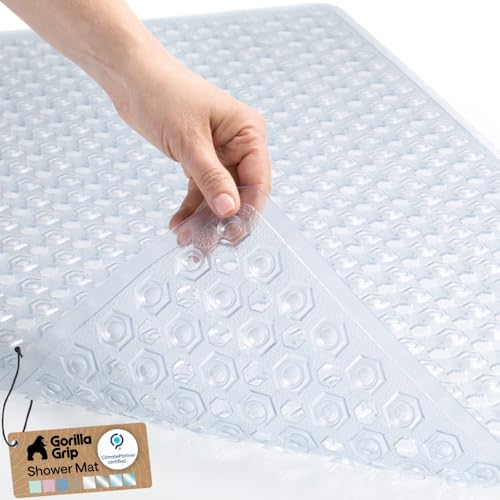
GORILLA GRIP Patented Bath Tub Shower Mat, Machine Washable Bathtub Floor Liner Mats, Suction Cups and Drain Holes to Keep Tubs Clean, Soft on Feet, Bathroom Essentials, 35×16 Inch, Clear
- Patented Design with Suction Cups: Securely stays in place with powerful suction
- Easy Water Drainage: Drain holes prevent water pooling
- BPA-Free and Textured: Soft, pebble-textured surface for comfort
As an affiliate, we earn on qualifying purchases.
As an affiliate, we earn on qualifying purchases.
Respectful Communication—How to Talk During Bathing
Using respectful, adult language is a must. Instead of baby talk or teasing, describe each step clearly: “Now I will rinse your hair,” or “Would you like to wash your face first?”
Ask about pain, temperature, or fatigue—“Are you feeling okay?” or “Is the water too hot?”
Remember, silence doesn’t always mean consent. If someone looks uncomfortable or pulls away, pause and check in. Clear, kind communication builds trust and keeps the experience safe and respectful.
Effective communication during bathing isn’t just about words; it’s about reading cues and responding empathetically. When you speak respectfully, it encourages cooperation and reassures the person that their comfort and feelings are priorities. This can be especially important for those with cognitive impairments or sensory sensitivities, who may not always verbalize discomfort. The goal is to create an environment where the individual feels heard, understood, and in control, which ultimately supports their dignity and emotional safety.
As an affiliate, we earn on qualifying purchases.
How to Keep Bathing Safe Without Losing Your Mind
Safety measures are essential, but they shouldn’t make the person feel like they’re in an institution. Use non-slip mats, grab bars, and a shower chair if needed. Good lighting and a warm room reduce fears of falling or being cold.
Imagine a caregiver helping a loved one with a transfer. Using a transfer bench and a secure grab bar can prevent falls. A handheld showerhead allows rinsing without moving too much.
These tools protect both caregiver and loved one, balancing safety with dignity.
Understanding the balance between safety and dignity is crucial. Overly restrictive safety devices can make the person feel confined or infantilized, which can lead to resistance or emotional distress. On the other hand, neglecting safety can result in falls, injuries, or other accidents that compromise health and dignity. The key is to select and use safety equipment thoughtfully—prioritizing features that are unobtrusive, easy to use, and suited to the individual’s needs. This way, safety measures support independence and dignity rather than undermine them.
As an affiliate, we earn on qualifying purchases.
Using the Least Intrusive Help to Boost Independence
Assistance should be scaled to the person’s needs. Start simple—set out supplies, give reminders, or help with tricky spots like feet or hair. If they can do some tasks, support that effort.
Gradually increase help only when necessary: help with transfers or using adaptive equipment, then full bathing only if needed. For example, helping someone wash their face or dry after a partial wash keeps dignity while ensuring cleanliness.
This ‘do with, not for’ approach isn’t just about convenience; it’s about empowering the individual to maintain as much independence as possible. When help is too intrusive or comes too early, it can diminish confidence and foster dependence. Conversely, providing only as much assistance as necessary encourages autonomy, promotes self-esteem, and can reduce feelings of helplessness. Recognizing the right moment to step in is a skill that improves with experience and understanding of the person’s capabilities and preferences.
Honoring Personal and Cultural Preferences During Bathing
Everyone has their own standards of modesty and routines. Some prefer same-gender caregivers; others have specific bathing products or rituals. Respecting these choices makes the experience more comfortable.
For example, a person might prefer to wash only with fragrance-free soap or want a quick rinse instead of a full shower. Document these preferences and do your best to honor them.
Understanding and respecting personal and cultural preferences isn’t merely about compliance; it’s about acknowledging individual identity and fostering trust. When caregivers ignore these preferences, it can cause discomfort, resistance, or feelings of disrespect. Conversely, honoring them affirms the person’s dignity and can improve cooperation, making bathing a more positive experience. It also demonstrates cultural sensitivity, which is especially important in diverse communities or for individuals with specific religious or cultural practices. The tradeoff is often a bit more planning and communication, but the emotional and relational benefits are well worth it.
Trauma-Informed Bathing—Safeguarding Emotional Well-Being
Bathing can trigger distress for those with past trauma or abuse. Signs include freezing, agitation, or withdrawal. Recognizing these reactions is key to offering respectful care.
Use a calm voice, give choices, and avoid sudden movements. Allow the person to stop at any time and stick to routines they find familiar.
Trauma-informed care is about creating a safe environment that reduces the risk of retraumatization. This approach emphasizes patience, predictability, and empowerment. For instance, allowing the person to choose the order of washing or to pause whenever needed can help rebuild feelings of control. It’s essential to recognize that trauma responses are deeply rooted and may manifest subtly; understanding these signs enables caregivers to respond compassionately and adapt their approach accordingly. This sensitivity not only prevents emotional harm but also fosters trust and cooperation, making the bathing experience less intimidating and more supportive of recovery and resilience.
Understanding and Addressing Resistance in Dementia
Refusal to bathe isn’t stubbornness—it’s often a sign of fear, confusion, or sensory overload. Recognizing this helps caregivers respond with patience.
Help by choosing calm times, following routines, and using familiar products or music. If they resist, offer a wash at the sink or try again later. Respect their cues and avoid arguing, which can escalate distress.
Understanding the reasons behind resistance allows caregivers to approach bathing with empathy and flexibility. For example, a person with dementia may associate the shower with a distressing experience or feel overwhelmed by unfamiliar surroundings. Recognizing these cues and adjusting the environment—such as using familiar scents, calming music, or a familiar routine—can reduce anxiety. Small, respectful interventions, like offering a different method or breaking the process into steps, often lead to better cooperation. This understanding helps caregivers balance safety with emotional comfort, ensuring the individual’s dignity remains intact even in the face of resistance.
Skin and Hygiene—How to Care Without Causing Harm
Older skin is delicate. Use warm water, gentle products, and pat dry—not rub. Focus on cleaning skin folds carefully, and moisturize to prevent dryness.
Watch for redness, sores, or signs of infection. If skin looks irritated or painful, seek professional advice.
For example, after a bath, applying a gentle moisturizer can prevent skin tears. Respecting skin health preserves comfort and dignity.
Proper skin care isn’t just about cleanliness; it’s about preventing injuries and discomfort that can diminish quality of life. Using gentle products and techniques minimizes trauma to fragile skin and reduces the risk of tears, infections, or pressure sores. Regular monitoring and early intervention when issues arise are essential, as skin problems can quickly worsen if overlooked. Taking a mindful, skin-friendly approach supports overall health and helps maintain a person’s sense of well-being and dignity.
When and How to Switch from Full Baths to Partial Washing
Full daily baths aren’t necessary for everyone and can dry out sensitive skin. Instead, focus on key areas—face, underarms, groin, and skin folds—more often.
Alternatives include sponge baths, no-rinse wipes, or wash-and-dry toilets. For example, a person with fragile skin might do a quick rinse of their face, hands, and underarms daily, with full baths weekly or as needed.
This approach balances hygiene with skin health and comfort.
Choosing partial washing routines can reduce skin irritation, conserve energy, and make bathing less burdensome. It’s important to assess individual needs, preferences, and skin condition to determine the most appropriate routine. Transitioning gradually and explaining the reasons can help the person understand and accept these changes, maintaining their dignity and hygiene without unnecessary discomfort or risk of skin damage.
Creating a Dignity-Preserving Bathing Routine Step-by-Step
- Discuss preferences, obtain consent, and assess safety risks.
- Warm the room, prepare supplies, and check water temperature.
- Explain each step, keep the person covered, and encourage participation.
- Monitor for discomfort or safety issues throughout.
- Dry carefully, apply products, and help dress.
Following these steps transforms a routine into a respectful, safe experience that honors the person’s dignity.
Key Safeguarding Principles for Respectful Care
Protecting dignity means never ridiculing, forcing, or exposing someone unnecessarily. Care should always involve consent, privacy, and respect.
Organizations need clear policies on boundaries and reporting abuse. Be alert for signs of neglect or mistreatment, such as unexplained injuries or fear of a caregiver.
Remember: safety and respect go hand in hand. When in doubt, pause, communicate, and seek help.
New Ideas and Tools Making Bathing Safer and More Respectful
Design innovations like walk-in showers, wash-and-dry toilets, and better lighting help make bathing safer and more comfortable. Technology, like sensor-based fall alerts and water temperature controls, adds extra safety layers.
For example, a walk-in shower with built-in seating and anti-slip flooring can prevent falls, while a temperature sensor ensures water isn’t too hot.
These advances support independence while respecting personal dignity.
Frequently Asked Questions
How do I offer bathing help without embarrassing someone?
Speak privately, use matter-of-fact language, and give choices. Asking, “Would you like to wash your hair now?” respects their independence and reduces embarrassment.
What if the person refuses to bathe?
Don’t argue. Ask what’s bothering them—cold, pain, or fear—and try a partial wash or reschedule. Persistent refusal may need a health assessment, especially if hygiene becomes a concern.
How often should an older adult bathe?
It varies. Some prefer daily, others less often. Focus on key areas and partial washing when full baths aren’t necessary. Personal preference and skin health guide the routine.
Is it safe to leave someone alone in the shower?
Depends on their balance, cognition, and mobility. An occupational therapist can help determine the safest level of supervision and suggest equipment to support independence.
What equipment is most useful?
Grab bars, shower chairs, transfer benches, handheld showerheads, and non-slip mats are common. Ensure they are properly installed and suited to the person’s needs for safe, dignified bathing.
Conclusion
Helping with bathing doesn’t have to mean losing respect or independence. Small touches—asking permission, safeguarding privacy, and communicating kindly—turn a routine into a dignified act of care.
Remember, a respectful approach builds trust, enhances well-being, and reminds us all that dignity is worth preserving—especially when it’s most needed.
Pool season Picks
robotic pool cleaners
As an affiliate, we earn on qualifying purchases.