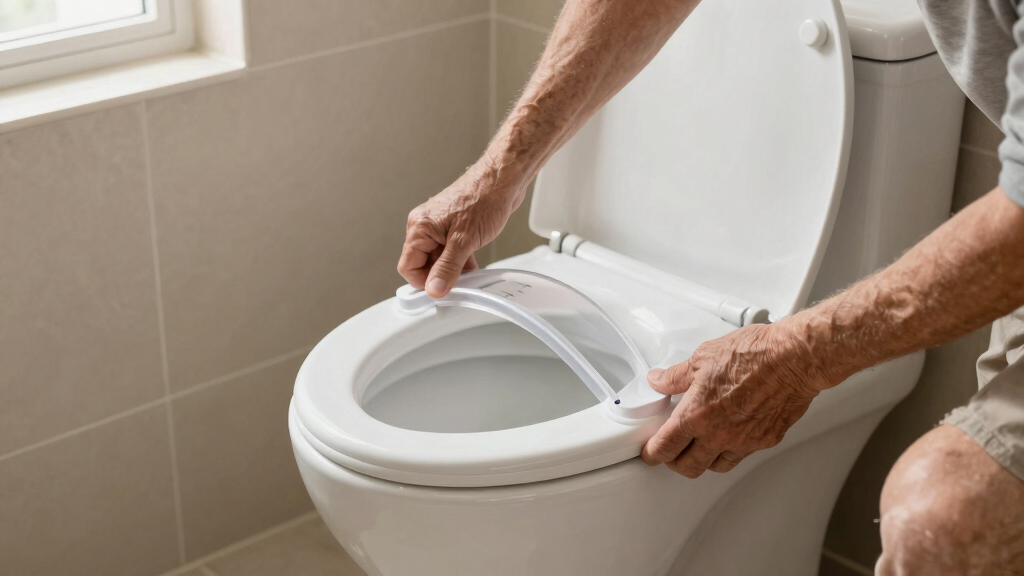
TL;DR
Selecting the right raised toilet seat height involves measuring the user’s height and mobility, understanding available options, and considering recent technological advances. Proper fit reduces fall risk and boosts independence.
Always measure your inseam and sitting height to determine the ideal seat height.
A 2- to 4-inch increase suits most users; taller individuals or those with significant mobility challenges may need 4-5 inches.
Modern seats with adjustable height and safety features offer more flexibility and security.
Match the seat shape to your toilet (round or elongated) for a secure fit.
Proper seat height can cut fall risk by nearly half, making everyday bathroom use safer.
How to Pick a Raised Toilet Seat Height
The right lift makes sitting and standing feel natural—not too low, not too high. Measure the user, match the toilet, and choose enough elevation to reduce strain while keeping both feet firmly supported.
A body-matched seat height may reduce bathroom fall risk by nearly half while supporting comfort, confidence, and independence.
Find the body’s natural sitting level
Good fit begins with posture. The user should sit with hips and knees comfortably positioned, feet flat on the floor, and no need to stretch downward or push upward from an awkward angle.
Measure the inseam
Measure from the groin to the bottom of the ankle. This gives a practical reference for a height that allows stable, flat-footed contact.
Check sitting height
While seated naturally, note the height from the floor to the back of the thigh or knee crease. This helps estimate a comfortable final seat level.
Observe the transfer
Watch the user sit and stand. Excessive dropping, rocking, pulling, or tiptoe contact signals that the proposed height needs adjustment.
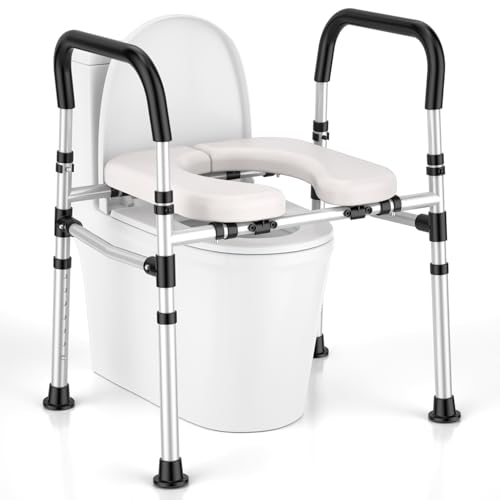
Toilet Seat Riser for Seniors, Raised Toilet Seat with Handles – FSA/HSA Eligible, Adjustable Height & Width, Supports 400 lbs – Universal Fit for Elderly, Handicap, Post-Surgery & Pregnancy
FSA/HSA Eligible: This raised toilet seat with handles is FSA and HSA eligible, making your purchase of this…
As an affiliate, we earn on qualifying purchases.
As an affiliate, we earn on qualifying purchases.
Calculate the lift, then test it
Use measurements to narrow the range, but make the final choice through a supported transfer test. Strength, balance, joint range, and footwear can all change what feels safe.

LemonBest Toilet Seat Fitting Tool – Universal Toilet seat Installation Key, Toilet Seat Repair Wrench, 10/13/17mm Professional Universal Plastic High-Strength Installation Key (1 Pack)
【Universal Rotation Design】This wrench adopts a universal rotation design, which is convenient and labor-saving to use in hard-to-reach…
As an affiliate, we earn on qualifying purchases.
As an affiliate, we earn on qualifying purchases.
Why height matters more than comfort
Too low increases bending and joint demand. Too high can leave feet unsupported or make transfers unstable. The safest point is the lowest height that meaningfully reduces effort while preserving control.
Lift spectrum
Relative lift by common raised-seat size.
Potential safety dividend
Safety studies cited for bathroom mobility aids associate properly selected height with a substantial reduction in fall risk.

Drive Medical 2-in-1 Raised Toilet Seat with Removable Padded Arms – Elevated Bathroom Safety Support – Secure Locking Attachment – Easy Height Assistance – Durable Construction, Standard Toilets
Toilet Seat Riser with Handles: Our easy-to-clean toilet seats are designed for individuals who have difficulty sitting down…
As an affiliate, we earn on qualifying purchases.
As an affiliate, we earn on qualifying purchases.
Raised seat heights side by side
Most users land between 2 and 4 inches. A 5-inch model is generally reserved for very tall users or more substantial mobility limitations—and requires careful stability testing.
| Lift | Ideal for | Advantages | Tradeoffs | Fit signal |
|---|---|---|---|---|
| 2″ | Shorter users or mild mobility limitations | ✓ Subtle lift; natural sitting and standing | ~ May not sufficiently reduce bending | Feet flat with slightly reduced joint effort |
| 3″ | Many users needing moderate assistance | ✓ Strong balance of comfort and control | ~ May be low for tall or highly limited users | Stable transfer without excessive push-off |
| 4″ | Taller users or significant hip, knee, or mobility challenges | ✓ Substantial reduction in squat depth | ✗ Demands secure attachment and foot support | Less strain without sliding or tiptoe contact |
| 5″ | Very tall users or maximum-lift requirements | ✓ Maximum elevation for difficult transfers | ✗ Bulkier; may feel perched or unstable | Use only when lower lifts remain inadequate |
✓ favorable ~ verify carefully ✗ potential concern

HealthSmart Enhanced Comfort 5" Raised (Round) Toilet Seat Risers for Seniors 5 Slip Resistant Pads FSA/HSA Eligible Padded Toilet Seat Elevation 15.7 x 15.2 x 6.1
Increased Comfort & Elevation: Our Raised toilet seat for seniors adds 5 inches in height to your standard…
As an affiliate, we earn on qualifying purchases.
As an affiliate, we earn on qualifying purchases.
Features that improve the fit
Height is only one part of the system. Newer designs combine adjustability, stronger attachment methods, hygienic materials, and transfer supports.
Adjustable height
Multiple settings accommodate changing needs, shared bathrooms, and trial-based fine-tuning.
Locks and anti-slip bases
Positive locking systems and grippy contact surfaces reduce shifting during transfers.
Arms and handles
Removable supports provide controlled push-off points when upper-body strength permits.
Easy-clean materials
Smoother, stain-resistant surfaces simplify regular cleaning and reduce difficult seams.
Compact travel models
Lightweight designs support temporary use, but must still pass the same fastening checks.
Safety sensors
Some premium products are beginning to add alerts and monitoring, though adoption remains limited.
Traceability chain / from measurement to independence
The five-point safety check
A secure 3-inch seat is safer than a loose 4-inch seat. Confirm the complete fit—not just the advertised lift—before relying on the product.
Match the bowl shape
Identify round or elongated and compare bowl dimensions with the product specification.
Verify the attachment
Prefer positive locks, secure clamps, or anti-slip systems that resist side-to-side movement.
Confirm foot contact
Both feet should rest flat and stable rather than dangling or relying on the toes.
Test sitting and standing
Look for a smooth, controlled transfer without dropping, sliding, twisting, or excessive pulling.
Inspect it regularly
Recheck fasteners, pads, cracks, cleanliness, and movement—especially after cleaning or travel.
Escalate complex needs
For severe balance limits, recent surgery, or needs beyond 5 inches, seek professional guidance.
Frequently asked questions
Most raised seats install quickly, but the final setup must remain stable under real transfer forces—not merely look secure when unused.
Will it fit my toilet?
Check whether the bowl is round or elongated, measure its width and length, and compare those dimensions with the manufacturer’s specifications.
Can I install it myself?
Usually. Many models use locks, clamps, or straps and require few or no tools. Follow the instructions and test for movement before use.
What is the maximum lift?
Four to five inches is the usual upper range. If that is still insufficient, consult a healthcare or mobility professional before going higher.
Is adjustable better than fixed?
Adjustable seats offer useful flexibility for changing needs or multiple users, provided the adjustment mechanism locks securely.
How do I know it is stable?
Confirm the base does not rock, rotate, lift, or slide. Look for anti-slip contact points, secure locks, and an appropriate weight capacity.
When should I seek advice?
Get individualized guidance for severe weakness, major balance impairment, unusual transfers, recent surgery, or repeated falls.
The right height supports dignity
Measure first, compare the 2- to 5-inch options, match the bowl, secure the attachment, and test the full transfer. The goal is not maximum elevation—it is the smallest reliable lift that improves comfort, stability, and independence.
How to Measure for the Perfect Seat Height
The first step in choosing a raised toilet seat height is measuring your body. A simple but critical measurement is your inseam — the length from your groin to the bottom of your ankle. For instance, if your inseam measures 28 inches, you’ll want a seat height that helps your feet rest flat on the floor without stretching.
Next, consider your sitting height — the distance from your seat to the top of your thigh when seated. This helps determine how much lift you need to sit comfortably without feeling like you’re straining or risking a fall.
For example, if your sitting height is around 17 inches, a seat that raises you to about 19 inches from the floor might offer the right balance of ease and stability.
Why accurate measurement matters: Properly measuring ensures the seat height supports your natural posture. Too high, and you might struggle to stand; too low, and you risk bending excessively or losing balance. These measurements help you find a lift that minimizes strain and maximizes safety, especially for those with limited mobility or balance issues.
Why Seat Height Matters More Than You Think
Choosing the correct height isn’t just about comfort. It’s a safety issue. A seat that’s too low can force you to bend excessively, increasing the risk of falls or muscle strain. Over time, this repetitive strain can lead to joint pain or further mobility issues. Conversely, a seat that’s too high can make standing up difficult, especially for seniors or those with knee or hip problems, potentially causing instability or falls during transitions.
Research from safety studies shows that a proper seat height can reduce the risk of bathroom falls by nearly 50%. This reduction is significant because falls are among the leading causes of injury in older adults. The right height supports natural movement patterns, reduces awkward postures, and enhances confidence during transfers.
Moreover, selecting an appropriate seat height respects individual differences—what’s safe for one person might not be for another. For example, a taller person might need a higher seat to prevent excessive bending, while a shorter individual might prefer a lower elevation for better control. Balancing these factors involves understanding the tradeoffs: a slightly higher seat might improve safety but could require more effort to stand, especially if the user has limited strength. Recognizing these nuances helps you choose a seat that promotes independence without compromising safety.
In essence, the right seat height acts as a foundation for dignity, comfort, and fall prevention. It’s an investment in safety that can significantly improve quality of life by enabling more confident and safer bathroom use.
Compare Common Raised Seat Heights Side-by-Side
| Height Increase | Ideal For | Pros | Cons |
|---|---|---|---|
| 2 inches | Shorter users, those with mild mobility issues | Less noticeable, easier to sit down and stand up | May not be enough for taller individuals or those with significant mobility challenges |
| 3 inches | Most users needing moderate lift | Good balance of comfort and safety | Could be insufficient for very tall users or those with severe mobility issues |
| 4 inches | Taller users or those with significant mobility challenges | Provides substantial lift, reduces strain during transfers | May feel less stable if not properly secured; may require more effort to sit and stand |
| 5 inches | Very tall users or severe mobility issues requiring maximum lift | Maximum support, enhances safety for difficult mobility | Potentially less stable if not properly secured; might be bulkier and less discreet |
Choosing the right height involves understanding these tradeoffs. A smaller increase might be more comfortable and less noticeable but could compromise safety for taller or more mobility-limited users. Conversely, higher lifts provide more support but may introduce challenges in stability or ease of use. Consider your specific needs and balance these factors to find the optimal height for your situation.
Frequently Asked Questions
How do I know if a raised toilet seat will fit my toilet?
Check the shape (round or elongated) and dimensions listed in the product specs. Measure your toilet bowl’s width and compare it to the seat’s size. Many models are universal, but confirming fit ensures stability and safety.
Can I install a raised toilet seat myself?
Yes, most are designed for easy DIY installation. Typically, you just place the seat on the bowl and secure it with locking mechanisms or straps—no special tools needed in most cases.
What’s the maximum height I should consider?
Generally, 4 to 5 inches is the upper limit for comfort and safety. If you need more lift, consult a healthcare provider to ensure it’s appropriate for your specific mobility needs.
Are adjustable-height seats worth it?
Absolutely. They offer flexibility as needs change, can accommodate different users, and help find the most comfortable, safest height with ease.
How can I ensure the seat is secure and stable?
Look for models with anti-slip bases, locking features, and positive user reviews. Proper installation and regular checks keep the seat safe during use.
Conclusion
Getting the right raised toilet seat height is a simple step that pays big safety dividends. It’s about finding that perfectly balanced lift—enough to support your body comfortably without sacrificing stability.
Take your measurements, compare options carefully, and don’t hesitate to choose adjustable models. A well-chosen seat transforms a routine task into a safer, more dignified experience. Because comfort and safety are just a seat away.