TL;DR
Open a free Amazon Business account
Business pricing, bulk buying and tax-exempt orders.
Create a free accountAs an affiliate, we earn on qualifying purchases.
Motion-sensor lights automatically illuminate hallways and stairs, reducing fall risks and conserving electricity. Modern options include smart features and adjustable settings for personalized safety and convenience.
Imagine walking into a dark hallway or stairwell—your steps uncertain, the risk of a misstep high. Now, picture a gentle light flickering on just as you approach, guiding your way effortlessly. Motion-sensor lights do exactly that. They turn on when you need them, then fade away. No switches, no fuss.
In this guide, you’ll learn how these lights work, the latest trends, and how to choose the right one for your home. Whether you’re aging in place or simply want smarter safety, understanding your options makes all the difference.
Proper placement and sensitivity adjustments are key to avoiding false triggers.
Dual-technology sensors offer the best accuracy for busy households or pet owners.
Smart motion-sensor lights can integrate with home automation for even greater convenience.
LED models last over 20,000 hours, making them a durable choice.
Installing lights at eye level and testing settings ensures maximum safety and performance.
Safer steps, lower bills, no switch-hunting.
Motion-sensor lights automatically illuminate hallways and staircases when movement is detected, then switch off when the path is clear. The best setups combine thoughtful placement, adjustable sensitivity, LED efficiency, and smart controls for safer night movement and less wasted electricity.
Placement and calibration can reduce fall-related accidents by up to 40%.
Entry-point positioning, eye-level mounting, and tuned sensitivity help lights activate at the moment people need them most.
Potential reduction in household lighting energy use.
Hours of operation for many LED motion lights.
Entry-level plug-in, battery, or screw-in models.
Feature-rich Wi-Fi, Zigbee, or Z-Wave fixtures.
Reliable, efficient detection for most indoor halls.
Wireless and plug-in models are usually beginner-friendly.
Dark corridors become guided paths.
Hallways and staircases are transition zones: people move quickly, carry objects, wake half-alert, and often skip turning on overhead lights. Motion lighting removes that fragile moment.
Instant illumination
Lights activate as someone approaches, improving visibility on steps, landings, corners, and thresholds.
Only on when needed
Automatic shutoff prevents hallway lights from staying on for hours after a quick pass-through.
No switches, no fuss
Ideal for seniors, kids, guests, and anyone carrying laundry, groceries, or late-night water glasses.
Five decisions make the system reliable.
Most disappointing motion-light setups fail because the sensor is pointed at the wrong thing, not because the fixture is bad.
Choose the entry point
Place sensors where people naturally enter a hallway or begin a staircase.
Pick wired or wireless
Use wireless for simple DIY upgrades; choose wired for permanent fixtures.
Mount at eye level
Install at eye level or slightly above to catch human movement early.
Set sensitivity
Reduce false triggers from pets, vents, curtains, and passing shadows.
Walk-test the route
Confirm the light stays on long enough for safe passage from end to end.
PIR is simple; dual-tech is precise.
Each sensor type balances accuracy, cost, coverage, and nuisance activations differently.
| Feature | PIR Sensor | Dual-Technology | Ultrasonic Sensor |
|---|---|---|---|
| Detection Method | Body heat | PIR plus sound-wave motion | Sound-wave movement |
| Best Use | Typical hallways and stairs | Busy homes, pets, complex layouts | Larger or obstructed spaces |
| Energy Efficiency | ✓ High | ✓ High | ~ Moderate |
| False Trigger Control | ✓ Good | ✓ Best | ✗ More sensitive |
| Typical Cost | $20-$50 | $50-$150+ | $30-$90 |
What modern fixtures optimize.
Good motion lighting is a balance of safety response, energy discipline, lifespan, and false-trigger prevention.
Sensitivity sweet spot
Too low and the light misses early steps. Too high and pets, drafts, or nearby movement can activate it unnecessarily.
The newest models tune themselves to daily life.
Smart features are useful when they make the light more predictable, not just more connected.
Apps, schedules, voice assistants, ambient sensors.
Wi-Fi, Zigbee, and Z-Wave models can adjust timers, sensitivity, and daylight activation rules from a phone or automation hub.
- 1Use ambient light sensing so fixtures stay off during the day.
- 2Choose weatherproof models for outdoor stairs, porches, and paths.
- 3Clean sensor lenses regularly to preserve detection accuracy.
- 4Keep sensors away from HVAC vents, swinging curtains, and pet paths.
- 5Set duration long enough for slow, safe movement across the full route.
From motion to confidence.
A well-placed motion light connects detection, illumination, visibility, and habit into one quiet safety upgrade.
Why Motion-Sensor Lights Make Your Dark Hallways Safer
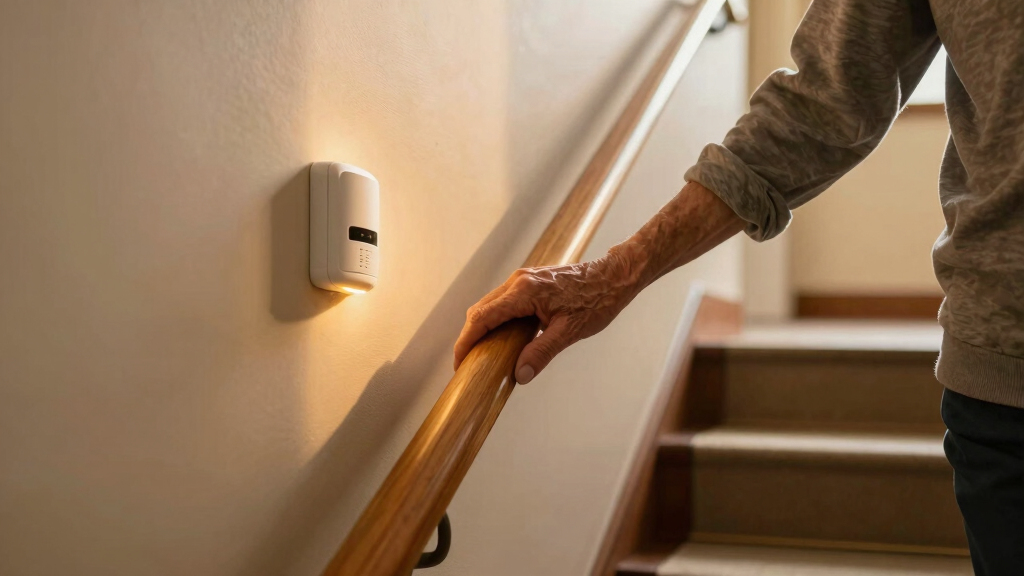
Motion-sensor lights are a game-changer for safety. They activate instantly when they detect movement, lighting up those tricky hallways and staircases. This quick response helps prevent trips and falls, especially when your eyes aren’t fully alert or if you’re carrying something.
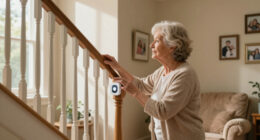
Think about an elderly parent waking at night. A quick step into a dark corridor can be risky. But a motion-activated light flickering on offers both guidance and reassurance. Plus, they save energy, turning off automatically once you’re gone.
As an affiliate, we earn on qualifying purchases.
What Types of Motion Sensors Are Best for Hallways and Stairs?
There are three main types of motion sensors used in home lighting: Passive Infrared (PIR), ultrasonic, and dual-technology sensors. PIR detects body heat, making it reliable and energy-efficient. Ultrasonic sensors send sound waves, detecting even slight movements but can trigger falsely from pets or drafts. Dual sensors combine both, offering higher accuracy.
For hallways and stairs, PIR sensors are often best—they’re simple, effective, and less likely to cause false alarms. But if you have pets or busy households, dual-technology sensors can minimize accidental triggers.
Choosing the right sensor involves understanding the tradeoffs: PIR sensors are generally more energy-efficient and less prone to false alarms, but ultrasonic sensors detect motion more quickly and from a wider angle, which might be necessary in larger or more complex spaces. Dual sensors offer a balance but may be more costly and complex to install.
smart stairway motion sensor light
As an affiliate, we earn on qualifying purchases.
As an affiliate, we earn on qualifying purchases.
Step-by-Step: How to Install Motion-Sensor Lights in Your Hallway or Staircase
- Choose a location at the entry point of your hallway or staircase, ideally at eye level or slightly above.
- Decide if you prefer wired or wireless models. Wireless options are easier for DIY installation.
- Follow the manufacturer’s instructions for mounting the sensor—use screws or adhesive strips as needed.
- Connect power: plug in or wire the fixture, depending on the type.
- Adjust sensitivity and duration settings to prevent false triggers and ensure lights stay on long enough for safe passage.
- Test the sensor by walking through and making adjustments as needed.
Many modern lights are designed for simple DIY setup, making safety upgrades accessible without electrical expertise.
As an affiliate, we earn on qualifying purchases.
How Smart Are the Latest Motion-Sensor Lights?
Today’s motion-sensor lights are smarter than ever. Many connect via Wi-Fi or Zigbee/Z-Wave protocols, allowing remote control through apps. You can schedule when they turn on, adjust sensitivity, and even set them to only activate in low ambient light conditions.
Imagine coming home after sunset—your smart light system activates automatically, illuminating your path without manual intervention. Plus, some integrate with voice assistants like Alexa or Google Home, making command and control a breeze.
Recent tech improvements include better detection ranges, fewer false triggers, and adaptive lighting that dims or brightens based on the surrounding light levels. These enhancements matter because they improve safety by ensuring lights turn on precisely when needed, reducing unnecessary energy use, and avoiding annoying false activations that can diminish trust in the system.
dual-technology motion sensor light
As an affiliate, we earn on qualifying purchases.
As an affiliate, we earn on qualifying purchases.
Real-World Examples: How Motion Lights Improve Daily Life
Meet Sarah. She’s 72, lives alone, and worries about night trips in her dark hallway. After installing motion-sensor lights, she feels safer. Now, she doesn’t fumble for switches, and her stairs are fully illuminated when she wakes at night, preventing slips.
Or consider a busy family with kids—motion lights above the staircase turn on instantly when anyone heads upstairs, reducing the chaos of searching for switches in the dark.
Outdoor staircases and porches benefit too—solar-powered motion lights with weatherproof sensors keep pathways lit without increasing electric bills, even during cloudy days. These examples highlight how motion-sensor lights address specific safety challenges, making daily routines smoother and reducing accident risks, especially for vulnerable populations like seniors or young children.
Comparison of Popular Motion-Sensor Light Features
| Feature | Basic Model | Smart Model |
|---|---|---|
| Sensor Type | PIR or Ultrasonic | |
| Connectivity | Manual switch or basic wireless | |
| Adjustable Settings | Sensitivity and timer | |
| Smart Integration | Usually no | |
| Price Range | $20–$50 |
Preventing False Triggers and Making Your Lights Last Longer
False triggers are common with ultrasonic sensors or poorly placed lights. To avoid them, position your sensors away from vents, moving objects, or pet areas. Adjust sensitivity settings to find the perfect balance—too high, and you get false alarms; too low, and the lights don’t activate when needed.
Choosing dual-technology sensors also helps—these are less likely to be fooled by pets or drafts. Regularly cleaning sensor lenses and checking placement ensures your lights work reliably and last longer. Understanding the tradeoffs here is important: overly sensitive settings may cause frequent false alarms, reducing user confidence and increasing energy consumption; too insensitive, and safety might be compromised because the lights won’t activate when needed. Proper calibration and maintenance extend the lifespan of your fixtures, saving you money and ensuring consistent safety performance.
Frequently Asked Questions
Are motion-sensor lights safe to use outdoors on stairs?
Absolutely. Many motion-sensor lights are weatherproof and designed specifically for outdoor use. They provide reliable illumination on outdoor stairs, pathways, and porches, improving safety and deterring intruders.
Can I install motion-sensor lights myself, or do I need an electrician?
Many models are DIY-friendly, especially wireless or plug-in types. However, wired installations in hardwired fixtures might require basic electrical skills. Always follow manufacturer instructions or consult a professional for complex setups.
How do I prevent my lights from turning on during the day?
Most modern motion-sensor lights include ambient light sensors that detect daylight and prevent activation when it’s bright outside. Adjust this setting if available to optimize energy savings.
Are smart motion-sensor lights compatible with my existing home system?
Many are compatible with popular smart home platforms like Alexa, Google Assistant, or Apple HomeKit. Check product specifications to ensure seamless integration with your current setup.
How long do LED motion sensors last?
LED-based motion lights can last between 20,000 and 50,000 hours, depending on quality and usage. That’s roughly 10–25 years of typical household use—making them a long-lasting safety upgrade.
Conclusion
Smart placement and adjustable features turn motion-sensor lights into your first line of safety in dark hallways and staircases. They’re a simple upgrade that makes everyday life safer and easier, especially for older adults or anyone with mobility concerns.
Remember—good lighting isn’t just about visibility. It’s about peace of mind. Brighten your home’s dark spots and take one step closer to a safer, smarter living space.
NFL season / tailgating Picks
team gear
As an affiliate, we earn on qualifying purchases.