Accessible home safety devices cover a wide range of tools — caregiver pagers, bed exit alarms, fall prevention systems, and bathroom grab rails — and choosing the right one starts with knowing who needs help and when. For a two-way emergency device that works without a subscription, the Freedom Alert Landline Personal Emergency Device is my top overall pick because it lets a senior speak directly through the pendant without paying monthly fees. If the need is more about caregiver awareness than emergency calling, the CallToU Caregiver Wireless Pager System offers the best range and reliability for the price, while the Lianjindun Toilet Safety Rails are the standout choice for bathroom fall prevention. The main tradeoff in this category is between monitoring devices that alert a caregiver and physical supports that prevent the fall from happening at all — most homes eventually need both. Read on for the full breakdown of all nine devices and who each one suits best.
Play games included with Prime
Start a Prime free trial and play with Amazon Luna on your devices.
Start playingAs an affiliate, we earn on qualifying purchases.
Complete the kit



Key Takeaways
- Subscription-free emergency calling set the Freedom Alert apart — every other device in this roundup alerts a caregiver nearby rather than reaching outside help, which is a fundamental difference in protection level.
- Pager systems clustered closely on price, so range, battery type, and button durability became the real differentiators between the CallToU, Wireless Caregiver Pager, and Caregiver Pager with 2 Buttons.
- Bed alarms split into two camps: motion-sensor models like the PILSAMAS set that trigger earlier and pressure-pad models like the Upgraded Bed Sensor Alarm that produce fewer false alarms — the right choice depends on the patient’s sleep habits.
- The Lianjindun Toilet Safety Rails was the only physical support in the lineup, and its 350-lb capacity plus adjustable height/width made it the most universally sized option even though it solves a completely different problem than the alert devices.
- None of the monitored devices require Wi-Fi, which matters for seniors in older homes — but it also means none of them can alert a remote family member without a separate service like the Freedom Alert provides.
| Freedom Alert Landline Personal Emergency Device with 2-Way Call for Seniors and Elderly |  | Best for Emergency-Service Access | Connectivity: Landline phone service | Communication: 2-way voice | Rechargeable: Yes | VIEW LATEST PRICE | See Our Full Breakdown |
| CallToU Caregiver Wireless Pager System with Call Button and Receiver |  | Best Simple Call Button | Number of Call Buttons: 1 | Range: 500+ ft | Ringtone Options: 55 | VIEW LATEST PRICE | See Our Full Breakdown |
| PILSAMAS Bed Alarms for Elderly Dementia Patients, Motion Sensor Pager Set |  | Best Scalable Monitoring System | Sensor Type: Infrared motion sensor | Range: 1000 ft | Battery Life: 1-3 months | VIEW LATEST PRICE | See Our Full Breakdown |
| Upgraded Bed Sensor Alarm and Fall Prevention System for Elderly and Dementia Patients |  | Best Value Fall-Prevention Kit | Range: 918 feet | Power Supply: Alkaline batteries or Micro USB | Includes: Caregiver pager, motion sensor, Micro USB, double-sided tape, screw kit, manual | VIEW LATEST PRICE | See Our Full Breakdown |
| Smart Caregiver Bed Alarm for Elderly Adults |  | Best Traditional Pressure-Pad Alarm | Sensor Pad Size: 10″ x 30″ | Power Source: 1 x 9V battery (included) or AC-02 Adapter (not included) | Alarm Volume: 80 dB | VIEW LATEST PRICE | See Our Full Breakdown |
| Wireless Caregiver Pager with Call Button and Receiver for Elderly and Patients |  | Best for Large Homes and Multi-Room Care | Range: 1500 feet | Expandable: Yes, up to 30 call buttons and multiple receivers | Ringtones: 58 | VIEW LATEST PRICE | See Our Full Breakdown |
| Lianjindun Toilet Safety Rails, Adjustable Height & Width, Supports up to 350 lbs |  | Best Bathroom Fall Prevention | Material: Corrosion-resistant aluminum | Weight Capacity: 350 lbs | Maximum Size: 16.15 x 4.8 x 13.7 inches | VIEW LATEST PRICE | See Our Full Breakdown |
| Caregiver Pager with 2 Wireless Call Buttons for Home Care |  | Best Value for Two-Zone Coverage | Number of Call Buttons: 2 | Portable Pager: 1 | Range: 500 feet | VIEW LATEST PRICE | See Our Full Breakdown |
| CallToU Caregiver Pager with 2 Wireless Call Buttons for Elderly at Home |  | Best Balanced Everyday Pager | Number of Call Buttons: 2 | Range: 500+ ft | Ringtone Options: 55 | VIEW LATEST PRICE | See Our Full Breakdown |
| accessible home safety device | Range |
|---|---|
| Freedom Alert Landline Persona | — |
| CallToU Caregiver Wireless Pag | 500+ ft |
| PILSAMAS Bed Alarms for Elderl | 1000 ft |
| Upgraded Bed Sensor Alarm and | 918 feet |
| Smart Caregiver Bed Alarm for | — |
| Wireless Caregiver Pager with | 1500 feet |
| Lianjindun Toilet Safety Rails | — |
| Caregiver Pager with 2 Wireles | 500 feet |
| CallToU Caregiver Pager with 2 | 500+ ft |
More Details on Our Top Picks
Freedom Alert Landline Personal Emergency Device with 2-Way Call for Seniors and Elderly
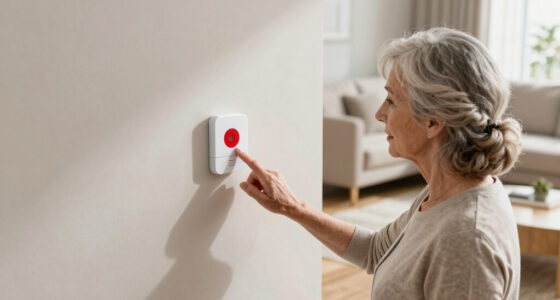
The Freedom Alert is the only device in this lineup that can actually dial 911, family members, or neighbors directly, which puts it in a different category than the pager-style options like the CallToU Caregiver Pager. Instead of alerting someone in the next room, this unit opens a two-way voice call through your landline, so help can be summoned even when no caregiver is home. The no-monthly-fee model is a genuine money-saver compared with subscription-based medical alert services.
The tradeoff is structural: it depends entirely on an existing landline connection, which many households have dropped, and the wearable pendant only works inside the home. Anyone who wants coverage in the yard or on walks will need a cellular alternative instead.
Pros:- Two-way voice calls to family, police, or fire services at the press of a button
- No monthly fees or subscriptions
- Rechargeable with 24-hour battery backup during power outages
- Wearable or wall-mountable button options for easy reach
Cons:- Requires an existing landline phone service to function
- Not portable — coverage is limited to inside the home
- No cellular or mobile connectivity as a fallback
Best for: Seniors living alone who still have a landline and want direct access to family or 911 without monthly subscription costs
Not ideal for: Households without landline phone service, or active seniors who need protection outside the home
- Connectivity:Landline phone service
- Communication:2-way voice
- Rechargeable:Yes
- Battery Backup:24 hours
- Monthly Fees:None
Our verdict“This is the pick for landline-owning seniors who want true emergency-response capability without recurring costs, provided they rarely leave home.”
CallToU Caregiver Wireless Pager System with Call Button and Receiver
Where the Freedom Alert is built for emergencies, this CallToU pager system solves a quieter, everyday problem: giving a senior a way to say “I need help” without shouting. One press of the waterproof call button triggers the receiver across the house, and the 500+ ft range is generous enough for most single-family homes and even some yard coverage. With 55 ringtones and 5 volume levels, caregivers can pick an alert they will actually hear over household noise.
Its simplicity is both strength and limitation. Unlike the PILSAMAS bed alarm, it depends on the senior being conscious and able to press a button — it does nothing for falls or wandering. And the package includes only one button and one receiver, so larger homes may need extra units.
Pros:- 500+ ft wireless range covers most homes and some outdoor areas
- Waterproof and dustproof button works in bathrooms and showers
- 55 ringtone options and 5 volume levels for reliable alerts
- Very simple setup with no app, subscriptions, or wiring
Cons:- Receiver must stay plugged into an outlet
- Only one call button and one receiver included
- No automatic detection — relies entirely on the user pressing the button
Best for: Family caregivers in the same home who need a simple, affordable way for a loved one to request assistance
Not ideal for: Dementia caregivers who need automatic monitoring, since it requires the user to actively press the button
- Number of Call Buttons:1
- Range:500+ ft
- Ringtone Options:55
- Volume Levels:5
- Waterproof:Yes
- Dustproof:Yes
Our verdict“The most straightforward choice for a capable senior who just needs a reliable way to summon a caregiver in the same house.”
PILSAMAS Bed Alarms for Elderly Dementia Patients, Motion Sensor Pager Set
The PILSAMAS system outgrows the one-room limitations of the simpler alarms in this roundup. Its 1000 ft range beats the Upgraded Bed Sensor Alarm by about 80 feet, and its ability to pair up to 20 sensors with unlimited receivers means a whole house — beds, doorways, hallways — can report to one display that identifies which sensor triggered. That location ID is the real value: a caregiver in the basement knows instantly whether the alert came from the bedroom or the front door.
The infrared sensors are tuned to detect footsteps at floor level, cutting the false alarms that plague generic motion detectors, but this precision demands correct mounting height during setup. Battery life of 1–3 months per sensor also means ongoing maintenance across multiple units.
Pros:- Sensor ID display shows exactly which room or zone triggered the alert
- Expandable to 20 sensors with unlimited receivers
- Floor-level infrared detection reduces false alarms
- No subscriptions, cameras, or audio recording — privacy-respecting design
Cons:- Sensors require careful mounting height to work correctly
- Battery replacement needed every 1–3 months per sensor
- Motion-only detection cannot replace call buttons or direct emergency contact
Best for: Dementia and wandering-risk care that needs multi-room, whole-home monitoring with room-level alert identification
Not ideal for: Anyone wanting a single-room, set-and-forget alarm, given the installation care and multi-sensor battery upkeep
- Sensor Type:Infrared motion sensor
- Range:1000 ft
- Battery Life:1-3 months
- Power:3x AAA batteries or USB-C
- Alert Modes:Chimes, vibration, LED flashes
- Mounting Options:Walls, floors, tables
- Expandable Sensors:Up to 20
- Additional Receivers:Unlimited
Our verdict“The strongest choice for caregivers managing wandering risk across a larger home, as long as they will handle the installation and upkeep.”
Upgraded Bed Sensor Alarm and Fall Prevention System for Elderly and Dementia Patients
This kit lands in a sensible middle ground. It costs less than building out a PILSAMAS multi-sensor network, yet it covers more ground than the Smart Caregiver pad alarm, thanks to motion sensors that can sit under the bed or at doorways — catching both bed exits and room departures from one package. The 918 ft wireless range to the caregiver pager is plenty for most homes, and the included tape, screws, and USB cable mean there is nothing extra to buy at the start.
The compromises show up in daily use. Some users find the alert volume falls short in noisy households, and the sensors need a round of testing to dial in placement — the CallToU pager, by comparison, works out of the box but offers no automatic detection at all.
Pros:- Sensors work under the bed or at doorways for two-zone coverage
- 918 ft wireless range to the caregiver pager
- Dual alerts with both sound and LED indicators
- Includes mounting tape, screws, USB cable, and manual in the box
Cons:- Ongoing battery replacement or USB charging required
- Placement needs testing to get sensing range right
- Alert volume may be insufficient in noisy environments
Best for: Budget-conscious caregivers who want both bed-exit and doorway monitoring in one affordable starter kit
Not ideal for: Loud or busy households where a quiet pager alert may go unnoticed
- Range:918 feet
- Power Supply:Alkaline batteries or Micro USB
- Includes:Caregiver pager, motion sensor, Micro USB, double-sided tape, screw kit, manual
- Volume Levels:5
Our verdict“A solid entry point into automatic fall-prevention monitoring without the cost or complexity of a full multi-sensor setup.”
Smart Caregiver Bed Alarm for Elderly Adults
Unlike the motion-sensing Upgraded Bed Sensor Alarm, the Smart Caregiver uses a pressure pad under the mattress, which makes it nearly foolproof: weight on the pad means the person is in bed, weight off means they are not. There is no mounting height to get wrong and no detection zone to tune, which makes it the most beginner-friendly automatic option here. The pad is incontinence resistant — a practical detail other alarms overlook — and silent-alert modes let a caregiver respond without startling a confused patient awake.
Its reach is the constraint. Alerts stay in-room unless you buy the separately sold wireless add-on, and the 9V battery or AC adapter situation adds another purchase decision. Compared with the PILSAMAS, it monitors one bed and nothing else.
Pros:- Pressure pad design eliminates setup guesswork and false triggers
- Incontinence-resistant pad built for real-world bedroom conditions
- Adjustable volume plus silent alert options to avoid startling patients
- Discreet placement under the mattress
Cons:- Wireless caregiver pager is sold separately
- Requires a 9V battery or a separately purchased AC adapter
- Alert range limited to the room without add-on hardware
Best for: First-time caregivers who want a proven, no-guessing bed-exit alarm for a single room
Not ideal for: Caregivers who sleep in another room or need multi-zone coverage without buying add-ons
- Sensor Pad Size:10″ x 30″
- Power Source:1 x 9V battery (included) or AC-02 Adapter (not included)
- Alarm Volume:80 dB
- Control Method:App, Touch
- Sensor Technology:Contact pressure sensor
- Additional Features:Incontinence resistant, fall prevention system
Our verdict“The right pick when reliability and simplicity matter more than range — ideal for a caregiver sleeping nearby.”
Wireless Caregiver Pager with Call Button and Receiver for Elderly and Patients
Range is where this system earns its place. At 1500 feet, it triples the coverage of the CallToU pager and the two-button home pager in this roundup, which matters if the caregiver is gardening, doing laundry in a basement, or caring for someone across a large single-story house. The IP55 waterproof rating also means the button can live in a shower or bathroom without failing — a scenario where cheaper pagers often quit. Expansion is the other differentiator: with support for up to 30 call buttons and multiple receivers, this is the only option here that scales to a small care facility or a household with several people needing help. The tradeoff is simplicity at the expense of intelligence — no smartphone integration, no two-way voice like the Freedom Alert, and the receiver needs a constant power source.
Pros:- 1500-foot range covers large properties far better than competing pagers
- Expandable up to 30 buttons and multiple receivers for multi-person care
- IP55 waterproof and dustproof rating suits bathrooms and outdoor mounting
- 58 ringtones and 5 volume levels up to 120 dB allow customization
Cons:- Receiver requires a constant power outlet, limiting where it can be placed
- No smartphone integration or two-way communication features
- Single-button starter kit means added cost to build out a full system
Best for: Caregivers in large homes or small facilities who need long-range coverage and the ability to add buttons for multiple residents
Not ideal for: Anyone wanting remote monitoring or smartphone alerts — this is a local-audio-only system with no app or two-way calling
- Range:1500 feet
- Expandable:Yes, up to 30 call buttons and multiple receivers
- Ringtones:58
- Volume Levels:5 adjustable levels, 0 to 120 dB
- Waterproof/Dustproof:IP55
- Operating Temperature:-4°F to 140°F
- Warranty:18 months
Our verdict“This is the pick for buyers whose main problem is distance — bigger homes and multi-user setups justify it over shorter-range alternatives.”
Lianjindun Toilet Safety Rails, Adjustable Height & Width, Supports up to 350 lbs
Every other product in this roundup alerts someone after trouble starts; these rails work on the other side of the equation by preventing the fall in the first place. The bathroom is the highest-risk room in most homes, and the 350-pound weight capacity with corrosion-resistant aluminum gives heavier users a stability option that caregiver pagers simply cannot address. Height (24–31 inches) and width (20–25 inches) adjustments let it fit most standard toilets without buying a specialized fixture, and the tool-free, foldable design makes it practical for travel or temporary recovery after surgery. Expect some fiddling to dial in a perfect fit, and note that the rubber feet can lose grip on wet tile over time — this is a support aid, not a substitute for grab bars anchored to wall studs.
Pros:- Addresses fall prevention directly rather than alerting after an incident
- 350 lbs capacity supports bariatric users most freestanding rails can’t
- Adjustable height and width fit most standard toilets
- Tool-free installation and foldable design suit travel and temporary use
Cons:- Freestanding design is less stable than wall-anchored grab bars
- Rubber feet and suction cups can degrade and slip on wet floors
- Requires manual readjustment to get a truly custom fit
Best for: Seniors and post-surgery patients who need standing support at the toilet, especially in rental homes where permanent grab bars aren’t allowed
Not ideal for: Users needing wall-mounted, professionally anchored support — freestanding rails move more under heavy lateral force
- Material:Corrosion-resistant aluminum
- Weight Capacity:350 lbs
- Maximum Size:16.15 x 4.8 x 13.7 inches
- Height Adjustment:24-31 inches
- Width Adjustment:20-25 inches
- Installation:Tool-free, foldable for storage and travel
Our verdict“Pair these rails with any pager in this roundup for the most complete bathroom safety setup — prevention plus a way to call for help.”
Caregiver Pager with 2 Wireless Call Buttons for Home Care
For typical apartments and single-family homes, paying extra for the 1500-foot Wireless Caregiver Pager is wasted coverage — and that’s the case this budget-friendly set makes. It ships with two call buttons in the box, so a buyer can cover both a bedroom and a bathroom on day one, something the single-button 1500-foot system can’t match without an added purchase. The included portable pager clips to a belt, meaning a caregiver doing chores stays reachable without carrying the receiver around a fixed outlet, which is a genuine usability edge over plug-in-only models like the CallToU. The compromises are real, though: the 500-foot range rules out large properties, battery operation means periodic replacements, and there are no waterproofing claims — so keep the buttons out of the shower.
Pros:- Two call buttons included covers two rooms out of the box
- Portable belt-clip pager frees the caregiver from a fixed outlet
- Simple operation suits caregivers who want zero setup friction
- Versatile mounting and wearing options for flexible placement
Cons:- 500-foot range limits use to smaller homes and care units
- Battery-powered buttons require periodic replacement
- No waterproof rating for bathroom or outdoor placement
Best for: Budget-minded caregivers in apartments or modest homes who need two rooms covered immediately
Not ideal for: Large properties or bathroom-mounted buttons — the 500-foot range and lack of waterproofing are limiting
- Number of Call Buttons:2
- Portable Pager:1
- Range:500 feet
- Power:Battery operated
- Battery Life:Ultra-long lasting
- Support Period:12 months
Our verdict“The smart choice for smaller homes where two covered rooms matter more than raw range or weatherproofing.”
CallToU Caregiver Pager with 2 Wireless Call Buttons for Elderly at Home
This CallToU set sits in the sweet spot between the budget two-button pager and the long-range system that anchors this list. It matches the budget option with two buttons included, but adds waterproof and dustproof buttons — the detail that makes bathroom mounting practical, which the cheaper two-button set can’t safely offer. With 55 ringtones and 5 volume levels, alerting is flexible enough to be audible across a busy household or quiet enough not to startle a light sleeper. Compared with the bed-alarm systems in this roundup, a call button gives the user agency — they summon help when needed rather than triggering a sensor. The main limitation is the plug-in receiver, which ties alerts to wherever an outlet exists, and the shorter range makes it a poor fit for sprawling properties where the 1500-foot system pulls ahead.
Pros:- Waterproof and dustproof buttons allow safe bathroom mounting
- Two buttons included covers two rooms without extra purchases
- 55 ringtones and 5 volume levels suit varied households and hearing needs
- Portable receiver moves with the caregiver between rooms
Cons:- Receiver requires a nearby electrical outlet at all times
- 500+ ft range falls well short of long-range competitors
- No published battery life or replacement details for the buttons
Best for: Families caring for an elderly relative at home who want reliable, waterproof two-room coverage without paying for pro-grade range
Not ideal for: Large multi-wing homes or caregivers who roam far from an outlet — range and receiver placement become problems
- Number of Call Buttons:2
- Range:500+ ft
- Ringtone Options:55
- Volume Levels:5
- Waterproof:Yes
- Dustproof:Yes
- Receiver Power:Electrical outlet required
Our verdict“The best all-around pager for a typical home — waterproof where it counts and fairly priced, as long as range demands are modest.”
How We Picked
I evaluated these nine devices against four criteria that matter most for accessible home safety: reliability of the alert (range, false-alarm rate, battery life), ease of use for both the senior and the caregiver, installation burden, and value over time including replacement batteries and any subscription costs. Because this category spans alert devices and physical supports, I grouped products by the job they do — emergency calling, caregiver paging, bed monitoring, and bathroom safety — and ranked within each group before ordering the full list.
The Freedom Alert earned the top spot because it is the only device here that can summon help when no caregiver is in the home, closing the biggest gap the other products leave open. Pager systems were ranked by wireless range and button build quality, since those two factors separate reliable daily-use systems from frustrating ones. Bed alarms were ordered by false-alarm resistance and sensor placement flexibility, and the toilet rails earned their position by addressing fall prevention directly rather than just alerting someone after a fall risk has already materialized.
Factors to Consider When Choosing Accessible Home Safety Devices
Choosing among accessible home safety devices is less about finding the most features and more about matching the device to the specific risk you are trying to manage. Before buying any of the products above, work through these factors.Alerting a Caregiver vs. Calling for Outside Help
The single biggest mistake buyers make is assuming every device can summon emergency services. Pagers and bed alarms in this roundup only notify someone already inside the home or within wireless range — if the caregiver steps out to the garden or a neighbor’s house, the alert may go unheard. Devices like the Freedom Alert pendant are built for the opposite scenario: a senior living alone who needs to reach family or 911 through a landline. Ask yourself honestly who will be within earshot when the device is triggered, because that answer determines which category of product you need. Many families end up layering both — a pager for daytime caregiving and an emergency call pendant for the hours when nobody is home. Skipping this question is how people end up with a device that gives false confidence rather than real protection.
Wireless Range and Your Home’s Layout
Manufacturer range claims are usually measured in open air, which almost no home provides. Walls, floors, appliances, and metal ductwork can cut a stated 500-foot range down to a fraction of that indoors, especially when the signal has to travel between floors. Before buying, picture where the receiver will sit — typically near the caregiver — and count how many walls stand between it and the patient’s bedroom or bathroom. If the caregiver likes to sit on a back patio or work in a garden shed, test the range on day one and keep the receipt. Dual-receiver systems exist for larger homes, but among the picks here, the CallToU models consistently handle multi-room layouts better than the budget pagers. A pager that drops its signal when you need it most is worse than no pager at all.
Motion Sensor vs. Pressure Pad Bed Alarms
Bed alarms come in two designs, and the choice affects both false alarms and how early you get warned. Pressure pads sit under the mattress or on the floor and only trigger when weight shifts off them, so they are quieter neighbors to restless sleepers but react a beat later. Motion sensors, like the PILSAMAS set, catch movement before the patient fully rises, buying the caregiver extra seconds — at the cost of more triggers from someone simply rolling over. Dementia patients who pace at night usually justify the earlier warning of a motion sensor, while a patient who sleeps soundly and only gets up deliberately may do better with a pressure pad. Also check whether the pad is washable and how the alarm volume is adjusted, because a loud bedside alarm can startle a confused patient into falling. There is no universally right answer — the patient’s nighttime behavior is the deciding factor.
Button Design and Physical Ability
A call button is only useful if the person can actually press it, and ability varies enormously. Patients with arthritis, tremors, or limited grip need large, flat, low-pressure buttons rather than small pendants they must pinch precisely. Consider whether the button can be worn as a wristband, hung around the neck, or mounted beside the bed and toilet — the best systems let you reposition buttons as needs change. Waterproofing matters more than most buyers expect, since bathroom falls are among the most common, and a button that cannot travel into the shower leaves a gap exactly where the risk is highest. Watch also for buttons that are too easy to press, which leads to accidental pages several times a night and caregiver burnout. Match the hardware to the hands that will use it, not to the spec sheet.
Ongoing Costs and Battery Reality
The sticker price is rarely the full cost. Pager systems typically run on replaceable AA or AAA batteries, which means steady replacement costs and — more dangerously — the possibility of a dead receiver the day it matters. Look for low-battery indicators and set a recurring reminder to swap batteries on a schedule rather than waiting for failure. Monitored emergency services always carry monthly fees, which is why subscription-free devices like the Freedom Alert hold their value over multiple years. Cheap pager sets often use proprietary coin cells that are annoying to find and replace, quietly pushing their true cost above better-built alternatives. Over a three-year horizon, a slightly pricier system with standard batteries and durable buttons usually costs less than a bargain model replaced twice.
Prevention Beats Reaction
Every alert device in this roundup reacts to danger; only the toilet rails actually reduce the chance of a fall happening. Bathrooms are the highest-risk room in most homes because of wet floors, low seating, and the need to transfer on and off a toilet, so physical support there delivers outsized protection for a modest price. Grab rails and safety frames require no batteries, never lose signal, and cannot be forgotten in another room. The tradeoff is that they only protect one location, which is why the strongest home safety setups combine physical supports in the bathroom with alert coverage everywhere else. If budget forces a choice, ask where the person has fallen or nearly fallen before — and put prevention there first.
Frequently Asked Questions
Do any of these devices work if my loved one lives alone?
Only the Freedom Alert Landline Device is genuinely suited to someone living alone, because it can place a two-way call through a landline to family members or emergency services without a caregiver nearby. Every pager and bed alarm in this roundup depends on a receiver that a human being has to hear, which means an empty house equals an unanswered alert. If your loved one lives independently, the pager systems can still add value as a way to summon you when you are visiting or in another part of the house during caregiving shifts, but they should never be the primary safety net for a solo household. A landline connection is required for the Freedom Alert, so households that have dropped landline service will need a different emergency solution entirely. This distinction is the first fork in the road when choosing among these products.
Which bed alarm has fewer false alarms at night?
The pressure-pad models, like the Upgraded Bed Sensor Alarm and the Smart Caregiver Bed Alarm, generally produce fewer nighttime false alarms than motion-sensor systems, because they only trigger when the patient’s weight actually leaves the pad. The PILSAMAS motion sensor set reacts earlier — catching a patient as they sit up rather than when they stand — but a restless sleeper who rolls around can set it off repeatedly, which exhausts caregivers fast. If the patient has dementia and tends to wander quickly once awake, that early warning may be worth the extra alerts. If the main goal is simply knowing when they get out of bed to use the bathroom, the pressure pad will wake you only when it matters. Sensor placement flexibility also helps: models that let you position the pad further toward the foot of the bed delay triggering until the person is genuinely up.
Can the call buttons be worn in the shower?
Most of the call buttons in this roundup are water-resistant enough for splashes but not designed for full submersion, and the specifics vary between models, so check the product listing before assuming shower safety. This matters more than it might seem, because the bathroom is statistically the most dangerous room in the home for falls, and a button that stays outside the shower leaves the highest-risk moments uncovered. A practical workaround is mounting the button on the shower wall within reach, where it avoids direct spray but stays accessible mid-bath. Pairing a mounted bathroom button with the Lianjindun Toilet Safety Rails addresses the same risk from two angles — one alerts you, the other physically supports the transfer. If in-shower wear is a firm requirement, confirm waterproofing rather than water resistance before buying.
How many call buttons and receivers do I actually need?
A common setup mistake is buying a single button and receiver when the real coverage need is larger. A good baseline is one button per room where the person spends unsupervised time — typically the bedside, the bathroom, and a favorite chair — all paired to one receiver the caregiver carries or keeps nearby. Dual-button kits like the CallToU two-button model and the Caregiver Pager with 2 Wireless Call Buttons cover this baseline well for most homes. A second receiver becomes worthwhile when two caregivers share duties on different floors, or when one person is hard of hearing and may miss a single chime. What you should avoid is assuming more range equals more coverage; button placement matters far more than raw receiver power. Start with two buttons and add only if you find real gaps in the first week of use.
Are cheap caregiver pagers reliable enough to trust?
Budget pagers usually work fine out of the box — the failures show up over months of daily use, through worn buttons, flaky battery contacts, and receivers that lose their pairing after a power change. Among the inexpensive options here, the CallToU models have a stronger track record for consistent range and durable buttons than the no-name alternatives at similar prices, which is why they rank higher despite modest spec differences on paper. The risk with an unreliable pager is subtle: it fails silently, so you do not discover the problem until an alert goes unheard. Two habits offset most of this risk regardless of price — testing every button weekly, and replacing all batteries on a fixed schedule rather than waiting for the low-battery chirp. If the device is your only safety layer, spend a little more; if it backs up physical supports and direct supervision, a budget pager is a reasonable choice.
Conclusion
The right pick here depends entirely on who is home when something goes wrong. For best overall, the Freedom Alert Landline Device stands apart because it is the only option that reaches help when no caregiver is present, and it does so without monthly fees. For best value, the CallToU Caregiver Wireless Pager System delivers dependable range and a durable button for a modest price, outclassing similarly priced pagers on range alone. The CallToU with 2 Wireless Call Buttons is my pick for beginners — it covers the standard two-room setup with almost no learning curve, making it ideal for families setting up their first care system. For premium fall prevention, the Upgraded Bed Sensor Alarm with its multiple sensor options justifies the higher price for dementia care where false alarms are costly. And for a specific need, the Lianjindun Toilet Safety Rails are the clear choice for bathroom transfers, attacking the fall risk directly rather than reacting to it. If I could only start with two items, I would pair the Freedom Alert for solo hours with the toilet rails for the highest-risk room — between them, they cover the gaps every other device in this roundup leaves open.
NFL season / tailgating Picks
team gear
As an affiliate, we earn on qualifying purchases.