
TL;DR

Turn quiet afternoons into listening time
- Thousands of audiobooks, podcasts and originals
- Listen on your phone, tablet or Echo — also offline
- Cancel anytime
A meta-analysis of 29 studies involving 7,090 nursing home residents found that 46.4% had visual impairment before correction, compared with 24.3% after best-corrected vision. Cataracts were the most prevalent eye condition, affecting 55.6% of residents, and the review identifies gaps in access to eye examinations, corrective lenses and treatment.
A review of 29 studies involving 7,090 nursing home residents found that nearly half had visual impairment before vision correction, while cataracts were the most common eye condition and the leading preventable cause of vision loss reported across regions. Published in the Journal of the College of Optometrists, the global meta-analysis also found lower rates of impairment and blindness when vision was assessed after correction.
The researchers estimated that 46.4% of residents had visual impairment based on presenting vision, compared with 24.3% after best-corrected vision. Blindness affected 8.7% based on presenting visual acuity and 3.9% after correction. These figures describe different assessment conditions; the corrected-vision estimates do not mean that every case can be resolved with glasses or other routine correction.
Cataracts affected an estimated 55.6% of residents, making them the most prevalent eye condition in the review. Refractive errors affected 39.8%, age-related macular degeneration 21.4%, glaucoma 13.9% and diabetic retinopathy 7.7%. The report identifies cataracts as the leading preventable cause of vision loss across the regions studied.
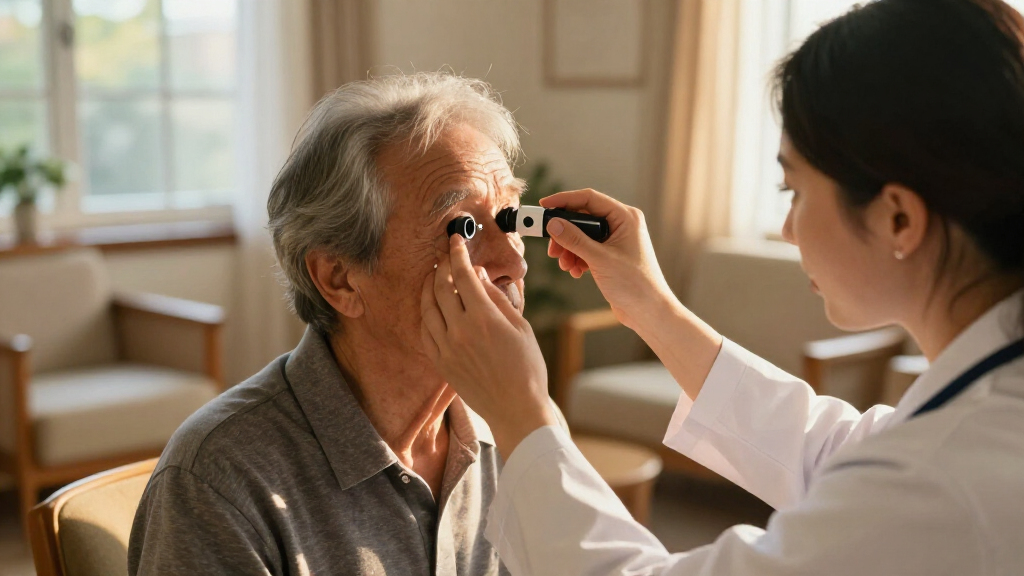
According to the review, most included studies reported significant improvements in visual acuity after refractive correction. The authors point to regular eye care, updated prescriptions and better access to services in long-term care facilities as potential ways to address some vision problems. Their suggested measures include comprehensive examinations, free or subsidized eyeglasses, timely referrals for cataract surgery and nutrition interventions intended to support eye health.
Vision Care in Long-Term Care
The findings matter because residents with impaired sight may not be able to identify or communicate a vision problem, and some may face obstacles to getting an examination or treatment. The authors cite advanced age, frailty, multiple health conditions and cognitive impairment as factors that can complicate access to care in nursing homes.
The gap between presenting and best-corrected vision suggests that some residents may benefit from assessing whether prescriptions or other correction are appropriate. It does not establish that correction alone will address the problem for an individual resident. The reported prevalence of cataracts and other eye diseases also points to a need for facilities and care teams to identify residents who may need further evaluation or referral.
For residents and families, the review offers population-level evidence of a substantial eye-care need. It does not measure how many residents went without care, explain why any particular person has vision loss, or show that a specific intervention will produce the same results in every facility. Its recommendations focus on making routine assessment and treatment pathways more available in long-term care.
Products Worth Considering

Philips Hue Festavia 65-Foot Smart LED String Lights, 250 Color-Changing Mini LEDs

Philips Hue Play Gradient 65-Inch Smart TV Light Strip

Levoit Core 400S-P Smart Air Purifier for Large Rooms
As an affiliate, we earn on qualifying purchases.
How the Review Measured Vision
The analysis brought together 29 published studies from around the world, with a combined 7,090 participants. It assessed the prevalence of visual impairment, blindness and common eye diseases among nursing home residents. The comparison between presenting visual acuity and best-corrected vision is central to the findings: one reflects vision before correction, while the other reflects vision after the best correction recorded in the studies.
The review’s estimates indicate that visual impairment and blindness were more prevalent among nursing home residents than in the broader population, according to the report. Rates varied by measure, and the source material does not provide a single comparison figure for the broader population. The results should therefore be understood as pooled estimates across studies, not as a count of residents in any one country or facility.
The authors recommend a comprehensive eye examination before a person enters a nursing home, followed by annual examinations or evaluations. They also propose improving access to glasses and referral for cataract surgery. These are recommendations from the researchers; the source material does not report that they have been adopted as policy or implemented across facilities.
“Advanced age, frailty, multiple health conditions and cognitive impairment may make it more difficult for residents to access eye care, communicate vision concerns and receive appropriate treatment.”
— The researchers, as summarized by Skilled Nursing News
Limits of the Available Evidence
The source report does not provide study-by-study results, the full geographic breakdown, or details about how researchers assessed and classified eye conditions across all 29 studies. It is also not clear from the supplied material how representative the pooled sample is of nursing home residents in each country, or how much prevalence varied between facilities and regions.
The difference between presenting and best-corrected vision points to possible benefit from correction, but the review does not state how many residents received new glasses, cataract surgery or other treatment as part of the studies. It also does not establish that every cataract can be treated or that all vision loss is preventable. Further details about the underlying studies and their methods would be needed to assess those questions.
Steps Facilities Can Take
The researchers recommend that nursing homes arrange comprehensive eye examinations, provide access to free or subsidized eyeglasses, and refer residents for cataract surgery when appropriate. They also recommend an examination before admission and annual examinations or evaluations after a resident enters a facility.
The source material does not identify a specific implementation deadline, funding plan or policy response. Whether facilities adopt the recommendations, and how that would affect residents’ vision outcomes, remains to be seen. The next relevant developments would include further reporting on how eye-care services are made available in nursing homes and research measuring the effects of those services.
Key Questions
What did the meta-analysis find about vision impairment?
It estimated that 46.4% of nursing home residents had visual impairment before correction, compared with 24.3% after best-corrected vision.
How common was blindness in the review?
Blindness was estimated at 8.7% based on presenting visual acuity and 3.9% after correction. These figures use different vision assessments.
Which eye condition was most prevalent?
Cataracts affected an estimated 55.6% of residents, the highest prevalence among the eye conditions listed in the review. Cataracts were also identified as the leading preventable cause of vision loss across regions.
What eye-care steps did the researchers recommend?
The researchers proposed comprehensive examinations, access to free or subsidized glasses, timely referrals for cataract surgery and annual examinations or evaluations after admission to a nursing home.
Source: skillednursingnews.com