
TL;DR
Simple systems to keep care notes organized use one shared format, timely factual entries, and a clear place for follow-up tasks. A notebook or secure digital tool can both work; choose the one each caregiver can use consistently, protect private details, and communicate urgent concerns directly.
At the end of a busy afternoon, a family caregiver may remember that lunch was barely touched but forget whether it was Tuesday or Wednesday. A short note written at the time can save the next caregiver from guessing. It can also help you explain a change clearly at an appointment.

Turn quiet afternoons into listening time
- Thousands of audiobooks, podcasts and originals
- Listen on your phone, tablet or Echo — also offline
- Cancel anytime
Simple systems to keep care notes organized do not require a stack of forms or a complicated app. They need a predictable place for information, a few useful prompts, and a habit that fits the household. This guide shows you how to choose a format, write entries that describe what happened, and pass along the next step without turning care into paperwork.
Care notes support communication; they do not replace professional assessment or a direct call about an urgent concern. The goal is a clear thread from one shift or appointment to the next, with the person receiving care treated with respect throughout.
Build each useful entry around what changed, what you did, and what needs attention next.
Choose one notebook, daily sheet, or suitable digital record that every caregiver can access and use.
Use a short template with dates, times, authors, observations, actions, and relevant follow-up.
Describe what you saw or heard in plain language, and label uncertainty rather than guessing.
Give urgent or time-sensitive information directly to the next caregiver; do not rely on a note alone.
Simple Systems to Keep Care Notes Organized
A shared, factual note helps caregivers carry important information from one visit or appointment to the next. Choose a format people can use consistently and protect private details.
Build each note around three questions
A short entry gives the next caregiver context, shows what care was provided, and keeps follow-up visible.
Record a concrete observation, with the date and time.
Describe the care provided and the person’s response.
Name relevant follow-up so an open task is not missed.
Choose a format everyone can use
Access, ease of use, and privacy matter more than extra features.
| Format | Can work well when | Check before choosing |
|---|---|---|
| Bound notebook | A small group shares care in one home | Keep it in a known, secure place |
| Printed daily sheet | You want quick prompts for routine tasks | Agree where sheets go and who reviews them |
| Digital record | Caregivers need remote access or searchable entries | Check access, device security, backups, and suitability |
Use a short, consistent template
Include only details relevant to the person’s care and the next caregiver’s needs.
Date, time, and author
Help readers judge how recent the entry is and ask the writer for context.
Observation and action
Use plain language to separate what you saw or heard from what you did.
Response and next step
Note relevant responses and tasks that still need attention.
Make handoffs clear
A useful note makes changes and pending tasks easier to spot.
- Describe what happened in concrete terms.
- Label uncertainty instead of guessing.
- Keep the system in an agreed, known place.
- Vague summaries without context.
- Tasks scattered across scraps or messages.
- Urgent updates left in the notes alone.
Start with three questions that make every note useful
Care notes are most useful when they say what changed, what you did, and what needs attention next. Together, these points explain why an event matters: the change gives context, the action shows how care responded, and the next step prevents an open concern from disappearing at handoff. You do not need to record every ordinary moment; focus on details that support care and follow-up. Too little information leaves the next person guessing, while too much can bury meaningful changes in routine detail.
For example, “Had a difficult morning” leaves a lot unanswered. A clearer entry might read: “10:15 a.m., declined toast and tea; said, ‘My stomach feels unsettled.’ Offered water and checked in again at 11:00; drank half a glass. Daughter will mention this at the afternoon appointment.” The note separates the person’s words from the caregiver’s actions and shows what remains to do. It also gives a clinician a time and a concrete observation to ask about, without claiming to know the cause.
Think of the note as a handrail between caregivers: it gives someone a steady place to hold while they pick up the routine. Include the date, time, author, observation, action, and follow-up when relevant. These details help readers judge how recent the information is, ask the writer for context, and see whether a task remains open. If nothing changed and no task is pending, a long entry adds little.
A clear note is a small bridge: it connects what one person noticed with what the next person needs to know.
Families can start with a single sheet on the kitchen counter or a bound notebook kept in a known, private place. Agree on one location and one simple format before several people begin writing. That small decision prevents information from scattering across scraps of paper, text messages, and memories. It also sets a shared expectation about where to look, so the system stays useful even when caregivers have different habits.
Products Worth Considering

Bose TV Speaker Compact Soundbar with Bluetooth and HDMI-ARC, Black

eufy E25 Robot Vacuum and Mop

LG StanbyME 2 Max 32-Inch 4K Portable Smart Touchscreen TV
As an affiliate, we earn on qualifying purchases.
Choose a notebook, daily sheet, or shared digital record
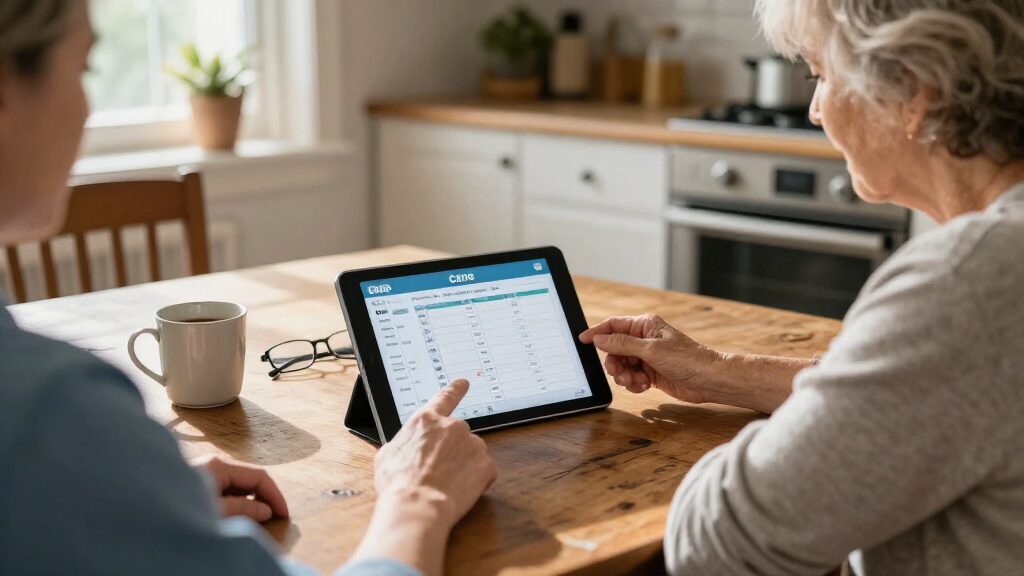
Simple systems to keep care notes organized can be paper-based or digital; the right choice is the one the people involved can access and use reliably. A notebook may suit a small household where caregivers overlap in person. A shared digital record can help when relatives live apart or several people cover different days, provided its privacy and access settings fit the situation. The practical tradeoff is between ease of sharing and ease of use: a tool that is accessible from anywhere helps only if each caregiver can operate it and protect the information.
Suppose two siblings trade weekend visits. One keeps a notebook beside the care schedule and writes a dated entry after each visit. The other can scan the recent pages before arriving. If the siblings live far apart, a secure shared tool with named accounts may be easier, especially when they need to search for an appointment date. Convenience matters, but so do access and protection of private details. Paper can be immediately available without logins, though it can be misplaced or read by visitors; digital records can be searched and shared remotely, though they depend on devices, accounts, and reliable access.
| Format | Can work well when | Check before choosing |
|---|---|---|
| Bound notebook | A small group shares care in one home | Keep it in a known, secure spot; write dates and names clearly |
| Printed daily sheet | You want quick prompts for routine tasks | Decide where completed sheets go and who reviews them |
| Digital record | Caregivers need remote access or searchable entries | Check account access, device security, backups, and suitability |
A digital tool may offer reminders or searchable entries, but those features do not make unclear writing clearer. Before putting sensitive details into a consumer app or messaging service, find out who can view or edit the information and how it is protected. Privacy rules can vary by country, workplace, and care setting. Also consider what happens during a device or internet outage: a system with no agreed fallback can interrupt a handoff just when someone needs the information.
Try one format for a short, agreed period and notice where people stumble. If a caregiver cannot reliably open an app, a paper sheet may serve the household better. If paper records are often out of date or inaccessible to distant caregivers, a suitable shared digital option may reduce that gap. Keep the system simple enough to survive a rushed evening, and agree how to handle urgent updates outside the record.
Use a short template that matches the person’s routine
A useful care-note template gives you the same few prompts each time, such as date and time, observation, care provided, response, and follow-up. Repeated prompts reduce the mental effort of deciding what to write, especially when a caregiver is tired or moving between tasks. Add categories only when they relate to the person’s needs or the care team’s requirements. A short form is easier to complete than a page full of boxes that rarely apply, and it makes important information easier to find when someone reviews several entries.
For instance, a household might track meals, sleep, mobility, mood, appointments, and agreed follow-up tasks. If a caregiver helps prepare lunch, they can note “12:30 p.m., soup and bread offered; ate about half; asked to save the rest.” That is more helpful than filling every field with “normal” or leaving a confusing blank. A blank can mean “not checked,” “not relevant,” or simply “forgotten.” If a field was not checked, say so when that matters; otherwise, a reader may assume it was checked and nothing noteworthy happened.
Start by listing the details the next caregiver actually asks about. If the family often wonders whether a transport booking was confirmed, include a “tasks” prompt. If sleep is a topic at an upcoming appointment, record the time the person went to bed and any meaningful interruption, using plain language. The template should reflect current questions, not every detail someone might someday want. Adding too many categories increases effort and can make completion less consistent, while too few may force caregivers to search across unrelated notes for answers.
- Date, time, and author: show when the entry happened and who wrote it.
- What you observed: use concrete details, such as an amount eaten or a stated concern.
- What you did: note care provided or who you contacted.
- What happened next: record the response and any pending task.
Keep notes to what supports care. Recording every small conversation can burden caregivers and make useful changes harder to spot. Review the template with the people who use it, and remove prompts that add work without helping anyone. A workable template is one that gives readers enough context to act while remaining easy to complete during ordinary routines.
Write what you saw, heard, and did—not a guess
Objective care notes describe observable details and keep interpretations clearly labeled as impressions. A reader can act more confidently on “walked from the bedroom to the kitchen with a pause at the doorway” than on “seemed unsteady.” The specific description helps another caregiver compare it with the person’s usual movement and decide whether to ask more. If you are unsure about a cause, say so instead of presenting a guess as a fact; an unsupported explanation can shape later care as if it were established.
Imagine your father usually joins breakfast at 8:00 a.m., but today he stayed in his room. “Was being difficult” adds judgment and may shape how the next person approaches him. “8:20 a.m., invited him to breakfast; he said he wanted to rest and stayed in his room. Offered tea at 9:00; he accepted” gives a clearer account and preserves his dignity. It also leaves room for the person’s preference or a temporary circumstance, rather than turning one event into a label.
Use direct quotes when the exact words carry useful context: “She said, ‘The hallway feels too dark at night.’” Mark the words as a quote so nobody mistakes them for the caregiver’s summary. For amounts and times, be as specific as you reasonably can, but avoid false precision. “About half a bowl” is honest when nobody measured it. This balance matters because records may be read later by people who were not present; clear limits help them understand what is known and what is approximate.
Consistent, factual notes can make changes easier to notice over time. If several entries show a different appetite or sleep pattern, you can share those observations with the appropriate professional. Notes do not establish a diagnosis, and a pattern should not be treated as an explanation on its own. The record is most useful as a prompt for a conversation: it can help describe when a change began and how often it appeared, while a qualified professional considers it alongside other information.
When a change concerns you or feels urgent, contact the appropriate clinician or emergency service directly rather than relying on a note to be found later. Record the contact and any follow-up after the conversation, following the care plan and local guidance. This keeps documentation connected to action; writing something down is not the same as ensuring someone has responded.
Make handoffs clear when several people share care
Shared care works more smoothly when every entry has an author, time, and clear next step. Pick one agreed place for notes and tell each caregiver how to flag a pending task. That way, information from one visit does not vanish into a personal phone or an unmarked sticky note. An author and timestamp also make it easier to resolve questions: a reader knows whom to ask and whether the information is still current.
For example, a paid caregiver leaves at 4:00 p.m. and a grandson arrives at 5:00. The entry can say: “3:30 p.m., called the transport service to confirm Friday pickup; waiting for a return call. Please check the voicemail after 6:00. —M.” The next person can see what has happened and what remains without repeating the call unnecessarily. Naming a check time makes the task actionable; leaving it as “waiting” could let it sit unnoticed between shifts.
Agree in advance on which items need a direct handoff, such as an urgent concern, a changed appointment, or an unfinished task due that day. A note is useful for routine information, but it cannot guarantee that someone has seen it. For time-sensitive matters, speak to the next caregiver directly and ask them to confirm the message. This takes an extra moment, but it closes the gap between leaving information and knowing it reached the person who needs to act.
- Use one shared location for routine entries and the current schedule.
- Identify the writer so another caregiver can ask for context.
- Mark pending work plainly with an owner or a time to check back.
- Correct mistakes transparently rather than silently changing an earlier entry.
If two caregivers record different details, keep the original account visible and add a dated clarification. A calm follow-up such as “I checked the calendar; the appointment is Thursday at 2:00” resolves the issue without turning recordkeeping into blame. Preserving both the original and the correction helps readers understand how the information changed and avoids making the record look more certain than it was at the time.
Review notes briefly and protect the person’s privacy
A regular, brief review helps you spot open tasks, repeated changes, and missing handoff details while keeping the record manageable. A family might spend ten minutes each Sunday checking the next week’s appointments and marking calls that still need an owner. The review is a practical check, not a search for fault. Looking across entries can reveal that a task has been waiting or that a change has appeared more than once; it also gives caregivers a chance to correct logistics before they become missed appointments.
When you keep care notes, put them somewhere that caregivers can reach but visitors cannot casually read. A notebook can live in a drawer or closed folder rather than beside the front door. On a shared device, use individual accounts where available, a screen lock, and access limited to people who need the information. The goal is to make appropriate access easy while reducing accidental exposure; a record that is too hard for caregivers to reach may lead them to create less protected copies elsewhere.
Digital tools may make it easier to share updates between locations, and some include reminders or search. Before choosing one, check who can view and edit entries, what happens if a phone is lost, whether records are backed up, and whether the tool is appropriate for your setting. Workplace requirements and privacy rules differ, so professional care teams should follow their organization’s process. A backup can help with continuity, but it also means there may be another copy to protect and eventually dispose of.
There is no single retention period that fits every family and care arrangement. Follow workplace rules and applicable local requirements when they apply. For a family record, decide what information still supports care or future appointments, and dispose of old notes in a way that respects privacy. Keeping everything indefinitely may preserve useful history, but it also leaves more sensitive information available if a notebook or device is lost.
Write for care, not curiosity: include what helps someone support the person or complete follow-up, and leave out details that serve no useful purpose.
If a relative wants broad access but the person receiving care prefers tighter sharing, talk through who needs which information and why. Where consent or professional rules are involved, ask the relevant provider or organization about the proper process. Sharing only what a caregiver needs can support coordination while respecting the person’s privacy and preferences.
Frequently Asked Questions
What should I include in care notes?
Include relevant, dated observations, care provided, appointments, and follow-up tasks. Add details such as times, quantities, or the person’s own words when they help explain what happened. Tailor the prompts to the person and follow any care-setting requirements.
How often should I write notes?
Write down meaningful events and changes while they are still fresh, and agree on a regular routine for ordinary care. For example, one household may add a brief entry after each visit and review open tasks every Sunday. The right schedule depends on the care arrangement and any professional requirements.
Should I use paper or an app?
Use the format that the people involved can reliably access, understand, and protect. A notebook can work well in one home, while an appropriate shared digital record may help relatives in different locations. Check privacy, access, and backup practices before storing sensitive details digitally.
How can I keep care notes objective?
Write what you saw, heard, measured, or did, and distinguish direct quotes from your own observations. “Ate about half of lunch and said she felt unsettled” gives more useful detail than “had a bad day.” Mark uncertain causes as uncertain.
What belongs in an urgent handoff?
Share what changed, when it began, what action you took, and what follow-up is needed. Contact the next caregiver directly about time-sensitive concerns instead of relying on a written note alone. For medical decisions or urgent health concerns, contact a qualified professional or emergency service as appropriate.
How long should our family keep care notes?
There is no universal retention period for every family or care setting. Follow applicable local rules and workplace policies where they apply. Families can weigh ongoing care and appointment needs against privacy, then dispose of outdated records securely.
Conclusion
Start with one shared place and a brief entry format: when, what you noticed, what you did, and what comes next. Keep the notes factual, protect access, and make time-sensitive handoffs directly.
A good care record should feel less like a stack of paperwork and more like a lamp left on for the next person—enough light to find the way forward.