TL;DR

Turn quiet afternoons into listening time
- Thousands of audiobooks, podcasts and originals
- Listen on your phone, tablet or Echo — also offline
- Cancel anytime
The University of Lancashire’s “The Person Before the Patient” placement brings first-year medical students into care homes for conversations focused on residents’ lives, rather than diagnosis. Students’ reflections describe learning to listen and adapt their communication, but the project did not formally measure empathy or establish lasting effects.
The University of Lancashire has made a care-home conversation placement compulsory for first-year medical students, giving them time to learn about residents’ lives before clinical training centres on diagnosis and treatment. Reflections from participating students describe practising patient listening and flexible communication, but the project did not formally test whether the experience changes empathy or later clinical behaviour.
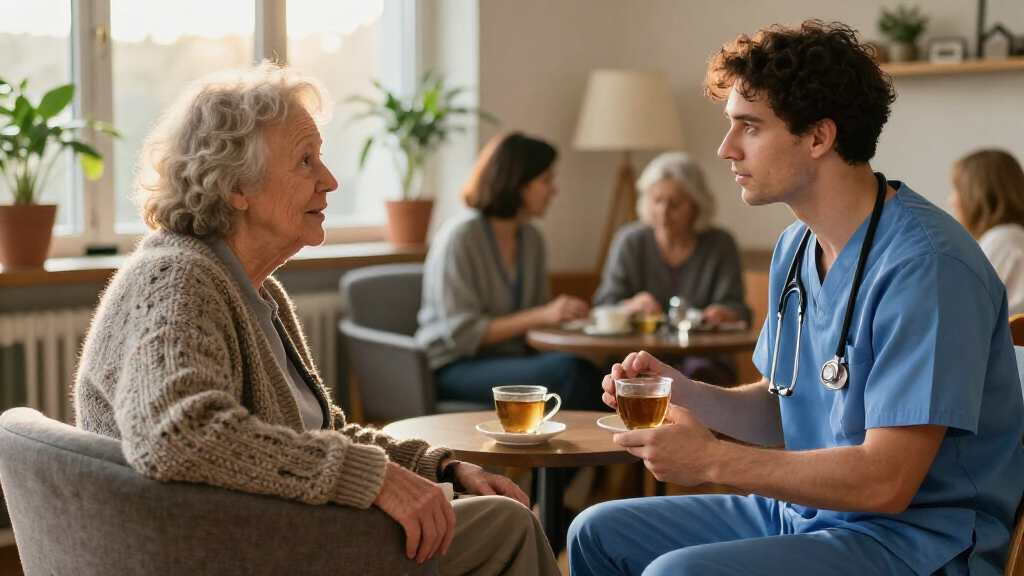
Called The Person Before the Patient, the program was piloted in 2023/24 and expanded across 11 care homes. Students spend four weeks meeting residents, some of whom live with dementia, frailty or long-term conditions. Their assignment is not to take medical histories or make diagnoses; it is to learn about residents’ interests and experiences through conversation.
In the report, the project’s author says students can arrive with prepared questions but have to follow residents’ lead. One student wrote that they learned to listen more, allow silence while a resident searched for words and pay attention to facial expressions and gestures. Those adjustments can matter when communicating with people who have hearing loss or memory difficulties.
The project gathered written reflections from 157 of 281 students who completed the placement. These were voluntary accounts of students’ impressions, not a formal measure of empathy. The author cautions that respondents may have viewed the placement more positively than students who did not submit reflections.
Practice in Resident-Led Communication
The placement gives students a chance to meet older people outside the roles of clinician and patient. That can help them practise communication skills that are harder to develop through rehearsed consultations alone: responding to what someone chooses to discuss, listening at their pace and noticing nonverbal cues. The report links these skills to person-centred care, particularly when a person’s communication needs require flexibility.
It also addresses a challenge in medical education: empathy may be difficult to develop and sustain as students move into clinical environments. The source report notes that research on changes in empathy during training is mixed. A 2023 review of 16 studies identified heavy workloads and poor role models among factors that may contribute to emotional detachment. The care-home placement offers one approach to keeping attention on the person behind a medical condition, but the available student reflections do not show that it prevents such detachment.
Residents’ agency is part of the educational question. The report says residents should be able to decide whether to take part and what to share, rather than have their lives treated simply as teaching material. In some homes, residents discussed hosting students and, with staff, how placement funding would be used.
Products Worth Considering

Bose Lifestyle Ultra Wireless Home Speaker

Levoit Core 400S-P Smart Air Purifier for Large Rooms

iRobot Roomba Max 715 Pet Robot Vacuum with AutoEmpty Dock
As an affiliate, we earn on qualifying purchases.
How the Placement Fits Medical Training
Medical students commonly practise consultations with actors playing patients. The report says these exercises can teach communication, while real conversations may feel different because residents speak about their own lives and decide where a discussion goes. The Lancashire program introduces students to this kind of encounter early, before their conversations are mainly shaped by clinical assessment.
Other evidence offers a mixed picture. An Australian study involving 61 fifth-year medical students found that five-day care-home placements improved dementia knowledge and attitudes toward working with older people, although some students questioned the educational value. A UK evaluation of Time for Dementia found improvements in students’ knowledge and attitudes after regular visits to people with dementia and their families, but no significant difference in measured empathy compared with other students.
The report also cites a small New Zealand analysis of reflections from five students involved in hands-on nursing-home care. Some described recognizing residents as individuals, while difficult care experiences could leave students overwhelmed. That study concerned personal care, not Lancashire’s conversation-based program, but the report says it points to the need for students to reflect on difficult feelings.
“I also learned to become comfortable with periods of silence while residents searched for the words they wanted to use.”
— A first-year student reflecting on the placement
What the Reflections Cannot Show
The project’s evidence does not establish whether students became more empathetic, retained any change, or behaved differently with patients later. The 157 written accounts were voluntary, and the report’s author says they may over-represent students who had a positive experience. The program did not formally measure empathy.
Other research cited in the report also cautions against assuming that contact alone produces lasting change: an evaluation of Time for Dementia found no significant difference in measured empathy, and a review of long-term empathy training found little evidence that gains persist. The source does not provide an evaluation of residents’ experiences across all 11 homes. It says care-home managers report that many residents enjoy the visits and look forward to students returning, but detailed or independently measured outcomes for residents are not given.
Longer-Term Evaluation Needed
The report identifies a fuller evaluation as the next step: following students over time, including after they enter clinical training, rather than relying only on immediate reflections. Such research could test whether communication skills or attitudes persist and whether they affect clinical practice. The source does not specify a timeline or describe a completed long-term study.
For future placements, the report also points to the need to keep residents’ choice central, including whether they take part and what they share. How consistently residents help shape the visits and funding arrangements across all participating homes remains unclear.
Key Questions
What do medical students do during the placement?
Students visit residents in care homes over four weeks and talk with them about their interests and experiences. They are not there to assess medical needs or make diagnoses.
Where and when did the program begin?
The University of Lancashire piloted The Person Before the Patient in 2023/24 and made it compulsory for first-year medical students in 2024/25. It operates across 11 care homes.
Did the project prove that students became more empathetic?
No. Students’ voluntary reflections describe what they felt they learned, but the project did not formally measure empathy or show whether any changes lasted.
What do residents gain from the visits?
The report says care-home managers report that many residents enjoy the visits and look forward to students returning. It does not provide a formal measurement of resident outcomes, and says residents should be able to choose whether to participate and what to share.
Source: rss