TL;DR
Get ready for Prime Big Deal Days — try Prime free
Exclusive member deals on October 6–7, plus fast free delivery. Cancel anytime.
Start your free trialAs an affiliate, we earn on qualifying purchases.
A dry bathroom floor is key to safety. Regular maintenance, non-slip surfaces, and smart tech reduce slip risks and prevent falls. Simple steps today can save you injuries tomorrow.
Imagine stepping out of the shower onto a wet, shiny floor. Slip. Fall. It’s a common scene in many homes, especially for older adults. But it doesn’t have to be that way. You can transform your bathroom into a safer space with a few smart choices and regular upkeep.
This guide walks you through practical ways to keep your bathroom floor dry and slip-resistant. From choosing the right materials to embracing new tech, you’ll learn how to prevent accidents while preserving dignity and comfort. Because everyone deserves a bathroom where safety doesn’t come at the expense of style or independence.
Regularly wipe down and dry the bathroom floor to prevent water pooling.
Choose textured, slip-resistant flooring and mats for better grip when wet.
Use smart sensors and high-tech coatings to detect leaks early and reduce slip hazards.
Design bathrooms with level floors and grab bars for safer access, especially for seniors.
Maintain plumbing and ventilation to control humidity and prevent mold-related slips.
Keeping the Bathroom Floor Dry and Safe
A dry floor protects mobility, dignity and independence. Combine fast cleanup, reliable drainage, slip-resistant surfaces and early-warning technology to turn a high-risk room into a calm, confident space.
Reported content benchmark linking bathroom falls with home-injury risk.
Dry splashes and leaks immediately, before anyone crosses the area.
Clear debris and check that water exits without pooling or backing up.
Inspect fixtures, connections, seals and hidden damp patches.
Build safety in layers, from water control to better access
No single product solves every hazard. The strongest bathroom combines good surfaces, disciplined maintenance, ventilation and thoughtful design.
Stop the spread
Use shower screens, sound seals and absorbent mats to keep splashes within the wet zone.
Move water away
Maintain clear drains and correct floor slopes so water exits quickly instead of pooling.
Choose traction
Select textured or matte flooring. Avoid glossy finishes that become slick when wet.
Clean up promptly
Keep a squeegee and absorbent towel nearby, then remove every spill as soon as it appears.
Control humidity
Run an exhaust fan or dehumidifier to discourage mold, mildew and persistent dampness.
Design for balance
Pair level access with well-positioned grab bars, clear pathways and low thresholds.
The five-minute dry-floor routine
A repeatable sequence shortens the time water remains underfoot and makes developing problems easier to spot.
Contain
Close the screen or curtain fully and keep spray directed inward.
Drain
Confirm water moves freely and no puddles remain near the outlet.
Squeegee
Guide water from walls and wet-zone flooring toward the drain.
Absorb
Press a dry, secured mat or towel onto remaining splashes.
Ventilate
Run the fan and leave airflow until moisture has cleared.
Compare what happens when the floor gets wet
Balance traction with cleaning effort, durability and household needs. Product ratings and local requirements should guide final selection.
| Floor or surface | Wet grip | Easy upkeep | Water resistance | Best use |
|---|---|---|---|---|
| Textured ceramic tile | ✓ Strong | ✓ Good | ✓ High | Main floors and showers |
| Matte porcelain tile | ✓ Strong | ✓ Good | ✓ High | Durable, high-use bathrooms |
| Anti-slip coating | ✓ Enhanced | ~ Varies | ✓ High | Upgrading a sound existing floor |
| Secured non-slip mat | ✓ Strong | ~ Wash often | ✓ High | Outside shower or tub exits |
| Sealed cork | ~ Moderate | ~ Care needed | ~ Seal dependent | Eco-conscious dry zones |
| Glossy smooth tile | ✗ Poor | ✓ Easy | ✓ High | Avoid in wet walking zones |
Where to focus first
Relative implementation priority based on how directly each action limits wet-floor exposure.
Potentially fewer slips
Properly maintained, firmly secured non-slip mats may reduce slip risk by up to 50%. A loose, curled or soap-coated mat can become a hazard itself.
Technology and design can prevent hazards earlier
Modern improvements work best when they support—not replace—simple maintenance and attentive household habits.
Leak sensors
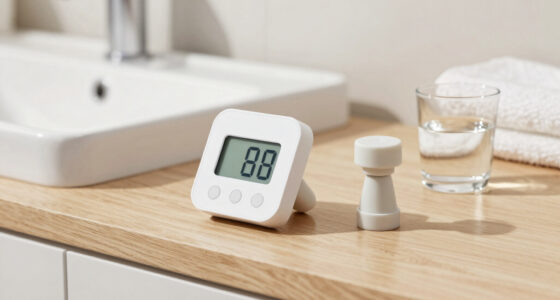
Place detectors near toilets, sinks and supply lines. Alerts reveal hidden water before it spreads across the floor.
Automatic shutoff
Connected valves can stop the water supply when abnormal flow or a leak is detected.
High-traction coatings
Durable treatments add micro-texture while selected antimicrobial surfaces simplify hygiene.
Curbless showers
Level access removes a trip point; a correctly engineered gentle slope still directs water to the drain.
Integrated grab bars
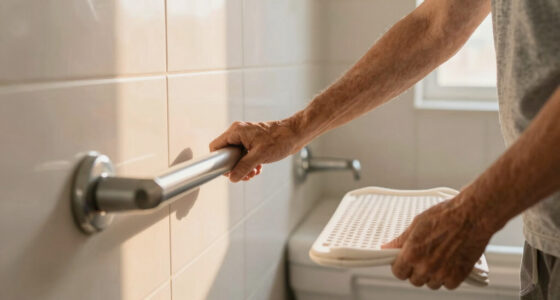
Well-positioned supports can blend with the decor while improving stability during entry and exit.
Lower-flow fixtures
Efficient showerheads reduce excess spray and water use when paired with good enclosure design.
Every layer supports the next
A safer bathroom is a connected system: contain moisture, remove it quickly, preserve traction, detect failures and support the person using the room.
How to Stop Water From Making Your Bathroom Floor a Slip Hazard
The first step to safety is preventing water from spreading everywhere. Think of your bathroom as a mini water park—without the fun. Proper drainage, quick cleanup, and leak prevention are your best tools.
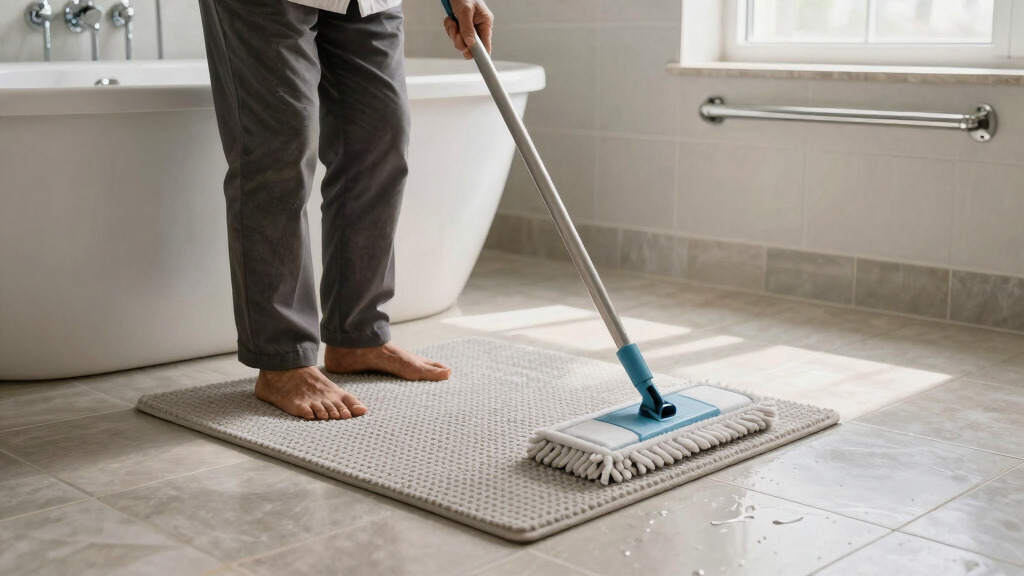
For example, imagine a family member taking a shower. If water splashes onto the floor and isn’t cleaned up promptly, it creates a slick, dangerous surface. Using a squeegee or absorbent towels immediately after showers can cut slip risks significantly.
Simple tips include:
- Installing a high-quality, well-maintained drain
- Using absorbent mats outside the shower or tub
- Promptly drying up water spills or leaks
- Sealing around tubs and sinks to prevent seepage
Effective drainage systems are crucial because they determine how quickly water exits the bathroom and prevent pooling. When drains are clogged or poorly maintained, water can linger, increasing slip hazards. Quick cleanup routines reduce the time water remains on surfaces, minimizing risk. Leak prevention through proper sealing and regular inspections stops unseen water from seeping onto floors, which might otherwise go unnoticed until it causes a fall. These measures collectively create a safer environment by addressing water at its source and ensuring it doesn’t accumulate on walking surfaces.
As an affiliate, we earn on qualifying purchases.
Choosing the Best Non-Slip Surfaces for Your Bathroom Floor
Non-slip flooring is your frontline defense against falls. Regular tiles can be slippery when wet, but textured surfaces dramatically improve grip. Think of it like the difference between a smooth ice rink and a rough gravel path.
Recent innovations include textured tiles with tiny ridges and coatings that increase traction. For instance, a homeowner replacing their bathroom floor might opt for slip-resistant ceramic tiles rated with high coefficient of friction—meaning fewer slips even when wet.
But beyond surface texture, understanding why these choices matter is important. Textured and matte finishes create micro-roughness that channels water away from the contact points and increases friction. This means less likelihood of slipping when floors are wet. Conversely, glossy tiles look sleek but become dangerously slick when wet, creating a false sense of security. The tradeoff often involves cost and aesthetics; textured tiles might be more expensive or require more maintenance but significantly enhance safety. Choosing the right surface involves balancing durability, ease of cleaning, and slip resistance to suit your specific needs. This choice directly impacts fall prevention, especially in environments prone to moisture.
Tip: Look for tiles with textured or matte finishes, and avoid glossy surfaces that become super slick when wet.
As an affiliate, we earn on qualifying purchases.
How to Keep Your Bathroom Dry with Simple Maintenance Routines
Maintaining a dry bathroom floor is about consistency. Think of it like watering plants—you need to do it regularly for the best results. Cleaning up water spills and inspecting plumbing keeps hazards at bay.
For example, a caregiver notices water pooling near the sink after use. A quick wipe with a cloth or towel keeps the area dry and safe. Routine checks of faucets and seals help catch leaks early before they cause bigger messes.
Follow these steps:
- Inspect and clean drains weekly to prevent clogs and water backup.
- Immediately dry any water spills or splashes.
- Check plumbing fixtures for leaks monthly.
- Replace worn or damaged seals around tubs and sinks.
- Use moisture-absorbing products or dehumidifiers if humidity is high.
Implementing these routines creates a proactive approach to bathroom safety. Regular inspections and immediate cleanup not only prevent water accumulation but also help identify underlying issues like leaks or drainage problems early. Addressing these issues promptly avoids larger repairs and potential hazards. Using moisture-absorbing products reduces humidity, which can contribute to mold and slippery surfaces. These routines establish a comprehensive maintenance system that minimizes the risk of slips, mold growth, and water damage, ensuring the bathroom remains a safe, dry zone.
As an affiliate, we earn on qualifying purchases.
Smart Tech and Materials That Make Bathroom Floors Safer
Technology and modern materials can make a big difference in bathroom safety. Think of smart sensors as your water watchdogs—alerting you before water becomes a hazard.
For example, some homes now install leak detectors that send alerts to smartphones when water is detected where it shouldn’t be. Plus, there are anti-slip coatings that last longer and resist mold, making cleaning easier.
Recent trends include:
- Leak sensors that activate alarms or shut off water supply
- High-traction, anti-slip coatings with long-lasting durability
- Water-resistant, anti-microbial surfaces that resist mold and bacteria
- Seamless, walk-in showers with level floors for safer entry
These innovations create a safer, smarter bathroom that reduces slip risks while staying easy to maintain. Understanding how these technologies work helps homeowners make informed decisions about investments that improve safety and reduce ongoing maintenance costs.
As an affiliate, we earn on qualifying purchases.
Design Changes That Help You Stay Safe Without Sacrificing Style
Design can play a huge role in safety. Imagine a bathroom with a curbless, walk-in shower—no tripping over a step, just smooth, level access. It’s a sleek look that also prevents falls.
For example, a family renovating their bathroom chose a curbless shower, making it easier for an elderly parent to enter safely. They also installed slip-resistant tiles and grab bars for extra security.
Recent innovations include:
- Seamless, level-floor showers
- Curbless designs with gentle slopes for drainage
- Built-in grab bars that blend with decor
- Walk-in tubs with low thresholds
These options prove that safety and style can go hand in hand—your bathroom can look beautiful and be safer for everyone.
Eco-Friendly Ways to Keep Your Bathroom Floor Dry and Safe
Eco-friendly solutions don’t just help the planet—they can also improve bathroom safety. Water-efficient fixtures reduce excess water, lowering the risk of spills and pooling.
For example, installing a low-flow showerhead minimizes water splashing onto the floor. Using sustainable, slip-resistant flooring options like cork or bamboo can also add traction and durability.
Some eco-friendly tips include:
- Water-saving fixtures that reduce runoff and splashes
- Natural, textured flooring that resists slips
- Proper ventilation to prevent mold growth and moisture buildup
These choices keep your bathroom safer and greener, offering peace of mind for your family and the environment.
Frequently Asked Questions
How often should I check for leaks or water damage?
Inspect your bathroom plumbing and seals at least once a month. Catching leaks early prevents water buildup and reduces fall risks. Look for signs like water stains, mold, or musty smells.
What are the best non-slip flooring options for bathrooms?
Textured ceramic or porcelain tiles rated for high traction are excellent. Textured vinyl or rubber mats are also good. Avoid glossy surfaces that become slick when wet.
How can I make my bathroom safer for elderly family members?
Install grab bars, use non-slip mats, and opt for level-floor designs. Keep pathways clear and ensure lighting is bright. Regularly check for water spills and leaks to prevent falls.
Are there DIY solutions to improve bathroom safety?
Yes. You can add non-slip adhesive strips to tiles, install suction grab bars, and keep a stash of absorbent towels or mats nearby. Regularly dry surfaces after use to maintain safety.
Conclusion
A safe bathroom is built on consistent habits and smart choices. Simple steps like quick cleanup, choosing the right flooring, and embracing new tech can make your bathroom a haven of safety and comfort.
Remember, a dry floor isn’t just about avoiding slips—it’s about preserving independence, dignity, and peace of mind. Invest in safety today, and your future self will thank you.
NFL season / tailgating Picks
team gear
As an affiliate, we earn on qualifying purchases.