
TL;DR

Turn quiet afternoons into listening time
- Thousands of audiobooks, podcasts and originals
- Listen on your phone, tablet or Echo — also offline
- Cancel anytime
A Flinders University qualitative study examined how specialist palliative care nurses make decisions when dying patients become unresponsive. Nurses described relying on clinical observation, knowledge of patients’ wishes and communication with families, while researchers called for stronger training and support.
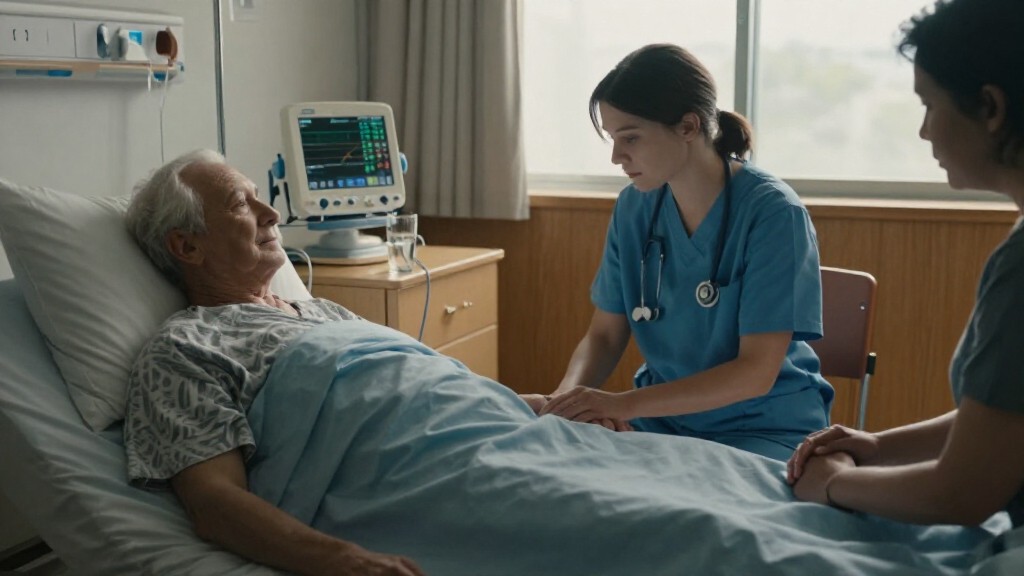
A Flinders University study has examined how specialist palliative care nurses make care decisions when dying patients become unresponsive, finding that they draw on clinical expertise, observation and family engagement. The qualitative research, published in the Journal of Advanced Nursing, also identifies a need for stronger education and clinical support for nurses caring for patients in this vulnerable phase.
The researchers interviewed specialist palliative care nurses from a metropolitan palliative care service. Their accounts highlighted how nurses use knowledge of a patient’s cues and wishes alongside conversations with family members to guide care when the patient cannot speak for themselves. Decisions include assessing comfort and dignity and responding to possible signs of distress.
The study describes the patient as an “absent presence”: although unable to communicate, the person’s identity, values and wishes continue to shape decisions. Nurses reported approaching care with focused attention to the dying process and a responsibility to notice subtle changes and advocate for patients.
The report notes that the period from becoming unresponsive to death averages about two days. During that time, patients may be unable to communicate pain, discomfort, fears or preferences. The researchers say this makes careful assessment and family communication particularly important, while recognizing that decisions remain uncertain when a patient cannot explain what they are experiencing.
Supporting Care When Patients Cannot Speak
The findings draw attention to a short but demanding stage of end-of-life care. When a patient cannot describe symptoms or state preferences, nurses must interpret what they observe and consider what they know about the person, while communicating with family. The study suggests that these decisions affect comfort, dignity and person-centered care.
Researchers say improved preparation could help nurses recognize care needs earlier, assess and manage distress, and communicate more effectively with families. They recommend mentorship, reflective discussion and communication-skills development, as well as support to make the ethical dimensions of decisions more explicit. These are recommendations from the researchers, not reported evidence that a particular training program has already improved outcomes.
Products Worth Considering

LEVOIT Vital 200S-P Smart Air Purifier for Large Rooms

Shark Rocket Corded Stick Vacuum (HV301) – Gray/Orange

Shark Rocket Pet Plus Corded Stick Vacuum, Lightweight, Bordeaux, HV322
As an affiliate, we earn on qualifying purchases.
How Nurses’ Decisions Were Studied
The report is based on interviews with nurses working in a metropolitan specialist palliative care service; it is a qualitative study focused on their experiences and decision-making. It does not report a trial comparing care models or measure whether a specific intervention changes patient outcomes.
Lead author Tricia O’Connor, a doctoral student at Flinders University, said relationships with patients and families inform nursing decisions. The study also found that nurses did not explicitly describe the ethical and moral aspects of these decisions, suggesting those considerations were often present in practice without being consciously framed as ethical decision-making.
The paper, by Tricia O’Connor and colleagues, is titled “When Dying Patients Fall Silent: How Nurses Navigate Decision-Making in the Last Days of Life—A Qualitative Study.” It appeared in the Journal of Advanced Nursing in 2026.
““Patients die in many different health care settings, but building relationships with a patient and their family greatly informs and influences nurses’ decision-making.””
— Tricia O’Connor, lead author and Flinders University doctoral student
Limits of the Interview Findings
The report does not provide the number of nurses interviewed or enough detail here to judge how closely their experiences represent nurses in other services or care settings. Because the study relies on interviews from one metropolitan service, its findings describe participants’ accounts rather than establish how all nurses make these decisions.
The research also does not test whether the proposed education, mentorship or guidelines improve patient comfort or family experience. It remains unclear which specific clinical framework would be appropriate across different settings, and how nurses should weigh observed signs against a patient’s previously expressed wishes when evidence is uncertain.
Building Training and Practice Support
The researchers call on health care leaders, educators and policymakers to strengthen nurses’ preparation for caring for unresponsive dying patients across settings. Their recommendations include structured mentorship, reflective dialogue, communication training and clearer clinical guidance.
The study provides a basis for further work on how those supports could be developed and evaluated. The report does not announce a rollout, timeline or specific guideline; what happens next will depend on decisions by health services and education or policy bodies.
Key Questions
What did the study examine?
It explored how specialist palliative care nurses make decisions while caring for dying patients who have become unresponsive, based on interviews at a metropolitan palliative care service.
How do nurses guide care when patients cannot communicate?
The nurses described using clinical observation, knowledge of patients’ cues and wishes, and family engagement to assess care needs and respond to possible discomfort or distress.
What does “absent presence” mean in the study?
It describes how a patient’s values, identity and wishes can continue to inform care even when the person is unable to speak.
What support do the researchers recommend?
They recommend stronger palliative care education, structured mentorship, reflective discussion and communication-skills development, along with support for clearer clinical guidelines. The study did not test whether these measures improve outcomes.
Source: medicalxpress.com