
TL;DR

Turn quiet afternoons into listening time
- Thousands of audiobooks, podcasts and originals
- Listen on your phone, tablet or Echo — also offline
- Cancel anytime
Using a mix of simple routines and modern Bluetooth trackers makes it much easier to find keys, glasses, and phones. Regular habits plus smart devices cut down daily searching time and stress.
Designate a specific spot for your keys, glasses, and phone to build a habit of always placing them in the same place.
Use visual cues like bright containers and labels to quickly identify where your belongings are.
Attach Bluetooth trackers to your essentials for quick, remote locating—consider waterproof and discreet options.
Create a daily routine of checking and returning items to their spots to prevent misplacement.
Reduce clutter regularly to make it easier to spot and grab your essentials when needed.
Create a Dedicated Spot for Your Keys, Glasses, and Phone
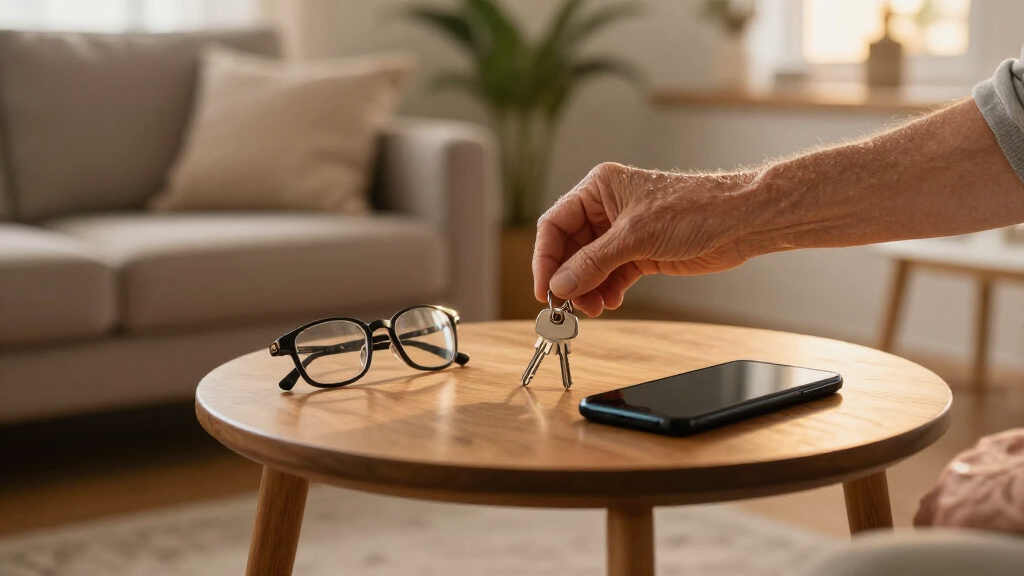
The first step is to assign a specific place for each item. Think of a stylish bowl by the door for keys, a colorful tray for glasses, and a charging station for your phone. When you always put these items in their designated spots, it becomes a habit to check there first. For instance, placing your keys in a bowl on the entryway table means you’ll see them when you come home and remember to grab them on your way out.
This simple habit reduces the mental clutter that leads to frantic searches. It’s a straightforward, yet powerful way to keep your essentials in sight and within reach. Consistency is key—make it part of your daily routine.
As an affiliate, we earn on qualifying purchases.
Use Visual Cues and Labels to Spot Items Fast
Adding visual cues makes a big difference. Use brightly colored or textured containers for different items. For example, a neon-orange bowl for your glasses or a patterned box for keys helps your brain quickly recognize where things go. Labels like “Keys” or “Glasses” further reinforce where to find or return each item. These visual signals serve as mental anchors, making it easier to remember where everything belongs, especially during hurried moments.
But beyond quick recognition, visual cues help embed organizational habits into your daily routine. They act as constant reminders, reducing the mental effort needed to recall where you placed items. Over time, these visual signals become automatic triggers—your brain associates the cues with the action of placing or retrieving items—making the process almost subconscious. This not only speeds up finding things but also minimizes the chance of forgetting or misplacing them in the first place. The tradeoff is that overly elaborate labeling or too many cues can sometimes cause visual clutter, so keep your system simple and intuitive to maintain its effectiveness.
waterproof Bluetooth tracker for keys
As an affiliate, we earn on qualifying purchases.
As an affiliate, we earn on qualifying purchases.
Leverage Technology with Bluetooth Trackers
Bluetooth trackers are game-changers for keeping track of keys, glasses, and phones. Devices like Tile, Apple AirTag, or Samsung SmartTag attach easily to your belongings, providing a digital safety net. When something is misplaced, you can open the app to see the last known location or make the tracker emit a sound to pinpoint it. This integration of technology reduces the guesswork involved in finding lost items, especially in cluttered or large spaces.
However, understanding their limitations is crucial. Bluetooth trackers depend on a stable connection, which can be affected by obstacles or distance, and batteries require periodic replacement. Attaching a tracker to your keychain or inside your glasses case ensures you can locate them even if they’re buried under clutter. They also offer a peace of mind that, if you do misplace something, help is just a tap away. The tradeoff involves ongoing maintenance and the need to remember to keep batteries charged or replaced, but the payoff is significant in reducing daily stress and search time.
As an affiliate, we earn on qualifying purchases.
Compare Physical Organization and Tech Solutions
| Physical Organization | Technology Aids |
|---|---|
| Designated spots, labels, and routines | Bluetooth trackers, smart home integration |
| Low cost, no batteries needed | Requires charging or battery replacement | Immediate visual recognition | Remote locating via app |
| Builds habits over time | Quick retrieval, especially for forgetful moments |
As an affiliate, we earn on qualifying purchases.
Make a Simple Routine to Keep Items in Sight
Establish a daily routine that includes a quick check of your designated spots. For example, every morning, glance at your keys, glasses, and phone before heading out. When you come home, put them back in the same place. Over time, this routine becomes second nature, reducing the chances of misplacing things.
Creating such routines helps reinforce the habit of intentional placement. It minimizes the cognitive effort required each day and prevents small distractions from leading to lost items. The key is consistency—by making these checks and placements a non-negotiable part of your day, you develop a reliable system that operates almost automatically. This consistency not only prevents daily stress but also builds a mental framework that makes the process feel effortless over time, leading to fewer forgotten items and less frustration.
Declutter Regularly to Avoid Lost Items in Chaos
Clutter is a magnet for lost items. When your space is tidy, it’s easier to see where everything belongs. Setting aside 10 minutes weekly to tidy up your entryway, desk, or bag pockets helps create a clear environment. Removing unnecessary clutter not only makes finding items easier but also reduces the mental load that can cause forgetfulness or distraction. A cluttered space often overwhelms the senses, making it harder to focus and increasing the likelihood of misplacing things.
Beyond aesthetics, decluttering improves cognitive clarity by creating visual harmony. A neat space allows your essentials to stand out, making them easier to spot quickly. Regularly discarding or organizing loose items like receipts, loose change, or unused accessories prevents clutter from accumulating and causing chaos. The tradeoff is that decluttering requires discipline and time, but the payoff is a more functional environment that supports your organizational system, ultimately reducing the chances of losing track of important items and decreasing daily stress.
What to Do When Items Are Truly Missing
If you can’t find your keys or glasses, stay calm. Use your tracking app if you have a tracker attached. Check the last known location, then retrace your steps. Sometimes, things turn up in the most obvious spots—pockets, handbags, or under furniture.
Patience and a systematic approach are your best allies. Instead of panicking, methodically search areas where the item is likely to be, based on your recent activities. For example, if you last used your keys in the kitchen, search there thoroughly before expanding outward. Many misplaced items are hiding in plain sight—under a pile of mail or behind other objects. Developing a calm and logical search pattern increases your chances of recovery and reduces frustration, making the process less stressful and more effective. Recognizing that most items are found in familiar or obvious places helps you avoid unnecessary frantic searching, saving time and mental energy.
Frequently Asked Questions
What’s the best way to start organizing my keys, glasses, and phone?
Begin with one item—pick your most misplaced or stressful one. Designate a specific spot, like a bowl or hook, and make it a habit to always put that item there. Once it becomes routine, add other items gradually.Are Bluetooth trackers safe and private to use?
Reputable trackers like Tile or AirTag use encryption and privacy protections. Always review the privacy policies and keep your app updated to ensure your location data stays secure.How long do Bluetooth trackers’ batteries last?
Most trackers have batteries that last between 6 months to a year. Many models remind you when the battery is low, and replacing batteries is simple and inexpensive.Can I attach trackers to glasses easily?
Yes, many trackers are small enough to hide inside or attach to glasses cases or straps. Just ensure it doesn’t interfere with comfort or daily use.What if I lose my phone? How can I find it quickly?
Use the ‘Find My’ app if Apple or the equivalent on Android. If your phone is nearby but silent, call it or use another device to ping its location. Having a tracker on your phone makes this even easier.Conclusion
Keeping your everyday items findable isn’t about perfection—it’s about creating habits and using smart tools that work for you. With a little consistency and a touch of tech, you’ll spend less time searching and more time enjoying your day. Imagine the relief of knowing your keys or glasses are just a glance away—every single time.Fall Picks
fall essentials
As an affiliate, we earn on qualifying purchases.