
TL;DR

Turn quiet afternoons into listening time
- Thousands of audiobooks, podcasts and originals
- Listen on your phone, tablet or Echo — also offline
- Cancel anytime
A randomized trial involving 1,706 adults with uncontrolled hypertension in Jamaica and Colombia found that a single pill combining two or three medicines, paired with team-based support, produced better blood pressure control than usual stepped care. The study followed participants for four years and reported that the advantage persisted six months after the trial ended, but it did not establish whether the strategy reduces heart attacks, strokes or deaths.
A four-year randomized trial in Jamaica and Colombia found that adults with uncontrolled high blood pressure had better blood pressure control with a single pill combining two or three medicines and team-based support than with usual care. The findings, reported at the 2026 American Heart Association Scientific Sessions and published in JAMA, add long-term evidence for a treatment approach already recommended by guidelines.
The Caribbean and South American Team-Based Strategy to Control Hypertension (CATCH) trial enrolled 1,706 patients at 40 primary care clinics in Jamaica and Colombia. Researchers assigned clinics to one of two approaches. Usual care mainly used stepped treatment: patients began with one blood pressure medicine, and clinicians increased doses or added drugs if blood pressure remained high. At the other clinics, patients received a pill combining two or three antihypertensive medicines.
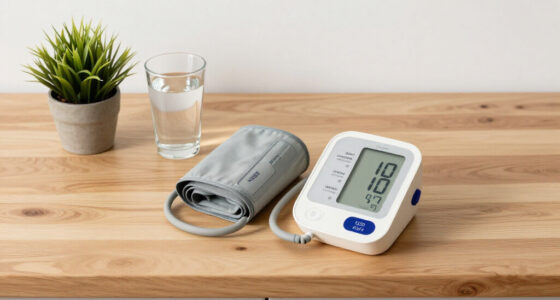
The combination-treatment group also received home blood pressure monitors, instruction from nurses on measuring blood pressure, regular review of their readings and health-coach support to help with medication adherence. The comparison was therefore between a package of single-pill treatment and support and usual care, rather than a test of pill format alone.
At 18 months, average systolic blood pressure—the upper number in a reading—had fallen by about 19 points in the intervention group, compared with a 9-point decline among patients receiving usual care. Nearly 70% of the intervention group reached the trial target of below 130/80 mm Hg; 29% of the usual-care group did. Six months after the trial ended, 75% of intervention-group patients were still receiving the combination treatment through insurance or government programs and had maintained better control, the report said.
A Simpler Path to Blood Pressure Control
Hypertension raises the risk of cardiovascular disease, chronic kidney disease and stroke, among other serious outcomes. Yet the source report says blood pressure is controlled in only 22.5% of U.S. patients with hypertension and 13.6% in low- and middle-income countries. Better control can matter at population scale, particularly where many patients are not reaching treatment targets.
A combined pill may make a multi-drug regimen simpler to take, while the trial’s nurse and health-coach support addressed monitoring and adherence. The study’s results offer evidence that the approach can be implemented in primary care settings in two countries and that many participants continued it after the formal trial period. They do not, however, show that the strategy prevents heart attacks, strokes or deaths; the reported outcomes concern blood pressure and continued treatment.
Products Worth Considering

LEVOIT Vital 200S-P Smart Air Purifier for Large Rooms up to 1875 ft², Quiet 27 dB Operation, AHAM VERIFIDE Certified, Air Quality Monitor,

Bose Lifestyle Ultra Wireless Home Speaker, White Smoke

Blueair Blue Pure 211i Max Air Purifier for Large Rooms
As an affiliate, we earn on qualifying purchases.
Why Long-Term Evidence Matters
Clinical guidelines in the United States and internationally recommend single-pill combination therapy as a preferred option for many people with high blood pressure. Earlier trials found that combination pills could lower blood pressure more quickly or effectively than regimens involving multiple pills, but the source report says many of those studies lasted only weeks. That left questions about whether control would last and whether patients would continue the treatment.
CATCH was designed to address that evidence gap in resource-constrained primary care settings. Its four-year duration included recruitment and follow-up, and the report highlights persistence six months after the trial ended. The research was co-led by UT Southwestern Medical Center investigators and colleagues in Colombia and Jamaica, and funded by the U.S. National Heart, Lung, and Blood Institute.
“Our study demonstrated that a single-pill combination provided an effective, implementable, scalable, and sustainable approach for hypertension control in low- and middle-income countries.”
— Jiang He, M.D., M.S., Ph.D., UT Southwestern Medical Center
Questions Beyond Blood Pressure
The results do not establish whether the approach reduces heart attacks, strokes, kidney disease or mortality. The source report calls for larger trials examining clinical outcomes. It also does not provide detailed information about adverse events, the specific medicines used, or whether results differed between the two countries or among patient groups.
Because the intervention combined medication with home monitoring and coaching, the study does not isolate how much of the improvement came from the single-pill formulation itself and how much came from the added support. The findings also come from clinics in Jamaica and Colombia; how well the same package would work in other health systems remains to be assessed.
Further Trials and Wider Uptake
The next evidence needed, according to He, is from large clinical trials that track clinical outcomes as well as blood pressure. Such studies could help determine whether improved readings translate into fewer cardiovascular events and could inform decisions about wider use.
The CATCH findings may also inform clinicians and health systems considering the approach, but adoption will depend on access to suitable combination medicines, coverage and the support needed to monitor patients. The report says about 10% of U.S. patients with hypertension are treated with single-pill combinations, and identifies physician unfamiliarity and the lack of large, long-term trial evidence as possible reasons for limited use. It does not announce a change to treatment guidelines or a specific implementation plan.
Key Questions
What did the trial compare?
It compared usual stepped care, in which clinicians adjusted one or more medicines over time, with a package using a pill that combined two or three blood pressure medicines plus home monitoring and health-coach support.
How many patients took part, and where?
The trial enrolled 1,706 patients with uncontrolled hypertension at 40 primary care clinics in Jamaica and Colombia.
How much better was blood pressure control?
At 18 months, systolic blood pressure fell by about 19 points in the intervention group, compared with 9 points under usual care. Nearly 70% versus 29% reached the trial’s target of below 130/80 mm Hg.
Did the study show fewer heart attacks or strokes?
The reported findings do not establish that. They focus on blood pressure control and treatment continuation; the researchers called for additional trials of clinical outcomes.
Does the result mean patients should change their medication?
No individual treatment recommendation follows from this report alone. Patients should discuss medication choices with a qualified health professional, who can consider their health needs and available treatments.
Source: news-medical.net