
TL;DR

Turn quiet afternoons into listening time
- Thousands of audiobooks, podcasts and originals
- Listen on your phone, tablet or Echo — also offline
- Cancel anytime
Home blood pressure readings are vital for managing health. Accurate technique and understanding what the numbers mean can help you spot risks early and work with your doctor effectively.
Use proper technique: rest, arm at heart level, and avoid talking during measurement.
Monitor consistently — twice daily, over several days — to get a true picture.
Choose validated upper-arm cuff monitors for accurate readings.
Understand that home readings of 135/85 mmHg or higher often require treatment.
Lifestyle changes like diet, exercise, and sleep significantly influence blood pressure.
Understanding Blood Pressure Numbers at Home
Your blood pressure is the pulse of your arteries — a story about your heart’s health told in two numbers. Honest, accurate readings from your living room can catch risk early, long before it becomes serious. Here’s how to measure correctly and decode what the numbers actually mean.
A home average of 135/85 mmHg is generally considered equivalent to an office reading of 140/90 mmHg — making home monitoring a crucial tool for accurate management.
Home BP threshold · clinical consensushealthy ceiling
requires treatment
then averaged
reliable average
What Do My Blood Pressure Numbers Actually Mean?
Blood pressure is two numbers measured in millimeters of mercury (mmHg). Together they reveal how hard your heart works — and whether your readings fall within a safe range.
Systolic — the beat
The pressure in your arteries when your heart contracts and pumps blood out. It reflects the force each heartbeat sends through your circulation.
Diastolic — the rest
The pressure in your arteries when your heart relaxes between beats. It shows the baseline load your arteries carry around the clock.
How to read it: systolic is 125, diastolic is 78. These numbers matter because they predict your risk of heart disease and stroke — and because hypertension is usually symptomless, the numbers are often the only warning you get.
| Blood Pressure Range | Category | What To Do |
|---|---|---|
| < 120/80 | ✓ Normal | Healthy range — maintain good habits; check periodically |
| 120–129 / <80 | ~ Elevated | Watch your lifestyle — diet, activity and stress can improve it |
| 130–139 / 80–89 | ~ Stage 1 Hypertension | Consult your doctor about possible treatment |
| 140+ / 90+ | ✗ Stage 2 Hypertension | Work with your healthcare provider on active management |
| 180+ / 120+ | ✗ Hypertensive Crisis | Seek emergency care immediately, especially with symptoms |
Framework: 2017 ACC/AHA guideline (current US standard). Note: European ESC/ESH guidelines define hypertension as ≥140/90 — a difference that confuses many readers.
Why Home Readings Differ From the Doctor’s Office
Ever notice your numbers spike at the clinic? You’re not alone. Two well-documented phenomena make home monitoring essential for an honest picture of your everyday blood pressure.
White-Coat Hypertension
Readings run high in a clinical setting — driven by anxiety or the busy environment — but settle back to normal at home. Common, and usually benign, but it can lead to overtreatment if unseen.
Masked Hypertension
The reverse — and arguably the more dangerous pattern: normal readings at the office, but elevated at home. It often goes undiagnosed precisely because check-ups look fine.
How to Measure Your Blood Pressure the Right Way
Technique drives accuracy. Wrong cuff size, an unsupported arm, dangling feet, talking, a full bladder — each can distort your numbers. Follow the chain below, every time.
Rest quietly
Sit still and silent for 5 minutes before measuring. No caffeine, exercise or smoking for 30 minutes prior.
Sit supported
Back supported in a chair, feet flat on the floor, legs uncrossed.
Arm at heart level
Rest your arm on a table at heart height — the same arm each time, typically the left.
Cuff snug & bare
Wrap the cuff on bare skin just above the elbow — not too tight, not loose, never over clothing.
Stay still & quiet
Don’t talk or move while the cuff inflates and the reading is taken.
Take two, average
Record the reading, wait 1 minute, repeat — then average the two.
Log consistently
Measure twice daily — morning before medication, and evening — for at least 5 days.
John, 70, follows this routine every morning. His consistent technique reveals his true blood pressure trend — helping his doctor fine-tune treatment with confidence.
Choosing and Using the Best Monitor
Not all devices are created equal. Validation status and positioning matter more than features or price.
Upper-Arm Cuff
The most reliable option and the clinical standard. Easier to position correctly, less sensitive to posture, and the category with the most validated models.
Wrist Monitor
Can work well, but only if held exactly at heart level. Highly position-sensitive — small placement errors translate directly into wrong numbers.
Cuffless / Smartwatch
Optical PPG-based sensors promise convenience, but accuracy and calibration drift remain open problems. Promising — not a replacement for a cuff.
Check accuracy lists from the AMA (Validated Device Listing) or STRIDE BP before buying.
Too small or too large a cuff distorts readings — match it to your arm circumference.
Measure on the same arm every time; a steady 10–15 mmHg gap between arms is worth flagging.
Bluetooth cuffs sync trends to apps and can share weekly averages with your doctor remotely.
From Normal to Crisis — At a Glance
Systolic pressure sits on a continuum. The thresholds below mark where each category begins — and where home monitoring draws its own, slightly lower line.
Keep Your Blood Pressure in Check
Blood pressure isn’t just about medication. Simple, evidence-backed changes can move your numbers meaningfully.
Cut the salt
Avoid processed foods and reduce sodium — one of the best-documented ways to lower readings.
Eat the DASH way
More fruits, vegetables and whole grains — the DASH diet demonstrably lowers blood pressure.
Walk 30 minutes
Regular aerobic activity, like brisk walking most days, strengthens the heart and eases arterial pressure.
Even 5–10 lb helps
Losing a modest amount of weight can significantly drop your home averages.
Limit alcohol
Cutting back on drinking removes a quiet but real driver of elevated readings.
Prioritize sleep
Adequate, consistent sleep is a key — and often overlooked — lever for healthy blood pressure.
Sarah, 68, started a daily walk and adjusted her diet. Over a few months, her home readings dropped from 142/88 to under 130/80 — a real sign she’s taking control.
When Should You Worry — and Call Your Doctor?
A single high reading isn’t alarming. Patterns are. And some numbers demand immediate action.
Hypertensive Crisis — Emergency
If readings reach 180/120 or higher — especially with symptoms — seek emergency care immediately. Quick action can save lives.
- Chest pain
- Shortness of breath
- Severe headache
- Vision changes
Persistent Elevation — Book a Visit
Consistent readings above 130/80 should prompt a conversation with your healthcare provider. One high reading doesn’t diagnose hypertension — a sustained pattern might.
Frequently Asked Questions
Twice daily — morning before medication or food, and evening — for at least a week to get a reliable picture of your average.
They can be accurate if validated and held exactly at heart level, but validated upper-arm cuffs are generally more reliable and easier to position.
Use one validated device on the same arm each time. Small variations are normal; large discrepancies deserve a conversation with your doctor.
No. Diagnosis rests on averaged patterns over days, interpreted by your clinician in context — not on a single number.
The Home Monitoring Loop
Correct posture, validated cuff, calm and quiet
Twice daily — morning and evening, every day
Five-plus days of pairs, averaged into a trend
Send trends to your clinician — telehealth makes it easy
Tune lifestyle and treatment — then measure again
What Do My Blood Pressure Numbers Actually Mean?
Blood pressure is two numbers, measured in mmHg, that reveal how your heart works. The top number, called systolic, shows the pressure when your heart beats. The bottom, diastolic, shows the pressure when your heart rests between beats. For example, a reading of 125/78 means your systolic is 125, and diastolic is 78.
Knowing these numbers helps you understand if your blood pressure falls within a safe range. A normal reading is under 120/80. If your systolic rises above 130 or diastolic over 80, you might be in the early stages of hypertension. These numbers matter because they predict your risk for heart disease and stroke, according to health authorities.
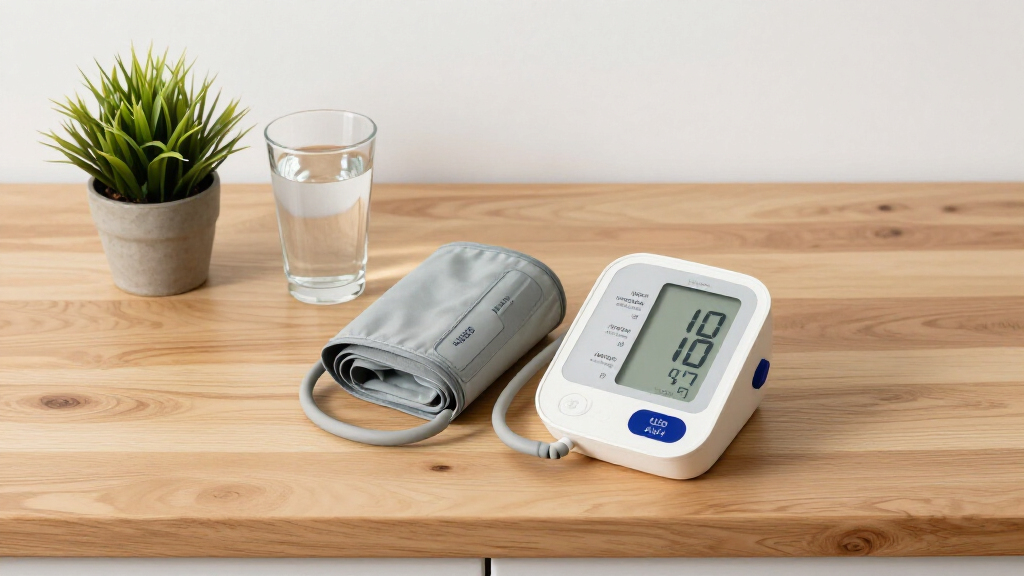
validated home blood pressure monitor
As an affiliate, we earn on qualifying purchases.
As an affiliate, we earn on qualifying purchases.
Why Your Home Readings Can Be Different From the Doctor’s Office
Ever notice your blood pressure seems higher at the clinic than at home? That’s common. It’s called the white-coat effect. Anxiety or the busy environment can temporarily spike your numbers. Conversely, some people have masked hypertension — normal readings at the doctor but high at home, which can be even more dangerous.
For example, you might have an office reading of 138/85 but average 125/78 at home. This discrepancy matters because it influences how your doctor manages your health. Monitoring at home gives a more honest picture of your everyday blood pressure.
As an affiliate, we earn on qualifying purchases.
How to Measure Your Blood Pressure the Right Way — A Step-by-Step Guide
- Rest quietly for 5 minutes before measuring. Sit in a comfortable chair with your back supported.
- Place your arm on a table at heart level. Use the same arm each time, typically the left.
- Wrap the cuff snugly around your upper arm, just above the elbow. Make sure it fits properly — not too tight or loose.
- Stay still and quiet. Don’t talk or move during the measurement.
- Press the button and wait for the cuff to inflate. Record the reading. Repeat after 1 minute and average the two.
- Measure twice daily — morning before medication and evening — for at least 5 days to get a reliable average.
For example, John, age 70, follows this routine every morning. His consistent technique shows his true blood pressure trend, helping his doctor fine-tune his treatment.
automatic digital blood pressure monitor
As an affiliate, we earn on qualifying purchases.
As an affiliate, we earn on qualifying purchases.
Choosing and Using the Best Blood Pressure Monitor
Not all devices are created equal. The most reliable are upper-arm cuffs that are validated for accuracy. Wrist monitors can work well if used exactly at heart level, but they’re more position-sensitive.
Here’s what to look for:
- Validated for accuracy — check lists from reputable organizations like the AMA or STRIDE BP.
- Proper cuff size — too small or large cuffs distort readings.
- Consistent arm use — measure on the same arm each time.
- Bluetooth or app connectivity — for tracking trends over time.
For example, a senior caregiver recommends a validated upper-arm monitor with a cuff that fits comfortably over her mother’s arm, ensuring readings are trustworthy.
blood pressure monitor with large display
As an affiliate, we earn on qualifying purchases.
As an affiliate, we earn on qualifying purchases.
What Do My Numbers Mean? A Simple Chart for Quick Interpretation
| Blood Pressure Range | What It Means | What to Do |
|---|---|---|
| Less than 120/80 | Normal — healthy range | Maintain healthy habits; check periodically |
| 120–129/<80 | Elevated — watch your lifestyle | See if diet, activity, or stress can improve |
| 130–139/80–89 | Stage 1 Hypertension | Consult your doctor for possible treatment |
| 140+/90+ | Stage 2 Hypertension | Work with your healthcare provider on management |
| 180+/120+ | Hypertensive crisis | Seek emergency care immediately |
Remember, your doctor will interpret these numbers in context, but knowing the basics helps you stay informed and proactive.
How To Keep Your Blood Pressure in Check — Easy Lifestyle Tips
Blood pressure isn’t just about medication. Simple changes can make a big difference. For example, reducing your sodium intake by avoiding processed foods, adding more fruits and vegetables, and cutting back on salt can lower your numbers.
Regular aerobic activity, like walking briskly for 30 minutes most days, strengthens your heart. Losing even 5-10 pounds can significantly drop your readings. Limiting alcohol and ensuring enough sleep are also key.
For instance, Sarah, 68, started a daily walk and adjusted her diet. Over a few months, her home readings dropped from 142/88 to under 130/80 — a real sign she’s taking control.
Latest Trends in Home Blood Pressure Monitoring — What You Should Know
Smart technology is changing how we track blood pressure. Bluetooth cuffs that sync with apps help you monitor your numbers over time and share data with your doctor remotely. These tools are increasingly reliable, but always check for validation.
New cuffless devices in smartwatches promise convenience, but they’re still being studied for accuracy. Telehealth programs now often include remote monitoring, making blood pressure tracking more seamless and integrated into your healthcare routine.
For example, Tom uses a Bluetooth cuff and an app to send his weekly averages directly to his doctor, helping catch early signs of trouble. It’s a smart way to stay connected and informed.
When Should You Worry and Call Your Doctor?
Consistently high numbers — especially above 130/80 — should prompt a chat with your healthcare provider. A single high reading isn’t alarming, but if your numbers stay elevated, it could signal a problem.
If your readings reach 180/120 or higher, or if you experience symptoms like chest pain, shortness of breath, severe headache, or vision changes, seek emergency care. These are signs of a hypertensive crisis that needs immediate attention.
For example, Mary noticed her readings hovered around 135/85 most days. When she got a sudden spike to 190/125 with a pounding headache, she called her doctor right away. Quick action can save lives.
Frequently Asked Questions
How often should I check my blood pressure at home?
Most experts recommend measuring twice daily — once in the morning before medication or food, and once in the evening. Doing this for at least a week gives a reliable picture of your average blood pressure.
Can I rely on wrist monitors for accurate readings?
Wrist monitors can be accurate if used exactly at heart level and validated for accuracy. However, upper-arm cuffs are generally more reliable and easier to position correctly.
What if I get mixed readings from different devices?
Always use a validated device and measure on the same arm each time. Variations are normal, but large discrepancies should be discussed with your doctor for proper interpretation.
Is a single high reading a sign I have hypertension?
No. One high reading doesn’t diagnose hypertension. Your doctor will consider averages over days or weeks, along with other factors, to determine your health status.
When should I call emergency services for my blood pressure?
If your blood pressure hits 180/120 or higher, or if you experience symptoms like chest pain, vision loss, or severe headache, seek emergency care immediately. These could be signs of a hypertensive crisis.
Conclusion
Your blood pressure isn’t just a number — it’s a vital sign reflecting your heart’s health. Taking a few minutes each day to measure it accurately and understand what the numbers mean empowers you to stay ahead of potential issues. Remember, consistent monitoring and healthy habits are your best tools for aging well and keeping your heart happy.Fall Picks
fall essentials
As an affiliate, we earn on qualifying purchases.