TL;DR

Turn quiet afternoons into listening time
- Thousands of audiobooks, podcasts and originals
- Listen on your phone, tablet or Echo — also offline
- Cancel anytime
Fit&Well published a yoga therapist’s seven-part seated movement routine for older adults, including people with movement disorders or chronic health conditions. The therapist says participants can adapt each movement to their own range; the report does not provide clinical evidence that the routine improves health outcomes.
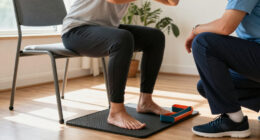
Fit&Well has published a yoga therapist’s seven-part seated movement routine for older adults, including people who find floor-based exercise difficult or prefer to move from a chair. The routine uses a sturdy chair and gentle movements, with the therapist advising readers to work within their own capacity rather than aim for a particular pose.
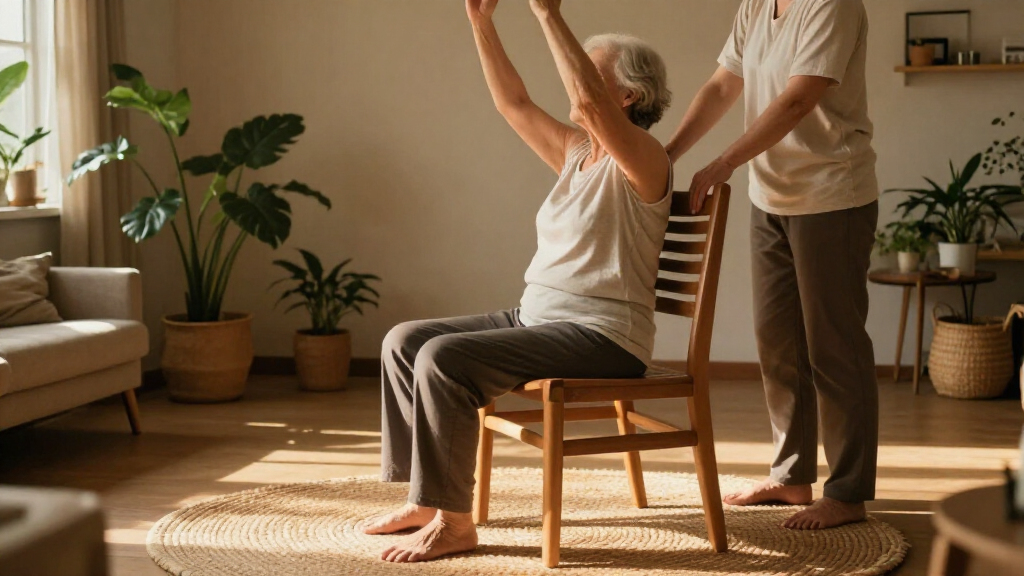
The therapist describes using chair-based yoga with older adults living with Parkinson’s, other movement disorders and chronic health conditions. The exercises include settling into a supported seated position, raising the arms, gentle torso twists, side bends, seated cat-cow movements and a forward fold. Most movements are suggested for three to five repetitions, or three repetitions on each side where relevant.
The sequence begins with about one minute of settling and natural breathing. Participants then move through the exercises at a pace they can manage. The source recommends sitting toward the back of the chair with the feet flat on the floor and keeping enough clear space nearby to raise the arms comfortably.
Several movements include adjustments. For a side bend, a person who wants more stability can hold the side of the chair rather than extend an arm downward. During the forward fold, the therapist suggests keeping hands on the knees for added support. Looking up at the hands during an arm raise is optional, not required.
A Seated Option for Gentle Movement
The routine offers an accessible format for people who may not be comfortable getting down to the floor, while retaining movements that involve the shoulders, spine and torso. Its practical instructions and modifications may help readers understand how to try a short sequence without needing exercise equipment beyond a chair.
The therapist says the practice combines mindful movement with stretching muscles and mobilizing joints, and reports that participants leave feeling more rested and uplifted. Those are the therapist’s observations, not measured outcomes in the report. The article does not present research showing that this particular sequence prevents falls, treats Parkinson’s or produces other specific medical benefits.
Products Worth Considering

Dyson Airwrap i.d. Multi-Styler for Straight and Wavy Hair

Philips Hue Smart LED Candle Light Bulb (B39, E12) – 2 Pack

Levoit Vital 100S-P Air Purifier with Washable Pre-Filter
As an affiliate, we earn on qualifying purchases.
How the Seven Movements Work
The report frames chair-based yoga as an alternative for people who have limited mobility for floor-based movement, as well as for those who are simply more comfortable seated. The therapist says the groups she works with include older adults with different health and movement needs, which is why she keeps the postures gentle.
After the opening breathing pause, the sequence links movement with breath: arms rise on an inhale and lower on an exhale; twists alternate between sides; and cat-cow shifts between a lifted chest and a rounded back. A seated forward fold completes the flow. The instructions repeatedly make range of motion personal, rather than asking readers to match a fixed shape.
“I encourage everyone to move within the range and capacity of their body—there’s no particular shape or position to achieve.”
— The yoga therapist quoted in Fit&Well
Evidence and Individual Suitability
The source does not identify a publication date, cite clinical trials of this specific sequence or quantify its effects. It also does not say how the routine should be adapted for particular diagnoses, injuries, pain or balance concerns. The therapist’s experience with older adults is described, but the report does not establish that every movement is appropriate for every person.
Readers’ abilities and health needs can differ, and the article does not provide a medical assessment. Anyone unsure whether a movement is suitable for them can seek guidance from a qualified health professional or an appropriately trained exercise or yoga practitioner. The report does not specify how often to repeat the sequence or how to progress it over time.
Trying the Routine at Home
The report provides a routine readers can try with a sturdy chair and enough surrounding space to move their arms. It gives repetition guidance for each exercise, but does not announce a follow-up study, trial or additional development. Any decision to use the sequence remains a matter of individual comfort and suitability; movements can be reduced or skipped if they do not feel manageable.
Key Questions
What exercises are included in the chair routine?
The sequence includes a seated settling pause, an arm arc into prayer, torso twists, single and double arm raises, side bends, cat-cow movements and a forward fold.
What equipment does the routine require?
The therapist says to use a sturdy chair and leave enough space around it to raise the arms comfortably. The report does not list other equipment.
Can the movements be modified?
Yes. The source advises moving within one’s own range and capacity. It suggests holding the chair during a side bend for extra stability and resting the hands on the knees during the forward fold for support.
Does the report show that these exercises treat Parkinson’s?
No. The therapist says she works with older adults who have Parkinson’s and other conditions, but Fit&Well does not provide evidence that this routine treats or improves any diagnosis.
How many repetitions should readers do?
The instructions generally call for three to five repetitions. Twists and side bends are listed as three repetitions on each side; the opening settling pause lasts about one minute.
Source: fitandwell.com