TL;DR

Turn quiet afternoons into listening time
- Thousands of audiobooks, podcasts and originals
- Listen on your phone, tablet or Echo — also offline
- Cancel anytime
An analysis of nationally representative data on more than 55,000 U.S. adults found that yoga and Pilates participation were associated with lower risks of death over roughly a decade. The researchers caution that the findings do not show the activities caused the difference, and other factors may help explain the association.
Yoga and Pilates were associated with lower risks of death in an analysis of more than 55,000 U.S. adults, according to Arizona State University researchers. The study examined 21 alternative health practices and found significant associations for only those two activities, but it cannot establish that either practice caused people to live longer.
Researchers used nationally representative data on U.S. adults and linked it to mortality records spanning about a decade. They reported that people who practiced yoga had a 27% lower risk of death, while Pilates practitioners had a 36% lower risk, compared with the relevant groups in the analysis. The source report does not provide further detail on the study’s measurement of participation or the exact comparison groups.
The research considered 21 alternative health practices; only yoga and Pilates were reported as significantly associated with lower mortality. The researchers accounted for several factors, including income, education, exercise, smoking, body mass index and self-rated health. Statistical adjustment can reduce the influence of measured differences, but it cannot rule out all other explanations.
Study co-author Connor Sheehan, an associate professor at Arizona State University, said the result points to a stronger longevity association for practices involving physical movement than for other approaches in the analysis. That is the researchers’ interpretation of the findings, not evidence that yoga or Pilates extends lifespan.
Movement Practices Show the Signal
The findings offer a comparison across 21 different practices at a time when consumers have many wellness options and long-term evidence for them is limited. In this analysis, yoga and Pilates stood out, while the other practices examined were not reported to have significant associations with lower risk of death. That can help identify questions for future research, but it does not rank the activities as proven ways to extend life.
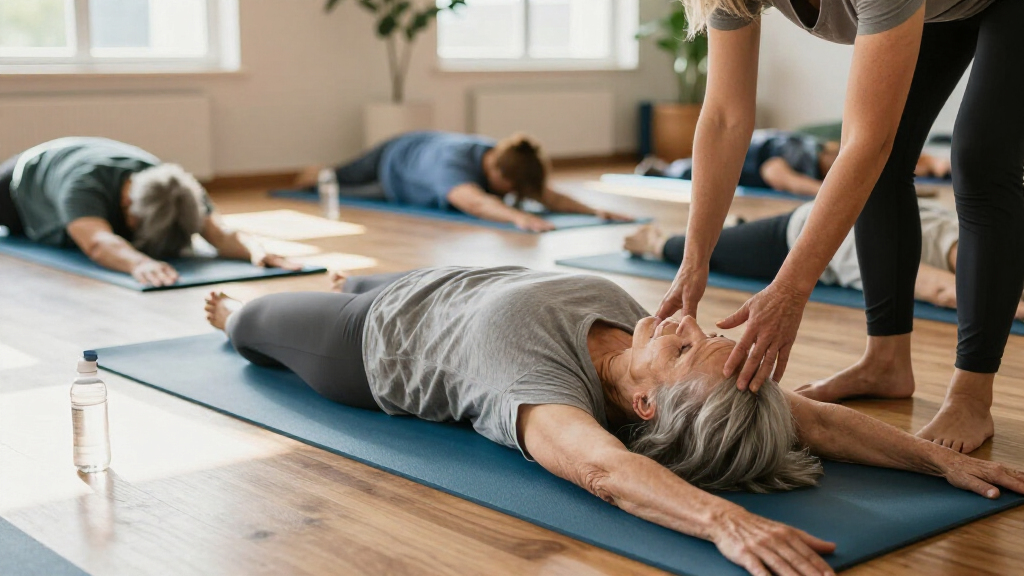
Both activities involve movement, and Sheehan said they may combine strength and balance work with breath practice, stress reduction and, in group classes, social contact. Those are possible explanations for the association, not mechanisms confirmed by this study. The result matters to readers weighing wellness claims because it illustrates the difference between an observed link and proof of a health benefit.
Sheehan also pointed to the large amount Americans spend on complementary and alternative medicine and said evidence about whether these practices are associated with longer life remains limited. The study’s broader contribution is to add population-level data to a field where many approaches are popular but have not been studied extensively over time.
Products Worth Considering

LG C2 Series 65-Inch OLED evo 4K Smart TV (OLED65C2PUA, 2022)

Philips Hue Secure Wired Video Doorbell, 2K, Black

Levoit Eleva 300X HEPA Air Purifier
As an affiliate, we earn on qualifying purchases.
Why Researchers Compared 21 Practices
The research was prompted by the spread of wellness and alternative health choices, alongside limited evidence about their long-term relationship with mortality. Sheehan said more than 40% of U.S. adults use at least one complementary or alternative practice, according to the source report. The study set out to examine whether a range of such practices were associated with death risk, rather than testing a treatment in a controlled trial.
The reported analysis drew on a large U.S. adult sample and mortality follow-up of roughly one decade. Its observational design means participants were not randomly assigned to practice yoga or Pilates. The results therefore describe associations within the data, and may reflect differences between people who do and do not take part.
“Maybe the sickest people are too unhealthy to do yoga or Pilates to begin with, so the practice looks protective when really it’s just excluding the least healthy.”
— Connor Sheehan
Association Is Not Proof
The study does not establish that practicing yoga or Pilates causes a longer lifespan. People who take part may differ from those who do not in ways the analysis could not fully account for. Sheehan cited possible differences in healthcare access, genetics, economic circumstances and general health habits. He also said people in the poorest health may be less able to participate, which could make the practices appear protective.
The source report does not specify how often participants practiced, how long they had practiced, or whether particular styles or class formats were associated with the results. It also does not provide detailed estimates of uncertainty around the reported risk reductions. Those details limit what readers can conclude about the size and consistency of the associations.
The findings concern mortality associations in the population studied; they do not establish that yoga or Pilates prevents a particular illness or that an individual will live longer by starting either activity. People considering changes to their health routines should seek guidance from a qualified health professional when they have medical concerns.
More Research on Wellness Claims
The results point to a need for further research that can test whether the association holds across different groups and clarify how participation relates to outcomes. Studies with more detailed information on frequency, duration and type of practice could help answer questions this analysis leaves open. Research designs that better address differences in health and lifestyle between participants and nonparticipants would also help separate possible effects from selection and other confounding factors.
Sheehan called for more study of rapidly changing wellness behaviors, including practices that have gained attention in recent years. The source report gives no timetable for follow-up research. For now, the finding is best read as a population-level association that may guide future investigation—not as a guarantee that yoga or Pilates will extend an individual’s life.
Key Questions
What did the study find about yoga and mortality?
The analysis linked yoga participation with a 27% lower risk of death. It was an observational association and does not show that yoga caused the difference.
What did it report about Pilates?
Pilates participation was associated with a 36% lower risk of death in the reported analysis. The study does not prove Pilates extends lifespan.
How many people and practices were included?
The researchers analyzed nationally representative data from more than 55,000 U.S. adults and examined 21 alternative health practices. Mortality records covered about a decade.
Can the findings show that yoga or Pilates makes people live longer?
No. Because the research was observational, it cannot establish cause and effect. Differences in health, healthcare access, genetics or other behaviors could help explain the association.
Were any other practices linked to lower mortality?
The report says yoga and Pilates were the only two of the 21 practices examined that were significantly associated with lower mortality risk. That does not establish that the other practices have no health effects.
Source: rss