
TL;DR

Turn quiet afternoons into listening time
- Thousands of audiobooks, podcasts and originals
- Listen on your phone, tablet or Echo — also offline
- Cancel anytime
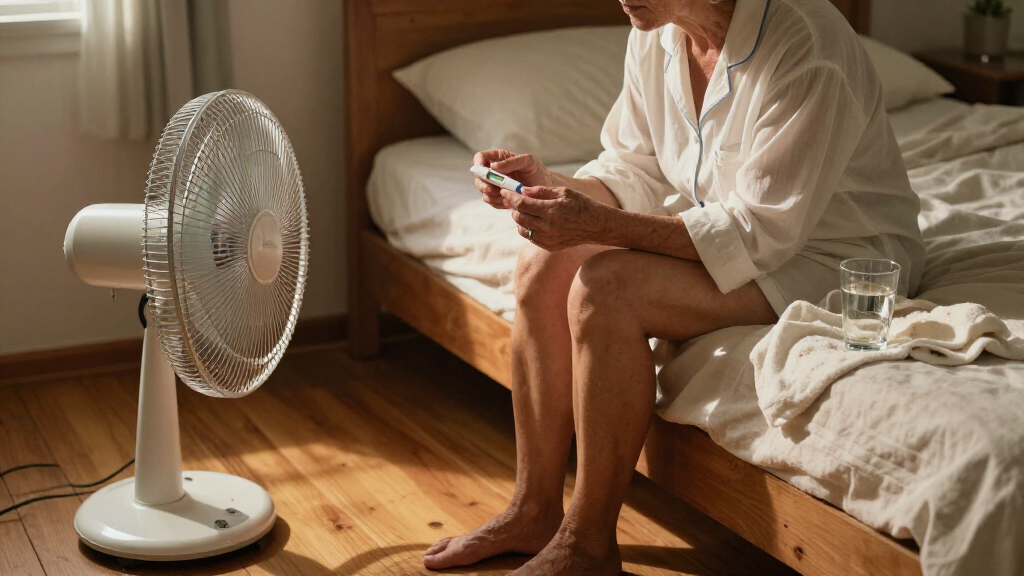
In a controlled University of Ottawa study, 18 adults ages 67 to 84 experienced repeated daytime heat exposure in a simulated three-day heat wave. Cooling the apartment overnight to 26°C allowed most measured responses to recover near baseline, but lower morning systolic blood pressure and elevated kidney-stress markers persisted; the researchers say a stable core temperature did not mean full recovery.
A University of Ottawa study found that some signs of physiological strain remained the morning after older adults experienced repeated daytime heat in a simulated heat wave, even when the apartment cooled to 26°C (79°F) overnight. The controlled trial, published in The Lancet Planetary Health, involved 18 adults ages 67 to 84 and suggests that overnight cooling did not fully reverse every measured effect of daytime indoor heat exposure.
Participants spent three consecutive days and two nights in a studio apartment-style climate chamber. During the heat-wave simulation, the room reached 34°C (93°F) during the day and cooled to 26°C overnight. In a separate comparison session, it stayed at 26°C throughout the day and night. Researchers said the simulated temperatures reflected indoor conditions recorded during heat events in Canada and the United States.
On hot days, participants’ peak core body temperature averaged 37.8°C (100.0°F), compared with 37.4°C (99.3°F) in the cooler condition. Their average heart rate was five beats per minute higher. Blood tests showed higher circulating markers of kidney and gastrointestinal stress; researchers also observed lower blood pressure and cardiac autonomic function, alongside small declines in balance and cognitive test performance.
Most measured responses moved close to baseline overnight, but recovery was incomplete. Lower morning systolic blood pressure and elevated markers of kidney stress were still evident on the following mornings. The researchers reported no adverse events during the trial. They cautioned that the study’s physiological measurements do not, by themselves, establish what the findings mean for every older person in everyday conditions.
Why Nighttime Cooling May Fall Short
The findings matter because people may assume that staying indoors or cooling a home overnight is enough to avoid heat strain. The study indicates that repeated daytime indoor heat can have effects that persist into the next morning, even when the room cools during the night. A home without adequate cooling may remain hot for several days, exposing residents to repeated heat.
The researchers point to maintaining indoor temperatures at or below 26°C (79°F) throughout a sustained heat event as a way to reduce physiological strain. They stress that this is an upper limit, not a temperature that guarantees protection for every older adult. The trial was small and conducted under controlled conditions, so it does not establish how much any particular cooling measure reduces the risk of illness or other outcomes in the wider population.
Products Worth Considering

Blueair Blue Pure 511i Max Air Purifier for Home and Bedroom

Dyson Purifier Hot+Cool HP1

Bose S1 Pro+ Portable PA Speaker
As an affiliate, we earn on qualifying purchases.
A Three-Day Test of Heat Recovery
The study was designed to track older adults across both daytime heat exposure and overnight recovery in a simulated multiday event. The authors described it as the first controlled trial to examine those periods together in older adults. It was a single-site, randomized crossover trial: participants experienced the heat-wave and cooler comparison conditions, allowing researchers to compare responses within the study design.
The work builds on earlier research by the same team examining a single day of heat exposure. The source report says that earlier work helped inform Health Canada guidance issued in June 2026, which recommends an upper indoor temperature limit of 26°C for older adults during extreme heat. The new trial examined repeated hot days rather than one day, but it does not show that the guidance guarantees safety for individuals.
“Physiological strain persisted across each day of the heat wave, and some effects did not fully resolve overnight, even when the apartment cooled to 26°C (79°F).”
— Glen Kenny, study lead and director of the University of Ottawa’s Human and Environmental Physiology Research Unit
Limits of the Trial Evidence
The trial included 18 participants from the Ottawa–Gatineau region, ages 67 to 84, with equal numbers of women and men. It is not clear from the source report how well the results apply to older adults with different health conditions, living arrangements or access to cooling. The controlled chamber also cannot capture every feature of real homes or heat events.
The report describes measured physiological and functional changes, but does not establish whether they lead to specific clinical outcomes or how long the remaining morning effects last beyond the observation period. It also does not identify which cooling approaches would be most practical or effective for households that cannot maintain the recommended temperature.
Applying Findings to Real Homes
The study adds evidence for researchers and public-health officials evaluating heat guidance and ways to protect older adults during extended hot weather. The source report does not announce a follow-up trial or a new policy change. Further research would be needed to test the findings in larger and more varied groups and to assess cooling strategies in actual homes.
For now, the study’s authors say the evidence supports keeping indoor temperatures at or below 26°C (79°F) day and night during sustained heat, while emphasizing that the limit cannot guarantee protection for everyone. How households without air conditioning can consistently reach that temperature remains an important practical question.
Key Questions
What did the study find about overnight recovery?
Most measured physiological responses moved close to baseline overnight, but lower morning systolic blood pressure and elevated kidney-stress markers remained evident the next morning.
How hot was the simulated heat wave?
The climate chamber reached 34°C (93°F) during the day and cooled to 26°C (79°F) overnight. The comparison condition stayed at 26°C throughout the day and night.
Did participants’ core temperatures keep rising each day?
No. The researchers said core body temperature did not worsen day over day, even though some other signs of physiological strain persisted. They cautioned that a stable temperature alone did not show that participants had fully recovered.
Does 26°C guarantee that every older adult is protected?
No. The study’s lead author described 26°C as an upper indoor temperature limit intended to reduce risk, not a guarantee of protection for every person.
How many people took part?
The single-site trial included 18 adults ages 67 to 84 from the Ottawa–Gatineau region, with equal numbers of women and men.
Source: rss