TL;DR

Turn quiet afternoons into listening time
- Thousands of audiobooks, podcasts and originals
- Listen on your phone, tablet or Echo — also offline
- Cancel anytime
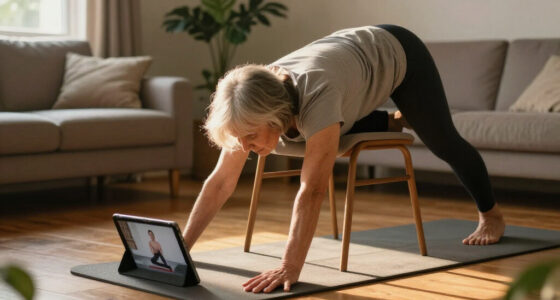
Fit&Well published a seven-move, 10-minute beginner Pilates flow led by Sundrop Pilates instructor Hannah Lawrence. The routine uses gentle mobility and stretching exercises; its reported benefits are guidance from the instructor and publication, not evidence of a measured clinical effect.
Fit&Well has published a 10-minute beginner Pilates flow from Sundrop Pilates instructor Hannah Lawrence, featuring seven exercises intended to help people move their backs and hips through a gentle range of motion. Lawrence advises moving slowly and keeping each movement within a comfortable stretch, without pain.
The sequence combines spinal movement, hip rotation and hamstring stretches. It begins with six to eight pelvic curls, or bridges: lying on the back with knees bent, participants lift the spine gradually and roll it back down. Ten cat-cow repetitions follow on hands and knees, with the back alternately arching and rounding.
The remaining exercises include a mermaid side bend held for one minute on each side and a seated single-leg forward fold held for 30 to 60 seconds per side. The routine then moves to a one-minute-per-side hamstring stretch lying on the back, three to four standing Pilates roll-downs, and five supine knee rocks to each side.
Fit&Well’s instructions emphasize slow, controlled movement. The roll-down can be done with more knee bend if the hamstrings feel tight. For the knee rocks, the participant lies with knees bent and lets them fall from side to side while keeping the shoulders against the mat.
A Short Routine for Everyday Mobility
The routine offers readers a brief set of movements that can be completed without Pilates equipment, using a mat or floor space for most exercises. Its mix of positions may be useful to people seeking a structured way to move the spine, hips and backs of the legs during a short break.
Lawrence says the session is intended to make positions such as sitting cross-legged and reaching toward the toes feel more comfortable and natural. That is her stated aim; the supplied report does not include study results or measurements showing how much mobility changes, or how quickly. The article therefore describes an instructor-led routine rather than a demonstrated treatment for stiffness.
Products Worth Considering

Dreame H15 Pro Wet-Dry Vacuum and Mop

Bose TV Speaker (2nd Gen) Compact Soundbar with Bluetooth and HDMI-ARC, Black

Bose S1 Pro+ Portable PA Speaker
As an affiliate, we earn on qualifying purchases.
Seven Moves, From Bridges to Knee Rocks
Fit&Well presents the flow as a beginner session focused on joint mobility and comfortable movement. It progresses from lying and kneeling exercises to seated stretches and standing spinal flexion, then returns to the floor for the final knee rocks.
The source provides specific repetition counts and hold times for each movement, but does not describe a warm-up, cooldown, or modifications for particular injuries or health conditions. Lawrence’s main direction is to move slowly and avoid pain; the supplied material does not state that the routine is suitable for every person with back or hip symptoms.
Evidence and Individual Suitability
The supplied report does not cite clinical research testing this specific flow, quantify changes in mobility, or establish how long any effects might last. It also does not explain whether the session is appropriate for people with an injury, persistent pain, or a diagnosed condition. Those details remain unspecified, and the article’s claims about mobility should be understood as the routine’s stated purpose rather than measured outcomes.
How to Approach the Session
Fit&Well’s instructions are to complete the seven movements at a controlled pace, following the listed repetitions and holds, and to keep each stretch comfortable. The source does not announce a follow-up study, additional program, or scheduled next development. Readers with concerns about whether these movements suit their circumstances can seek guidance from a qualified health professional before trying them.
Key Questions
How long is the Pilates flow?
The routine is described as 10 minutes and contains seven exercises. The source lists individual repetitions and hold times, though it does not give a separate timing breakdown for transitions between moves.
Which exercises are included?
The sequence includes pelvic curls, cat-cow, mermaid side bends, a seated single-leg forward fold, a lying hamstring stretch, Pilates roll-downs and supine knee rocks.
What does the instructor say about pain?
Hannah Lawrence advises moving slowly and making each movement feel like a stretch without causing pain. The report does not give additional guidance for people who experience pain during an exercise.
Does the report show that the routine treats back or hip stiffness?
No clinical results are provided in the supplied report. It presents the flow as an instructor-led mobility routine and describes Lawrence’s intended benefits, but does not establish a treatment effect.
Source: rss