TL;DR

Turn quiet afternoons into listening time
- Thousands of audiobooks, podcasts and originals
- Listen on your phone, tablet or Echo — also offline
- Cancel anytime
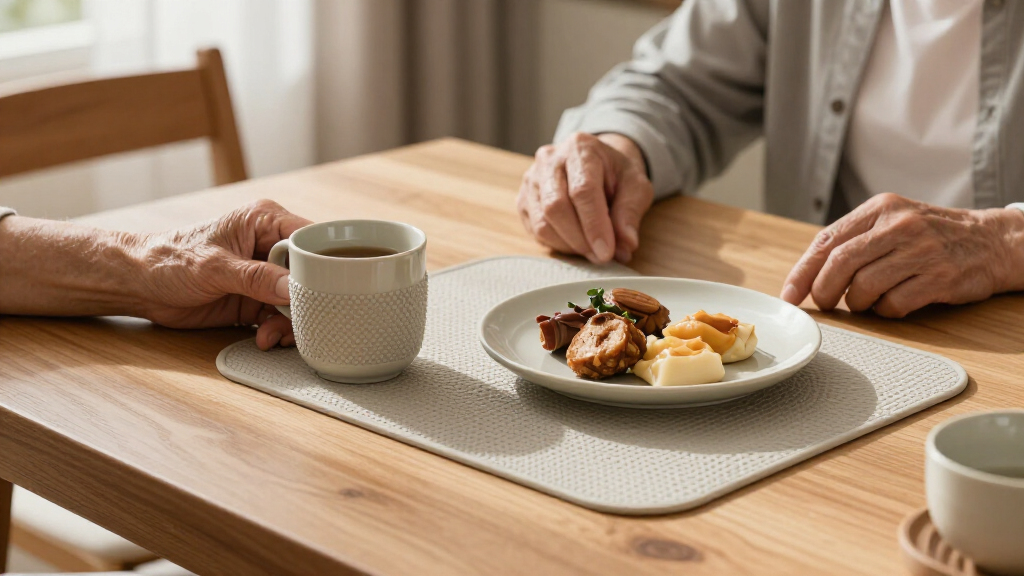
Nonslip plates, cups, and mats help prevent spills and accidents by anchoring securely to tables. They use textured surfaces, suction cups, or silicone grips, making mealtime safer and less stressful. Growing innovation in design and materials makes them more effective, eco-friendly, and suited for all ages.
Imagine trying to eat while your plate slides every time you reach for a fork or your cup tips over with the slightest bump. Frustrating, right? For many, especially older adults or those with motor skill challenges, this common problem can turn mealtime into a safety hazard. The good news? Nonslip plates, cups, and mats are here to keep your table steady and your meal enjoyable.
In this guide, you’ll learn how these simple tools work, what features matter most, and how recent innovations make them more reliable and eco-friendly. Whether you’re caring for a loved one or looking for solutions to make your own mealtime safer, understanding these options can make a big difference.
Mealtime safety field guide
Nonslip Plates, Cups, and Mats for Mealtime
A steady surface can turn a frustrating meal into a safer, calmer, and more independent experience. Textures, silicone grips, and suction systems anchor tableware so attention stays on eating—not chasing a sliding plate.
Tiny features. Meaningful control.
Nonslip products work by increasing friction or creating suction between the tableware and the surface beneath it. The right mechanism depends on the user, the table, and how easily the item must be lifted after the meal.
Textured Bottoms
Ridges, dimples, or patterned bases increase surface contact and resist small bumps. They require no setup and work well when moderate stability is enough.
Best fit: quick placement + easy liftingSilicone Grips
Flexible, tacky silicone holds against many surfaces without a full vacuum seal. It is commonly food-safe, heat-resistant, reusable, and dishwasher-friendly.
Best fit: everyday versatilitySuction Bases
One large cup or several suction points create a strong seal on smooth tables and trays. A release tab can make removal easier and protect delicate surfaces.
Best fit: tremors + strong movementChoose for grip, care, and longevity.
Material affects stability, cleaning, heat tolerance, odor retention, weight, and waste. Silicone usually provides the strongest all-round balance; rubber prioritizes traction, while BPA-free plastic often keeps cost and weight low.
| Material | Grip | Easy care | Heat fit | Watch for |
|---|---|---|---|---|
| Silicone | ✓ Strong | ✓ Often dishwasher-safe | ✓ High | Verify food-grade quality |
| Rubber | ✓ Very strong | ~ Product-specific | ~ Variable | Odor and material sensitivity |
| BPA-free plastic | ~ Design-dependent | ✓ Usually simple | ~ Check label | Stains, scratches, retained odors |
| Coated ceramic | ✓ Stable + weighted | ~ Check coating | ✓ Often high | ✗ Heavier and breakable |
Care and heat compatibility vary by product—always follow the manufacturer label.
Safety is more than avoiding a spill.
A stable plate or cup reduces the mental effort of monitoring every movement. For children, older adults, and people with limited dexterity, that can support participation, dignity, and greater self-reliance.
Less chasing
A secure base lets the user push food against a plate edge without sending the entire dish across the table.
Less vigilance
When tableware stays put, attention can shift from preventing accidents to eating and social interaction.
Less intervention
Reliable grip can reduce the need for constant assistance while preserving a calm, familiar dining routine.
The best nonslip product is secure during use, simple to release, gentle on the table, and easy to clean after every meal.
Match the product to the real table.
Grip performance changes with surface texture, moisture, dish weight, and cleaning residue. A short real-world check is more useful than choosing by suction strength alone.
Look for
- Food-grade materials and BPA-free certification where relevant
- A wide, stable base with an accessible release tab
- Non-porous surfaces that resist stains and odors
- Dishwasher-safe construction when frequent cleaning matters
- Raised rims or ergonomic handles for limited dexterity
Watch for
- Overly strong suction on delicate or easily marked finishes
- Deep textures that trap food and complicate cleaning
- Microwave use without explicit manufacturer approval
- Worn, cracked, sticky, or misshapen gripping surfaces
- A seal that performs poorly on porous or uneven tables
The grip-strength sweet spot
slides easily Balanced
secure + releasable Too strong
hard to remove
Smarter, cleaner, more adaptable.
Recent design directions combine stronger anchoring with easier release, more sustainable materials, modular components, and accessibility-led details suited to different ages and abilities.
Multiple Suction Points
Distributed contact can improve stability while release tabs and flexible edges make removal more controlled.
Innovation focus: grip without struggleDurable Eco Materials
Long-lasting, reusable products and silicone-infused hybrids aim to reduce replacement frequency and material waste.
Innovation focus: longevity + reuseSmarter Tableware
Temperature indicators, antimicrobial coatings, modular sets, and personalized designs extend usefulness beyond nonslip performance.
Innovation focus: safety + usabilityHow Nonslip Features Keep Your Table Safe and Stable
At their core, nonslip plates, cups, and mats prevent movement with textured surfaces, silicone grips, or suction cups. These features create friction or suction that keeps items firmly in place, even if your hand shakes or the table is uneven. But why does this matter beyond just preventing spills? It’s about reducing the cognitive load during mealtime—less worry about slipping means more focus on eating and social interaction. Moreover, these features can foster independence for individuals with limited dexterity, empowering them to feed themselves without constant assistance. However, there are tradeoffs: some textured surfaces may be harder to clean thoroughly, and overly strong suction cups might damage delicate surfaces if not used carefully. Choosing the right feature set involves balancing grip strength with ease of removal, especially in households with multiple surfaces or surfaces prone to scratching. Ultimately, these tiny but mighty features contribute significantly to a safer dining environment, minimizing accidents and promoting confidence during meals.
As an affiliate, we earn on qualifying purchases.
The Best Materials for Nonslip Dishes and Mats
Choosing the right material is key for safety and durability. Silicone is a favorite because it’s flexible, food-safe, and dishwasher-friendly. Its elasticity allows for a snug fit on various dish sizes and shapes, which helps maintain stability during use. Additionally, silicone’s heat resistance means hot foods won’t warp or degrade the material, ensuring longevity. Rubber offers similar benefits but often provides a more textured, tacky surface that enhances grip even further, making it ideal for users with tremors or weak grip strength. BPA-free plastics are common in budget options; however, they often lack the flexibility and grip properties of silicone or rubber, which can compromise safety if not designed properly. The tradeoff here is that plastics are lighter and easier to manufacture but may stain or retain odors over time, affecting hygiene and appearance. Considering these factors, selecting materials that resist stains and odors, are easy to clean, and provide consistent grip ensures the tableware remains functional and safe over repeated use. The implications are clear: investing in high-quality, appropriate materials enhances safety, reduces waste, and offers better value over time.
As an affiliate, we earn on qualifying purchases.
As an affiliate, we earn on qualifying purchases.
As an affiliate, we earn on qualifying purchases.
Fall Picks
fall essentials
As an affiliate, we earn on qualifying purchases.