
TL;DR
Prime for Young Adults — start your free trial
Fast free delivery, streaming and member deals for eligible 18–24 year olds.
Try it freeAs an affiliate, we earn on qualifying purchases.
A well-chosen shower chair with a back and arms boosts safety and comfort, reducing fall risks. Focus on stability, adjustability, and ease of cleaning to find the best fit for your needs.
Bathing should be a moment of peace, not danger. Yet, slips and falls in the shower remain common, especially among older adults. Choosing the right shower chair with a back and arms can transform a risky task into a safe, comfortable routine.
In this guide, you’ll learn what makes a shower chair truly supportive, what recent innovations make them better, and how to pick one that fits your space and needs. That way, you can enjoy independence with confidence—and peace of mind.
Prioritize safety features like non-slip feet, sturdy arms, and a supportive backrest when choosing a shower chair.
Adjustability in height, arms, and backrest makes a chair more versatile and comfortable for different users.
Recent innovations include antimicrobial materials, foldability, and even fall detection sensors—adding layers of safety and convenience.
Measure your shower space and user size carefully; a well-fitting chair enhances safety and independence.
Regular inspection and timely replacement prevent accidents caused by wear and tear or corrosion.
Build a safer bathing routine, one sturdy seat at a time.
A well-chosen shower chair with a back and arms can turn a risky daily task into a calmer, more independent routine. The strongest choices combine stable feet, supportive arms, an ergonomic backrest, adjustable height, easy-clean materials, and a size that truly fits the shower.
Prioritize stability, fit, and cleanability before comfort extras.
Six features decide whether the chair feels secure.
Back support and arms are only the beginning. A safe chair has to grip wet surfaces, support transfers, match the user’s body, and survive repeated exposure to water, soap, and cleaning products.
Non-slip feet and a wide base
Rubberized feet, textured contact points, and a broad stance reduce wobble on wet tile or shower pans.
Backrest plus sturdy arms
Arms help with controlled sitting and standing, while the backrest reduces fatigue and anxiety during bathing.
Height that meets the user
Adjustable legs help align the seat with the user’s knees and hips, making transfers smoother and less strenuous.
Weight rating with margin
Choose a chair rated above the user’s weight to protect against frame stress, tipping, or early failure.
Drainage and sealed surfaces
Mold-resistant plastic, drainage holes, and removable parts make cleaning easier and reduce bacterial buildup.
Measured for the shower
A chair that is too large blocks movement; one that is too small can feel unstable or uncomfortable.
How safety priorities stack up.
The most important buying factors are practical: grip, transfer support, correct height, and durability. Comfort matters, but only after the chair is stable and properly sized.
Fixed, full-support chairs
Usually strongest for daily use when the shower has enough floor space and the user needs consistent transfer support.
Foldable compact chairs
Useful in tight bathrooms, but only when the model has dependable locks, non-slip feet, and a suitable weight rating.
Feature checklist for comparing models.
Use this table to separate true safety features from nice-to-have conveniences. The strongest option is not always the most expensive; it is the one that fits the user and shower without compromise.
| Feature | Why It Matters | Basic Chair | Back + Arms Chair | Foldable Model |
|---|---|---|---|---|
| Transfer support | Helps the user sit and stand with control. | ~ Limited | ✓ Strong | ~ Varies |
| Back comfort | Reduces fatigue during longer showers. | ✗ No | ✓ Yes | ✓ Often |
| Small-space storage | Important for shared or narrow bathrooms. | ~ Moderate | ~ Moderate | ✓ Strong |
| Weight capacity | Protects against frame stress and collapse. | ~ Check label | ✓ Check label | ~ Check label |
| Cleaning ease | Prevents mold, mildew, and bacteria buildup. | ✓ Good | ✓ Good | ~ Hinges need care |
A practical path to the right fit.
Measure before buying, then check safety features in order. This prevents the most common mistake: choosing a chair that looks comfortable but does not fit the shower or transfer routine.
Measure the shower
Confirm floor width, depth, door clearance, and drain position.
Match the user
Check height, weight, mobility level, and caregiver needs.
Verify stability
Look for non-slip feet, a sturdy frame, and low wobble.
Test cleanability
Prefer drainage holes, sealed surfaces, and removable parts.
Inspect regularly
Replace if rust, cracks, loose arms, or instability appear.
Newer designs add hygiene, storage, and monitoring.
Recent shower chair improvements focus on lighter frames, antimicrobial surfaces, better drainage, compact folding, customizable supports, and niche smart features such as fall-detection sensors.
Lightweight antimicrobial builds
Help reduce cleaning friction while limiting mold, mildew, and bacterial growth in humid bathrooms.
Foldable compact frames
Make small bathrooms easier to share, provided the locks and feet remain stable under load.
Drainage and textured surfaces
Reduce pooling water and improve grip, though textured areas still need thorough cleaning.
Customizable supports
Adjustable legs, arm positions, and back angles can support more body types and mobility levels.
Emerging sensor features
Some niche models experiment with fall detection, but these should supplement, not replace, stable design.
Routine inspection matters
Check feet, bolts, armrests, seat cracks, and corrosion; replace when stability is compromised.
From measurements to peace of mind.
The right shower chair connects six decisions: bathroom space, user size, transfer needs, support features, cleaning habits, and replacement timing.
- Choose a chair made for wet environments, never a regular household chair.
- Prioritize arms, back support, non-slip feet, and an adequate weight rating.
- Measure the user and the shower before comparing styles or padding.
- Replace the chair when rust, cracks, looseness, or instability appears.
Why a Shower Chair With Back and Arms Is a Must-Have for Safety
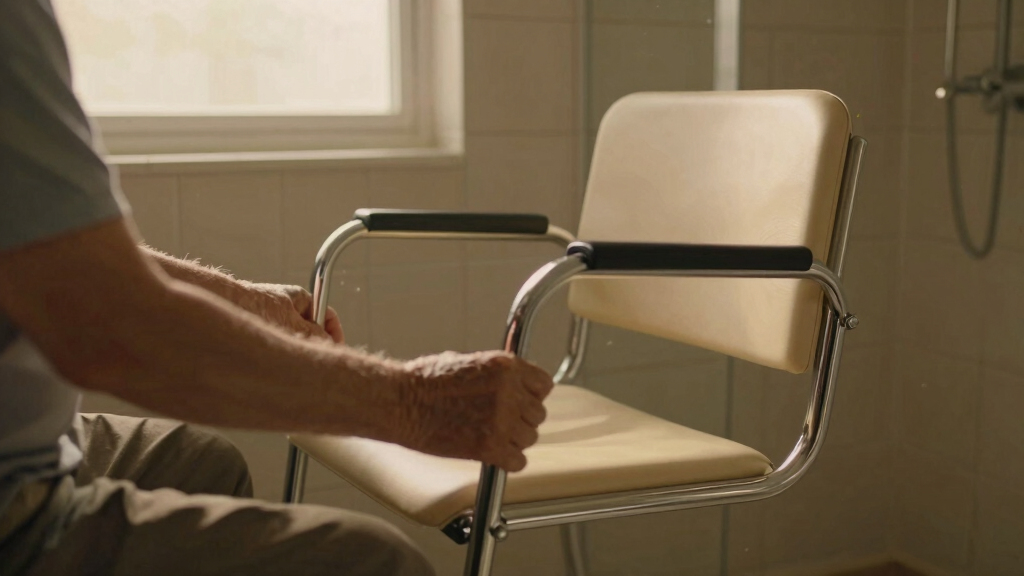
A shower chair with a back and arms isn’t just about comfort—it’s about safety. For many seniors or those with mobility challenges, these features act as safety rails, preventing slips and providing support during transfers. Imagine trying to sit down or stand up without something to hold onto—it’s a recipe for a fall.
Research shows that the risk of falling in the shower drops by as much as 80% when a sturdy chair with arms and back is used. This significant reduction in fall risk can be life-changing, as falls are a leading cause of injury among older adults. The arms provide a reliable grip, crucial when balance is compromised or when someone needs assistance to stabilize themselves. The backrest offers a sense of security, reducing anxiety and encouraging more independent bathing. For caregivers, these features mean fewer worries about slips and falls, and less physical strain during transfers. Integrating these safety features isn’t just about preventing accidents—it’s about empowering users to bathe with confidence and dignity.
As an affiliate, we earn on qualifying purchases.
What to Look for in a Shower Chair With a Back and Arms
When selecting a shower chair, focus on six key aspects:
- Safety and stability: Rubberized or non-slip feet are essential. The importance of stability cannot be overstated—on a wet, slippery surface, a wobbly chair can be the difference between a safe transfer and a fall. Chairs with a broad base and textured, non-slip feet distribute weight evenly and grip the shower floor, reducing wobbling and slipping. This stability directly correlates with safety; a secure seat prevents accidents and provides peace of mind for both users and caregivers.
- Comfort and support: Padded seats and backrests are not just luxuries—they significantly influence user comfort and safety during longer showers. A comfortable seat reduces the urge to shift or fidget, which can cause imbalance. Moreover, padding can prevent soreness and pressure points, especially important for users with sensitive skin or existing wounds. Comfort encourages users to bathe without rushing or feeling anxious, fostering a safer, more relaxed experience.
- Adjustability: Height-adjustable legs are crucial for customizing the chair to the user’s height, which affects ease of transfer and overall safety. Properly adjusted height minimizes strain on the back and knees, making sitting and standing smoother and safer. For example, a family member can adjust the height for a caregiver assisting an elderly relative, ensuring ergonomic positioning. The tradeoff is that more adjustable models may be slightly more complex or costly, but the safety benefits outweigh these considerations by accommodating a wider range of users and reducing injury risk.
- Weight capacity: Selecting a chair with an adequate weight capacity is essential for safety and durability. Chairs supporting 250-300 pounds are common, but bariatric models can support more. Choosing a model that exceeds the user’s weight ensures stability and reduces the risk of structural failure or collapse, which could lead to falls. Overloading a chair not only compromises safety but also shortens its lifespan, leading to potential hazards down the line.
- Ease of cleaning: Materials like molded plastic or sealed surfaces resist mold and mildew, which are common in humid environments. Easy-to-clean features, such as removable armrests or seats, facilitate hygiene and maintenance. Regular cleaning reduces bacterial buildup, which is vital for preventing infections, especially for users with open wounds or sensitive skin. A chair that is straightforward to clean encourages consistent hygiene practices, ultimately protecting health and prolonging the chair’s usability.
- Size and fit: Accurate measurements of your shower space and user dimensions are critical. A too-small chair may be unstable or uncomfortable, while an oversized one can be difficult to maneuver. Proper fit ensures the user can sit and stand with minimal effort, reducing the likelihood of slips. It also allows for easier transfers and more comfortable positioning. Balancing safety with space constraints involves considering models that optimize stability without overcrowding the shower, ensuring the safest and most comfortable experience.
For example, a narrow, compact shower requires a small, foldable chair that can be stored easily but still provides sufficient support. Conversely, a spacious shower allows for a larger, padded chair that offers additional comfort and safety features. The key is to assess your specific bathroom layout and user needs carefully, then select a model that offers the best combination of stability, convenience, and space efficiency.
adjustable shower chair for seniors
As an affiliate, we earn on qualifying purchases.
As an affiliate, we earn on qualifying purchases.
Latest Features Making Shower Chairs Safer and Easier to Use
New designs are making shower chairs smarter and safer. Here are some recent developments:
- Lightweight, antimicrobial materials: These materials not only reduce the overall weight of the chair, making transfers easier but also inhibit the growth of mold, mildew, and bacteria. This dual benefit extends the lifespan of the chair, reduces cleaning efforts, and promotes better hygiene. For users with compromised immune systems or sensitive skin, this means a safer, healthier bathing environment. The tradeoff may be that some antimicrobial materials are slightly more expensive or less common, but the added safety and hygiene benefits are often worth it.
- Foldable and space-saving: These models are designed to fold flat or compactly store when not in use, which is invaluable for small bathrooms. The convenience of space-saving features can encourage regular use, as the barrier to entry becomes lower. However, foldable chairs sometimes compromise on stability or weight capacity compared to fixed models. It’s important to choose a foldable chair rated for the user’s weight and intended use to ensure safety isn’t sacrificed for convenience.
- Enhanced safety features: Built-in drainage holes prevent water pooling, textured surfaces improve grip, and anti-slip feet reduce movement on wet surfaces. These features work together to keep the chair dry, stable, and secure, significantly lowering slip hazards. Additionally, these safety features simplify cleaning, as water drains quickly, reducing mold and mildew buildup. The tradeoff might be that some textured surfaces can be harder to clean thoroughly, so selecting designs with smooth yet slip-resistant textures is ideal.
- Adjustable and customizable options: Height, armrest, and backrest adjustments allow the chair to be tailored precisely to the user’s needs. This customization enhances safety by ensuring proper posture and support, reducing strain and the risk of falls. However, increased adjustability can add to the complexity and cost of the chair. Users should weigh the importance of a perfect fit against potential higher prices or maintenance requirements, but for many, the safety and comfort gains justify these tradeoffs.
- Emerging tech: Some models incorporate fall detection sensors, emergency alert buttons, or handles with electronic monitoring. These features provide an extra layer of security, especially for users at high risk of falls. Think of a smart system that notifies caregivers immediately if a fall occurs, enabling quick assistance. While these innovations offer significant safety benefits, they often come with higher costs and require additional setup or maintenance, which might not be necessary for all users but are invaluable for high-risk individuals.
These innovations are transforming shower chairs into more than just functional devices—they’re becoming integral components of a safe, hygienic, and accessible bathing environment. When selecting a model, consider which features align best with your safety priorities, budget, and ease of use to ensure a confident, secure bathing experience.
As an affiliate, we earn on qualifying purchases.
Frequently Asked Questions
What is the best shower chair with arms and a back for elderly users?
The best options are those with a sturdy frame, high weight capacity, padded support, and features like non-slip feet. Look for models that are adjustable and easy to clean.How do I measure for the right size of a shower chair?
Use a tape measure to record the width, depth, and height of your shower space. Also, measure the user’s height and weight to find a chair that fits comfortably and safely.Are foldable shower chairs safe?
Yes, if they have anti-slip feet, sturdy construction, and are rated for the user’s weight. Always verify safety features before choosing a foldable model.How often should I replace a shower chair?
Check for rust, cracks, or worn parts at least once a year. Replace if stability or safety is compromised—usually every 1-2 years for most chairs.What features are most important for limited mobility users?
Prioritize stability, ease of transfer, padded armrests, and a supportive backrest. Adjustable height and fall detection features add extra safety.foldable shower chair with back support
As an affiliate, we earn on qualifying purchases.
As an affiliate, we earn on qualifying purchases.
Conclusion
Choosing a shower chair with a back and arms isn’t just about comfort—it’s a vital step in making your bathroom safer and more accessible. Think of it as giving yourself the gift of confidence during everyday routines.
Remember, a sturdy, well-fitted chair turns a potentially dangerous task into a moment of independence. That simple choice can foster dignity, safety, and peace of mind for years to come.
Fall yard work Picks
leaf blowers
As an affiliate, we earn on qualifying purchases.