TL;DR
Proper stair safety combines sturdy handrails, bright lighting, and high-contrast markings. These simple upgrades can cut fall risks in half, especially for older adults or those with mobility challenges.
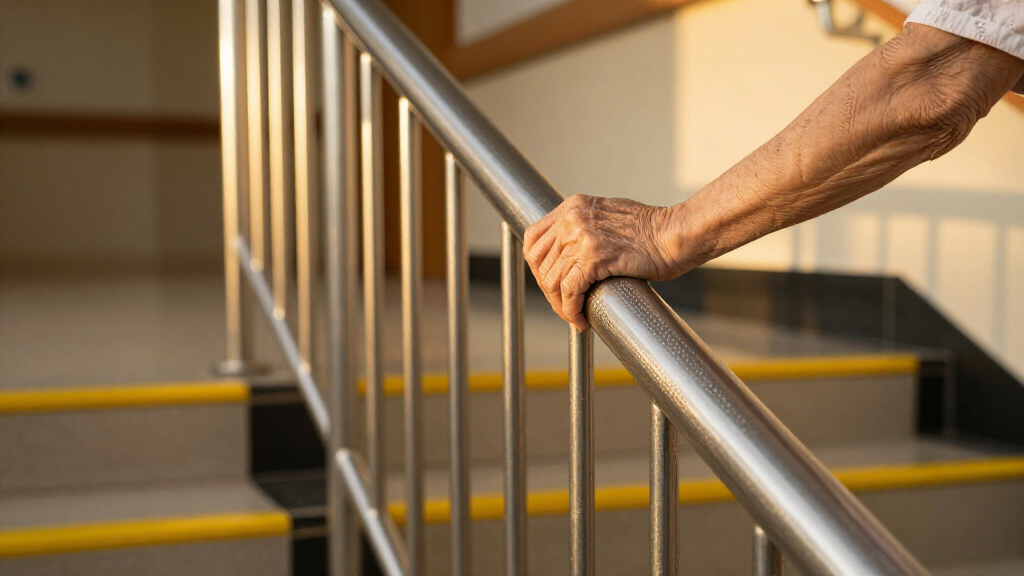
Install sturdy, continuous handrails at 34-38 inches height for maximum support.
Use bright, glare-free LED lighting to eliminate shadows and make each step visible.
Add high-contrast markings or tactile strips to the front edge of each stair for better visibility.
Stay updated on safety tech like motion sensors and anti-slip coatings for ongoing improvements.
Regularly inspect and maintain stair features—tighten handrails, clean fixtures, and refresh markings.
Why a Sturdy Handrail Could Save Someone’s Life
Handrails are your primary support when navigating stairs. They act like a safety net, especially for older adults or anyone with limited mobility. Properly installed, they can prevent up to 70% of falls on stairs. But beyond the statistics, a well-designed handrail provides psychological reassurance—knowing you have reliable support encourages safer movement. The height, grip texture, and continuous support are critical factors. If a handrail is too high or low, it forces users into awkward positions, increasing fall risk. A handrail that is too short or not continuous can cause users to reach or lose support midway, leading to instability. Textured surfaces are vital because they improve grip, especially when hands are sweaty, cold, or when users wear gloves. Regular maintenance—checking for loose fittings or worn surfaces—is essential because a wobbly handrail can quickly turn into a hazard. The tradeoff in choosing quality materials and proper installation is worth it; it ensures durability and safety, reducing the risk of accidents that could have serious consequences. Investing in a well-supported, ergonomically designed handrail creates a dependable safety feature that can be the difference between a minor stumble and a serious injury.
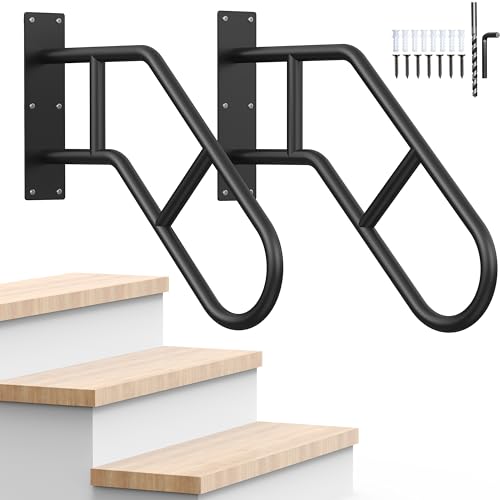
Handrails for Outdoor Steps ,22.8" Stair Railing Indoor1-3 Step, U-Shaped Safety Handrails for Kids, Elderly, Pregnant Women, Disabled (2 Pack Upgraded U-Shaped handrail)
- Material and Durability: Made of rust-proof 16 gauge steel
- Load Capacity: Supports up to 530 pounds
- Weather Resistance: Suitable for any environment and weather
As an affiliate, we earn on qualifying purchases.
As an affiliate, we earn on qualifying purchases.
Brighten Your Stairs: How Good Lighting Prevents Accidents
Lighting isn’t just about visibility; it’s about perception, confidence, and reaction time when using stairs. Poor lighting can create shadows that distort the shape and depth of steps, leading to misjudgments that cause falls. Bright, evenly distributed lighting allows the eye to distinguish each step accurately, reducing hesitation and errors. For instance, installing LED strips along the edge of each tread creates a visual boundary that guides foot placement, especially useful in low-light conditions. Modern innovations, such as motion sensors and adaptive lighting systems, not only improve safety but also offer energy efficiency—lights turn on only when needed, reducing waste and operational costs. Proper placement of fixtures is crucial: they should eliminate shadows and evenly illuminate the entire tread surface, not just the riser or the background wall. This prevents confusion about step edges. Regular maintenance—cleaning fixtures and replacing bulbs—ensures consistent brightness; dim or flickering lights can mislead users or cause them to hesitate. Good lighting directly impacts safety, especially for seniors or those with compromised vision, by enhancing spatial awareness and reaction time. The tradeoff is balancing brightness with glare; overly bright lights can cause discomfort, so selecting diffused or glare-free fixtures is advisable. Integrating smart lighting solutions can adapt to changing needs, making stairs safer and more user-friendly over time.
As an affiliate, we earn on qualifying purchases.
How to Make Your Steps Stand Out with Markings
Step markings serve as visual anchors, helping users quickly and accurately identify each tread’s edge, which is especially important in low-light or visually challenging conditions. High-contrast paint or tactile strips enhance depth perception and spatial awareness—key factors in preventing missteps. For example, applying bright yellow tape on dark wood stairs creates a stark contrast that makes each step clearly defined, reducing hesitation. Tactile indicators, like textured strips or raised surfaces, provide physical feedback, which is particularly helpful for visually impaired users or those with neurological conditions affecting spatial perception. However, the effectiveness of markings depends on their simplicity and clarity; overly busy or overly bright patterns can be distracting or cause visual overload, diminishing their utility. The tradeoff involves balancing visibility with aesthetic harmony. Incorporating tactile strips at the top and bottom of stairs signals transitions and boundaries, which can prevent falls during hurried or distracted movement. These deliberate visual and tactile cues reinforce safety and build user confidence, making it easier to navigate stairs safely in various lighting conditions or for users with sensory impairments.
As an affiliate, we earn on qualifying purchases.
The Latest in Stair Safety Tech You Should Know About
Emerging safety technologies are transforming how we protect stair users by integrating smart systems and advanced materials. Motion-activated lighting automatically adjusts brightness when someone approaches, ensuring optimal visibility during nighttime or in dimly lit spaces without manual intervention. Anti-slip coatings and textured surfaces are now standard on stair treads, providing improved grip even when surfaces are wet—crucial for preventing slips and falls. Building codes are evolving to mandate features like continuous handrails, tactile markings, and enhanced lighting, reflecting a deeper understanding of fall prevention. Sensors embedded in stairs or handrails can monitor usage, detect loose supports, or identify when lighting needs replacement, alerting homeowners proactively. These smart systems facilitate maintenance before hazards develop, reducing the risk of accidents. While these innovations are becoming more accessible, they also highlight the importance of integrating technology thoughtfully—considering cost, ease of use, and actual safety benefits. Embracing these advances means stairs become smarter, safer, and more reliable for all users, but it’s essential to weigh the tradeoffs, such as initial investment versus long-term safety gains.
As an affiliate, we earn on qualifying purchases.