
TL;DR
Listen free for 30 days with Audible
Thousands of audiobooks and originals — cancel anytime.
Start your free trialAs an affiliate, we earn on qualifying purchases.
Nightlights help prevent falls by illuminating key areas without disrupting sleep. The best options are dim, warm, motion-activated, and strategically placed to guide nighttime journeys safely.
Choose warm, amber or red-toned nightlights to avoid sleep disruption and promote safety.
Place lights at strategic points: bedside, along hallways, stairs, and near thresholds.
Use motion-activated models to eliminate fumbling and ensure consistent nighttime illumination.
Keep lights low and diffused—bright enough to see obstacles, but not glaring or disruptive.
Select reliable, energy-efficient LED models with proper installation to maximize safety and lifespan.
Where to Place Nightlights for Maximum Safety
Proper placement is often more important than the brand of nightlight. Keys areas include beside the bed, along the route to the bathroom, at the top and bottom of stairs, and near thresholds or step-downs. Low-mounted lights (like baseboard or floor-level fixtures) illuminate obstacles at their level, helping you detect uneven floors or objects. Avoid placing bright lights directly in your line of sight or in contrasting zones that cause your eyes to re-adjust repeatedly.
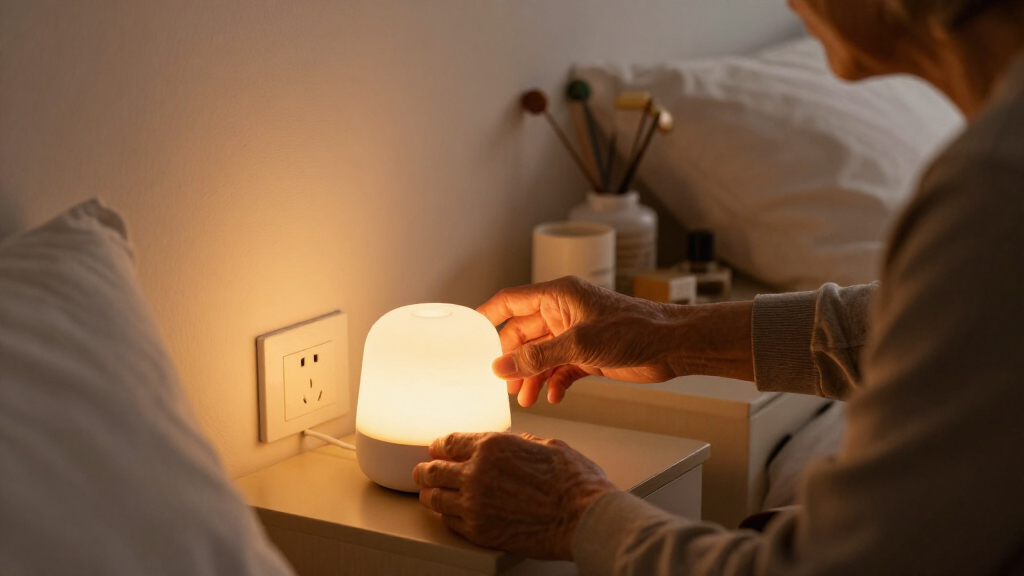
For example, placing a nightlight at the foot of the bed directs light toward the path and minimizes glare in your eyes. Arranging multiple lights along a hallway creates a gentle, continuous guide that prevents blind spots.
Strategic placement considers the typical routes you take at night. Positioning lights where they naturally fall along your path ensures you’re not searching for illumination when you’re most vulnerable. This reduces reaction time and minimizes the risk of missteps, especially in unfamiliar or cluttered environments. The tradeoff involves balancing sufficient coverage with avoiding excessive light that can cause glare or disrupt sleep cycles.
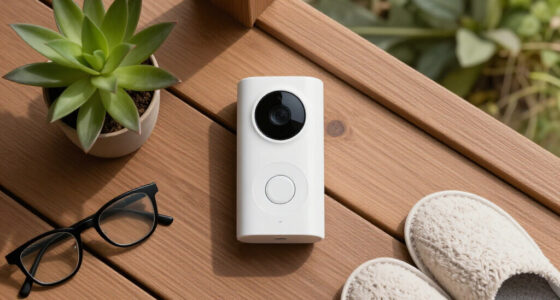
motion-activated LED nightlight for seniors
As an affiliate, we earn on qualifying purchases.
As an affiliate, we earn on qualifying purchases.
Understanding Light Colors and Their Impact on Sleep
The color of your nightlight isn’t just a matter of preference; it has a direct impact on your sleep quality and safety. Warm hues like amber, red, or soft white are best because they mimic natural sunset colors, which do not suppress melatonin production—the hormone responsible for sleep regulation. In contrast, blue or cool white lights can interfere with your circadian rhythm, making it harder to fall asleep or causing you to wake up more easily.
Choosing the right color helps you stay alert enough to navigate safely without disrupting your sleep cycle. For example, a red nightlight can provide sufficient visibility while minimally affecting melatonin levels, leading to better rest and fewer nighttime disorientations. This understanding is crucial for designing a sleep-friendly environment that also prioritizes safety.
When selecting a nightlight, consider the implications: a light that’s too bright or of an inappropriate color could cause unnecessary awakenings or discomfort, defeating its safety purpose. The tradeoff lies in balancing visibility with sleep preservation—opting for dim, warm tones that illuminate without waking or disturbing you.
As an affiliate, we earn on qualifying purchases.
Frequently Asked Questions
Do nightlights actually prevent falls?
Yes, nightlights reduce a common fall risk by illuminating the path in the dark. They work best when combined with other safety measures like clutter removal and grab bars. Alone, they help, but a comprehensive approach is most effective.What color nightlight is best?
Amber, warm white, or red hues are best because they provide visibility with minimal disruption to sleep. Avoid blue or cool white lights that can suppress melatonin and disturb rest.How bright should a nightlight be?
Just enough to see obstacles—think of a soft glow similar to candlelight—bright enough to guide your steps without causing glare or waking you up fully.Where should I place nightlights?
Position them beside the bed, along hallways, at the top and bottom of stairs, and near thresholds. Low-mounted lights at floor level are especially effective for illuminating trip hazards.Are motion-sensor nightlights worth it?
Absolutely, they turn on only when needed, removing the hassle of switches and ensuring light during movement. They significantly reduce the risk of trips in the dark.stairway nightlight with dimming feature
As an affiliate, we earn on qualifying purchases.
As an affiliate, we earn on qualifying purchases.
Conclusion
A simple, well-placed nightlight can turn a risky, dark hallway into a safe passage. Think of it as a gentle guide — bright enough to see, soft enough to sleep. When you combine the right color, placement, and features, you create a safer home where nighttime trips don’t have to be dangerous adventures.plug-in nightlight for hallway safety
As an affiliate, we earn on qualifying purchases.
As an affiliate, we earn on qualifying purchases.
NFL season / tailgating Picks
team gear
As an affiliate, we earn on qualifying purchases.