
TL;DR
Adaptive utensils are specially designed tools that improve grip, stability, and ease of use, helping individuals with dexterity challenges enjoy eating again. Recent innovations like smart stabilization and 3D printing make these tools more personalized and effective, restoring independence and joy.
Imagine struggling with a fork or spoon, feeling frustrated and embarrassed at mealtime. Now picture a simple yet powerful change—an adaptive utensil that makes eating smooth, steady, and—dare I say—fun again. These tools are quietly transforming lives, bridging the gap between challenge and confidence.
If you or someone you care for faces difficulties with traditional utensils—due to arthritis, tremors, or limited hand strength—you’re about to see how design and technology are rewriting the rules. This isn’t just about eating; it’s about restoring independence, dignity, and even joy in everyday moments.
Adaptive utensils feature ergonomic handles, stabilization tech, and customizable designs to make eating easier and more confident.
Technologies like gyroscopic stabilization and 3D printing allow for personalized, highly effective tools tailored to individual needs.
These tools significantly boost independence, dignity, and social participation for users with mobility challenges.
Ease of use and maintenance make adaptive utensils practical for everyday life, encouraging consistent use.
The market is rapidly evolving, with future innovations promising even smarter, more responsive eating aids.
Adaptive Utensils That Restore the Joy of Eating
Adaptive utensils improve grip, stability, and ease of use for people with arthritis, tremors, stroke recovery, Parkinson’s disease, limited hand strength, or dexterity challenges. The best designs do more than move food from plate to mouth: they restore independence, dignity, confidence, and pleasure at the table.
Reported increase in mealtime confidence after switching to well-matched adaptive utensils.
Estimated annual expansion for assistive eating aids as aging populations and smart devices reshape demand.
The utensil should fit the person. Enlarged grips, angled shafts, weighted handles, smart stabilization, and 3D printing all move care away from one-size-fits-all design.
Less slipping, spilling, wrist strain, and fatigue during daily meals.
Arthritis, tremors, stroke, Parkinson’s, cerebral palsy, and motor impairment groups.
From simple DIY grips to app-connected, motorized stabilization devices.
Dishwasher-safe materials and simple attachments encourage consistent use.
What makes them different?
Traditional utensils expect the hand to adapt. Adaptive utensils reverse that relationship with ergonomic shapes, stabilizing physics, and personalized fit.
Enlarged, textured handles
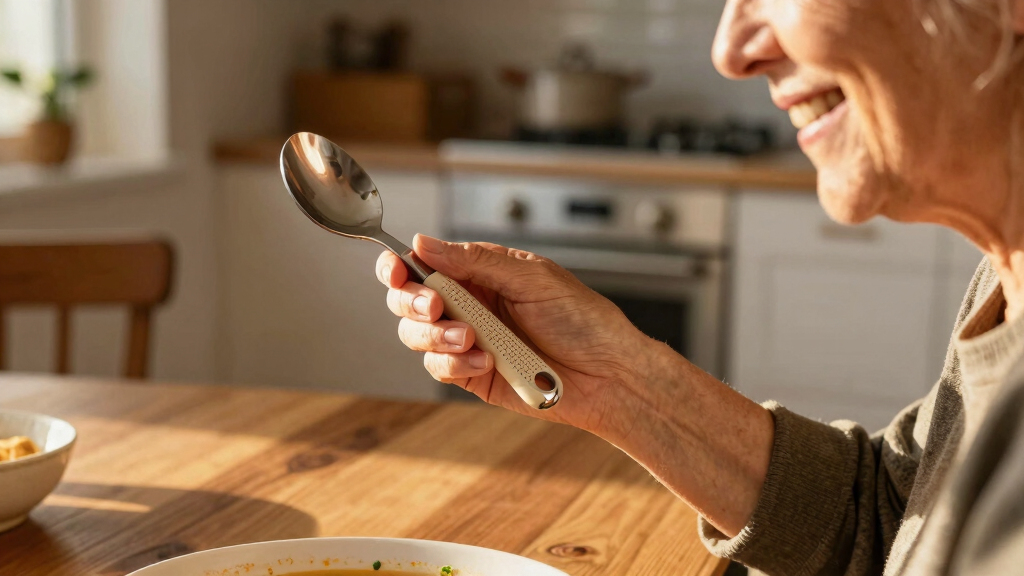
Wide rubberized or silicone grips reduce pain, increase contact area, and help people with weak grip or arthritis hold utensils with less effort.
Angled and flexible shafts
Angled forks and spoons reduce wrist rotation, making it easier to reach the mouth comfortably when range of motion is limited.
Weighted or smart balance
Weighted handles dampen tremors, while gyroscopic systems actively correct small involuntary movements to reduce spills.
Challenge
Weak grip, tremor, pain, fatigue, or reduced wrist control.
Design match
Handle size, weight, angle, texture, and material are selected.
Stability boost
Weighted, gyroscopic, or motorized features steady movement.
Less strain
Eating requires fewer corrections, less force, and less awkward motion.
More joy
The meal becomes social, sensory, and dignified again.
Modern stabilization is changing the experience.
Newer tools combine physical design with sensors, microcontrollers, and electromechanical correction. The goal is simple: fewer spills, more confidence, and less embarrassment.
From passive weight to active correction
Weighted handles reduce the visible effect of tremors through mass and balance. Smart handles go further by detecting shaky motion and correcting the utensil angle in real time.
More technology can mean more setup.
Simple enlarged grips are inexpensive and intuitive. App-connected or motorized utensils can deliver a better fit for complex needs, but may require charging, training, troubleshooting, and privacy consideration.
Feature checklist for choosing well
The right choice balances comfort, cleaning, cost, condition-specific support, and the user’s willingness to adapt to new technology.
- Large, textured handles for a secure and less painful grip.
- Angled or flexible shafts to reduce wrist strain and awkward positioning.
- Weighted or gyroscopic stabilization for tremor reduction.
- Dishwasher-safe silicone, medical-grade plastics, or durable composites.
- Simple attachment mechanisms for quick utensil switching.
| Feature | Best for | Ease | Confidence impact |
|---|---|---|---|
| Enlarged grip | Arthritis, weak grip, hand pain | ✓ | High everyday comfort |
| Angled shaft | Limited wrist motion or shoulder range | ✓ | Less strain and easier reach |
| Weighted handle | Mild to moderate tremor | ~ | Better control with some added weight |
| Gyroscopic handle | Parkinson’s or significant tremor | ~ | Strong stability, higher learning curve |
| Poorly fitted standard utensil | Almost no one with dexterity challenges | ✕ | Can increase frustration and spills |
Personalization spectrum
Why the benefits go beyond eating
Adaptive utensils reduce the practical barriers around meals, but their deeper value is emotional and social: users can participate without feeling watched, rushed, or dependent.
More control at the table
A better utensil can reduce caregiver dependence and help users complete meals at their own pace.
Less embarrassment
Reduced spilling and easier handling help people feel less self-conscious during family meals or dining out.
More social connection
When eating feels manageable, shared meals become easier to enjoy again instead of avoid.
Traceability: from barrier to belonging
This is the practical chain behind a better mealtime: identify the barrier, fit the tool, reduce effort, build confidence, and bring the user back into shared daily rituals.
Meal barrier
Grip, tremor, fatigue, pain, or strain.
Design fit
Handle, angle, material, and weight.
Stabilization
Passive balance or active correction.
Daily use
Easy cleaning and simple setup.
Confidence
Less spilling and less dependence.
Joy
Meals become connection again.
What Makes Adaptive Utensils Different From Regular Ones?
Adaptive utensils are specifically crafted to overcome common challenges like weak grip, tremors, or limited dexterity. They often feature larger, textured handles that are easier to grasp and less likely to slip. Some have angled or flexible shafts that help position food more comfortably and reduce strain.
For example, a person with arthritis might find a wide, rubberized handle reduces pain and fatigue. Someone with Parkinson’s may benefit from weighted handles that dampen tremors, helping them control their movements better. These tweaks make a world of difference.
Think of adaptive utensils as personalized tools designed to fit the user, not the other way around. The goal? To make mealtime a moment of independence, not frustration.
As an affiliate, we earn on qualifying purchases.
How Do Modern Adaptive Utensils Boost Stability and Ease?
Today’s adaptive utensils blend ergonomic design with smart features to support steadiness and comfort. Many incorporate weighted handles that counteract tremors, and some use gyroscopic stabilization that actively corrects shaky movements.
For instance, a user with Parkinson’s might hold a spoon with a handle that contains a hidden gyroscope, which detects and stabilizes even the tiniest tremor. The result? Less spillage, more confidence, and a more enjoyable meal.
Understanding how these technological features work reveals their profound impact: they directly address the root causes of difficulty—like involuntary movements—by actively compensating for them. This not only improves functionality but also restores a sense of control, which can significantly boost emotional well-being. The tradeoff, however, is that some of these devices require training or adaptation time, as users learn to trust and operate the new technology effectively.
ergonomic eating aids for arthritis
As an affiliate, we earn on qualifying purchases.
As an affiliate, we earn on qualifying purchases.
Which Features Should You Look For in Adaptive Utensils?
Not all adaptive utensils are created equal. Here’s a quick checklist to help you find the best fit:
- Large, textured handles for a secure grip
- Angled or flexible shafts to reduce wrist strain
- Weighted or gyroscopic stabilization for tremor reduction
- Easy-to-clean materials like silicone or medical-grade plastics
- Simple attachment mechanisms for quick use or switching between utensils
Choosing the right features involves balancing ease of use, comfort, and technological sophistication. For instance, a caregiver might select a fork with a thick, rubberized handle and an adjustable angle to match the user’s comfort, but also consider the cleaning process—opting for materials that can withstand frequent washing without degradation. The tradeoff often lies in cost versus customization; more adjustable and high-tech features tend to be pricier but can offer a significantly better fit and functionality, leading to increased user satisfaction and independence.
As an affiliate, we earn on qualifying purchases.
How Technology Is Personalizing Eating Aids Through 3D Printing and Apps
Recent advances mean you can now customize adaptive utensils to fit exact hand sizes and preferences using 3D printing. Imagine a utensil designed specifically for a loved one’s grip—lightweight yet sturdy, with a handle molded to their hand’s shape. This customization can significantly improve comfort and control, especially for users with unique anatomical needs or special conditions that make standard handles uncomfortable or ineffective.
Some devices connect to mobile apps that allow users or caregivers to adjust grip sensitivity, monitor usage, or even get reminders. For example, a tablet app might let a user set the stabilization level, ensuring the tool adapts as their needs change. This level of personalization means the device can evolve with the user, providing ongoing support rather than a one-size-fits-all solution. The implication is a shift towards truly individualized care, but it also raises considerations about device complexity, user training, and data privacy that must be carefully managed.
These innovations make adaptive utensils more personal and responsive, turning them from generic tools into tailored solutions that restore confidence at every meal.
personalized adaptive eating tools
As an affiliate, we earn on qualifying purchases.
As an affiliate, we earn on qualifying purchases.
What Are the Main Benefits of Using Adaptive Utensils?
Adaptive utensils do more than just help you eat. They restore independence, dignity, and social confidence. Imagine a person with arthritis who previously avoided social meals. Now, with the right tool, they can eat comfortably and join friends without worry. These tools can transform social interactions, reducing feelings of embarrassment or dependence that often accompany mobility challenges. This emotional uplift can lead to increased participation in social activities, which is crucial for mental health and overall well-being.
Research from A Daily Zone shows users report a 50-80% increase in confidence during meals after switching to adaptive utensils. This statistic highlights how vital the right tools are—not just for physical ease but for emotional resilience. Additionally, reducing spills and fatigue means users can focus on the social and sensory aspects of eating, enhancing their overall quality of life. The broader implication is that adaptive utensils serve as enablers of social inclusion, helping users reconnect with shared experiences and restore a sense of normalcy.
In essence, these tools turn eating from a chore into a moment of pleasure and connection, fostering a more positive outlook on daily life challenges.
Are Adaptive Utensils Easy to Use and Maintain?
Most adaptive utensils are designed for straightforward use—think simple, one-click attachments or ergonomic grips that feel natural. Maintenance is just as easy, often involving regular dishwasher cleaning or wiping with a damp cloth. For example, a weighted spoon with a removable handle can be cleaned in minutes, keeping it hygienic and ready for every meal. Some electronic models require minimal charging or battery replacement, just like a smartphone. These design choices aim to minimize the burden on the user or caregiver, encouraging consistent use without frustration or technical difficulties. Additionally, manufacturers are increasingly prioritizing durability and ease of cleaning, understanding that complex or fragile designs can hinder adoption and long-term use. The tradeoff might be that more sophisticated electronic models require careful handling or specialized cleaning routines, but overall, the focus remains on making these tools as accessible as possible for everyday life.
Ease of use and cleaning make these tools practical for daily life, encouraging consistent use and long-term benefits.
What’s the Cost Range, and Are They Worth It?
Prices vary widely—from affordable DIY options around $20 to high-tech devices costing over $500. Basic models with large handles and non-slip grips are budget-friendly, while electronic stabilization tools are more of an investment. When evaluating cost, consider both the immediate expense and the potential long-term benefits, such as increased independence, reduced caregiver assistance, and improved quality of life. For many users, investing in higher-end devices can lead to greater emotional and physical benefits, offsetting the initial cost over time. Conversely, simpler models can be highly effective for those with less severe needs or limited budgets. The tradeoff centers on functionality versus affordability—more advanced features often deliver better stability and customization but at a higher price. Ultimately, the decision should balance individual needs, financial considerations, and the potential for improved daily living.
What’s Coming Next for Adaptive Eating Devices?
The future of adaptive utensils is bright. Expect smarter, more personalized tools that learn and adapt over time. AI-powered stabilization, fully automated eating systems, and more lightweight, durable materials are on the horizon.
For example, imagine a robotic arm that feeds you, controlled via voice or eye movement, providing hands-free dining. These innovations could redefine independence for many users. As these technologies become more accessible and affordable, they have the potential to significantly improve the quality of life for people with severe mobility challenges. However, they also raise questions about user safety, ethical considerations, and the need for proper training and support to ensure safe and effective adoption. The key will be balancing technological advancement with usability and affordability, making these innovations available to a broad spectrum of users.
As technology advances, adaptive utensils will become more integrated, intuitive, and accessible—making mealtime a pleasure again for everyone.
Frequently Asked Questions
Who can benefit most from adaptive utensils?
Anyone with limited hand strength, tremors, arthritis, or coordination challenges can benefit. This includes seniors, stroke survivors, and people with neurological conditions like Parkinson’s or cerebral palsy.
Are adaptive utensils complicated to learn and use?
Most are designed for easy handling, with simple mechanisms and ergonomic grips. Some initial guidance or practice may help, but they are generally straightforward to adopt.
How much do adaptive utensils typically cost?
Prices range from about $20 for basic DIY or non-electronic models to over $500 for high-tech, stabilized devices. Consider your needs and budget when choosing a solution.
Can adaptive utensils be customized for individual needs?
Yes, many can be personalized through adjustable angles, grip sizes, or even custom shapes made with 3D printing, ensuring a perfect fit for the user.
Are there safety concerns or risks?
When used properly and cleaned regularly, adaptive utensils are safe. Devices with electronic parts may require supervision or training, especially for first-time users.
Conclusion
Adaptive utensils are quietly transforming mealtime from a struggle into a moment of independence and joy. The right tool can turn frustration into confidence, opening the door to more social, enjoyable dining experiences.
Remember, the goal isn’t just eating—it’s reclaiming your or a loved one’s freedom to enjoy the simple pleasure of a good meal. Small changes can make a big difference—why not start exploring today?