TL;DR

Turn quiet afternoons into listening time
- Thousands of audiobooks, podcasts and originals
- Listen on your phone, tablet or Echo — also offline
- Cancel anytime
Preparing a home for a returning loved one means matching the setup to their discharge instructions, mobility, and daily needs. Start by confirming the care plan, then clear the routes they will use, prepare the bedroom and bathroom, organize essentials, and agree on realistic caregiver support. Ask the care team or a qualified therapist about equipment and transfers, and adjust the setup as needs change.
A clear path to the bathroom can matter more on the first night home than a beautifully prepared guest room. When a loved one returns after a hospital stay, surgery, illness, or rehabilitation, the familiar home may suddenly ask more of them: a step at the front door, a dim hallway, or a towel just out of reach.
Preparing a home for a returning loved one is about making essential routines easier while respecting what the person can do for themselves. Your best starting point is the discharge plan, followed by a walk through the home from your loved one’s point of view. This guide covers the questions to ask, the areas to prepare, the support to arrange, and how to adapt the plan as recovery unfolds.
Ask the care team about mobility, restrictions, equipment, medication instructions, follow-up, and contacts before changing the home.
Clear and light the routes between the entrance, sleeping area, bathroom, and main living space.
Choose bathroom and mobility equipment for your loved one’s needs with professional guidance; towel rails are not support bars.
Keep frequently used items within reach and make room for the mobility aid or equipment the care plan recommends.
Agree on who will help, learn safe transfer methods from a qualified professional, and review the setup as needs change.
Preparing a Home for a Returning Loved One
Start with the discharge plan, then prepare the routes and rooms they will use. A setup that supports independence today may need to change as recovery unfolds.
Begin with the care plan
Confirm what your loved one can safely do before moving furniture or choosing equipment.
Clarify mobility, restrictions, medication instructions, equipment, follow-up, and who to contact with concerns.
Check the entrance, sleeping area, bathroom, and main living space for clear paths and adequate lighting.
Agree who will help with daily tasks, and ask a qualified professional to demonstrate safe transfers.
Prepare the spaces used every day
Small changes can make essential routines easier while preserving comfort and choice.
Make room to move
Remove loose rugs, cords, and clutter. Leave space for a walker or wheelchair if the care plan recommends one.
Choose equipment with guidance
Discuss options such as grab bars or a shower seat with the care team. Towel rails are not support bars.
Keep essentials close
Make space beside the bed and keep commonly used items, a phone, water, and prescribed equipment within reach.
Make daily support workable
A home plan should fit both the returning person’s needs and the caregivers’ capacity.
- Ask what feels awkward or uncomfortable.
- Keep frequently used items within reach.
- Respect the person’s preferences for help.
- Assign help with meals, transport, and appointments.
- Learn transfer methods from a qualified professional.
- Keep written instructions and contacts accessible.
Start with the discharge plan, not a shopping list
Before you move furniture or buy equipment, ask the care team what your loved one can safely do and what help they will need at home. The discharge plan should guide decisions about activity restrictions, mobility, medications, follow-up appointments, equipment, and whom to call with concerns. A walker that helps one person may not suit another person’s balance or the layout of their home.
Write down the answers while you have the team’s attention. Ask whether your loved one can use stairs, shower, prepare simple food, and get in and out of bed independently. Clarify whether a physical or occupational therapist will demonstrate transfers or assess the home. If instructions seem unclear, ask for a plain-language explanation before the return date.
For example, a daughter may assume her father can sleep upstairs because that is where his bedroom has always been. If he has been told to limit stair use, that familiar arrangement could make daily life harder. A temporary bed on the main floor might fit the plan better, but the care team should advise on his specific needs.
Keep the written plan where everyone involved can find it. Include appointment dates, medication instructions supplied by the clinicians, equipment details, and contact numbers. Do not guess at medical instructions; contact the healthcare team or pharmacist with questions. For urgent symptoms, use the directions in the discharge plan or local emergency services.
Products Worth Considering

Philips Hue Secure Starter Kit with Contact Sensors, Motion Sensor, Bridge, and Color Smart Bulbs

Ring Floodlight Cam Wired Plus, 1080p HD Outdoor Security Camera with Motion-Activated Floodlights, Black

Philips Hue White and Color Ambiance Smart Light Starter Kit, 2 A19 Bulbs with Hub
As an affiliate, we earn on qualifying purchases.
Clear the routes your loved one will use most
Make the path between the entrance, bedroom, bathroom, and main living area as clear and well-lit as you can. Remove loose rugs, trailing cords, shoes, baskets, and small tables that narrow the route. A walker or wheelchair needs room to turn, and a person moving slowly may need more clearance than they did before their hospital stay.
Walk the route at the times your loved one will use it. At night, a familiar hallway can look different when someone is tired and the lights are off. Add lighting where needed, especially near the bed and bathroom, and check that switches are easy to reach. Night-lights can help mark the way, but they do not replace adequate room lighting or professional advice about mobility.
Imagine someone using a walker to move from a ground-floor bedroom to the kitchen. A folded laundry basket in the hallway might seem minor, but it can force an awkward turn. Move it, open doors fully, and make sure the floor surface is stable and dry. If there is a step at the entrance, ask the care team whether it can be managed safely and what support is appropriate.
Use a short walk-through as a practical check:
- Walk the planned route from the entrance to the sleeping area.
- Check the path to the bathroom, including the doorway and turning space.
- Look for rugs, cords, clutter, slippery patches, and dim corners.
- Place frequently used items where they can be reached without stretching or bending.
- Ask your loved one what feels awkward or inconvenient as they move through the space.
Clear space supports choice: your loved one can move between rooms more easily without having to ask someone to shift everyday obstacles.
Make bathroom routines safer and easier to manage
Prepare the bathroom around the movements your loved one can safely manage, and get professional guidance about equipment when needed. Depending on the person and room, the care team may suggest a shower seat, handheld showerhead, raised toilet seat, grab bars, or nonslip surface. These are options to discuss, not a standard shopping list; the right setup depends on the person, the room, and their instructions.
A towel rail is designed to hold towels, not a person’s weight. Grab bars intended for support must be securely installed into suitable structure according to product and building requirements. If you are unsure where or how to install them, consult a qualified installer. Do not count on a suction-mounted accessory as a weight-bearing support unless it is specifically rated and appropriate for that use.
Consider the whole routine rather than one fixture. Can your loved one reach the soap, towel, and clean clothes without leaning? Is there a dry place to sit while dressing? Does the door open freely if another person needs to assist? For example, a shower seat may help with fatigue, but a crowded bathmat can still create an obstacle at the entrance.
Some adjustments may be temporary, while others can support longer-term independence. Ask your loved one what would make bathing feel comfortable and private, and agree on what help they want. If personal care is needed, talk through how the person can maintain dignity and control, such as choosing the time of day or keeping supplies within reach. A safer bathroom should support the person’s routine, not force a routine that feels unfamiliar or uncomfortable.
Set up a bedroom that supports rest and easy movement
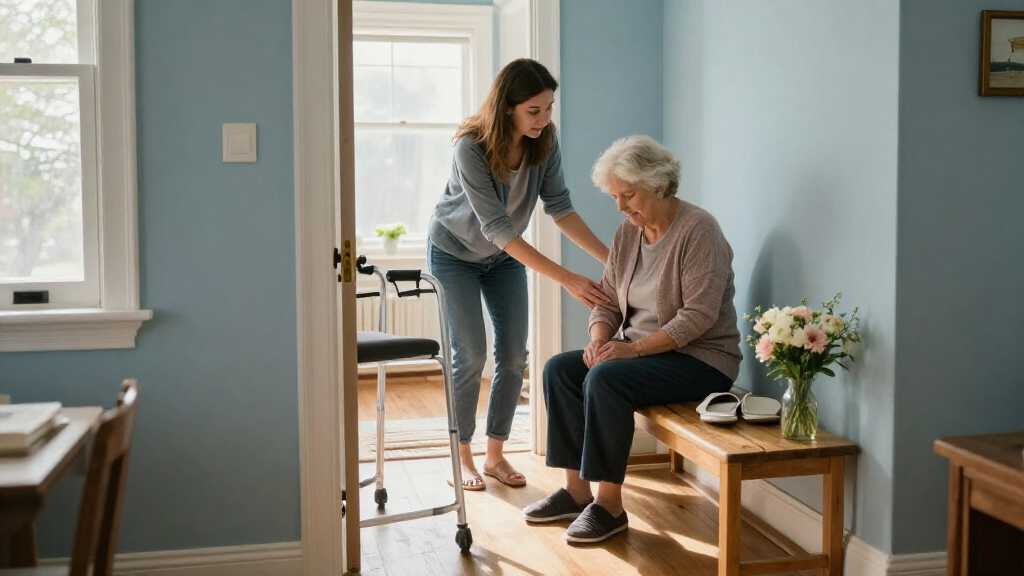
Arrange the sleeping area so your loved one can get into bed, get up, reach the bathroom route, and access everyday essentials as safely as their plan allows. The bed’s location and height may affect how easy it feels to stand or sit, but changes should follow professional guidance if mobility or transfer support is involved. Keep the area beside the bed open enough for a walker or wheelchair if one is needed.
Place a phone, water, glasses, and other commonly used items within easy reach. If prescribed equipment needs to be nearby, follow the care team’s directions for placement and use. A small, stable bedside surface can help; a wobbly stool or a pile of books may not. Keep cords out of the walking path and make sure a light can be turned on without crossing a dark room.
Picture a person returning home after rehabilitation who wakes during the night and needs the bathroom. If their slippers, walking aid, or phone sits on the far side of the room, they may have to stretch or take steps before they feel steady. Setting up the space around the night-time routine can remove those unnecessary hurdles.
If the usual bedroom is upstairs and stairs are not appropriate under the discharge plan, ask the team about a temporary main-floor sleeping arrangement. A living room may work for a short time if there is privacy, a clear route, and enough room for care needs. Before moving furniture, invite your loved one into the decision. Comfort and dignity count, alongside the practical details of getting in and out of bed.
Organize meals, medications, and everyday items within reach
Put the things your loved one uses most often where they can reach them without carrying objects while walking, bending deeply, or stretching high. That may include cups, snacks, a phone charger, clothing, or a small set of meal supplies. Follow any clinician-provided instructions about medication storage and timing; a clear, consistent place for written instructions can help family members refer to the same information.
Think about the movement behind each task. Carrying a hot mug from the kitchen while using a walking aid may be awkward. A caregiver could bring it, or you could set up a nearby surface where the person can sit and have a drink. Simple meals, pre-portioned snacks, and a clear space to eat can reduce effort during the first few days, when the person may be tired.
For example, if your loved one normally makes tea in the morning, place a few cups and tea bags at a reachable height and agree on who will handle the kettle if the care plan or balance makes that difficult. That preserves a familiar ritual while addressing the part of the task that may need help. Small choices can make a room feel like home rather than a temporary care station.
Keep important information easy to find, but protect privacy. A shared note can list appointment times, the names of helpers, and who to contact for practical questions. Medical instructions should stay accurate and come from the care team. Make the easy choice the reachable choice: a well-placed item can reduce unnecessary trips and let your loved one handle more of their own routine.
Agree on caregiver help that is safe and realistic
A workable home plan includes the people providing help, their time, and the tasks they can safely do. Decide who will support meals, transport, appointments, household chores, and personal care, and make sure everyone understands what they have agreed to do. If a task requires lifting or a transfer, ask a physical or occupational therapist to demonstrate a safe method and recommend equipment.
Do not improvise a transfer because it seems quicker. If helping someone stand feels unsafe, painful, or beyond your ability, pause and contact the care team for guidance. Family members may care deeply and still need training or additional support. A realistic plan protects both the person returning home and the people helping them.
Consider a common first-week scenario: one caregiver works during the day, another lives nearby, and appointments require a car. Writing down who can cover each trip or meal can reveal gaps before they become stressful. If no one can cover a need, ask the healthcare team about available home-care services or other local support. Do not assume one family member can quietly take on every task.
Check that helpers know where to find the discharge instructions and whom to contact with questions. Care arrangements can change as recovery progresses, so set a time to review the plan. Caregiver capacity is part of home safety. A setup works best when the person receiving care has appropriate help and the helpers can provide it without risking their own safety.
Revisit the setup as needs and confidence change
Check the home plan again after your loved one has spent some time back in the house. A setup that felt practical before the first night may not work once you see the actual routine. Recovery can be uneven: someone may manage a short walk in the morning but feel tired later, or discover that a doorway is harder to pass through than it looked.
Ask open, specific questions. “Is anything in the way on your bathroom route?” often reveals more than “Are you okay?” Invite your loved one to point out what feels uncomfortable, inconvenient, or too dependent. You can then make small changes together, such as moving a chair, adding a lamp, or changing where supplies sit.
Watch for signs that the current arrangement is not working, such as repeated near-falls, missed medication instructions, difficult transfers, or caregiver exhaustion. These are reasons to contact the healthcare team and ask what additional training, services, or changes may help. Follow the discharge plan for urgent concerns, and seek prompt professional guidance for new or worsening symptoms, a fall, medication questions, or difficulty managing care at home.
Remote follow-up or telehealth may make some check-ins easier when available, but it does not replace hands-on assessment when the person needs help with transfers or daily activities. Coverage and availability vary. Keep the plan adjustable: the goal is a home that matches your loved one’s abilities today and can respond as those abilities change.
Frequently Asked Questions
What should I do first before my loved one returns home?
Read the discharge instructions and ask the care team what your loved one can safely do, what help they will need, and whether any activity or movement is restricted. Confirm equipment needs, follow-up appointments, medication instructions, and whom to contact with questions. Use that information to guide home changes.
What should I change at home after a hospital stay?
Start with clear routes between the entrance, bedroom, bathroom, and main living area. Remove loose rugs, cords, clutter, and other obstacles, and improve lighting where needed, especially at night. Prepare the bathroom and sleeping area around the person’s specific mobility needs and care plan.
What equipment might my loved one need?
Depending on their needs, the care team may recommend a walker, wheelchair, crutches, shower seat, grab bars, raised toilet seat, or other equipment. The right choice depends on the person and the home layout. Ask a qualified professional for guidance rather than buying items based on a general checklist.
Can I install grab bars myself?
Grab bars need secure installation into suitable support and must follow the product and building requirements. If you are unsure about the wall structure or installation, ask a qualified installer. Do not rely on towel rails as supports for a person’s weight.
How can I help without making my loved one feel dependent?
Ask what feels comfortable, offer choices, and agree together on the tasks where help is wanted or needed. Keep familiar routines where possible and encourage your loved one to manage tasks they can safely do. Revisit the arrangement as their abilities and confidence change.
What if the home has stairs?
Ask the care team whether your loved one can use the stairs safely and what support is appropriate. If stairs are not suitable under the current plan, discuss a temporary sleeping and living arrangement on one level or another place to stay. Do not assume a familiar stairway is manageable after a hospital stay.
When should I contact a clinician after the return home?
Follow the discharge plan for urgent symptoms and follow-up. Contact the healthcare team promptly about new or worsening symptoms, a fall, medication concerns, or difficulty managing care at home. For an emergency, use local emergency services.
Conclusion
Start with the discharge plan, then prepare the route and rooms your loved one will use most. Ask what feels helpful, make choices together, and get professional guidance for equipment and transfers. A few thoughtful changes can turn the first trip from bed to bathroom into a calmer, more manageable part of coming home.