TL;DR

Turn quiet afternoons into listening time
- Thousands of audiobooks, podcasts and originals
- Listen on your phone, tablet or Echo — also offline
- Cancel anytime
Making the front entry easier to use starts with walking the route from the sidewalk to the inside of the home and noting where steps, tight space, poor lighting, or a difficult door create extra effort. Prioritize a stable approach, a manageable threshold, enough room to open the door, and reachable controls; larger changes such as ramps, lifts, or widened doorways need a design that fits the home and local requirements.
A front door can look welcoming and still ask too much of the person trying to use it. One step, a slick patch of stone, or a knob that needs a firm twist can turn a quick trip outside into a careful, tiring routine.
Making the front entry easier to use means looking at the whole route: getting to the door, reaching the bell and lock, opening it, crossing the threshold, and turning once inside. You’ll find practical ways to spot barriers, decide which changes to tackle first, and understand when a larger project needs qualified help.
The right changes depend on your home and the person using it. A brighter porch light or lever handle may solve a daily frustration; a steep step may call for a carefully designed ramp or lift. The goal is a safer, more comfortable entry that supports independence and feels like home.
Walk the complete route, including the turn inside, and ask the person who uses it what feels difficult.
Measure a doorway’s clear opening with the door open; the nominal door size does not tell you the usable passage.
Use a stable, slip-resistant approach with enough landing space, good drainage, and lighting that avoids glare.
A lever handle, improved light, or cleared path may address a specific barrier; a ramp, lift, or widened doorway needs site-specific planning.
Keep a reliable entry method available if a smart lock or video doorbell loses power or connectivity.
Making the Front Entry Easier to Use
A welcoming front door should be easy to find, approach, open, and pass through. Walk the whole route to spot the steps, tight turns, poor lighting, or difficult controls that add effort, then choose changes that fit the home and the person using it.
Start with a walk-through
Follow the route as the resident uses it, at the time of day it usually happens. Ask what feels awkward or tiring instead of judging by appearance alone.
Look underfoot
Check for curled mats, clutter, uneven paving, standing water, ice, and surfaces that become slick in rain or snow.
Reach and operate
Test the bell, lock, and handle from seated and standing positions. Notice grip effort, glare, and whether the door swings into the route.
Rank by frequency
Note daily obstacles separately from problems that arise only after dark or in bad weather. Start with the barrier that causes real effort.
- ApproachGet from the walk to a stable landing.
- ReachFind the bell, lock, and handle.
- OpenManage the door and its swing.
- CrossPass the threshold safely.
- Turn insideMove into the hall without a surprise stop.
A visitor may see a neat porch; the resident may know the mat curls, the bell is out of reach, and the door closes before a walker can get inside. Observe together and write down what happens.
Choose a route that fits the site
A step-free entrance can come from regrading, a ramp, or a lift. The height change, available space, drainage, mobility equipment, and local requirements shape the choice.
Firm, stable, slip-resistant
Keep the approach clear and provide a level landing with room to pause, open the door, and maneuver. Drainage and weather protection help the route stay usable.
Design for the rise and landing
A ramp needs a suitable slope, secure edges, and space at both ends. A lift can require structural work and a safe landing. Check applicable code and permits.
A successful route works as a whole
A short, steep ramp squeezed beside a porch can be harder to use than the step it replaces. Have an accessibility professional or qualified contractor assess substantial changes against the home and local rules.
Make the doorway manageable
A wider opening alone may not solve a tight turn or a landing with no room to pause. Check the entire opening sequence with the mobility aid used at home.
| Barrier | Possible adjustment | Check before changing |
|---|---|---|
| Round or stiff knob | ✓ Fit a lever handle; adjust a sticking door. | Reach and effort from seated and standing positions. |
| Heavy door or closer | ~ Consider adjustment, lighter door, or automatic opener. | Secure latching, fire safety, and security requirements. |
| Limited clear opening | ~ Explore different hinges or a wider doorway. | Measure with door fully open; include frame, hardware, and nearby walls. |
| Cramped maneuvering space | ✓ Clear the landing and handle side where possible. | Swing path, approach angle, and room to turn inside. |
| High or catching threshold | ~ Reduce the change in level where suitable. | Water control, weather seal, and the user’s wheels or feet. |
Smart locks, video doorbells, and automatic operators can reduce effort. Keep accessible controls, reliable power and connectivity in mind, and retain a dependable entry method for outages.
Improve light, contrast, and footing
Even, glare-free light helps reveal steps, the threshold, lock, and surface changes. Contrast can make the door, hardware, and landing edges easier to identify.
Light the whole sequence
Illuminate the approach, keyway, and landing. A motion sensor should activate before someone reaches the first step.
Reduce glare, add contrast
Avoid a bright bulb shining into the user’s eyes or reflections from glossy surfaces. Make controls and edges easy to distinguish.
Keep surfaces dependable
Use a firm, stable path and secure mats. Address drainage and remove clutter, ice, and standing water as conditions change.
Five checks for a better entry
Small changes may resolve a specific daily frustration. Ramps, lifts, and widened doorways call for site-specific planning.
- 1Walk the complete route, including the turn inside, and ask the person who uses it what feels difficult.
- 2Measure the doorway’s clear opening with the door open; nominal door size does not show usable passage.
- 3Provide a stable, slip-resistant approach, enough landing space, good drainage, and lighting that avoids glare.
- 4Match the change to the barrier: a lever or better light may help; a ramp, lift, or wider doorway needs planning.
- 5Keep a reliable way to enter if a smart lock or video doorbell loses power or connectivity.
Start with a walk-through to find the real sticking points
Making the front entry easier to use starts with following the route the way the person who uses it does: approach, reach the controls, open the door, cross the threshold, and turn inside. That simple walk-through can reveal whether the main problem is a step, a heavy door, glare, or a cramped landing. It keeps you focused on the barrier that actually causes effort.
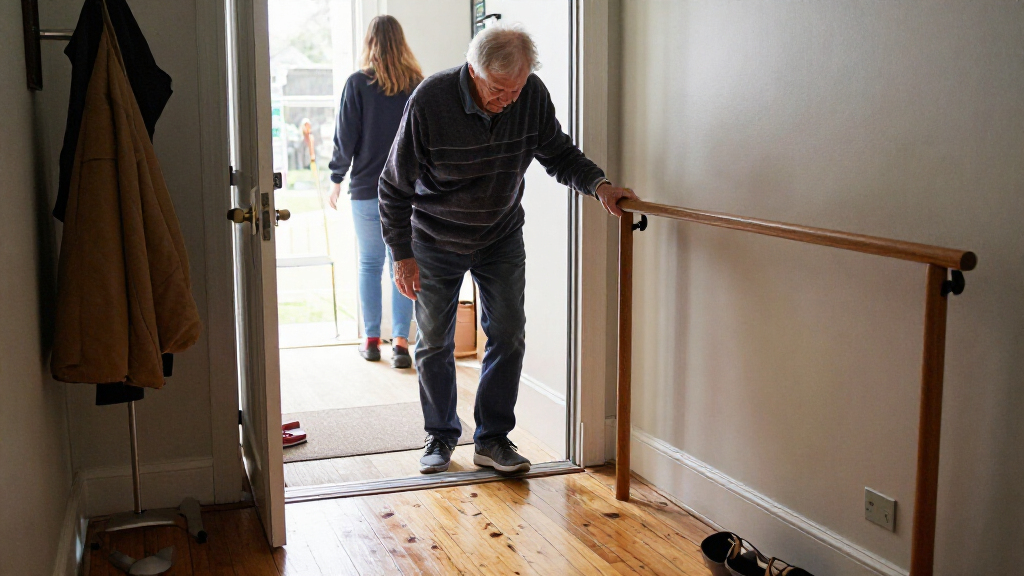
Try the route at the time of day it usually gets used. Notice how the light falls, whether the door swings into the person’s path, and where groceries or a walker might need to sit while the lock is used. A family caregiver can observe and take notes, but should ask the resident what feels awkward or tiring. Their experience matters more than assumptions based on appearance.
For example, a visitor may see a neat doormat and a charming porch. The resident may know that the mat curls at one corner, the bell is too far from the handle, and the door closes before they can move their walker inside. Write down each obstacle, then mark which ones happen daily and which ones appear only in rain, snow, or darkness.
Think of the entry as a short route with several gates. Making one gate easier helps, but the whole trip works best when you can move from the walk to the hallway without a surprise stop. A quick list also helps you compare a low-cost adjustment with a larger building project.
- Check the route in daylight and after dark.
- Notice loose mats, clutter, standing water, ice, and uneven surfaces.
- Test whether the doorbell, lock, and handle are reachable from a seated or standing position.
Products Worth Considering

Bose SoundLink Plus Portable Bluetooth Speaker, Wireless Outdoor Speaker, Up to 20 Hours Battery Life, Waterproof and Dustproof, Black

Philips Hue Secure Starter Kit with Contact Sensors, Motion Sensor, Bridge, and Color Smart Bulbs

PHILIPS Hue Smart LED Candle Light Bulb, B39, E12, 2-Pack
As an affiliate, we earn on qualifying purchases.
Choose a step-free route that fits your home
A step-free route gives you a level way to approach the entrance; where a height change remains, a properly planned ramp or lift may help. The right choice depends on the rise, space available, drainage, and the person’s mobility equipment. A short, steep ramp squeezed beside the porch can be harder to use than the step it replaces.
Making the front entry easier to use may begin with a small threshold adjustment, or it may require work outdoors. For a modest height difference, regrading the approach or changing the landing might be possible. A ramp needs a firm, slip-resistant surface, secure edges, a suitable slope, and enough space at the top and bottom to pause and maneuver. Local rules and site conditions affect the design.
Imagine a home with three steps and a narrow garden strip beside the porch. A ramp could take up more room than that strip allows, while a lift may need structural work and a safe place to land. A qualified contractor or accessibility professional can assess those constraints before you commit to a design. Requirements differ by location, so check local code and permit rules for substantial changes.
Portable ramps can serve some doorways with small height changes, but they are not a universal fix. The ramp must stay stable, fit the rise, and work for the person and device using it. Rain, snow, or a soft surface can affect safety. A level, weather-protected landing is useful whether you choose a ramp, lift, or a different route.
A ramp is part of a route, not a standalone object. The approach, landing, surface, and turn at the door all need to work together.
Make the doorway easier to open and pass through
A usable doorway gives you enough clear space to pass through and enough room to manage the door. The door’s advertised or nominal width does not show the actual opening once it swings open; the frame, hinges, handle, and nearby wall all affect clearance. Measure the clear opening with the door open, then consider the walker, wheelchair, or other aid used at home.
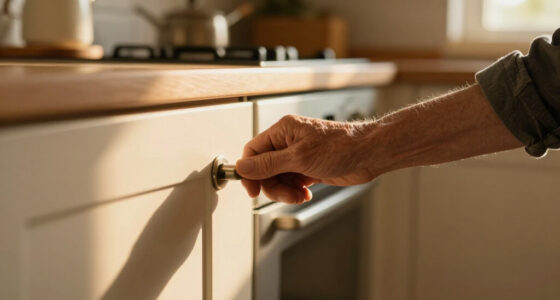
Making the front entry easier to use can start with the hardware. A lever handle is generally easier to operate than a round knob, especially when your hands are full or you have difficulty gripping. A door that sticks or slams may need adjustment. A lighter door, a well-adjusted closer, or an automatic opener may reduce effort, provided the door still latches securely and meets applicable fire and security requirements.
Consider someone coming home with a tote bag and a cane. If they must twist a stiff knob, pull the door toward themselves, and step backward to clear its swing, each task competes for the same small patch of floor. A lever and better maneuvering space can ease that sequence. If the door itself blocks the passage, different hinges or a wider doorway may help, but those changes need to suit the frame and building.
Before changing the doorway, observe how the person approaches from both outside and inside. Can they reach the handle without leaning? Can they hold the door while moving through? A wider opening alone may not solve a tight turn or a landing too small for a safe pause. For people with disabilities and older adults, the whole opening sequence should be easy to manage with the mobility aid they actually use.
- Measure the clear opening with the door fully open.
- Check the handle height and effort from a seated and standing position.
- Look at the swing path, landing, and space beside the handle.
Improve lighting, contrast, and the surface underfoot
Even, glare-free lighting makes it easier to see the steps, threshold, lock, and changes in surface level. Good contrast can help the door, hardware, and landing edges stand out. The aim is a clear view without a bright bulb shining into someone’s eyes or reflecting off a glossy surface.
Making the front entry easier to use after sunset may be as straightforward as improving a porch light or adding illumination near the lock. Check that a visitor can find the bell and that someone using a key can see the keyway. A light that comes on automatically can be convenient, but its placement and reliability matter. For example, a motion sensor that triggers only after someone reaches the first step may leave the approach in shadow.
Underfoot, choose a firm and stable route. Loose mats can bunch up under a cane or catch a walker’s front wheels; smooth, wet stone can become slippery. Keep the path clear of plant pots, delivery boxes, and garden hoses. Drainage and weather protection help reduce standing water, while prompt snow and ice removal helps keep a familiar path usable in colder weather.
Picture a rainy evening: the porch light shows the door, but water has collected on the landing and the dark threshold blends into the floor. A more even light, a contrasting threshold edge, and a path that drains well each address a different part of the problem. When you choose changes, consider the view from inside and outside, and check the route in wet and dim conditions as well as on a bright day.
Put bells, locks, and technology within comfortable reach
Entry controls should be reachable and understandable from the position a person normally uses. That includes the doorbell, intercom, lock, mail slot, and any keypad or opener. A control that is technically present but requires an awkward lean or a tight grip may not help much.
Making the front entry easier to use can include moving a doorbell or choosing a lock with controls that are simple to operate. Smart locks and video doorbells may reduce trips to the door or make it easier to identify a visitor, depending on the person’s needs and comfort with technology. A large, clear button may be easier to use than a small touchscreen. Consider sound, lighting, screen readability, and privacy settings as well as convenience.
For instance, a caregiver may install a video doorbell so a resident can see who is outside before opening the door. That can be helpful, but it should not become the only workable way to answer. If the internet goes out or a battery runs flat, the resident still needs a reliable way to enter and operate the door. Keep a backup plan that makes sense for the household, such as a dependable physical key or another agreed entry method.
Test controls from both standing and seated positions if both are relevant. See whether a person can reach the button, hear the chime, read the screen, and operate the lock without balancing against the door. A feature earns its place when it makes an ordinary arrival simpler and fits the user’s habits. Give the person who lives there a say in the setup, including notifications and who can access them.
Prioritize improvements by effort, cost, and the size of the barrier
Making the front entry easier to use is often a sequence of improvements rather than one major renovation. Start with changes that address frequent effort or instability, then decide whether the remaining barrier needs building work. A sensible first step can be inexpensive, but the best priority depends on the person and the home.
For example, if a resident can manage the step but struggles to see the lock, lighting and contrast may help first. If a wheelchair cannot cross the threshold, a brighter bulb will not solve the main access problem. Match each fix to an observed difficulty; don’t spend on a device simply because it is available.
| Barrier | Possible first change | When to get more help |
|---|---|---|
| Hard-to-grip knob | Try a lever handle that suits the door and user | If the door sticks or will not latch reliably |
| Dim or uneven porch | Improve the light and reduce glare | If electrical changes or wiring are needed |
| Loose mat or clutter | Remove the obstruction and keep the path clear | If the surface itself is unstable or damaged |
| Step or high threshold | Review the route, landing, and height difference | Before adding a ramp, lift, or structural change |
| Tight passage | Measure the clear opening and turning space | If changing the frame, hinges, or wall is needed |
Small updates can have immediate practical value, while ramps, lifts, door widening, and electrical work may involve more cost and local rules. Ask a qualified professional to assess substantial changes, especially where structure, drainage, or electrical systems are involved. A phased plan lets you address today’s barrier while keeping later improvements in view.
Frequently Asked Questions
What is the easiest way to make a front entrance step-free?
The right option depends on the height difference, available space, and site layout. Regrading, a ramp, or a lift may work, but each needs an appropriate design and safe landing. Ask a qualified professional to review substantial changes and check local requirements.
How steep should an entry ramp be?
There is no single slope that suits every home and user. Local codes and accessibility standards may set requirements, while ramp length, surface, weather exposure, and the mobility aid used all affect how practical it is. Have the site assessed before choosing a ramp.
Can I improve access without rebuilding the porch?
Often, yes. A lever handle, better lighting, a clearer path, an adjusted door, or a threshold improvement may solve a specific barrier without rebuilding the whole porch. Start with what the person finds difficult and check whether the landing still gives enough room to maneuver.
How wide does the front doorway need to be?
Measure the clear opening with the door fully open, and consider the mobility aid and turning space the person needs. The door’s listed width does not equal the usable opening, and requirements vary by building type and location. A contractor or accessibility professional can help assess a tight doorway.
Are portable ramps safe for front doors?
A portable ramp may suit some small height changes if it is stable, correctly sized, slip-resistant, and appropriate for the person using it. It may not work well where there is little landing space, a steep rise, or frequent exposure to rain and ice. Check its setup and the full route before relying on it.
How can I make the entry safer in rain, snow, or ice?
Use a firm, slip-resistant surface and keep the approach clear of standing water, loose mats, and clutter. Good drainage, weather protection, and working lights help in poor conditions. Clear snow and ice promptly using a method suitable for the surface.
Conclusion
Start by walking the route with the person who uses the door, then fix the barrier that causes the most effort or uncertainty. A better light, a reachable lever, or a stable landing can make an ordinary arrival feel calmer; larger changes deserve a careful plan that fits the home and local rules.
A good entry lets you focus on coming home, not negotiating the doorway. Make one practical change, then walk the route again.