
TL;DR

Turn quiet afternoons into listening time
- Thousands of audiobooks, podcasts and originals
- Listen on your phone, tablet or Echo — also offline
- Cancel anytime
A July 2026 World Health Organization guideline update says 14 modifiable risk factors are associated with 45% of the risk of developing dementia and cognitive decline. That figure does not mean eliminating those factors would prevent 45% of cases: most evidence is observational, and the source says blood pressure is the risk factor with clear causal evidence so far.
The World Health Organization updated its guidance in July 2026, concluding that 14 modifiable risk factors account for 45% of the risk of cognitive decline and dementia. The estimate points to potential prevention opportunities, but it does not mean that changing or eliminating those factors would prevent 45% of dementia cases, researchers quoted by Being Patient cautioned.
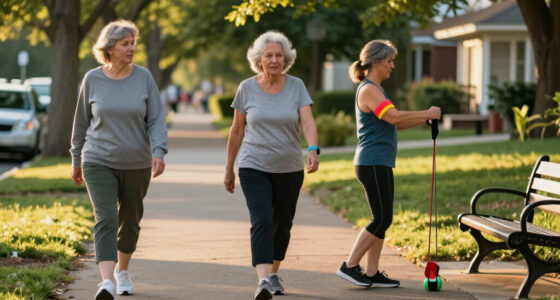
The factors named in the report include high blood pressure, high cholesterol, obesity, diabetes, smoking, physical inactivity, alcohol use and air pollution, along with other risks. Some, such as education in early life and exposure to polluted air, are shaped by social and environmental conditions rather than being choices an individual can easily change.
The 45% figure comes from studies that track large groups over time and compare dementia outcomes among people with different exposures. Repeated findings across populations can strengthen evidence that a factor is associated with higher risk. But these studies are generally observational, and researchers may not be able to account fully for other differences between participants. That means the estimated relationship can be stronger than the effect that would result from changing the factor.
Neurologist Edo Richard of Radboud University Medical Centre told Being Patient that blood pressure is the only factor with clear causal evidence to date, according to his assessment. The article describes a study in Chinese villages where trained village health providers helped residents use blood-pressure medication; over four years, the intervention lowered blood pressure and dementia risk. The source does not provide the study’s sample size or the size of the reduction.
What the 45% Estimate Can Tell Us
The estimate matters because it signals that dementia risk is not determined by age or genetics alone. Some influences may be addressed through health care or public policy, and acting on them may also protect against conditions with better-established links to those risks, including heart disease and stroke. The number can help frame prevention priorities, but it is not a forecast of how many cases a person, health system or country could avert by changing behavior.
Richard told Being Patient that it is an illusion to think these risk factors could simply be eradicated, and said that even if they could, it would not be certain dementia risk would fall by the same proportion. Andrew Ho, a neurologist at Banner Health, said that no intervention has been shown to prevent dementia outright, though changes to some risk factors might delay its onset. The distinction is important: lower risk is not a guarantee of prevention, and the evidence does not support promising an individual a particular reduction in their chances of dementia.
Population-level changes may matter alongside personal health decisions. Richard argued that investment in public health, healthier environments and education could have a role, particularly in low- and middle-income countries. The source also reports that U.S. age-specific chances of developing dementia have declined by as much as 67% over 40 years, citing an analysis by Duke University actuarial researcher Eric Stallard. That historical trend is not proof that the listed factors caused the decline, and it does not mean the total number of people with dementia will fall as populations age.
Products Worth Considering

Blueair Blue Pure 211i Max Smart Air Purifier

Philips Hue Festavia 130-Foot Indoor/Outdoor Smart String Lights, 500 LEDs

TCL QM64L 85-Inch QD-Mini LED 4K Smart Fire TV
As an affiliate, we earn on qualifying purchases.
How Dementia Risk Is Estimated
Risk-factor research typically follows people over time, recording exposures such as hypertension or smoking and comparing later health outcomes. When multiple studies find similar associations in different groups, confidence in the relationship grows. Still, association does not by itself establish cause: factors can cluster together, and other influences can be difficult to separate from the one being studied.
The article also explains why percentages can mislead. A relative reduction describes a difference between groups, not the number of cases prevented in a population. In its hypothetical example, a 50% relative reduction applied to a 1% starting risk would amount to an absolute reduction of 0.5 percentage points. The 45% estimate should likewise be read as a population-level attribution, not as an individual promise or a direct prediction of the effect of an intervention.
Some risks may be hard to change, and the timing of intervention matters. Ho told Being Patient that damage accumulated over time may not be fully reversed later in life. The source says addressing factors such as exercise or hearing loss may be practical steps for some people, while Richard advises patients that the evidence for reducing heart attacks and strokes is stronger than the evidence for preventing dementia.
““It’s an illusion [that] you could eradicate these risk factors.””
— Edo Richard, neurologist and professor at Radboud University Medical Centre, speaking to Being Patient
Limits of the Dementia Evidence
The source does not list all 14 factors in full or provide the underlying WHO guideline document, study citations, methods or confidence ranges for the 45% estimate. It also does not specify the exact populations and time periods used to calculate the estimate. Readers therefore cannot determine from this material how the figure varies by country, age group or other characteristics.
It remains uncertain how much changing each factor would reduce dementia risk, whether effects differ depending on when a change is made, and how much of the observed association reflects other influences. The village blood-pressure study is described as evidence of a reduction over four years, but the supplied account gives no numerical effect size or detail that would establish how widely its findings apply. No individual outcome can be inferred from the 45% figure.
What Prevention Research Needs
The next step is stronger evidence about which interventions change dementia outcomes, by how much and for whom. The source identifies blood pressure as the factor with clear causal evidence so far, while saying evidence for other factors is less conclusive. Further follow-up and studies that test interventions can help distinguish a risk association from an effect that prevention programs can produce.
For now, the report’s practical message is measured: some risk factors may be changeable, but the 45% estimate is not a personal forecast or a guarantee that dementia can be prevented. People considering changes to medication, exercise or other health routines should discuss them with a qualified health professional. The source says such measures have stronger established benefits for cardiovascular health, while any dementia benefit remains uncertain for many factors.
Key Questions
Does the 45% figure mean 45% of dementia cases can be prevented?
No. It is an estimate of the share of risk associated with 14 modifiable factors, not a demonstrated prediction of how many cases would be avoided if those factors were removed. The source says it is uncertain whether eliminating them would reduce risk by that amount.
Which dementia risk factor has the clearest causal evidence?
Neurologist Edo Richard told Being Patient that blood pressure is the only factor with clear causal evidence to date. The report describes an intervention in Chinese villages that lowered blood pressure and dementia risk over four years, but does not give the size of that reduction.
What is the difference between relative and absolute risk reduction?
Relative reduction compares risk between two groups. Absolute reduction shows the actual difference in risk. In the source’s example, a 50% relative reduction from a starting risk of 1% would equal an absolute reduction of 0.5 percentage points.
Can an individual use this estimate to predict their own dementia risk?
No. The 45% figure is a population-level estimate and does not predict an individual’s outcome. Risk depends on personal and wider circumstances, and the evidence for changing many of the factors remains uncertain.
Source: rss