TL;DR
Open a free Amazon Business account
Business pricing, bulk buying and tax-exempt orders.
Create a free accountAs an affiliate, we earn on qualifying purchases.
Caregiving tasks can strain your back, but using proper body mechanics, environment prep, and equipment reduces injury risk. Small changes make a big difference in staying pain-free.
Caregiving often sneaks up on you. One moment, you’re gently helping a loved one sit up, and the next, your back is protesting loudly. It’s easy to overlook the toll that repeated bending and lifting take, especially when you’re focused on safety and comfort for someone else.
In this guide, you’ll learn practical ways to protect your back—simple habits, smart equipment, and techniques that can save you from pain and injury. Because a healthy caregiver is the foundation of good care.
Always evaluate the person’s ability before attempting a transfer; safety depends on planning.
Use your hips and knees, not your back, and keep the person close to reduce strain.
Choose equipment like transfer belts or lifts that match the task and the person’s ability.
Develop daily habits—adjust work height, wear proper footwear, and take regular breaks—to prevent injury.
Modern caregiving shifts focus from lifting to using assistive technology and safer techniques, reducing injury risks.
How to Protect Your Back While Caregiving
Caregiving strain often builds through repeated bending, reaching, pushing, and supporting—not just one heavy lift. Plan first, keep the person close, and use equipment before strength. A healthy caregiver is the foundation of good care.
01 / Assess before moving
Know when—and when not—to lift
A safe transfer begins before anyone moves. Consider what the person can do, what may change unexpectedly, and whether the environment and equipment are ready.
Weight-bearing ability
Can the person push through their legs, hold their trunk upright, and participate reliably?
Balance and fatigue
Check for weakness, dizziness, pain, poor balance, or tiredness that could change during the move.
Cognition and behavior
Confusion, fear, drowsiness, or unexpected movement can make a manual transfer unsafe.
Prepare the environment
Clear obstacles, dry floors, secure rugs, improve lighting, and put supplies within reach.
Lock and position
Set the destination close, lock bed or wheelchair brakes, and remove footrests if appropriate.
Choose the safest method
If the person cannot reliably assist, use suitable equipment or another trained helper.
Assess ability, alertness, pain and balance
Clear the route and prepare the destination
Select equipment, help and technique
Explain, count down and move together
02 / Body mechanics
Build the move from the floor up
Good positioning reduces the force on your spine and improves control. The goal is not a rigid posture—it is a stable, neutral position that lets your legs and hips do the work.
Stand close and create a stable base
Place feet about shoulder-width apart, with one foot slightly forward when useful.
Hinge at hips and knees
Keep your spine comfortable and neutral instead of folding forward at the waist.
Keep the person close
Reaching away from your body increases leverage and stress on the lower back.
Pivot—never twist under load
Move your feet and turn your whole body toward the destination.
Lower with control
Bend through hips and knees, keep the person close, and avoid sudden pulling.
03 / Transfer tools
Match the device to the person and task
Equipment can reduce friction, reaching, twisting, and manual load—but only when it is correctly sized, maintained, fitted, and used.
| Tool | Best use | Back-saving benefit | Watch-outs |
|---|---|---|---|
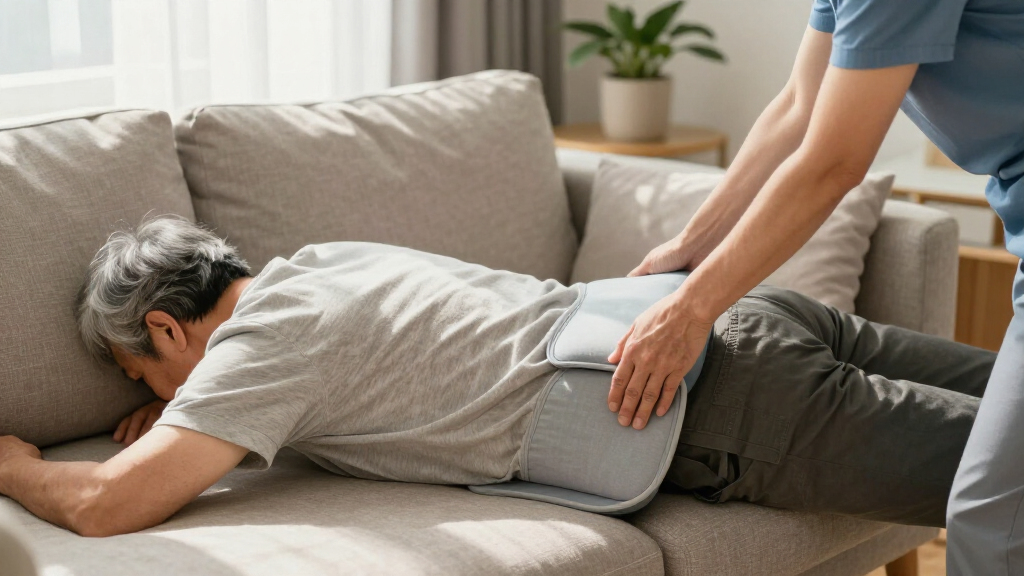
| Gait belt | ✓Guiding a person who can bear weight and participate | +Improves control and hand placement | ~Not a lifting handle; unsuitable for some abdominal, rib, spinal, skin, or surgical conditions |
| Mechanical lift | ✓Heavy, dependent, unpredictable, or unassisted transfers | +Minimizes manual lifting and weight support | ~Requires correct sling, space, inspection, and training |
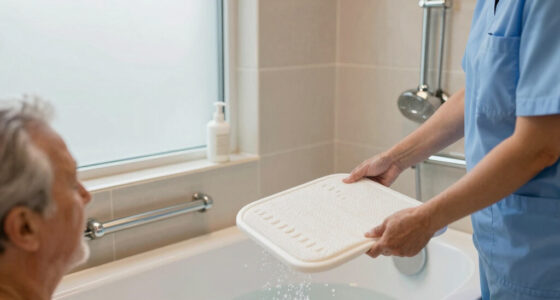
| Transfer board | ✓Seated lateral transfers across a short, level gap | +Reduces lifting, friction, and twisting | ~Needs a stable surface and sufficient sitting balance |
| Slide sheets | ✓Repositioning or turning someone in bed | +Reduces drag and force during bed mobility | ~Incorrect use can cause slips, shear, or skin irritation |
| Sit-to-stand lift | ✓A person with some trunk control and weight-bearing ability | +Supports the rise without a full manual lift | ~Requires assessment, correct fit, and active participation |
Professional guidance matters: an occupational therapist, physical therapist, nurse, or other trained professional can assess the home and teach safe use.
Which options minimize manual handling most?
04 / Everyday prevention
Small habits protect your back all day
Repeated small movements can accumulate into significant strain. Reduce the frequency, reach, force, and awkwardness of routine tasks—not just the obvious heavy transfers.
Take short breaks
Alternate demanding tasks so tired muscles are not repeatedly overloaded.
Raise the work
Bring beds and work surfaces toward waist height to reduce stooping.
Wear secure shoes
Supportive, slip-resistant footwear improves balance and traction.
Keep items close
Use reachable storage or a rolling cart to cut bending and twisting.
Train resilience
Regular strength and balance work supports safer everyday movement.
05 / The safer-care shift
From lifting people to handling safely
Modern caregiving focuses on preserving independence and minimizing manual load. Safer transfers can protect the caregiver while also improving comfort, control, and dignity for the person receiving care.
Strength-first caregiving
- React quickly and lift with available strength
- Support most or all of the person’s weight
- Reach across beds and twist toward destinations
- Ignore small, repetitive sources of strain
Assessment-led handling
- Plan the move and encourage safe participation
- Use lifts, boards, sheets, rails, and adjusted heights
- Coordinate movement and pivot with the feet
- Stop, reassess, and obtain help when conditions change
Technology changes the risk equation
Powered lifting can substantially reduce physical strain compared with manual handling. The exact benefit depends on the person, task, equipment, environment, and correct technique—so training and individualized assessment remain essential.
06 / Warning signs
Listen when your back says stop
Pain that worsens, repeatedly returns, disturbs sleep, or changes how you move deserves attention. Early assessment may prevent a temporary strain from becoming a lasting problem.
Do not work through these signs
- Back pain that is persistent, worsening, or recurring
- Pain that interferes with sleep or daily movement
- Shooting pain, tingling, or numbness into a leg
- New weakness or reduced ability to stand or walk
- Symptoms that began after a caregiving transfer
Stop the task, avoid further lifting, and contact an appropriate healthcare professional for individualized advice.
Get immediate medical help
- Loss of bladder or bowel control
- Numbness around the groin or saddle area
- Severe pain or weakness after a fall
- Rapidly worsening numbness or leg weakness
- Severe symptoms that prevent safe movement
These symptoms may indicate a serious injury or nerve problem and require prompt professional evaluation.
The safe-care chain
Never try to catch a falling person. Widen your stance, protect their head if possible, guide them toward the floor, and call for help.
How to Assess Before Moving — Know When and How to Lift Safely
The first step to protecting your back is understanding the situation. Before you lift or support your loved one, evaluate their ability. Can they help push, pull, or balance? Do they feel steady, or are they drowsy or confused?
Imagine lifting someone who’s very heavy, unsteady, or panicked—you’re risking injury. If they can’t help, it’s time to consider equipment or assistance. Always plan the move, check your surroundings, and clear obstacles.
For example, if your loved one is frail but can sit up with help, a simple transfer with a gait belt may work. If they’re heavy or uncooperative, a mechanical lift is safer than risking your back.
Understanding their ability helps you decide whether a move can be done manually or if you need to use specialized equipment. This step is crucial because rushing or attempting unsafe lifts can lead to serious injuries, long-term back problems, or falls. Proper assessment minimizes risks and ensures that you’re choosing the safest, most effective method for each situation.
As an affiliate, we earn on qualifying purchases.
Use Proper Body Mechanics to Save Your Back
Protect your back by using good posture and body positioning during lifts. Stand close to your loved one, with feet shoulder-width apart. Keep your back straight and bend at the hips and knees—like sitting into a chair—rather than bending from the waist.
Imagine your spine as a sturdy column. Keeping it neutral and aligned prevents strains. For example, when helping someone from a bed, position yourself so you don’t have to reach across the mattress, reducing twisting and bending.
Remember: Move with your legs, not your back. Push through your hips and knees to generate power, not by arching your spine.
This technique is vital because many caregivers underestimate how much strain poor positioning can place on their lower back. Repeatedly lifting or supporting someone without proper mechanics can cause microtears in muscles, herniated discs, or chronic pain. Using your legs and hips distributes the effort more evenly, reducing fatigue and injury risk, and allowing you to lift or transfer with greater control and safety.
As an affiliate, we earn on qualifying purchases.
Compare Common Transfer Tools — Which One Protects Your Back Best?
| Tool | Pros | Cons |
|---|---|---|
| Gait Belt | Increases control, reduces strain, easy to use | Not suitable for all medical conditions, needs proper fitting |
| Mechanical Lift | Minimizes manual effort, ideal for heavy or uncooperative patients | Requires space, training, and sometimes professional setup |
| Transfer Board | Smooth transfers, reduces friction and twisting | Needs flat, stable surface; improper use can cause slips |
| Slide Sheets | Easy repositioning in bed, reduces friction | Can cause skin irritation if used improperly |
Choosing the right device depends on the situation and your loved one’s abilities. Mechanical lifts are safest for heavy or unassisted transfers, but smaller aids like transfer boards work well for lighter tasks. Selecting the appropriate tool is a tradeoff between safety, ease of use, and the specific needs of the person you’re helping. Using the wrong device or improper technique can negate safety benefits, so understanding each tool’s advantages and limitations helps prevent injuries and ensures a smoother transfer process.
As an affiliate, we earn on qualifying purchases.
Everyday Habits That Keep Your Back Strong and Safe
Small habits add up. Incorporate these into your routine to protect your back daily:
- Alternate demanding tasks with quick breaks to rest your muscles. This prevents overexertion and microtrauma that accumulate over time, reducing the risk of chronic pain.
- Adjust work surfaces to waist height—no more bending over a low table. This simple change helps maintain proper spinal alignment and reduces repetitive strain.
- Wear sturdy, slip-resistant shoes to maintain balance. Good footwear provides stability, preventing slips or falls that can cause sudden injuries or strain.
- Keep supplies within arm’s reach—avoid unnecessary reaching or bending. This minimizes awkward postures that strain muscles and joints.
- Do gentle strength and balance exercises regularly—think of it as “lifting” your resilience. Strengthening core muscles supports your spine, making lifting and supporting tasks safer and easier over time.
For example, using a rolling cart for supplies means less twisting and bending. Over time, these small shifts reduce fatigue and injury risk, creating a safer environment for both caregiver and recipient.
AmazonAs an affiliate, we earn on qualifying purchases.
The Big Shift: From Lifting to Safe Handling — What’s New in Caregiving
Modern caregiving prioritizes minimizing manual lifting by using mechanical aids and assessing individual mobility. The days of lifting with brute strength are fading. Instead, the focus is on tools and techniques that keep both caregiver and recipient safe.
An important change: repeated small movements can be just as harmful as a single heavy lift. That’s why equipment like slide sheets and lifts are now standard in professional settings and increasingly in homes.
For example, a caregiver using a powered lift can transfer a resident with less strain, reducing injury risk by up to 60% compared to manual lifts. This shift not only protects caregivers from injury but also preserves the dignity and comfort of the person being cared for, since safer transfers are often smoother and less frightening for the recipient.
This paradigm shift enhances safety, reduces long-term injuries, and promotes a more respectful, dignified approach to care that benefits everyone involved.
Signs You’re Injuring Your Back — Don’t Ignore the Warning Signs
Back pain that worsens, recurs, or interferes with sleep isn’t normal. It’s a signal that your muscles or joints are strained. Immediate attention is necessary if pain is severe, persistent, or accompanied by numbness or weakness.
Ignoring early symptoms can lead to more serious injuries, such as herniated discs or chronic back problems that limit your mobility and affect your quality of life. Recognizing these signs early allows for prompt intervention, which can prevent long-term damage and help you return to safe caregiving more quickly.
For instance, if you help someone and afterward experience shooting pain or tingling down your leg, seek medical advice. Ignoring such symptoms can lead to nerve damage or more complex issues requiring extensive treatment.
Watch for warning signs like numbness around your groin, loss of bladder control, or severe pain after a fall. These are urgent symptoms that need immediate professional evaluation to prevent permanent injury or disability.
Your Top 5 Questions About Protecting Your Back — Answered
- What is the safest way to lift someone from a bed? Always avoid manual lifting of heavy or uncooperative individuals. Use adjustable beds, transfer aids, or trained assistance, and plan every move carefully. Proper planning prevents sudden strains and ensures safety for both caregiver and recipient.
- Should I keep my back perfectly straight? Focus on using your hips and knees, not rigidity. Keep your spine neutral, but don’t worry about locking it straight—comfort and control matter more. Overly stiff postures can cause tension and fatigue, so aim for a natural, supported position.
- Can one person safely transfer a heavy adult? Often not. If they can’t bear weight or follow instructions, mechanical lifts or extra help are safer options. Attempting solo lifts in such cases significantly raises the risk of injury, so assessing the situation carefully is essential.
- Are gait belts safe? Yes, when fitted properly and used on someone who can bear some weight. Never pull on clothing or use them to lift someone entirely unsupported. Proper use ensures control and reduces strain, but misuse can cause injury to both caregiver and patient.
- What should I do if someone starts to fall? Guide them gently toward the floor, protect their head, call for help, and check for injuries. Never try to hold them upright forcibly, as this can cause further injury. Supporting their descent safely minimizes harm and allows for emergency response.
Conclusion
Your back is your best tool in caregiving. Small adjustments—like planning each move, using the right equipment, and maintaining good habits—can keep you pain-free for years to come. Remember, protecting yourself isn’t selfish; it’s the foundation of safe, compassionate care.
So next time you lift or support someone, picture your spine as a sturdy, flexible column. Treat it with respect, and it will serve you well—even on the toughest days.
This article is for informational purposes only and is not medical advice. Always consult a qualified healthcare professional about your specific situation.SUMMER Summer Picks
summer essentialssummer essentials
As an affiliate, we earn on qualifying purchases.