
TL;DR
Listen free for 30 days with Audible
Thousands of audiobooks and originals — cancel anytime.
Start your free trialAs an affiliate, we earn on qualifying purchases.
Lift recliners help with mobility and comfort, especially for seniors and those with joint issues. Choosing one depends on size, safety features, and personal needs — this guide covers what to look for to make a smart buy.
Imagine sitting comfortably, then with a press of a button, feeling your chair lift you smoothly to a standing position. That’s the magic of a lift recliner. These chairs aren’t just about luxury—they’re about safety, independence, and easing everyday struggles.
If you or a loved one needs help getting up or sitting down without strain, understanding what to look for makes choosing easier. This guide cuts through the confusion, highlighting the features, safety tips, and recent upgrades that matter most.
Measure your space and body carefully to choose a size that fits comfortably and safely.
Prioritize safety features like a sturdy base, battery backup, and safety sensors to prevent accidents.
Stay updated on recent innovations, such as app controls and eco-friendly materials, for a more personalized experience.
Invest in quality for durability—most lift recliners last 7-10 years with proper care.
Always test in person if possible, and consult health professionals for specific medical needs.
Understanding Lift Recliners: A Simple Buyer’s Guide
Lift recliners combine everyday comfort with a powered lifting mechanism that helps people sit down and stand up with less strain. The smartest choice balances fit, safety, comfort, space, and long-term durability.
Recent heavy-duty models now support higher weight capacities, improving durability and inclusivity.
Quality chairs can last close to a decade with cleaning, battery checks, and motor care.
A lift recliner is not just a soft chair. It is a mobility tool designed to reduce joint stress, lower fall risk, and preserve independence.
What Makes It Different
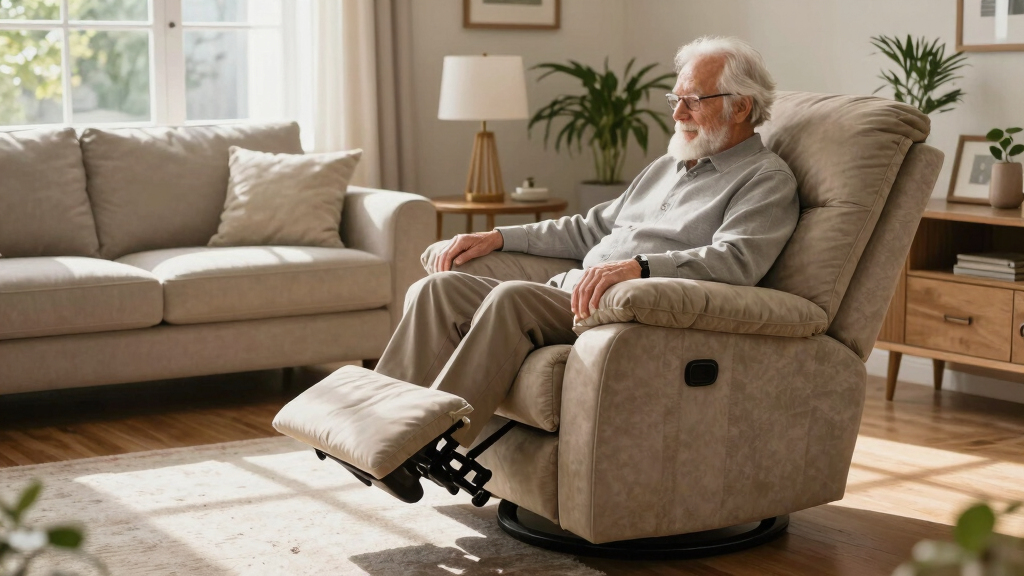
A standard recliner leans back. A lift recliner also tilts forward and upward, giving the user a controlled boost from seated to standing.
Powered lift
Most models use an electric motor controlled by a remote or side button for smooth transitions.
Less strain
The lifting angle supports natural movement and can reduce pressure on knees, hips, and lower back.
Recline options
Many chairs include multiple recline positions, lumbar support, padded arms, heat, or massage.
Sit securely
The stable base keeps the chair grounded while the user settles in.
Recline gently
The motor adjusts the back and footrest for rest, reading, or recovery.
Lift forward
The seat tilts upward to bring the user closer to a standing posture.
Stand safer
Less pushing and twisting can mean fewer risky movements.
Safety & Comfort Priorities
The best chair is not the one with the longest feature list. It is the one that fits the user, keeps operation predictable, and handles everyday use without wobble or confusion.
Feature impact score
Non-negotiables
Choose a sturdy base, simple controls, and a battery backup so the chair can still help the user sit or stand during a power outage.
Comfort matters too: breathable upholstery, padded armrests, ergonomic support, and enough seat depth can turn a useful device into a chair people actually enjoy using every day.
Compare Before You Buy
Price often tracks with capacity, comfort materials, safety systems, and smarter controls. Use the table to match the chair tier to the user’s real needs.
| Decision Point | Basic Model | Mid-Range Model | Premium Model | Buyer Signal |
|---|---|---|---|---|
| Estimated price | $300–$700 | $700–$1,200 | $1,200–$2,000+ | Balance budget against lifespan |
| Battery backup | ~ Sometimes | ✓ Common | ✓ Expected | Prioritize for outage safety |
| Heat or massage | ✗ Rare | ~ Optional | ✓ Common | Useful for sore muscles |
| Smart controls | ✗ Rare | ~ Limited | ✓ App or presets | Helpful when settings are repeated |
| Higher capacity | ~ 250–300 lb | 300–400 lb | ✓ 400+ lb options | Choose above current weight when possible |
Size is safety
Measure the user’s body and the room. The right seat width, depth, and clearance prevent slipping, strain, unstable movement, and awkward transfers.
Capacity planning
Smart Setup Checklist
A lift recliner works best when it suits both the room and the person. Test in person when possible, and ask a healthcare professional for medical recovery or joint-specific guidance.
Measure clearance: allow roughly 12–18 inches behind many models, or choose a wall-hugging design for tight rooms.
Check fit: feet should meet the floor, shoulders should feel supported, and the seat should not pinch or swallow the user.
Test controls: remotes and side buttons should be readable, reachable, and easy for limited dexterity.
Maintain monthly: clean upholstery, inspect screws and connections, test batteries, and listen for grinding or squeaking.
Traceability: From Need to Chair
A practical buying path connects health needs, physical fit, safety features, room constraints, and long-term care into one decision.
Mobility need
Standing, sitting, arthritis, recovery, or fall-risk support.
Body fit
Seat width, depth, height, and weight capacity.
Safety layer
Stable base, battery backup, sensors, simple controls.
Home fit
Clearance, wall-hugging profile, upholstery, decor.
Long life
Quality motor, cleaning routine, support, warranty.
What makes a lift recliner different from a regular chair?
At its core, a lift recliner combines a standard comfy chair with a powerful motor that tilts and elevates. Picture a sofa that not only reclines but also gently lifts you up—perfect for easing into standing or sitting without using excessive effort.
For example, a senior recovering from knee surgery might find it difficult to stand. A lift recliner offers a gentle boost, reducing joint stress and helping regain independence.
In essence, a lift recliner is designed to support your body’s natural movements, making everyday transitions safer and less painful.

CANMOV Large Power Lift Recliner Chair with Massage, Heat, and USB for Elderly, Overstuffed Wide Recliners, Heavy Duty and Safety Motion Reclining Mechanism, Gray
- Power Lift and Recline: Adjusts to desired position smoothly and silently
- Wide and Deep Seat: Supports larger users with 25.6" backrest and 20.9" seat depth
- Massage and Lumbar Heat: Four massage zones with five modes and heat function
As an affiliate, we earn on qualifying purchases.
As an affiliate, we earn on qualifying purchases.
How do I pick the right size and weight capacity?
Choosing the right size starts with measuring your space and your body. Sit in the chair if possible—ensure your feet touch the ground when standing, and your shoulders are comfortable when sitting.
Look at the seat width and depth: a wider, deeper seat feels more relaxing if you have broader hips or prefer more room. Check the weight capacity—most models support between 250 to 400 pounds, with some heavy-duty options supporting more. For instance, if you weigh 200 pounds and want extra stability, aim for a chair supporting at least 300 pounds.
Always verify dimensions and weight limits before buying. A chair that’s too small or supports too little weight can cause safety issues or wear out faster.
Understanding the importance of proper sizing helps prevent potential accidents or discomfort. An undersized chair might strain your joints or slip, while an oversized one could be unstable. Conversely, choosing a model with a higher weight capacity than needed ensures durability and safety, especially if your weight fluctuates. The tradeoff is often a higher cost or a larger footprint, so balancing size, capacity, and space is key.

IKAKOS Power Lift Recliner Chair for Elderly, 400lbs Heavy Duty Big and Tall Reclining Sofa, Soft Corduroy Electric Chair with Massage and Heat, USB & Type-C Ports, Cup Holders, Living Room (Grey)
- Stand Assist and Recline: Smooth 160° recline with lift assist
- Heavy Duty Support: Supports up to 400 lbs with reinforced frame
- Extra Wide Seat: 21.7-inch seat and 22-inch depth
As an affiliate, we earn on qualifying purchases.
As an affiliate, we earn on qualifying purchases.
What features should I prioritize for safety and comfort?
Safety features are non-negotiable. Look for models with a sturdy, stable base—think of it as the foundation of peace of mind. Battery backup is a game-changer: during a power outage, it keeps the chair functioning so you can stand or sit safely.
Comfort is equally important. Padded armrests, ergonomic support, and breathable upholstery add to the experience. Imagine sinking into plush microfiber or easy-to-clean faux leather after a long day.
Additional perks like heat and massage functions can soothe aching muscles, but always check for easy-to-use remote controls or side buttons, especially if dexterity is limited.
Prioritizing these features ensures that the chair not only supports your safety but also enhances your overall well-being. For example, a model with a stable base and a battery backup minimizes the risk of falls or entrapment during power failures. Comfort features like adjustable headrests or lumbar support can reduce strain and fatigue, making daily use more enjoyable. The tradeoff often involves additional cost or complexity, but these are worthwhile investments for long-term safety and comfort.

MineCtrl Universal Battery Pack for Reclining Furniture, GreenPower 3300mAh Wireless Rechargeable Battery Pack for Power Recliner, Power Sofa, Sectional, and Lift Chair
- Cord-Free and Safe: No tangled cords, certified safety standards
- Universal 2-Pin Compatibility: Fits standard two-pin connectors for recliners
- Long-Lasting Power: Over 200 recharge cycles, lasts 4+ weeks
As an affiliate, we earn on qualifying purchases.
As an affiliate, we earn on qualifying purchases.
What are the latest innovations making lift recliners better?
Recent upgrades focus on safety, convenience, and personalization. Many new models now integrate Bluetooth or app controls—imagine adjusting your chair’s position from your phone or presetting favorite settings.
Safety sensors prevent the chair from moving if something’s in the way, reducing accidents. Eco-friendly fabrics and sustainable manufacturing are also gaining ground, giving you options that are gentle on the planet.
Some chairs now support higher weight capacities—over 400 pounds—making them more inclusive. Plus, customizable styles and colors help match your decor, turning a functional piece into a stylish addition.
These innovations not only improve the user experience but also reflect a shift towards smarter, more adaptable furniture that caters to diverse needs and lifestyles. The tradeoff might be higher prices or more complex controls, but the benefits in safety, convenience, and personalization are often well worth it.

Vive Mobility Reclining Wheelchair with Elevating Leg Rests – Heavy Duty
- Full Recline for Comfort: Reclines to 180 degrees for full-body support
- Lockable Recline Angles: Multiple lockable positions for personalized comfort
- Elevating Leg Rests: Height-adjustable, swing-away leg supports
As an affiliate, we earn on qualifying purchases.
As an affiliate, we earn on qualifying purchases.
What do I need to know about costs and longevity?
Lift recliners typically cost between $300 and $2,000+. Basic models are affordable but may lack advanced safety features, while high-end chairs offer extra comfort and tech options. Investing wisely pays off—quality chairs often last 7 to 10 years with proper care.
For example, a mid-range chair costing around $800 might include a battery backup, multiple recline positions, and plush upholstery. Proper maintenance—like regular cleaning and checking motor function—keeps your chair running smoothly.
Remember, a well-chosen lift recliner is a long-term ally in independence and safety.
Understanding the balance between initial cost and long-term durability helps you make an informed decision. Cheaper models might save money upfront but could require replacement sooner or lack critical safety features, leading to higher costs over time. Conversely, investing in a higher-quality chair often results in better performance, fewer repairs, and a longer lifespan, which compensates for the initial higher price. The tradeoff is often the cost versus longevity, but the peace of mind that comes with a durable, well-made chair is invaluable.
Can a lift recliner suit my space and health needs?
Yes, but measure your space carefully. Lift recliners need clearance to fully recline—usually about 12-18 inches behind the chair. If your room is tight, look for models with a slimmer profile or wall-hugging design.
If you have health concerns like arthritis or limited mobility, a chair with easy-to-use remote controls and gentle lifting action is ideal. Always consult with a healthcare professional if you have specific medical needs, especially for post-surgery recovery or joint issues.
Picture a compact model fitting neatly into a cozy corner, yet offering full functionality—your perfect match exists.
How do I maintain and troubleshoot my lift recliner?
Regular upkeep keeps your chair safe and comfortable. Wipe down upholstery with a damp cloth, check for loose screws or connections, and test the remote and buttons monthly.
If the lift isn’t working smoothly, start with the batteries—replace or recharge them. Listen for unusual sounds—grinding or squeaking might mean needing a professional check.
Most issues are simple to fix, but always refer to the manufacturer’s instructions or contact customer support for guidance.
Frequently Asked Questions
How do I know if a lift recliner is right for me?
If you experience difficulty standing or sitting, or want added safety and comfort, a lift recliner can help. Consider your mobility level, space, and health needs, and consult with a healthcare professional if necessary.Are lift recliners safe for people with limited mobility?
Yes, when equipped with safety features like a sturdy base, battery backup, and sensors. Always choose a model that matches your weight and size, and follow manufacturer instructions for safe operation.What maintenance does a lift recliner require?
Regularly clean the upholstery, check remote and motor functions, replace batteries as needed, and inspect for loose parts. Proper care ensures longevity and safe use.Can I find a lift recliner that fits small spaces?
Absolutely. Look for wall-hugging or compact models designed for tighter rooms. Measure your space carefully to ensure full recline without obstruction.How long does it take to set up a new lift recliner?
Most arrive partially assembled and can be ready to use within 30 minutes to an hour, depending on your familiarity with assembly and the model’s features.Conclusion
A lift recliner isn’t just a piece of furniture—it’s a tool for independence and safety that can transform daily life. Think of it as a trusted partner, helping you stand up with ease and sit back in plush comfort.
Choosing the right one means balancing safety, comfort, and your space. When in doubt, focus on features that support your unique needs, and remember—this chair should serve you, not the other way around.
Baby shower & registry season Picks
baby registry must-haves
As an affiliate, we earn on qualifying purchases.