TL;DR

Turn quiet afternoons into listening time
- Thousands of audiobooks, podcasts and originals
- Listen on your phone, tablet or Echo — also offline
- Cancel anytime
Better lighting can make reading more comfortable by helping text appear clear without glare, harsh shadows, or a bright page in a dark room. Combine room lighting with a well-positioned task lamp, then adjust brightness and angle for the reader, the print, and the setting. Lighting cannot address every cause of visual discomfort, so take breaks and consult an eye-care professional about persistent symptoms.
A book can be perfectly readable in daylight and feel like a blur under the wrong lamp. Often, the problem is not that you need the brightest bulb you can find: reflections, shadows, and a page that glows against a dark room can all make reading less comfortable.
With a few small changes, you can make print easier to see and help your reading spot feel more relaxed. This guide explains how better lighting improves reading comfort, how to set up a lamp, and what to adjust when the page still seems hard to read. The right setup depends on you, your reading material, and the light already in the room.
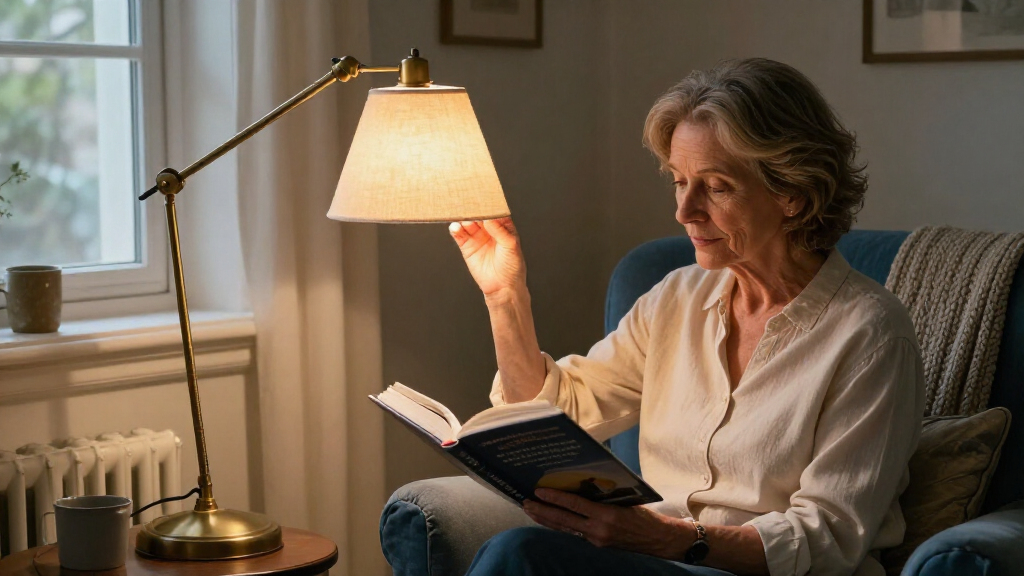
Combine room lighting with a focused reading lamp to soften the contrast between a bright page and a dark room.
Place the lamp beside or slightly behind you, and move it if you see hand shadows or reflections.
Adjust brightness to suit the print and your comfort; the brightest bulb is not automatically the best choice.
Treat warm and cool color settings as personal preferences, not eyesight treatments.
Take breaks during long reading sessions, and ask an eye-care professional about persistent pain, headaches, or blurred vision.
A practical guide to visual comfort
How Better Lighting Improves Reading Comfort
A readable page depends on more than brightness. Balance room light with a well-placed task lamp, then adjust for the print, the surface, and what feels comfortable to you.
01 / Why balance matters
Clear words, without glare or hard shadows
The aim is comfortable visibility—not the brightest bulb. Print size, daylight, the page surface, and personal preference all affect what feels clear.
Give small print useful light
A focused lamp can make fine details easier to see. Add light to the page before reaching for a much brighter bulb.
Soften the bright-page effect
Room light fills the surroundings, so a bright page does not stand out as sharply against darkness.
Keep reflections out of view
Glare can hide words, especially on glossy pages and screens. Change the light angle, material position, or shade.
02 / Find your setting
Adjust for the reader, the print, and the room
There is no single brightness setting that suits every reader or every task. Make small changes and notice what improves clarity.
Comfort is a range, not a maximum
Start with steady room light, add a task lamp, and tune the brightness until text is easy to see without a glaring page or unusually dark surroundings.
Illustrative guide · the comfortable point varies by person and task
03 / Set up your lamp
A four-step setup for a more comfortable page
Use these positions as starting points. Check the actual page or screen and adjust until the words look clear in your usual reading posture.
-
01
Light the room
Turn on comfortable ambient light to ease the contrast around the page.
-
02
Place the lamp
Set it beside or slightly behind you, with the bulb outside your direct view.
-
03
Check shadows
If writing, try the lamp opposite your writing hand: left for right-handed, right for left-handed.
-
04
Move the beam
Shift the lamp or book to move reflections away from the text. Add a shade if the bulb feels sharp.
04 / Fine-tune the experience
Small changes can tell you what is getting in the way
Change one thing at a time—brightness, direction, or room light—so you can tell which adjustment makes reading feel easier.
Match light to the task
Small print and detailed material often need more focused light than a large-print novel.
Use color as a preference
Warm light may feel relaxing in the evening; neutral or cooler light may suit daytime tasks. Neither is an eyesight treatment.
Notice your posture
Leaning forward, squinting, or repeatedly shifting the page can signal that the setup needs a change.
Take breaks
During long reading or screen sessions, look away periodically and give your eyes a rest.
05 / Common questions
Quick answers for your reading setup
What is the best lighting for reading?
Use enough even light to see comfortably, with minimal glare and a room that is not much darker than the page or screen.
Is warm or cool light better?
Neither is universally better. Choose the color that feels comfortable and suits the time of day and task.
Does dim light damage your eyes?
Dim light can cause temporary fatigue or squinting, but reading in dim light is not generally understood to cause permanent eye damage by itself.
Does a brighter bulb always help?
No. Excessive brightness can cause discomfort or glare. Adjust the lamp, shade, angle, and brightness together.
How better lighting makes reading feel easier
Better lighting improves reading comfort when it makes the words easy to see without glare, hard shadows, or extra squinting. A focused lamp can help illuminate small print, while softer room light keeps a bright page from standing out sharply against a dark background. The goal is comfortable visibility, not maximum brightness.
This balance matters because reading asks your eyes to keep picking out fine details across a small area. When the page is too dim, letters may lose definition and you may lean closer or strain to distinguish them. Turning up a bare lamp can solve that problem on one page but create another: a bright reflection or a glaring patch can make some words harder to see. Good lighting therefore means putting useful light where you need it while keeping the rest of your view comfortable.
Think of light like seasoning: too little can leave the details hard to pick out, but too much can overpower the experience. If you read a paperback beside a sunny window, you may need only a modest lamp as afternoon light fades. If you are working through a paper bill with tiny print, a directional desk lamp may help more than the ceiling light alone. These examples show why a single brightness setting rarely works for every task; the print, surface, daylight, and reader all affect what feels clear.
Notice what you do while reading. Leaning forward, turning the page toward a lamp, or squinting at the same paragraph can signal that your setup needs an adjustment. Try adding light to the page and changing its angle before replacing a bulb with a much brighter one. Change one thing at a time, so you can tell whether the improvement came from more light, a better direction, or reduced glare.
Lighting can support visual comfort, but it cannot prevent every kind of eye strain or explain every vision change. If discomfort persists, or you have pain or blurred vision, consider speaking with an eye-care professional. Your reading space should help you settle in—not make you work to see every line.
Products Worth Considering

Philips Hue Large Smart Light Tube, Black – White and Color Ambiance LED Color-Changing Light – 1 Pack

Philips Hue Festavia Globe Outdoor String Lights, 32 Bulbs, 91 ft

Dyson Purifier Hot+Cool HP1
As an affiliate, we earn on qualifying purchases.
Use two light sources to avoid the bright-page effect
Using comfortable room light alongside a reading lamp can make a page easier to look at than using a bright task light in an otherwise dark room. The room light fills in the surroundings; the smaller lamp directs light onto the words. Together, they can soften the difference between the page and the space around it.
The reason this balance helps is that your view includes more than the printed lines. When a bright page is surrounded by darkness, the difference can feel stark, and the page may seem to glare even if the lamp is not especially powerful. Adding room light raises the light level around the book, so your eyes are not moving between such sharply different areas. The room light need not be as strong as the task lamp; it simply makes the surrounding space easier to see.
For example, imagine reading a glossy recipe book in a dim living room. A strong lamp can make the paper look like a bright patch in the dark, and its reflection may hide the ingredients. Turning on a shaded room light and lowering or angling the reading lamp can make the page and room feel more balanced. The tradeoff is that more room light may make a relaxing evening feel less subdued, so start modestly and use the task lamp to supply the extra light the page needs.
There is no single brightness level that suits every reader. Small print, a shaded corner, and individual preferences all affect how much light feels comfortable. Start with the room light on, then add a focused lamp and adjust it until the text looks clear without the page feeling glaring. If the page still looks harsh, changing the lamp angle or softening its beam may help more than increasing the overall brightness.
A useful starting point is simple: light the page and the space around it, then adjust for comfort.
This approach also helps when you move between tasks. A relaxed large-print novel may need less focused light than a handwritten note or detailed craft pattern. Keep the room lighting steady, and adjust the task lamp to match what you are reading. That way, the surroundings remain familiar while the page gets the added light required by each task.
Position your lamp to cut shadows and reflections
Place a reading lamp to the side or slightly behind you so it lights the page without shining into your eyes. This position can reduce reflections and keep your own hand from casting a shadow while you write or turn pages. A lamp’s angle often matters as much as its brightness: light coming from the wrong direction may leave the words in shadow or bounce straight back toward you.
If you write with your right hand, try placing the lamp on your left; if you write with your left, try the right. For instance, a right-handed reader filling out a form at a kitchen table may find that a lamp on the right throws a dark hand-shaped shadow across the lines. Moving it to the left can clear the writing area. Reading without writing may call for a different position, so use the hand rule as a starting point rather than a fixed rule.
Glossy pages and screens need a little extra attention. Shift the lamp, book, or screen until reflections move away from the text. A shade or diffuser can soften a bare bulb, which may otherwise feel like a sharp point of light in your view. The angle that works for a matte paperback may reflect off a glossy page, so check the actual material you use instead of assuming one arrangement will work for everything.
- Turn on the room light, then place the task lamp beside or slightly behind you.
- Move the beam onto the page while keeping the bulb out of your direct line of sight.
- Check for hand shadows and reflections, then adjust the lamp or reading material.
- Settle into your usual reading posture and see whether you can read without leaning or squinting.
Room layouts vary, so treat these positions as starting points. A side table, recliner, or window may change the best angle. Make a small adjustment, read a few lines, and keep the arrangement that feels natural. If you have to hold the book at an awkward angle to avoid glare, it may be easier to move the lamp or change its height than to keep repositioning the book.
Choose brightness and color that suit your reading
The right brightness and color depend on the print, the room, and your preference; a brighter bulb is not always more comfortable. Too little light can make small print harder to see, while a bright, exposed source can create glare. Adjust the lamp and its shade before assuming you need more power. Brightness helps only when it reaches the page in a useful way; extra light aimed at your eyes or reflected from the paper can make reading feel worse.
Older adults and people with low vision may prefer brighter, more evenly distributed light, but needs differ from person to person. One reader may enjoy a softly lit room and large-print book, while another may want a focused beam for a newspaper. If you share a home, an adjustable lamp can help each person find a comfortable setting without changing the whole room. The useful tradeoff is flexibility: a focused beam can support detailed tasks, while broad room light can make the space feel more balanced.
Warm light often feels relaxing in the evening, while neutral or cooler light may feel more alerting during daytime tasks. These are preferences, not guarantees about eyesight or reading ability. Color temperature is measured in kelvins: lower values look warmer and higher values look cooler. Treat the number as a description of appearance, then choose what feels pleasant in your space. A color setting that looks inviting in one room may make a page seem different in another, depending on the walls, furnishings, and other lights.
Modern LED lamps may offer dimming or adjustable color, which lets you tune the light for a morning newspaper or evening novel. Try a moderate setting first. If the page looks washed out, reduce brightness or soften the beam; if the words remain difficult to see, adjust the light and print size together. Larger print can reduce the need to rely on a very intense beam, and it may be more comfortable than continually turning the lamp higher.
Make your chair, page, and lamp work together
A reading lamp works best when the light reaches your usual reading position without making you lean forward, twist, or hold a book at an awkward angle. Comfort comes from the whole setup: chair, page, lamp, and room light. A lamp that looks bright from across the room may still leave a shadow on your book because the reader’s body or furniture blocks the beam.
Consider a caregiver helping a family member read mail in a favorite armchair. The floor lamp sits behind the chair, but the reader’s head blocks its beam. Moving the lamp a little to the side may light the envelope while letting the reader rest against the back cushion. That small change can make the chair feel like a reading spot again. It also shows why simply increasing brightness may not fix a blocked beam: more light can intensify the glare elsewhere while the page stays shaded.
Keep controls easy to reach. A switch that is hidden behind furniture can make an otherwise good lamp frustrating to use, especially when you want to adjust brightness without standing up. If you rearrange the space, keep cords out of the walking path and place the lamp on a stable surface so it does not wobble when you reach for the switch. An easy control makes it more likely that the reader will adjust the light as conditions change, rather than tolerate a setting that has become uncomfortable.
Try the setup with the material you actually read. A large-print book, a phone screen, and a sewing pattern each reflect light differently. If you find yourself repeatedly shifting the page, leaning forward, or rubbing your eyes, pause and change one thing at a time: the angle, the room light, or the brightness. Checking the setup in your usual posture matters too, because a lamp that works while you sit upright may cast a different shadow when you recline.
Build in breaks and know when lighting is not enough
Good lighting makes reading more comfortable by helping text appear clear without glare or deep shadows, but it does not replace breaks during a long session. Your eyes can feel tired after concentrating on a page or screen for a while, even when the lamp is well placed. Pause, relax your focus, and give yourself a moment before continuing. A short pause can also help you notice whether discomfort eases when you stop reading, which is useful information if you later discuss the pattern with an eye-care professional.
For screen reading, a simple habit is to look away periodically at a distant object. For example, after finishing a chapter on a tablet, glance across the room or out a window before returning to the page. If you read a printed book, set it down between chapters, stretch, or get a glass of water. These breaks interrupt sustained close focus; they will not correct a poor prescription or a lamp that shines into your eyes, so keep adjusting the setup if the discomfort returns as soon as you resume.
Some people notice discomfort from flickering or poorly controlled lighting. A reputable lamp and bulb may help, though sensitivity varies. If a lamp makes you uncomfortable, try a different setting or fixture and avoid looking directly into a bright light source. Changing one light at a time can help identify whether the problem seems tied to that lamp, while switching several fixtures at once makes the cause harder to spot.
Lighting can help when discomfort comes from glare, poor contrast, or insufficient light, but persistent headaches, blurred vision, or eye pain may have other causes. Those symptoms deserve advice from a qualified eye-care professional. You do not need to diagnose the problem yourself; you can describe what you notice and when it happens. Mentioning whether it occurs with particular lighting, reading materials, or after a certain amount of time can help make that conversation more useful.
Frequently Asked Questions
What is the best lighting for reading?
There is no single setting that suits everyone. Use enough even light to see comfortably, limit glare, and avoid a room that feels much darker than the page or screen.
Does reading in dim light damage your eyes?
Dim light can make reading uncomfortable and may lead to temporary fatigue or squinting. It is not generally understood to cause permanent eye damage by itself, but persistent discomfort is a good reason to seek professional advice.
Is warm or cool light better for reading?
Neither is universally better. Warm light often suits a relaxed evening, while neutral or cooler light may feel more alerting; choose the color that feels comfortable in your room.
Where should I put a reading lamp?
Place it to the side or slightly behind you so it lights the page without shining into your eyes. If you write with your right hand, try the left side first to reduce hand shadows, then adjust for your room.
Can a brighter bulb reduce eye strain?
Sometimes more light helps, especially with small print, but excess brightness can cause glare or discomfort. Try changing the lamp angle or using a shade before choosing a brighter bulb.
When should I ask an eye-care professional about reading discomfort?
Consider getting advice if you have persistent headaches, blurred vision, or eye pain. Lighting may help with glare or low light, but it cannot explain every cause of visual discomfort.
Conclusion
Start with one change: turn on a comfortable room light, then aim a shaded reading lamp at the page from the side. Adjust until the words look clear and the room feels calm, not glaring.
Your best reading light is the one that lets you settle back, follow the lines, and enjoy the quiet rustle of a page without fighting the shadows.