TL;DR

Turn quiet afternoons into listening time
- Thousands of audiobooks, podcasts and originals
- Listen on your phone, tablet or Echo — also offline
- Cancel anytime
Physical therapist Devin Trachman recommends the sit-to-stand as a practical strength exercise for muscles used in walking and other daily movements. She suggests two to three sets of eight to 10 repetitions, with support or a chair with armrests if needed. The report does not cite a study testing this specific routine or quantify its effects.
Physical therapist Devin Trachman recommends the sit-to-stand exercise as a starting point for people who want to build strength that supports walking. In a Fit&Well report, the Physical Therapy Central clinic director said the movement trains lower-body muscles used in everyday activities, including walking, climbing stairs and rising from a chair.
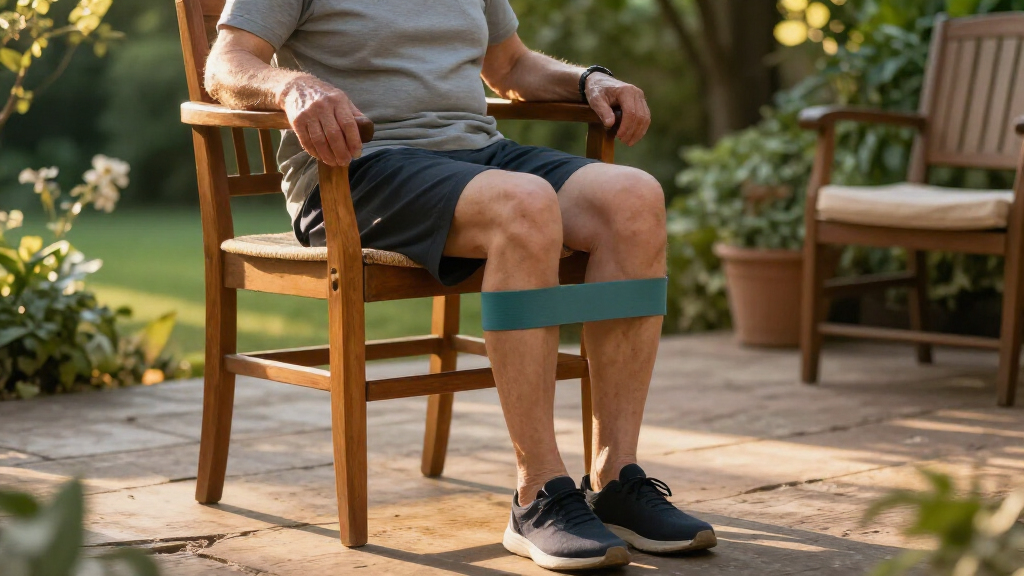
Trachman’s suggested routine is two to three sets of eight to 10 repetitions, with about 60 seconds of rest between sets. The exercise uses a sturdy chair: sit near the front with feet flat and about shoulder-width apart, lean the chest slightly forward while keeping the back straight, then push through the heels to stand. Lower back into the chair slowly and with control.
The movement targets the quadriceps and gluteus maximus, along with core stabilizers, according to the report. Trachman advises avoiding hand support if possible. People who need help can use a chair with armrests for light assistance or place a sturdy support in front of them, the article says. The source does not provide individualized guidance about whether the exercise is suitable for a particular person.
Trachman links declines in walking ability with several possible factors, including reduced activity, pain, fatigue, weaker supporting muscles and reduced balance or endurance. She argues that strength work may help make walking feel easier. Those points are her professional assessment as quoted by Fit&Well; the supplied report does not describe a clinical trial of this exercise or provide measured outcomes for the recommended routine.
Strength for Everyday Mobility
The recommendation focuses on a movement many people already perform in daily life: getting up from a chair. Practicing it as a controlled exercise can address lower-body strength used in several functional tasks, not only walking. That makes it a straightforward option for readers seeking a strength exercise tied to ordinary mobility rather than a specialized workout.
Trachman says improving strength and confidence may help people remain active and independent. The broader point in her comments is that difficulty walking can have multiple contributors, and simply urging someone to walk more may not address weakness or discomfort. The article presents sit-to-stands as her recommended starting exercise, not as a guaranteed way to prevent mobility loss or restore walking ability.
Products Worth Considering

Blueair Blue Pure 511i Max Air Purifier for Home and Bedroom

Ring Floodlight Cam 2K Wired Security Camera, 3-Pack, Black

Samsung 48-Inch S90H OLED 4K Smart TV (2026)
As an affiliate, we earn on qualifying purchases.
How the Walking Advice Was Framed
Fit&Well’s report describes age-related changes in muscle and mobility as one reason walking can become less comfortable for some people. It also quotes Trachman saying that people may reduce walking because life becomes busy, pain develops, or the activity feels more tiring. In her account, declining activity can contribute to weaker muscles, lower balance and less endurance, which may make walking feel harder and reinforce the reduction in activity.
Trachman is identified as a physical therapist and clinic director at Physical Therapy Central in West Edmond. The supplied report says she earned a Doctor of Physical Therapy degree and became board-certified as an orthopaedic clinical specialist in 2024. It does not report a new study, policy change or formal clinical guideline; the development is a practitioner recommendation published by a health and fitness outlet.
““If I could only prescribe one exercise to improve walking, this would be it.””
— Devin Trachman, physical therapist and clinic director at Physical Therapy Central
Evidence and Individual Suitability
The supplied report does not identify a study comparing sit-to-stands with other exercises for improving walking, nor does it give data on how much or how quickly the exercise might affect walking. It also does not specify the population for whom the suggested sets and repetitions were tested. The recommendation should therefore be understood as Trachman’s clinical advice, not a quantified outcome or a universal prescription.
The source does not discuss how people with pain, balance problems, recent injuries or other health concerns should adapt the movement. It offers armrests or a sturdy support as modifications for people who need help, but it does not set out screening criteria. Readers with concerns about exercise safety or their ability to stand and sit steadily should seek guidance from a qualified health professional.
Applying the Exercise Safely
The Fit&Well report gives readers a starting routine rather than announcing a follow-up study or scheduled program: two to three sets of eight to 10 sit-to-stands, resting for about a minute between sets. Its instructions emphasize controlled lowering and using support when needed. The article does not say that Trachman plans to publish further findings or provide a timeline for evaluating results.
For readers considering the exercise, the immediate next step is to decide whether the movement can be performed safely with a stable chair and appropriate support. Anyone unsure because of pain, balance limitations or a health condition can ask a physical therapist or another qualified professional about suitable modifications. The report offers no expected results timeline, so any change in walking ability remains individual and unquantified.
Key Questions
Which exercise does Devin Trachman recommend for walking strength?
She recommends the sit-to-stand: standing up from a sturdy chair and lowering back down with control.
How many sit-to-stands does the report suggest?
The report lists two to three sets of eight to 10 repetitions, with about 60 seconds of rest between sets.
What if I need my hands to stand up?
The report suggests using a chair with armrests for light support or a sturdy support in front. It does not give individualized advice, so people uncertain about safe form can consult a qualified professional.
Does the report prove sit-to-stands improve walking?
No. The supplied report presents Trachman’s professional recommendation but does not cite a trial or provide measured results for the exercise’s effect on walking.
Source: rss