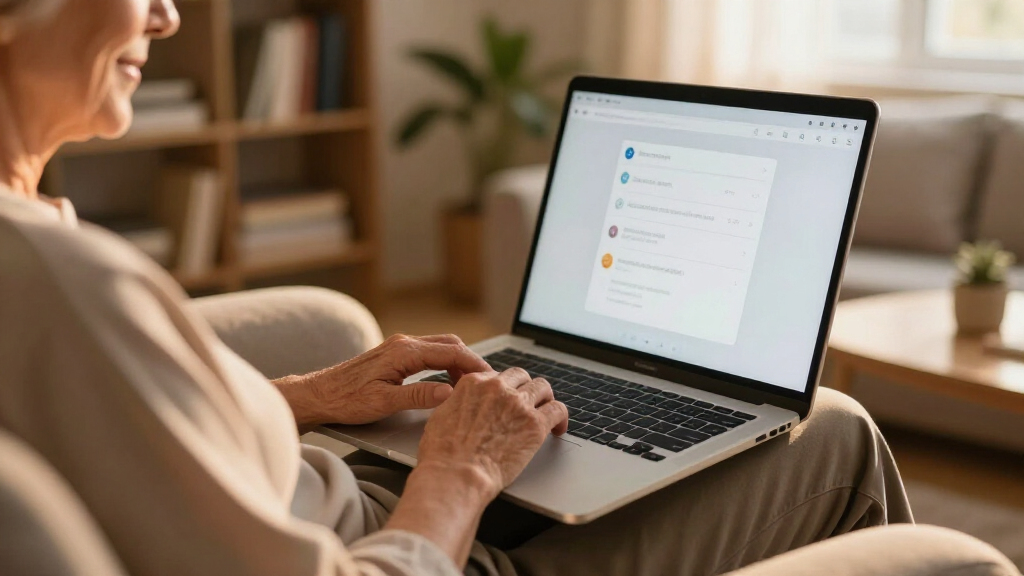

Finding accessible laptops for seniors comes down to three things: a large, readable display, simple day-to-day operation, and enough storage to avoid constant maintenance. My top pick is the HP 17.3″ Touchscreen Business Laptop with 20GB of RAM and a 1TB SSD, because the huge screen, responsive touch input, and generous memory make it the easiest machine to live with long term. For tighter budgets, the Dell 15.6″ FHD Laptop offers a sharp full-HD screen at a much lower price, while the HP 14″ Chromebook is the simplest option for seniors who mostly browse, email, and video call. The main tradeoff in this category is between big-screen Windows machines (more capable, more maintenance) and smaller Chromebooks (simpler, but limited). Read on for the full breakdown of all eight picks.
Prime for Young Adults — start your free trial
Fast free delivery, streaming and member deals for eligible 18–24 year olds.
Try it freeAs an affiliate, we earn on qualifying purchases.
Complete the kit


Key Takeaways
- Screen size was the single biggest differentiator: both 17.3-inch HP models ranked above every 14-15.6 inch option because larger displays reduce eye strain and make touch targets easier to hit.
- The renewed Dell Latitude 3190 proved that buying refurbished is a false economy for seniors — its tiny 11.6-inch screen and 4GB of RAM work against the core goal of accessibility.
- Chromebooks (the HP 14 and Acer Chromebook 315) are the easiest machines to maintain day-to-day, but their dependence on internet access makes them a poor fit for seniors with unreliable connections.
- Bundled Microsoft 365 subscriptions on the HP 14 and HP 17.3 add real value for seniors writing letters or managing photos, saving roughly $70 per year versus buying it separately.
- Storage tier matters more than processor speed in this category: the 1TB SSD on the top pick and 512GB SSD on the HP 15.6 mean years of photos and documents without cleanup chores, while 64-128GB models fill up fast.
| HP 17.3″ Touchscreen Business Laptop, 20GB RAM, 1TB SSD, AMD Ryzen 5 7430U |  | Best Overall for Big-Screen Clarity | Display: 17.3-inch HD+ touchscreen, anti-glare, 250 nits | Processor: AMD Ryzen 5 7430U (up to 4.3 GHz) | RAM: 20GB DDR4 | VIEW LATEST PRICE | See Our Full Breakdown |
| HP 14″ HD Touchscreen Notebook with Intel N150, 4GB RAM, 128GB SSD, and One Year Microsoft 365 Subscription |  | Best Budget-Friendly Starter | Display: 14-inch HD touchscreen | Processor: Intel N150 | RAM: 4GB | VIEW LATEST PRICE | See Our Full Breakdown |
| Dell 15.6″ FHD Laptop with Intel Core i3, 8GB RAM, Windows 11 Home |  | Best Balance of Price and Comfort | Display: 15.6 inches Full HD | Processor: Intel Core i3 100U | RAM: 8GB | VIEW LATEST PRICE | See Our Full Breakdown |
| Dell Latitude 3190 11.6″ HD 2-in-1 Touchscreen Laptop with Intel N5030, 4GB RAM, 128GB SSD, Windows 11 Pro (Renewed) |  | Best Compact Tablet-Style Option | Display: 11.6-inch HD (1366 x 768) touchscreen, 2-in-1 convertible | Processor: Intel N5030 (1.1GHz, up to 2.4GHz) | RAM: 4GB DDR4 | VIEW LATEST PRICE | See Our Full Breakdown |
| HP 14-Inch Laptop 2026 – Intel N4500, 4GB RAM, Chrome OS |  | Easiest to Learn On | Display: 14-inch HD (1366 x 768) | Processor: Intel Celeron N4500 dual-core | RAM: 4GB LPDDR4x | VIEW LATEST PRICE | See Our Full Breakdown |
| HP 17.3” Touchscreen Laptop with Microsoft 365, 8GB RAM, 128GB Storage |  | Best Big-Screen Touch Experience | Display: 17.3-inch HD+ touchscreen, 1600 x 900, anti-glare | Processor: Intel N100 Quad-Core | RAM: 8GB DDR4 | VIEW LATEST PRICE | See Our Full Breakdown |
| Acer Chromebook 315 Laptop, 15.6″ HD Display, Intel Celeron N4020, 4GB RAM, 64GB eMMC, Chrome OS |  | Best for Simplicity and Battery Life | Display: 15.6-inch HD, anti-glare | Processor: Intel Celeron N4020 (up to 2.8GHz) | RAM: 4GB | VIEW LATEST PRICE | See Our Full Breakdown |
| HP 15.6 inch Laptop with Intel N100, 16GB RAM, 512GB SSD, Windows 11 Pro |  | Best Storage and Multitasking Value | Display: 15.6-inch, 250 nits, non-touch, anti-glare | Processor: Intel N100, 4 cores | RAM: 16GB | VIEW LATEST PRICE | See Our Full Breakdown |
| accessible laptops for senior | Display | Processor | RAM | Storage |
|---|---|---|---|---|
| HP 17.3" Touchscreen Business | 17.3-inch HD+ touchscreen, anti-glare, 250 nits | AMD Ryzen 5 7430U (up to 4.3 GHz) | 20GB DDR4 | 1TB PCIe SSD |
| HP 14" HD Touchscreen Notebook | 14-inch HD touchscreen | Intel N150 | 4GB | 128GB SSD |
| Dell 15.6" FHD Laptop with Int | 15.6 inches Full HD | Intel Core i3 100U | 8GB | — |
| Dell Latitude 3190 11.6" HD 2- | 11.6-inch HD (1366 x 768) touchscreen, 2-in-1 convertible | Intel N5030 (1.1GHz, up to 2.4GHz) | 4GB DDR4 | 128GB SSD |
| HP 14-Inch Laptop 2026 | 14-inch HD (1366 x 768) | Intel Celeron N4500 dual-core | 4GB LPDDR4x | 64GB eMMC |
| HP 17.3” Touchscreen Laptop wi | 17.3-inch HD+ touchscreen, 1600 x 900, anti-glare | Intel N100 Quad-Core | 8GB DDR4 | 128GB UFS |
| Acer Chromebook 315 Laptop | 15.6-inch HD, anti-glare | Intel Celeron N4020 (up to 2.8GHz) | 4GB | 64GB eMMC |
| HP 15.6 inch Laptop with Intel | 15.6-inch, 250 nits, non-touch, anti-glare | Intel N100, 4 cores | 16GB | 512GB SSD |
More Details on Our Top Picks
HP 17.3″ Touchscreen Business Laptop, 20GB RAM, 1TB SSD, AMD Ryzen 5 7430U
For seniors who want everything readable without squinting, this 17.3-inch touchscreen is the centerpiece of this roundup. The large display means bigger default text, roomier icons, and the option to simply tap instead of tracking down a tiny touchpad cursor — a genuine accessibility advantage over the Dell 15.6″ FHD Laptop, which forces more scrolling and zooming at the same font settings. The anti-glare finish also reduces reflections from lamps and windows, a real help for aging eyes.
Performance is far beyond what email and video calls demand, with 20GB of RAM and a 1TB SSD that will never fill up with family photos. That headroom comes at a price: this is the heaviest and likely priciest pick here, so it works best as a desk-bound machine rather than something to carry between rooms. The unspecified battery life reinforces that tradeoff.
Pros:- Huge 17.3-inch touchscreen that’s easy on the eyes and supports tap navigation
- Anti-glare display cuts reflections from indoor lighting
- 20GB RAM and 1TB SSD mean it stays fast and never runs out of photo storage
- Windows 11 Pro with versatile ports for printers, external monitors, and accessories
Cons:- Largest and heaviest form factor in this lineup — not portable
- Battery life is not specified, so unplugged use is a question mark
- No dedicated GPU; overkill specs add cost without helping basic tasks
Best for: Seniors who mostly use a laptop at one spot — a desk or kitchen table — and want the largest, clearest screen money can buy
Not ideal for: Anyone who wants to carry a laptop around the house or to the coffee shop — the 17.3-inch chassis is bulky and heavy
- Display:17.3-inch HD+ touchscreen, anti-glare, 250 nits
- Processor:AMD Ryzen 5 7430U (up to 4.3 GHz)
- RAM:20GB DDR4
- Storage:1TB PCIe SSD
- Operating System:Windows 11 Pro
- Connectivity:Wi-Fi 6, Bluetooth 5
- Ports:1x USB-C, 2x USB-A, HDMI 1.4b, headphone/mic jack
Our verdict“If screen size and readability matter more than portability, this is the machine to buy.”
HP 14″ HD Touchscreen Notebook with Intel N150, 4GB RAM, 128GB SSD, and One Year Microsoft 365 Subscription
This HP 14-incher makes the most sense for a first laptop purchase where cost and simplicity lead the decision. The bundled one-year Microsoft 365 subscription is the standout perk: Word, Excel, and Outlook are pre-paid, and the included Copilot AI assistant can help with tasks like drafting letters — genuinely useful for someone still building confidence with computers. Compared with the HP 17.3″ Business Laptop, you give up half the screen real estate, but you gain a machine that’s easy to move from the kitchen table to the couch.
The tradeoffs are real, though. The HD display is noticeably less sharp than the Dell 15.6″ FHD model, and the 4GB of RAM means it’s built for one or two browser tabs at a time, not heavy multitasking. The 128GB SSD fills quickly if photo backups are the plan — the Acer Chromebook 315 or the larger HP offer more headroom elsewhere in this guide.
Pros:- Includes a full year of Microsoft 365 with AI Copilot, saving an annual subscription fee
- Lightweight and easy to carry around the home
- Fast charging gets you back up and running quickly
- ENERGY STAR certified with recycled plastics
Cons:- Only 4GB of RAM — slows down with multiple apps or tabs open
- Basic HD screen is noticeably softer than Full HD rivals
Best for: Budget-conscious seniors buying their first laptop who mainly email, browse, and video chat
Not ideal for: Photo hoarders and multitaskers — 4GB of RAM and 128GB of storage will feel tight within a year
- Display:14-inch HD touchscreen
- Processor:Intel N150
- RAM:4GB
- Storage:128GB SSD
- Battery:Long battery life with HP Fast Charge
- Subscription:One year Microsoft 365 included
- Certifications:EPEAT Gold, ENERGY STAR
Our verdict“A sensible, low-cost entry point for light users — as long as storage and multitasking needs stay modest.”
Dell 15.6″ FHD Laptop with Intel Core i3, 8GB RAM, Windows 11 Home
This Dell lands in the sweet spot many seniors actually need: a Full HD 15.6-inch display that renders text sharply without the bulk of the HP 17.3″ Business Laptop, paired with 8GB of RAM — double what the HP 14″ Touchscreen Notebook offers — so it won’t stutter when a grandchild opens fifteen tabs. Dell’s attention to comfort shows in the details: blue light reduction eases eye strain during longer reading sessions, and the ergonomic keyboard layout suits arthritic hands better than cramped 14-inch designs.
What sets it apart from everything else in this lineup is the one year of onsite service — if something goes wrong, a technician comes to you rather than the reverse. That peace of mind is worth a lot for buyers who dread shipping a broken computer. The compromise is middle-of-the-road power: fine for everyday use, but not for photo editing, and there’s no touchscreen for those who prefer tapping.
Pros:- Full HD display keeps text and video crisp at typical viewing distances
- Blue light reduction and ergonomic design for comfortable extended use
- 8GB RAM handles everyday multitasking without slowdowns
- One year onsite service means repairs happen at home
Cons:- Intel Core i3 is entry-level and will struggle with demanding software
- No touchscreen — navigation is keyboard and touchpad only
Best for: Seniors who want a reliable mid-size Windows laptop and value in-home tech support if problems arise
Not ideal for: Touch-first users and anyone doing demanding creative work — no touchscreen and only entry-level processing power
- Display:15.6 inches Full HD
- Processor:Intel Core i3 100U
- RAM:8GB
- Operating System:Windows 11 Home
- Battery:Energy-efficient with Express Charge
- Support:1 Year Onsite Service
Our verdict“The safest middle choice here: readable, comfortable, and backed by doorstep support.”
Dell Latitude 3190 11.6″ HD 2-in-1 Touchscreen Laptop with Intel N5030, 4GB RAM, 128GB SSD, Windows 11 Pro (Renewed)
The Latitude 3190 fills a niche none of the other picks touch: it’s a 2-in-1 convertible, so the screen folds flat into a tablet for reading the news or playing solitaire with direct touch. For seniors who find a keyboard intimidating but still want a full Windows machine, that flexibility is hard to replicate — the HP 17.3″ Business Laptop offers touch but nothing close to this form factor, and the HP Chromebook 14 doesn’t fold at all. Its 11-hour battery rating also beats every Windows machine in this guide.
Buyers need to go in with clear eyes, though. This is a renewed (refurbished) product, meaning some wear is possible and warranty coverage depends on the seller — the Dell 15.6″ FHD Laptop’s onsite service is the opposite approach to support. The 1366 x 768 display is the lowest resolution here beyond the Chromebook, so text is adequate rather than sharp, and the aging Celeron N5030 is slow by modern standards.
Pros:- Folds into a tablet for touch-first reading and games
- Up to 11 hours of battery life — the longest in this lineup
- Touchscreen with stylus support for precise tapping
- Windows 11 Pro on a fast SSD at a budget price
Cons:- Renewed condition means possible cosmetic wear and seller-dependent warranty
- Low-resolution 720p display is the softest viewing experience of the Windows picks
- Slow Celeron processor feels sluggish with multiple programs open
Best for: Seniors who prefer tapping and swiping like a tablet but occasionally need Windows programs and a keyboard
Not ideal for: Anyone wanting a pristine new machine with full manufacturer warranty and a crisp modern display
- Display:11.6-inch HD (1366 x 768) touchscreen, 2-in-1 convertible
- Processor:Intel N5030 (1.1GHz, up to 2.4GHz)
- RAM:4GB DDR4
- Storage:128GB SSD
- Operating System:Windows 11 Pro
- Battery Life:Up to 11 hours
- Weight:4.4 pounds
- Condition:Renewed
Our verdict“A cheap way to get tablet-style simplicity with Windows underneath — if refurbishing quirks don’t bother you.”
HP 14-Inch Laptop 2026 – Intel N4500, 4GB RAM, Chrome OS
Of everything in this roundup, this is the laptop I’d hand to a senior who has never used a computer before. Chrome OS strips away nearly everything confusing about Windows — no updates to manage, virtually no viruses to catch, and an interface that mostly amounts to a browser with apps. Compared with the Dell Latitude 3190, which runs full Windows on similarly modest hardware, the HP feels quicker because Chrome OS simply asks less of its processor. At 3.35 pounds, it’s also the lightest machine here.
The catch is what it can’t do. With only 64GB of storage — less than every other pick — it’s built around keeping files in Google’s cloud, which assumes a reliable internet connection and a willingness to learn Google’s way of doing things. Anyone already comfortable with Windows programs like the desktop Quicken or Word will be better served by the HP 14″ Touchscreen Notebook, which includes a Microsoft 365 subscription instead.
Pros:- Chrome OS is the simplest, lowest-maintenance operating system for beginners
- Automatic updates and strong built-in virus protection
- Lightest laptop in this roundup at 3.35 pounds
- Fast boot times and Wi-Fi 6 connectivity
Cons:- Only 64GB of storage — heavily dependent on cloud and internet access
- Cannot run Windows applications, which locks out some familiar software
Best for: First-time computer users who live online — email, video calls, streaming — and want the simplest possible system
Not ideal for: Anyone who needs Windows-only software or wants files stored locally rather than in the cloud
- Display:14-inch HD (1366 x 768)
- Processor:Intel Celeron N4500 dual-core
- RAM:4GB LPDDR4x
- Storage:64GB eMMC
- Operating System:Chrome OS
- Weight:3.35 lbs
- Connectivity:Wi-Fi 6, Bluetooth 5.3
- Ports:1x USB-C, 2x USB-A, 1x HDMI, headphone/mic jack
Our verdict“The least frustrating path into computing for absolute beginners, provided everything they do happens in a browser.”
HP 17.3” Touchscreen Laptop with Microsoft 365, 8GB RAM, 128GB Storage
Among laptops built for easy,直观 computing, this model stands out for combining the two features seniors tend to appreciate most: a 17.3-inch touchscreen and a full-size backlit keyboard. Tapping directly on the screen removes a layer of mouse-and-cursor frustration, and the HD+ anti-glare panel keeps reflections from washing out text in a bright living room. Compared with the Acer Chromebook 315, which has a similarly spacious 15.6-inch screen but no touch input, this HP feels more approachable for anyone who finds a cursor hard to track.
The tradeoff is storage. At 128GB, it holds far less than the HP 15.6-inch with 512GB SSD, so photo libraries will need cloud storage or an external drive. The Intel N100 chip handles email, browsing, and video calls comfortably but lags on demanding multitasking. The fingerprint reader is a genuine win here — logging in without remembering a password is exactly the kind of friction-reduction older buyers benefit from most.
Pros:- Huge 17.3-inch touchscreen makes tapping icons and zooming photos intuitive
- Fingerprint reader eliminates password struggles at login
- Backlit full-size keyboard with clear key labels for low-light typing
- Microsoft 365 included, so Word and email work out of the box
Cons:- 128GB of storage fills fast once photos and documents accumulate
- Intel N100 slows down noticeably with many browser tabs or programs open
- Dim 60% color gamut display looks washed out compared to sharper rivals
Best for: Seniors who want the largest possible screen and tap-to-navigate simplicity without learning Windows keyboard shortcuts
Not ideal for: Anyone storing large photo or video collections locally — 128GB fills up quickly, unlike the 512GB HP alternative
- Display:17.3-inch HD+ touchscreen, 1600 x 900, anti-glare
- Processor:Intel N100 Quad-Core
- RAM:8GB DDR4
- Storage:128GB UFS
- Weight:4.6 lbs
- Battery:Fast charge 0 to 50% in 45 minutes
- Connectivity:Wi-Fi 6, Bluetooth 5.4, USB-C, USB-A, HDMI
- Additional features:Fingerprint reader, backlit keyboard, Windows 11 Home, Microsoft 365 included
Our verdict“This pick makes the most sense for seniors who value a giant, tappable screen and password-free login over raw storage or speed.”
Acer Chromebook 315 Laptop, 15.6″ HD Display, Intel Celeron N4020, 4GB RAM, 64GB eMMC, Chrome OS
If the goal is the simplest possible computing experience, this Chromebook argues its case well. Chrome OS updates itself automatically, resists the viruses that plague Windows machines, and strips away nearly everything that can confuse a first-time user. Compared with the HP 17.3-inch touchscreen, the software here is genuinely easier to learn — but you give up touch input and the bigger panel in exchange.
Where this model pulls ahead of every other laptop in this roundup is battery life: up to 12.5 hours means a full day of use without hunting for an outlet, a real benefit for anyone who forgets to plug in overnight. The anti-glare 15.6-inch screen remains readable in sunny rooms. The compromises are real, though — 64GB of storage is the smallest here, the Celeron N4020 is the slowest chip in the lineup, and anyone who needs desktop Office programs or specific Windows software will hit a wall, since Chromebooks run web apps only.
Pros:- Chrome OS is the most forgiving, low-maintenance system for beginners
- 12.5-hour battery outlasts every other laptop in this roundup
- Anti-glare 15.6-inch screen stays readable in bright rooms
- Both USB-C and USB-A ports make connecting accessories simple
Cons:- 64GB of storage is the tightest in the lineup and fills fast offline
- Celeron N4020 is underpowered once several tabs or apps are open
- Cannot run Windows software such as desktop Office or most tax programs
Best for: Seniors whose needs are email, web browsing, video calls, and streaming — and who want minimal maintenance and no virus worries
Not ideal for: Anyone dependent on Windows-only programs or local file storage; 64GB and web-only apps won’t accommodate either
- Display:15.6-inch HD, anti-glare
- Processor:Intel Celeron N4020 (up to 2.8GHz)
- RAM:4GB
- Storage:64GB eMMC
- Battery Life:Up to 12.5 hours
- Ports:2 x USB-C 3.1, 2 x USB-A 3.1, headphone jack
- Operating System:Chrome OS
Our verdict“Choose this if ease of use and all-day battery matter more than storage, speed, or Windows compatibility.”
HP 15.6 inch Laptop with Intel N100, 16GB RAM, 512GB SSD, Windows 11 Pro
This is the option for the senior who plans to keep years of photos, documents, and email archives on one machine. With 16GB of RAM and a 512GB SSD, it doubles the memory of the HP 17.3-inch touchscreen and quadruples its storage — and unlike the Acer Chromebook 315, it runs full Windows, so desktop Office, tax software, and familiar programs all install without workarounds. The inclusion of Microsoft Office and Windows 11 Pro means there’s nothing to buy or download before the first email is sent.
The anti-glare display is easy on the eyes, and the ultra-quiet fan design keeps it unobtrusive in a quiet room. The main sacrifice versus the 17.3-inch HP is touch input — everything here happens through keyboard and touchpad, which may not suit anyone who found tapping a screen more intuitive. The 45% color gamut panel is also modest, so photos look acceptable rather than vivid. Still, for headroom and longevity, this is the strongest value in the group.
Pros:- 512GB SSD stores thousands of photos and documents with room to spare
- 16GB of RAM keeps many tabs and programs open without slowdown
- Microsoft Office and Windows 11 Pro pre-installed and ready on day one
- Anti-glare screen and near-silent operation suit long reading sessions
Cons:- No touchscreen, so all navigation relies on keyboard and touchpad
- 45% color gamut display is muted compared to sharper premium panels
- Intel N100 still limits demanding tasks like video editing or gaming
Best for: Seniors who want a Windows laptop that stays fast for years and holds a lifetime of photos without external drives
Not ideal for: Anyone who prefers tapping the screen directly — this display is non-touch, unlike the HP 17.3-inch model
- Display:15.6-inch, 250 nits, non-touch, anti-glare
- Processor:Intel N100, 4 cores
- RAM:16GB
- Storage:512GB SSD
- Graphics:Intel UHD Graphics
- Battery:Long battery life
- Design:Ultra-quiet cooling
- Operating System:Windows 11 Pro with Microsoft Office included
Our verdict“This model is better suited to seniors who prioritize storage, speed, and familiar Windows software over touchscreen convenience.”

How We Picked
I evaluated each laptop through a single lens: how easily a senior can use it without technical help. That meant prioritizing screen size and sharpness first, since squinting at small text is the fastest way to frustrate a new user. Second, I weighed input flexibility — touchscreens scored well because tapping an icon is more intuitive than mastering a trackpad. Third, I looked at memory and storage, because slow performance and full drives create maintenance problems that fall on family members to fix. Finally, I factored in software simplicity: Chrome OS is easier to keep safe than Windows, but Windows offers more freedom for installed programs and offline work.
The ranking reflects these priorities in order. Big-screen machines with ample RAM (the two 17.3-inch HPs) sit at the top; mid-size Windows laptops with balanced specs fill the middle; and the smallest, lowest-spec models land at the bottom regardless of price, because a cheap laptop that strains the eyes fails the accessibility test no matter what it costs.
| accessible laptops for senior | Operating System | Battery |
|---|---|---|
| HP 17.3" Touchscreen Business | Windows 11 Pro | — |
| HP 14" HD Touchscreen Notebook | — | Long battery life with HP Fast Charge |
| Dell 15.6" FHD Laptop with Int | Windows 11 Home | Energy-efficient with Express Charge |
| Dell Latitude 3190 11.6" HD 2- | Windows 11 Pro | — |
| HP 14-Inch Laptop 2026 | Chrome OS | — |
| HP 17.3” Touchscreen Laptop wi | — | Fast charge 0 to 50% in 45 minutes |
| Acer Chromebook 315 Laptop | Chrome OS | — |
| HP 15.6 inch Laptop with Intel | Windows 11 Pro with Microsoft Office included | Long battery life |
Factors to Consider When Choosing Accessible Laptops For Seniors
Beyond the specific models above, there are broader patterns worth understanding before spending anything in this category. These are the factors that most often make the difference between a laptop a senior loves and one that sits in a drawer.Screen Size Beats Every Other Spec
The most common mistake families make is buying a laptop with the specs they’d want for themselves — fast processor, discrete graphics — instead of the display their parent or grandparent actually needs. A 15.6-inch screen should be the minimum, and 17.3 inches is genuinely better for anyone with declining vision, because Windows scaling on a larger panel produces bigger, crisper text rather than magnified blur. Also check resolution: a full-HD panel at 15.6 inches reads far more comfortably than the same size at 720p. If the buyer already uses reading glasses or a magnifier for printed text, going straight to the biggest screen available will do more for daily usability than any other decision you make.
Touchscreens Are Underrated Accessibility Tools
Trackpads are quietly one of the hardest input methods for older hands — the cursor jumps, taps get misread, and double-click timing frustrates. A touchscreen removes that barrier by letting users tap directly on what they want, the same way they already use a phone or tablet. Five of the eight laptops I compared include touch, and it’s no coincidence that they dominate the upper half of the rankings. The tradeoff is a modest price premium and slightly shorter battery life, but for seniors who struggle with fine motor control, touch input is worth paying for. If you skip it, budget for an external mouse — a full-size wireless mouse with large buttons is often easier than any built-in pointer.
Windows or Chrome OS: Match the System to the User
This choice shapes the entire ownership experience. Windows machines (six of my eight picks) run any software, work fully offline, and handle printers and peripherals without fuss — but they need occasional updates, antivirus awareness, and patience with restart prompts. Chromebooks update themselves silently, are nearly immune to viruses, and boot in seconds, which makes them ideal for a senior whose usage is email, browsing, and video calls. The catch: Chromebooks assume a reliable internet connection and can’t run traditional Windows programs like some tax software or older photo editors. Ask what the senior actually does in a typical week, and let that answer decide the operating system rather than defaulting to Windows out of habit.
RAM and Storage: Buy Headroom, Not Speed
Processor marketing misleads buyers in this category. Any modern chip — even the budget Intel N-series — handles email, video calls, and browsing comfortably. What actually degrades the experience over time is running out of RAM or storage: 4GB models feel sluggish within a year as software grows heavier, and a 64-128GB drive fills with photos and forces cleanup sessions no one wants. Aim for 8GB of RAM minimum and 256GB or more of storage if the machine will hold family photos. The 16-20GB models in this lineup may seem like overkill, but they guarantee the laptop stays responsive for five-plus years, which often works out cheaper than replacing an underpowered machine in two.
Beware Renewed and Refurbished Deals
Refurbished laptops look tempting at checkout and disappointing at first boot. Beyond cosmetic wear, renewed units often carry aging batteries, older processors, and short remaining lifespans — the renewed Dell in my comparison pairs a 11.6-inch screen with a low-power chip and 4GB of RAM, a combination that works against accessibility on every axis. Warranty coverage on renewed machines is also typically 90 days instead of a full year. If budget is the constraint, a new budget laptop with modest specs will almost always serve a senior better than a refurbished business machine. The exception is buying a certified renewal of a recent, high-end business model — but that requires more research than most buyers in this category want to do.
Factor In Software Subscriptions and Support
The sticker price rarely tells the whole story. Some bundles include Microsoft 365 for a year (worth about $70), which covers Word, Excel, and Outlook — programs many seniors already know from desktop computing. Others ship with nothing but trial software, adding hidden costs. Equally important is who provides support when something goes wrong: manufacturers like HP and Dell offer phone-based technical assistance that a senior can call directly, and it’s worth checking whether that service is US-based and unlimited before buying. Finally, set up the machine yourself before gifting it: pre-installing browser bookmarks, enlarging default text, and enabling automatic updates turns a generic laptop into one that feels familiar from the first session.
Frequently Asked Questions
Is a 17-inch laptop too heavy for a senior to handle?
A 17.3-inch laptop typically weighs between 4.5 and 6 pounds, which is noticeably heavier than a 14-inch machine. That matters if the laptop will be carried between rooms or taken on trips, but it’s irrelevant if the machine will live on a desk or kitchen table — which is how most seniors use a primary computer. The larger chassis also brings a benefit: room for a full-size keyboard with a number pad, which is easier for arthritic hands than cramped smaller layouts. If portability is a genuine need, a mid-size 15.6-inch model is the better compromise; if the laptop stays home, go big and don’t look back.
Would a tablet be simpler than any of these laptops?
For pure consumption — video calls, photos, web browsing — an iPad or Android tablet is genuinely easier, and I’d never talk someone out of one for that use case. But tablets fall short the moment real typing, file management, or printing enters the picture. A physical keyboard, a file system that works the way long-time computer users expect, and reliable printer support still favor laptops for seniors who write emails of any length or manage documents. The touch-enabled laptops in this lineup split the difference nicely, offering tap-to-click simplicity with a keyboard when needed. Many families ultimately keep both: a tablet for casual use and a laptop as the home base.
How much should I expect to spend for a laptop that will last a senior five years?
Plan on $400 to $600 for a machine with a comfortable screen, 8GB or more of RAM, and 256GB-plus of storage — enough headroom that the laptop won’t feel obsolete before the decade turns. The sub-$300 models in this comparison, like the Chromebooks and entry-level HPs, can absolutely serve light users well, but they demand disciplined storage habits and realistic expectations about speed. Spending above $700 buys performance this audience rarely uses. The better investment beyond $600 isn’t a faster processor — it’s a larger screen, a Microsoft 365 subscription, or a comfortable external mouse and keyboard.
Can I make any laptop easier to use for someone with low vision?
Yes, and this is one of the most underused areas of setup. Both Windows 11 and Chrome OS include built-in accessibility settings that scale text to 125-150%, enlarge the cursor, enable high-contrast mode, and power a full screen reader (Narrator on Windows, ChromeVox on Chrome OS). Windows also supports Magnifier, which follows the cursor like a magnifying glass, and dictation for seniors who find typing difficult. Spend an hour on these settings during initial setup and even a modest laptop becomes dramatically more usable. The laptops with touchscreens in my comparison pair particularly well with magnification, since tapping a large on-screen target is easier than aiming a cursor at scaled-down buttons.
Is 4GB of RAM really a dealbreaker, or can it work for basic use?
It depends almost entirely on the operating system. On a Chromebook, 4GB is workable because Chrome OS is lightweight and runs one thing at a time; the Acer Chromebook 315 handles email and browsing fine on it. On Windows 11, 4GB is a recipe for frustration — the system itself consumes most of it before a single browser tab opens, and the machine slows to a crawl within months as updates accumulate. A Windows laptop with 4GB will work out of the box and disappoint by year two. If a Windows machine is the choice, treat 8GB as the absolute floor and 16GB as the smarter long-term buy; the RAM is almost never upgradeable in modern budget laptops, so you’re locked into whatever you buy.
Conclusion
Matching the right laptop to the right person matters more than any single spec on the box. For the best overall choice, the HP 17.3″ Touchscreen Business Laptop stands apart — the giant screen, 20GB of RAM, and 1TB of storage make it the machine least likely to need intervention from family tech support. The HP 17.3″ Touchscreen with Microsoft 365 is the best value among big-screen options, trading storage capacity for a lower price and a year of Office software. Best for beginners goes to the HP 14″ Chromebook or Acer Chromebook 315 — whichever size fits — because Chrome OS removes the update prompts, antivirus worries, and general complexity that trip up new Windows users. The HP 15.6″ with 16GB of RAM and a 512GB SSD earns the premium-adjacent spot for seniors who want a mid-size machine that will still feel fast in 2030, and it’s the one I’d pick for someone managing large photo libraries. If budget is the deciding factor, the Dell 15.6″ FHD delivers the sharpest screen per dollar in the lineup. The one I’d skip entirely is the renewed Dell Latitude — small, slow, and used is the wrong direction for accessibility. Whatever you choose, set it up in person: enlarge the text, add the bookmarks, and the laptop will feel like theirs from the very first click.
Fall yard work Picks
leaf blowers
As an affiliate, we earn on qualifying purchases.