
TL;DR
Listen free for 30 days with Audible
Thousands of audiobooks and originals — cancel anytime.
Start your free trialAs an affiliate, we earn on qualifying purchases.
Making phone calls easier to hear involves using built-in phone features, assistive devices, and clear communication strategies. Recent tech advances like noise reduction and captioning greatly enhance clarity for those with hearing challenges.
Use your phone’s built-in sound and noise reduction features to boost clarity.
Pair hearing aids or assistive devices for direct, static-free audio streaming.
Use speakerphone or wireless headsets in noisy environments for better sound quality.
Explore apps like Sound Amplifier and enable live captioning for extra support.
Choose devices with strong network connections and good microphone quality for the clearest calls.
Boost Phone Volume and Clarity with Your Settings
Most smartphones have easy-to-access volume controls and audio settings that can make a big difference. Adjusting the volume to maximum isn’t always enough; enabling specific sound enhancement features can clarify speech. For example, many phones now include a ‘Loud Volume’ mode or ‘Sound Amplifier’ feature that filters background noise and sharpens voices.
On iPhones, turning on ‘Phone Noise Cancellation’ helps reduce echo and background sounds. Android phones often have ‘Adaptive Sound’ or ‘Hearing Aid Compatibility’ modes. Experiment with these to find what works best. A quick example: someone with mild hearing loss found that boosting volume and activating noise reduction made her conversations crystal clear, even in busy cafes.

Vivtone Bluetooth Hearing Aids with APP Control for Precise Fitting, Phone Call & Music Streaming, Rechargeable OTC Hearing Aids for Seniors Adults Men Women, Xpure 2.0
- Bluetooth Phone Calls & Music: Stream calls and music wirelessly
- High-Quality Sound: Minimizes distortion and feedback
- Customizable Sound Settings: Adjust volume and frequency easily
As an affiliate, we earn on qualifying purchases.
As an affiliate, we earn on qualifying purchases.
Use Hearing Aids and Assistive Listening Devices to Connect Better
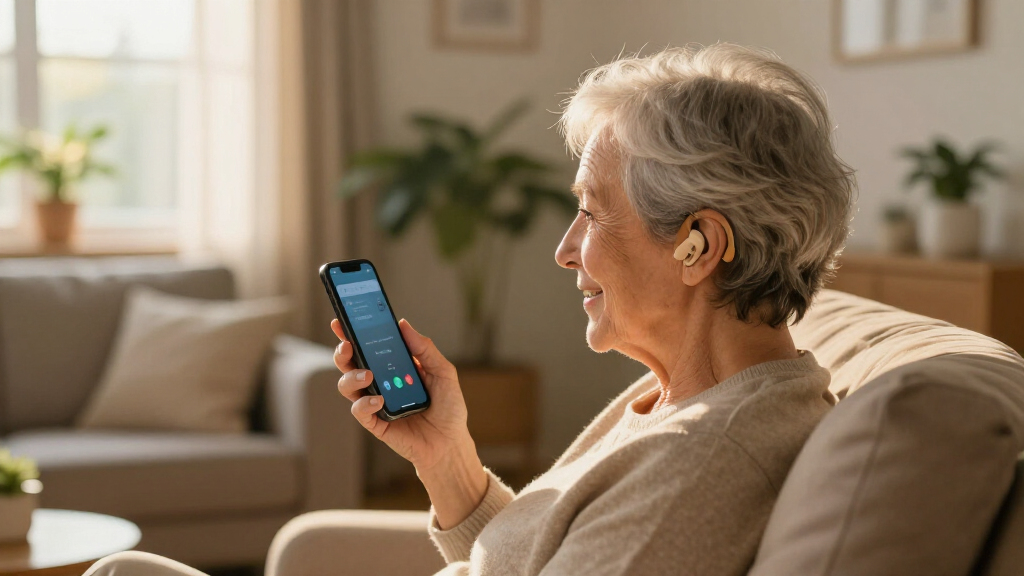
Hearing aids aren’t just for hearing loss — they can directly connect to your phone via Bluetooth, streaming conversations straight into your ears. Around 70% of modern hearing aids support Bluetooth, making phone calls clearer without extra effort.
For example, a man with hearing aids paired his devices to his iPhone using the telecoil setting. During calls, the sound streamed directly into his hearing aids, eliminating static and background noise. If you don’t have hearing aids, consider using a portable amplifier or Bluetooth neck loop, which can work with your existing hearing aids or assistive devices.

Wireless Headset with Mic for Work, Bluetooth Headset with Noise Cancelling
- Noise Cancelling & Mute: Crystal-clear calls with environmental noise reduction
- Bluetooth 5.3 & USB Dongle: Low-latency wireless connection with USB adapter
- Dual Device Connectivity: Connects to laptop and smartphone simultaneously
As an affiliate, we earn on qualifying purchases.
As an affiliate, we earn on qualifying purchases.
Leverage Speakerphone and Hands-Free Options for Better Listening
Sometimes, holding a phone to your ear isn’t the easiest way to hear. Using speakerphone or a Bluetooth headset can open up your ears to clearer sound. Imagine sitting back with your favorite mug, talking through a wireless headset — sounds clearer and less strained.
Most smartphones have a dedicated speakerphone button, and Bluetooth headsets can connect with a simple pairing process. For instance, a caregiver suggested using a Bluetooth speaker for her father’s calls, so he could sit comfortably, listen with both ears, and respond more easily.
sound amplifier app for smartphones
As an affiliate, we earn on qualifying purchases.
As an affiliate, we earn on qualifying purchases.
Add Sound Enhancement Tech to Cut Out Background Noise
Background noise is one of the biggest barriers to understanding during calls. Modern phones and accessories now include noise reduction, echo cancellation, and voice amplification. These features are vital because they directly impact how much of the conversation you can understand in real-world settings. For instance, in a noisy restaurant, even a slight improvement in noise filtering can mean the difference between missing key words and catching every detail.
Using these features effectively requires understanding their tradeoffs: sometimes, aggressive noise suppression may cut out not just background noise but also parts of speech, leading to less natural sound. It’s important to experiment with settings to find a balance that enhances speech clarity without making the sound seem unnatural or disconnected. Apps like Google’s ‘Sound Amplifier’ can turn your phone into a personal hearing booster, focusing on speech and filtering out distracting sounds.

BeHear SMARTO Personal Hearing Amplifier – Pocket-Sized Bluetooth Assistive Listening Device for Seniors, TV & Phone Calls, Sound Amplifier for Hearing, Rechargeable Hearing Device for Elderly
- Superior Sound Quality: Up to 70 dB amplification with noise reduction
- Senior-Friendly Design: Large buttons and one-touch emergency calls
- Bluetooth Connectivity: Connects easily to phones and TVs
As an affiliate, we earn on qualifying purchases.
As an affiliate, we earn on qualifying purchases.
Add Visual Aids and Captioning for Extra Clarity
Sometimes, hearing isn’t enough. Visual cues help fill in the gaps. Many smartphones now support live captioning — instant subtitles during calls. Imagine watching a call’s real-time captions, catching every word even if the sound isn’t perfect.
Android phones offer ‘Live Caption,’ and iPhones can use third-party apps. For example, a family caregiver turned on live captions for her mother’s calls, and they could understand each other better, especially when background noise was loud. These tools are especially useful in noisy environments or when the speaker has a soft voice, but they work best when used alongside other hearing enhancement methods.
Choose the Right Device and Network for Clear Calls
The quality of your phone and network makes a difference. A high-quality microphone and speaker reduce static, while a strong Wi-Fi or cellular connection prevents interruptions. For instance, a person living in a rural area swapped to a mobile carrier with better coverage. Calls became noticeably clearer, with less drop-out and static.
Choosing a device with good reviews for sound quality involves considering factors like microphone sensitivity, speaker clarity, and compatibility with hearing accessories. Upgrading your plan or switching providers can also make a significant difference if your current network frequently drops calls or causes muffled audio. Remember, no matter how advanced your device is, a weak or unstable network can undermine all your efforts to improve clarity.
Compare Tech Options to Find What Fits Your Needs
| Feature | Benefit | Best For |
|---|---|---|
| Hearing Aid Compatibility | Direct audio streaming, clearer sound | Hearing aid users |
| Sound Amplifier Apps | Boosts speech, reduces background noise | All users in noisy environments |
| Bluetooth Headsets | Hands-free, clearer audio | Anyone wanting easier listening |
| Live Captioning | Real-time subtitles | Hearing-impaired or noisy settings |
Frequently Asked Questions
Can I use my hearing aids with any phone?
Many modern hearing aids support Bluetooth or telecoil (T-coil) compatibility, allowing direct connection to smartphones. Check your hearing aid model and your phone’s capabilities to see if they can pair directly for clearer sound.What’s the easiest way to improve call clarity without new devices?
Start by adjusting your phone’s sound settings, enabling noise reduction, and using speakerphone or a wireless headset. Apps like Sound Amplifier can also boost speech and cut background noise on your existing device.Are captioning apps reliable for understanding calls?
Live captioning apps and features work well in many situations, especially in noisy environments. However, they may not catch every word perfectly, so using them alongside other tools offers the best results.What should I do if my call quality is poor?
Check your network connection first. If static or muffled sound persists, try switching to Wi-Fi calling, resetting your network, or using a different device or headset to improve clarity.Are there specific brands that are better for hearing-impaired users?
Brands like Phonak, Oticon, and Signia offer hearing aids with excellent Bluetooth features compatible with smartphones. When selecting a device, look for one with good reviews for sound quality and ease of use.Conclusion
A clearer call isn’t about more volume — it’s about smarter sound. Small adjustments, paired with the right tech, can turn frustrating conversations into comfortable chats. Remember: your voice matters, and so does your ability to hear it clearly. Take these tools and tips, and make every call a step toward better connection and confidence.College move-in / dorm season Picks
dorm essentials
As an affiliate, we earn on qualifying purchases.