TL;DR
Prime for Young Adults — start your free trial
Fast free delivery, streaming and member deals for eligible 18–24 year olds.
Try it freeAs an affiliate, we earn on qualifying purchases.
A good home pulse oximeter measures blood oxygen and pulse reliably. Focus on accuracy, user-friendliness, certification, and smart features. Recent tech advances have made monitoring simpler and more precise.
Imagine checking your blood oxygen level in just a few seconds — without a trip to the doctor. As health monitoring becomes more personal, choosing the right pulse oximeter at home can make a real difference. It’s not just about numbers; it’s about feeling confident in your health data every day.
This guide walks you through what to look for, recent tech upgrades, and practical tips — so you can pick a device that fits your needs and keeps you safe. Whether managing a health condition or staying vigilant during flu season, the right oximeter becomes your handy health companion.
Prioritize devices with FDA or CE certification for trustworthy readings.
Choose models with simple, bright displays and quick, easy operation.
Recent tech advances, like AI and better sensors, have improved accuracy across skin tones.
Keep fingers warm, remove nail polish, and follow instructions for reliable results.
Use pulse oximeters as trend tools, not definitive medical diagnoses.
How to Pick a Pulse Oximeter for Home Use
A good home pulse oximeter measures blood oxygen and pulse reliably in just a few seconds. Focus on accuracy, certification, clear readings, practical battery life, and smart features that support trends without turning a simple check into a complicated ritual.
Use it as a trend tool, not a diagnosis machine.
The number matters, but the pattern, symptoms, and device limits matter too.
Start with reliability, then make it easy to use every day.
Inaccurate readings can create false reassurance or unnecessary panic. Certification, display clarity, finger fit, and simple operation all affect whether your home data is actually useful.
Accuracy and Certification
Look for FDA-cleared, CE-marked, or clinically validated devices. Certification means the device has met a defined testing pathway, which improves confidence in the numbers.
Clear Display
Choose bright, high-contrast digits for SpO₂ and pulse. OLED or color screens can help in dim rooms and for users with vision challenges.
Simple Operation
Large buttons, automatic orientation, and quick readings reduce user error, especially for seniors or anyone checking levels during illness.
Portability
A small, lightweight device is easier to keep nearby during travel, work, walks, or flu season monitoring.
Useful Extras
Pulse strength, perfusion index, storage, and app sync can add context. Pick only the features you will actually use.
Limits and Context
Cold fingers, movement, nail polish, poor circulation, and skin pigmentation can affect readings. Watch trends and symptoms, not one isolated number.
Match the device tier to the way you will monitor.
A budget device can be fine for occasional checks. Frequent monitoring, chronic respiratory conditions, family sharing, or clinician reports may justify paying for stronger visibility and data features.
| Buying Factor | Budget Spot Check | Best Home Choice | Advanced Connected |
|---|---|---|---|
| FDA or CE certification | ~ Check carefully | ✓ Prioritize this | ✓ Usually available |
| Reading speed | ~ Varies by model | ✓ Aim for about 5 seconds | ✓ Fast plus stored readings |
| Display quality | ~ Basic LCD | ✓ Bright, large, high contrast | ✓ OLED or app view |
| Bluetooth or USB export | ✗ Rare | ~ Useful for trends | ✓ Best for sharing logs |
| Pulse strength or perfusion index | ✗ Often missing | ✓ Helps judge reading quality | ✓ More context |
| Family profiles | ✗ Usually absent | ~ Nice for shared use | ✓ Better data separation |
Reliable numbers start before you press the button.
The best device still needs good technique. Warm fingers, still hands, and clean nails help prevent misleading low readings or erratic pulse data.
Warm Hands
Cold fingers reduce blood flow and can weaken the signal.
Remove Polish
Dark polish or artificial nails can interfere with light sensors.
Sit Still
Movement can create artifacts and unstable readings.
Wait Briefly
Give the device a few seconds to settle on a stable value.
Log Trends
Repeated patterns are more useful than one isolated number.
Prioritize the specs that change your daily experience.
Accuracy comes first, but usability determines whether the device becomes a trusted health companion or disappears into a drawer.
SpO₂ interpretation band
Better sensors and AI are improving confidence across skin tones.
Newer pulse oximeters use enhanced sensors, reflectance technology, motion reduction, smartphone integration, and analytics to address older accuracy gaps, including concerns about bias in readings across diverse skin tones.
- AIEmerging models can flag anomalies and support richer trend interpretation.
- SensorsImproved hardware helps reduce motion artifacts and weak-signal errors.
- AppsBluetooth tracking makes it easier to share multi-day patterns with clinicians.
- WearablesContinuous monitoring can help people with chronic respiratory conditions, but fit and validation still matter.
From device choice to safer decisions.
A home oximeter is most useful when every step is connected: certified device, clear display, good technique, repeat checks, trend awareness, and timely medical advice when numbers or symptoms are concerning.
Validate
Check FDA, CE, or clinical validation.
Read
Use bright digits and uncluttered screens.
Prepare
Warm fingers and remove polish.
Track
Watch patterns over time.
Question
Recheck odd values before reacting.
Escalate
Call a clinician for low readings or symptoms.
What really matters: accuracy and certification
The first thing to check? Accuracy. You want a device that reliably reflects your blood oxygen levels and pulse. But why does this matter? Inaccurate readings can lead to false reassurance, causing you to overlook potential health issues or panic unnecessarily. For example, a falsely high oxygen level might mask early signs of respiratory decline, delaying critical intervention. Conversely, false low readings could cause undue stress or unnecessary doctor visits.
Look for models validated by authorities like the FDA or bearing CE marks in Europe. These certifications mean the device has undergone rigorous testing and adheres to strict standards, which directly impacts the reliability of your health data. Choosing certified devices minimizes the risk of errors that could have serious health implications. Remember, even the most accurate device is a tool — it’s essential to understand its limitations and use it as part of a broader health monitoring strategy.
As an affiliate, we earn on qualifying purchases.
How to choose an easy-to-use device with clear readings
Using a pulse oximeter shouldn’t be complicated or frustrating. Why does ease of use matter? Because complicated devices increase the likelihood of user error, which can lead to misleading readings and false alarms. A simple interface with large, bright digits reduces confusion, especially for seniors or those with visual impairments. Quick readings within 5 seconds are crucial — the longer you wait or struggle to interpret results, the more likely you are to misread or become impatient, leading to inconsistent monitoring.
Imagine a device that displays your SpO₂ and pulse in bold, colorful numbers, easily visible even in low light. Some models also offer adjustable brightness or larger screens, which are especially helpful if you have vision challenges or are using it in dim environments. Testing a device in-store or asking for a demonstration helps ensure you’re comfortable with its operation. An intuitive device encourages regular use, which is key to effective health tracking and early detection of issues.
As an affiliate, we earn on qualifying purchases.
The display: what features help you see your numbers clearly
A bright, crisp display isn’t just about aesthetics — it directly impacts your ability to interpret results accurately. Why does this matter? Clear visibility reduces the risk of misreading, especially if you check your levels frequently or in various lighting conditions. Adjustable contrast and high-contrast colors can make a significant difference in readability. OLED screens or color displays often provide better visibility than basic LCDs, especially for users with visual impairments.
For example, a device with a high-contrast display shows your SpO₂ in vibrant red or green, and your pulse in clear white digits. Some models also display waveforms or pulse strength indicators, providing additional context that can help you assess the quality of the reading. If the display is cluttered or dim, you might misinterpret your levels or overlook important trends. Prioritizing a device with a user-friendly, high-quality display ensures you can rely on your readings without confusion or guesswork.
smart pulse oximeter with AI technology
As an affiliate, we earn on qualifying purchases.
As an affiliate, we earn on qualifying purchases.
Battery life and portability: how your device fits into daily life
Long-lasting batteries and compact size are more than just convenience — they influence your consistency in monitoring your health. Why? A device with poor battery life or bulkiness can discourage frequent use, leading to gaps in your health data. Devices with rechargeable batteries or those that run for at least 20 hours on standard batteries are ideal, ensuring you can use them regularly without hassle.
Imagine slipping a small, lightweight oximeter into your pocket or bag. It’s easy to carry, so you can check your levels during travel, at work, or during daily walks. The more accessible your device, the more likely you are to incorporate regular checks into your routine, which is crucial for detecting trends or early warning signs. Portability thus supports consistent health monitoring, making it a practical tool rather than an occasional gadget.
digital pulse oximeter for home use
As an affiliate, we earn on qualifying purchases.
As an affiliate, we earn on qualifying purchases.
Extra features that add value without complicating use
Modern pulse oximeters often include features that enhance their usefulness without adding complexity. Why are these features important? They can provide additional insights into your cardiovascular health or make data management easier. For instance, a pulse strength indicator (plethysmograph) shows how strongly your heart is pumping blood, which can be useful for detecting irregularities or weak pulses. The perfusion index indicates blood flow quality, helping you interpret whether a low SpO₂ reading might be due to poor circulation rather than actual oxygen deficiency.
Connectivity features like Bluetooth or USB allow you to transfer readings to a smartphone app, enabling trend tracking over days or weeks. This can be particularly valuable for managing chronic conditions or sharing data with healthcare providers. Multiple user profiles prevent mix-ups if the device is used by family members, ensuring each person gets accurate readings. While these features are beneficial, it’s essential to choose ones that genuinely add value for your needs without making the device overly complicated or difficult to operate. Balance is key to ensuring your device remains a helpful tool rather than a confusing gadget.
Price tags: what to expect and how to balance cost with features
Home pulse oximeters range from about $20 to over $100. Why does price matter? Cheaper models can be perfectly adequate for basic tracking, but they often lack advanced features, longer battery life, or high-quality displays. Why might you pay more? Investing in a higher-priced device can mean better accuracy, durability, and added functionalities like Bluetooth or larger screens, which can improve your overall experience and confidence in the readings.
Consider your specific needs: if you require frequent monitoring, features like Bluetooth connectivity or extended battery life might justify a higher cost. Conversely, if you only need occasional checks, a budget model might suffice. Think of it like buying a smartphone — a basic model covers essentials, but paying more can offer peace of mind through better reliability and additional features. Balancing cost with your health monitoring needs ensures you get the best value without overspending on unnecessary extras.
How recent tech advances improve accuracy and usability
Recent innovations in pulse oximeter technology have significantly enhanced both accuracy and user experience. Why do these advances matter? Earlier models often struggled with inaccuracies caused by skin pigmentation, cold fingers, or movement, which could lead to misleading readings. Newer reflectance sensors and algorithms now better compensate for these variables, resulting in more reliable data across diverse users and conditions. This means you can trust your readings more, regardless of skin tone or environmental factors.
Connectivity features like Bluetooth enable automatic data transfer to smartphones, simplifying trend analysis and sharing with healthcare providers. AI-powered devices can now detect unusual drops in oxygen levels, providing early alerts that could be critical for managing health conditions. Additionally, improved sensors reduce false readings caused by external factors like nail polish or cold extremities, making home monitoring more trustworthy. These technological improvements reduce frustration, increase confidence, and support more consistent health tracking, which can be life-changing for those with chronic respiratory or cardiac conditions.
What you need to know about using a pulse oximeter safely at home
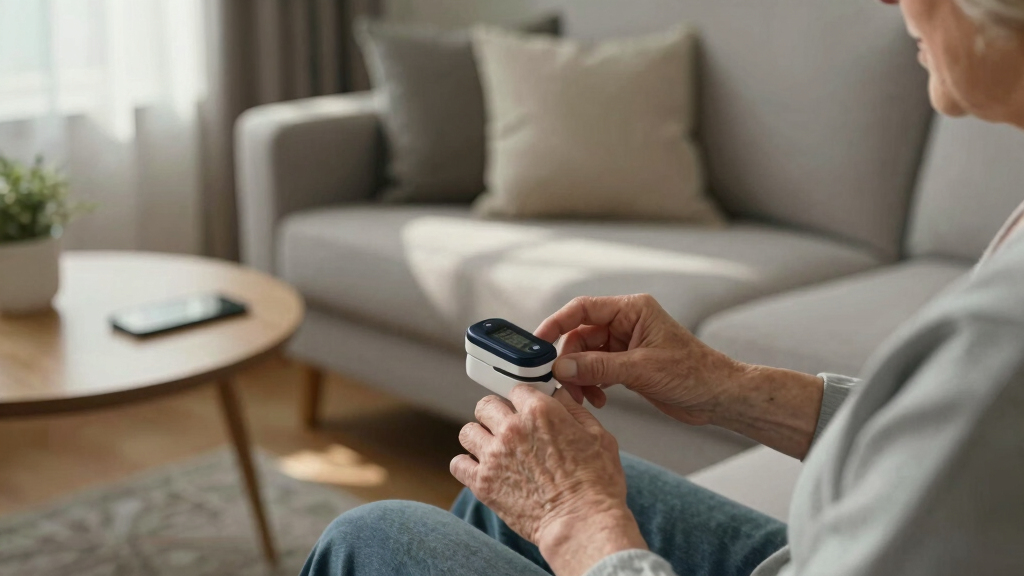
Using your device correctly is key to getting accurate readings. Why? Because improper use can lead to false readings, which might cause unnecessary concern or false reassurance. For example, cold fingers or nail polish can interfere with sensor accuracy, leading to misleading results. Following proper procedures ensures your data reflects your true health status. Keep your fingers warm, remove nail polish, and stay still during measurement. Proper finger placement and remaining quiet during the test reduce the chance of motion artifacts that distort results.
For example, gently press your finger into the sensor, ensuring it’s seated properly without excessive pressure. Avoid moving, talking, or shaking during the measurement, as motion can cause inaccurate readings. Remember, pulse oximeters are tools for observing trends over time, not definitive diagnoses. If you notice consistently low readings, consult your healthcare provider promptly. Proper use maximizes the device’s reliability and helps you make informed health decisions.
Your most common questions answered
- Are home pulse oximeters accurate enough for medical decisions? They are reliable for tracking trends and initial assessments, but they should not replace professional medical advice. Abnormal or persistently low readings require confirmation by a healthcare provider to ensure proper diagnosis and treatment.
- How can I improve accuracy? Keep your fingers warm, avoid nail polish, and follow the device’s instructions carefully. Consistent measurement techniques help you distinguish true health changes from measurement errors.
- Can children use adult models? Some models are designed for pediatric fingers, with smaller probes and suitable sizing. Always check the product specifications to ensure a proper fit and accurate readings for children.
- How often should I check my levels? Depending on your health condition, daily monitoring or as advised by your healthcare provider is recommended. Regular checks can help detect early signs of deterioration or improvement.
- What if my readings are low? Contact your doctor immediately for assessment and guidance. Do not ignore persistent low levels, as they may indicate serious health issues requiring prompt attention.
Conclusion
Picking the right pulse oximeter means balancing accuracy, ease, and smart features. The best device becomes a simple, trusted partner in your health routine.
Think of it as a small, powerful window into your well-being — ready whenever you want a quick health check. With the right choice, you gain confidence and peace of mind every day.
Flea & tick season Picks
flea and tick prevention
As an affiliate, we earn on qualifying purchases.