TL;DR
Lever door handles require less grip strength and dexterity than traditional knobs, making them ideal for arthritis sufferers. They improve safety, independence, and can be easily retrofitted or chosen for new homes, especially with recent ergonomic innovations.
If opening a door feels like a battle with a stubborn round knob, you’re not alone. For those with arthritis, everyday tasks can turn into frustrating challenges. The good news? A simple upgrade—like switching to lever door handles—can make a world of difference.
In this guide, you’ll learn exactly how lever handles support arthritic hands, why they’re becoming the standard in accessible homes, and how a small change can boost your independence and safety every day.
Lever door handles require significantly less force than knobs, making them ideal for arthritic hands.
Choosing handles with ergonomic shapes and soft grips enhances comfort and reduces fatigue.
Installation is generally simple, often doable by homeowners, and retrofitting can be quick and affordable.
Modern options include electronic, sensor-activated handles that eliminate physical effort entirely.
Upgrading to lever handles increases safety, independence, and can add a sleek, modern look to your home.
Why Lever Handles Are a Game-Changer for Arthritis
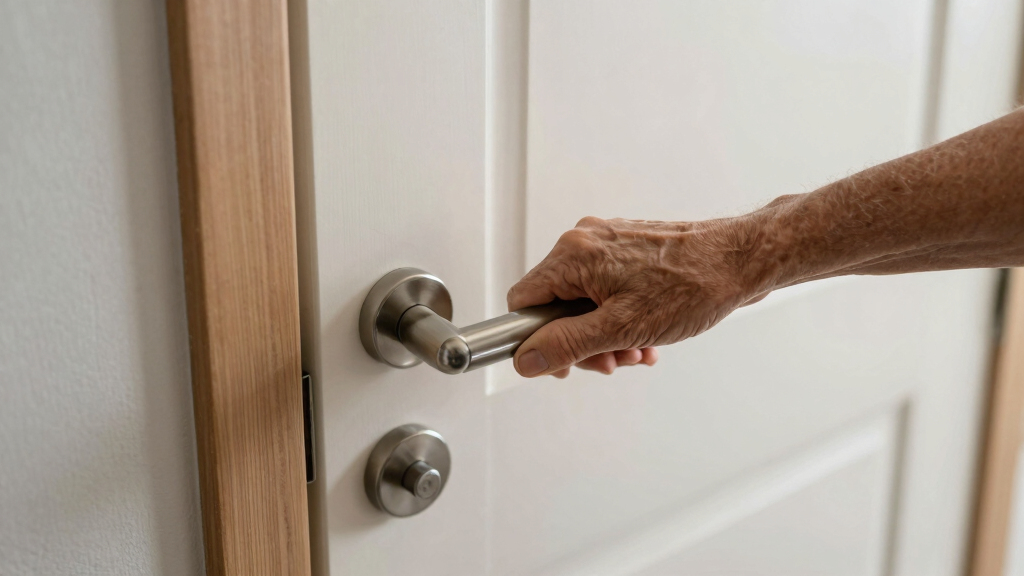
Lever door handles are designed to be pushed down with a palm, forearm, or even an elbow. Unlike knobs, they don’t require a tight grip or twisting motion. This means less strain on painful, weak, or stiff hands.
Imagine trying to open a heavy, sticky door with a knobby handle — now picture effortlessly pushing down a smooth, wide lever. The difference is clear. For many with arthritis, this simple act feels like a relief that’s long overdue.
Research from accessibility experts shows that lever handles can cut the force needed to operate a door by nearly half. That’s a big deal when your joints ache or your grip is compromised.

2 Pack Door Knob Grip & Lever Extension with Clamps – Non-Slip Rubber Door Knob Cover Converts Round Knobs to Handles – Arthritis & Elderly Assistive Aid – Fits Most 2”–2.5” Doorknobs
Grip + Lever in One Solution: Functions as a non-slip rubber door knob cover while also converting round…
As an affiliate, we earn on qualifying purchases.
As an affiliate, we earn on qualifying purchases.
How Ergonomic Design Keeps You Comfortable
Not all lever handles are created equal. The best ones feature ergonomic shapes that fit comfortably in your hand, with soft grips or textured surfaces. These details prevent slipping and reduce fatigue.
Picture a lever with a cushioned, rubberized grip — it feels warm and secure against your palm. For someone with arthritis, this tactile comfort turns a difficult task into a smooth, natural motion.
Choosing handles with a larger, well-contoured lever can also minimize the effort needed. It’s like sliding your hand over a gentle slope rather than lifting a steep hill.

Amazon Basics Easy Installation Straight Door Lever, Passage, Satin Nickel, 1-Pack
Easy installation with standard Phillips head screwdriver
As an affiliate, we earn on qualifying purchases.
As an affiliate, we earn on qualifying purchases.
Installing Levers: Easy Fix for Better Home Access
Most lever door handles are straightforward to install, often requiring just a screwdriver. If you’re comfortable with DIY projects, you can swap out knobs for levers in under an hour.
For example, replacing a traditional round knob with a lever handle on your bathroom door can be a quick upgrade. It’s a small step that pays off every time you enter or leave a room.
If you prefer professional help, a handyman can do the job efficiently. Either way, retrofitting lever handles is a cost-effective way to boost your home’s accessibility.
- Remove the existing knob or handle.
- Align the new lever handle with the latch mechanism.
- Secure it with screws — usually provided with the handle.
- Test the handle to ensure smooth operation.
Amazon Basics Easy Installation Straight Door Lever, Passage, Satin Nickel, 1-Pack
Easy installation with standard Phillips head screwdriver
As an affiliate, we earn on qualifying purchases.
As an affiliate, we earn on qualifying purchases.
Comparing Traditional Knobs and Lever Handles
| Feature | Traditional Knobs | Lever Handles |
|---|---|---|
| Ease of Use | Require grip strength and twisting | Push down with palm or forearm |
| Effort Needed | High for arthritis | Low, ergonomic design |
| Installation | Generally simple | Also straightforward, often easier |
| Accessibility | Limited for arthritic hands | Highly recommended |

Kwikset Halifax LED Motion Activated Light Up Privacy Door Lever for Bathroom and Bedroom, Matte Black, Reversible Keyless Push Button Lock Door Lever, with Microban Protection
LOCKING PRIVACY: Use LED light handle on doors requiring privacy, can be locked inside with a push button,…
As an affiliate, we earn on qualifying purchases.
As an affiliate, we earn on qualifying purchases.
Smart, Touchless Levers Make Life Even Easier
Beyond traditional lever handles, modern options include electronic, sensor-activated, or Bluetooth-enabled models. These touchless solutions are perfect for reducing physical effort and contact, especially for those with severe arthritis or immune concerns.
Imagine walking up to a door and simply waving your hand to open it. No twisting, no gripping, no pain. These innovations turn a simple door into a smart, accessible feature of your home.
While a bit more pricey, they can be a real game-changer — especially in kitchens, bathrooms, or entryways where frequent use demands effortless operation.
What You Need to Know Before Upgrading
Choosing the right lever handle involves considering style, grip, and installation. Look for handles with softer materials, larger levers, and easy-to-turn mechanisms. It’s worth testing different models in-store or reading reviews.
Installation is generally simple, but if you’re unsure, a professional can ensure everything fits perfectly and functions smoothly.
Also, check if your home’s doors are compatible with these handles — most interior doors are, but some exterior or specialty doors may need custom solutions.
Are Lever Handles Worth the Investment?
Absolutely. For many, the small upfront cost pays off through increased independence and safety. They reduce the effort needed to open doors, helping prevent slips or falls caused by slipping or weak grip.
In homes with multiple arthritic residents or aging family members, upgrading to levers creates a more comfortable environment for everyone.
Plus, they add a sleek, modern look that blends into almost any décor. It’s a smart choice that pays dividends in daily comfort.
Key Facts About Lever Door Handles and Arthritis
- Levers require up to 50% less force to operate than knobs.
- Most people with arthritis prefer lever handles because of their ergonomic design.
- They can be retrofitted on existing doors, often with simple tools.
- Building codes like the ADA recommend levers for accessibility, influencing widespread adoption.
- Recent innovations include soft grips and electronic options, making them even easier to use.
Your Questions About Lever Handles — Answered
Are lever door handles suitable for all doors? Yes, almost all interior and exterior doors can accommodate lever handles with minor adjustments.
Can I install them myself? Many models are designed for easy DIY installation, but hiring a professional guarantees perfect fit and function.
Do electronic or sensor models work reliably? Yes, modern touchless levers are tested for durability and ease of use, making them a solid choice for everyday convenience.
Are they expensive? Prices vary, but most lever handles are affordable, especially considering the safety and independence benefits.
What’s the best way to choose the right handle? Focus on ergonomic features, soft materials, and reviews from users with similar needs.
Conclusion
Replacing traditional knobs with lever handles isn’t just a small upgrade — it’s a big step toward independence and safety for those with arthritis. Imagine opening your door with a gentle push, without pain or struggle. That simple change can transform everyday routines into moments of ease and confidence.
Ask yourself: What’s stopping you from making this simple, impactful switch? A better, more accessible home might be just a lever away.