
TL;DR

Turn quiet afternoons into listening time
- Thousands of audiobooks, podcasts and originals
- Listen on your phone, tablet or Echo — also offline
- Cancel anytime
Fit&Well reports that physical therapist Raj Suppiah recommends three stretches for stiffness associated with prolonged sitting: a half-kneeling hip flexor stretch, a figure-four glute stretch and an all-fours adductor stretch. He says the movements should stay comfortable and that hip strength and capacity matter alongside mobility.
Physical therapist Raj Suppiah has recommended three stretches that may help ease hip stiffness associated with sitting for long periods: a half-kneeling hip flexor stretch, a figure-four glute stretch and an all-fours adductor stretch. In a report by Fit&Well, Suppiah said the movements target the front, back and inner part of the hip, while cautioning that stretching is only one part of maintaining hip health.
For the half-kneeling hip flexor stretch, kneel with one knee on the floor and the opposite foot planted in front, its knee bent. Gently tuck the pelvis and lean forward until there is a comfortable stretch at the front of the hip on the kneeling side. Suppiah advises against arching the lower back. The source recommends five to six repetitions per side, holding each for about 10 seconds.
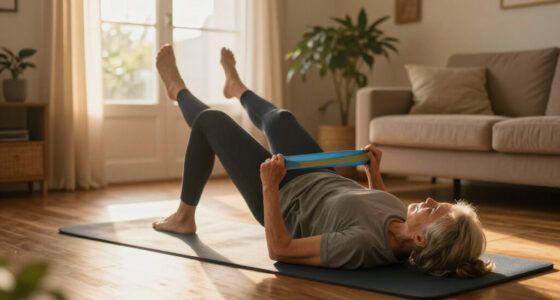
The figure-four glute stretch starts lying on the back with both knees bent. Place one ankle across the opposite thigh, then hold behind the thigh of the supporting leg and draw it gently toward the body. The stretch should be felt around the glute and hip. Fit&Well lists five to six repetitions on each side, held for 10 seconds. Suppiah says it works mobility at the back and outside of the hip.
For the all-fours adductor stretch, begin on hands and knees, extend one leg out to the side with the foot on the floor, then slowly rock the hips toward the heels while keeping the back neutral. The intended stretch is along the inner thigh. The source recommends eight to 10 repetitions per side, holding for six seconds. Suppiah said the inner-thigh adductors contribute to hip movement and load control.
How the Three Stretches Target the Hip
The recommendations offer a short routine that addresses three regions around the hip, rather than concentrating only on the front of the joint. That distinction reflects Suppiah’s explanation that prolonged sitting is one possible contributor to stiffness, but hip discomfort can also follow a sudden increase in activity or demands the body is not prepared to handle.
Suppiah told Fit&Well that the hip needs both mobility and strength to tolerate daily activities and exercise. The stretches may provide a way to move the hip through comfortable ranges, but they are not presented as a diagnosis or a cure for pain. The report also advises people to stop if an exercise causes pain and seek professional advice when needed.
Products Worth Considering

Bose TV Speaker Compact Soundbar with Bluetooth and HDMI-ARC, Black

Blueair Blue Pure 511i Max Air Purifier for Home and Bedroom

Ring Floodlight Cam 2K Wired Security Camera, 3-Pack, Black
As an affiliate, we earn on qualifying purchases.
Sitting Is Not the Only Factor
Suppiah, a co-founder of Foundation Physiotherapy & Wellness, told Fit&Well that hip discomfort can reflect a mismatch between current physical capacity and activity demands. His examples include sitting for much of the week and then playing several hours of pickleball, abruptly increasing running mileage, or starting a gym program at a much higher workload than usual.
He also noted that other causes of hip pain can include arthritis, irritated tendons around the hip, or pain originating in the lower back. That means the stretches are general movement suggestions from the report, not evidence that every case of hip stiffness is caused by sitting or will respond to stretching.
“A mismatch between what your body is currently prepared to handle and what you’re asking it to do.”
— Raj Suppiah, physical therapist, speaking to Fit&Well
When Stretching May Not Be Enough
The report does not provide clinical trial results showing how much these specific stretches reduce stiffness, how quickly an effect might occur, or whether they work for particular diagnoses. It also does not establish that sitting is the cause of an individual reader’s hip symptoms. Suppiah identified several other possible sources of pain, including arthritis, tendon irritation and the lower back.
Fit&Well says to use a comfortable range and seek advice if the exercises cause pain. The source does not specify who should avoid each movement or provide individualized modifications, so people with persistent symptoms or concerns may need guidance from a qualified health professional.
Pair Mobility With Hip Strength
Suppiah advises combining regular movement and stretching with strength work, rather than treating the three stretches as a complete program. He points to exercises such as squats and recommends building strength and capacity for the demands placed on the hips. Fit&Well also references a separate set of five hip-strengthening exercises, though details of those exercises are not included in the supplied report.
For readers trying the stretches, the immediate guidance is to move gently, stay within a comfortable range and stop if pain occurs. The source gives no follow-up results or schedule for repeating the routine; individual decisions about ongoing pain or exercise should be discussed with a qualified professional.
Key Questions
Which three stretches does the report recommend?
Physical therapist Raj Suppiah recommends the half-kneeling hip flexor stretch, figure-four glute stretch and all-fours adductor stretch.
How long should each stretch be held?
The Fit&Well report suggests holding the first two stretches for about 10 seconds and the all-fours adductor stretch for six seconds. It lists five to six repetitions per side for the first two and eight to 10 for the adductor stretch.
Can stretching alone keep hips healthy?
Suppiah says stretching can help maintain mobility, but strength and physical capacity also matter. He mentions regular movement and strengthening exercises such as squats.
What should I do if a stretch causes pain?
The report advises staying within a comfortable range and seeking advice if an exercise causes pain. It does not offer a diagnosis or personalized treatment plan.
Source: rss