
TL;DR
Play games included with Prime
Start a Prime free trial and play with Amazon Luna on your devices.
Start playingAs an affiliate, we earn on qualifying purchases.
Older homes face higher fire risks due to outdated wiring and appliances. Simple steps like installing detectors, practicing safe cooking, and using modern safety devices can significantly cut that risk and keep everyone safe.
Fire safety in older homes isn’t just about luck; it’s about proactive choices. Many homes built decades ago still stand, but their wiring, appliances, and safety features often lag behind modern standards. That leaves you vulnerable to preventable fires and injuries.
In this guide, you’ll discover practical steps to make your home safer—simple changes that can be put into action today. Whether you’re living in an inherited house or caring for a loved one’s space, these tips help you protect what matters most.
Regular electrical inspections can cut fire risks in older homes by up to 50%.
Installing detectors on every level and near bedrooms saves lives—test them monthly.
Simple habits like never leaving cooking unattended and keeping fire extinguishers handy prevent many fires.
Modern safety tech, like smart detectors, adds an extra layer of protection, even when you’re away.
Small home modifications, like better lighting and sturdy handrails, support overall safety and accessibility.
How to Spot Electrical Risks in Your Old Home
Older homes often have outdated wiring that can spark fires. You might notice frayed cords, flickering lights, or circuit breaker trips. These signs aren’t just minor inconveniences—they indicate underlying safety issues that could lead to serious fires if left unaddressed. The best way to be sure? Hire a licensed electrician for a thorough inspection.
They’ll check for signs like overloaded circuits, fuse box issues, or knob-and-tube wiring. These older wiring systems are prone to deterioration and can’t handle modern electrical loads, increasing fire risk. Replacing worn wiring and upgrading to modern circuits not only reduces fire hazards but also supports your home’s safety in daily use, preventing potential overloads that could cause sparks or shorts. Recognizing and addressing these risks early can save lives and property, but it requires understanding the implications of outdated wiring—like how it might fail under stress or age, leading to dangerous sparks.
For example, a homeowner in a 60-year-old house had frequent breaker trips. A professional rewired the kitchen and living room, dramatically lowering fire hazards and giving peace of mind. This investment in electrical safety ensures your home can handle everyday demands without risking a fire.
smart smoke and carbon monoxide detectors
As an affiliate, we earn on qualifying purchases.
As an affiliate, we earn on qualifying purchases.
Why Every Older Home Needs Well-Placed Smoke and CO Detectors
Smoke and carbon monoxide (CO) detectors are your first line of defense. Their placement matters because fires and leaks can start in hidden or unexpected areas, and early detection can prevent tragedies. According to the National Fire Protection Association, working smoke alarms cut the risk of death in a fire by 50%. But placement alone isn’t enough—detectors must be functional and strategically located to alert you in time.
Place smoke detectors on every level—especially near kitchens, bedrooms, and stairways—because fires can start anywhere. CO detectors are vital in homes with gas appliances or old heating systems, common in older houses, as they prevent silent, deadly poisoning. Proper placement ensures you’re alerted promptly when danger arises, which can be a matter of seconds in a fire or CO leak. Regular testing—monthly—is key to keeping them reliable, as dust or aging batteries can render them ineffective. Understanding why placement matters helps you make smarter decisions—like avoiding installing detectors too close to bathrooms or drafts, which can cause false alarms or delay alerts, ultimately saving lives.
For instance, a family in an 80-year-old house woke up to a chirping detector during a gas leak, avoiding a potential disaster. This underscores the importance of placing detectors correctly and maintaining them regularly, as their effectiveness directly impacts your safety in critical moments.
fire extinguisher for home kitchen
As an affiliate, we earn on qualifying purchases.
As an affiliate, we earn on qualifying purchases.
Simple Kitchen Safety Tips That Prevent Fires
Kitchen fires are the leading cause of home fires, often sparked by unattended cooking. In older homes, where stove wiring might be outdated or circuits overloaded, these risks are heightened. Understanding why these hazards matter is crucial—unattended cooking is a common mistake, but in older homes, the stakes are higher because electrical systems may not support prolonged use safely, increasing the chance of shorts or sparks that ignite fires. Following these safety rules reduces both immediate and long-term risks:
- Never leave food unattended on the stove—an unattended pot can quickly boil over, spill, or ignite nearby items.
- Keep flammable items—tea towels, paper, curtains—away from burners—clutter near heat sources can easily catch fire.
- Use timers to remind you when to check on cooking—this simple step helps prevent forgetfulness that leads to fires.
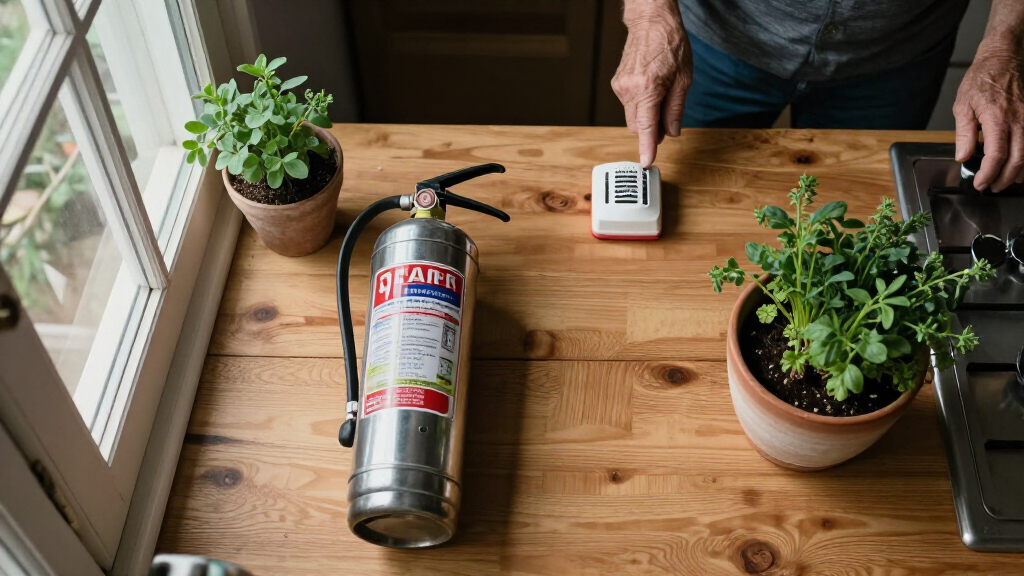
- Ensure a fire extinguisher—preferably Class K for grease—nearby. Knowing how and when to use it can stop a small fire from escalating.
Imagine someone boiling pasta. They get distracted, and the pot boils over, igniting a rag nearby. The quick use of a nearby extinguisher can stop a small flame from becoming a devastating house fire. These habits and safety tools are essential because they address the common points of failure—like distraction or flammable clutter—that can turn a minor incident into a disaster. Making these small adjustments can significantly reduce your fire risk and give you peace of mind.
As an affiliate, we earn on qualifying purchases.
How to Keep Fire Extinguishers Ready and Know What to Do
Multiple fire extinguishers in key spots—kitchen, garage, hallway—are a must. Check pressure gauges monthly, and replace or recharge when needed. Knowing how to use them can save lives and prevent small fires from escalating. Proper maintenance ensures they’re ready when you need them most, and understanding their use is equally vital—improper use can be ineffective or even dangerous.
Follow the PASS method: Pull the pin, Aim at the base, Squeeze the handle, and Sweep side to side. Practice with a demo extinguisher at least once a year to build confidence and muscle memory. This training helps you act swiftly and correctly in an emergency, which can make all the difference between containment and disaster.
For example, during a grease fire, quick action with a Class K extinguisher can douse flames and prevent escalation. Developing an escape plan with your household—knowing multiple exits and safe spots—ensures everyone can evacuate quickly if needed. These preparations are critical because fires can spread rapidly and panic can impair judgment. Being ready and knowledgeable helps you respond effectively, reducing damage and risk to everyone involved.
As an affiliate, we earn on qualifying purchases.
Heating Equipment Safety Tips for Older Homes
Older homes often rely on space heaters or aging furnaces, which can be fire hazards if neglected. Keep heaters away from curtains, furniture, and paper—these materials ignite easily and can cause quick fires. Never leave them unattended when on, as overheating or tipping over can lead to fires. Understanding the implications of improper use—like blocking airflow or using damaged cords—helps you prevent accidents that could rapidly escalate.
Ensure heaters are plugged directly into outlets, not extension cords, which can overheat and cause fires. Regular maintenance of heating systems, including chimney cleaning and inspecting connections, reduces risks associated with old or faulty equipment. Recognizing warning signs—such as strange smells, unusual noises, or excessive dust—can alert you to potential hazards before a fire starts. These safety practices matter because heating equipment is often a leading cause of fires in older homes, and neglecting proper use and maintenance can have devastating consequences. Simple precautions can prevent tragedy and keep your home warm and safe.
Must-Have Home Modifications for Fire Safety
Adding extra lighting, non-slip mats, and sturdy handrails helps prevent falls—an often overlooked fire risk because falls can lead to injuries that hinder evacuation or increase vulnerability during emergencies. Well-lit stairways and hallways ensure quick and safe evacuation during emergencies, reducing the likelihood of trips or delays when every second counts. These modifications aren’t just about comfort—they directly impact your ability to respond swiftly during a fire or other crisis, which can be the difference between safety and tragedy.
For example, a senior homeowner installed motion-activated lights along the corridor. When a power outage caused a blackout, she confidently navigated her home, avoiding falls and potential fire hazards in the dark. These simple, proactive changes help maintain safety and independence, especially for those with mobility challenges or visual impairments, and they contribute to faster evacuation and reduced injury during emergencies.
New Fire Safety Tech Making Older Homes Safer
Smart detectors now link to your phone, sending instant alerts if smoke or CO is detected. This means you don’t have to be home to know about a fire or leak. The immediacy of these alerts allows for faster response times, which can prevent small issues from becoming disasters. Energy-efficient appliances with automatic shut-off reduce chances of overheating or fires, especially if they malfunction or are left unattended. Many regions also have updated codes requiring retrofits, especially in older houses, to meet modern safety standards.
Imagine receiving a text alert when your downstairs detector senses smoke—giving you time to react before a small fire grows. Tech advances make safety easier and more reliable, enabling you to monitor your home remotely and respond promptly to potential hazards. These innovations are vital because they provide peace of mind, especially for homes with limited mobility or those occupied by vulnerable individuals, by acting as a constant safety net that works even when you’re not physically present.
What You Can Do Today to Make Your Home Safer
Start with these quick wins:
- Install or replace smoke and CO detectors. Test monthly.
- Inspect your wiring, or hire someone to do so. Understanding the state of your electrical system helps you prioritize repairs and upgrades that prevent fires caused by deterioration or overloads.
- Keep fire extinguishers accessible and know how to use them—this is your immediate defense against small fires.
- Create a simple escape plan and practice it regularly—knowing multiple exits and safe spots ensures quick evacuation, reducing panic and confusion during emergencies.
- Keep flammable items away from heat sources—this prevents accidental ignition and minimizes fire spread risk.
Small, consistent steps build a safer home. The effort pays off with peace of mind and protection for everyone inside. Recognizing the importance of each action helps reinforce a safety culture that can save lives and property in unexpected situations.
Conclusion
Fire safety in older homes doesn’t require costly overhauls—just consistent, practical steps. Regular inspections, smart detectors, and safe habits create a fortress of protection.
Imagine your home as a safe haven where every corner is prepared to catch a small fire before it grows. Staying vigilant today keeps your home and loved ones secure tomorrow.
Fall yard work Picks
leaf blowers
As an affiliate, we earn on qualifying purchases.