TL;DR
Listen free for 30 days with Audible
Thousands of audiobooks and originals — cancel anytime.
Start your free trialAs an affiliate, we earn on qualifying purchases.
Rearranging your home by lowering shelves and organizing storage boosts safety and ease of use. Focus on frequently used items at waist to chest height, and avoid overhead reaching to prevent strain or falls.
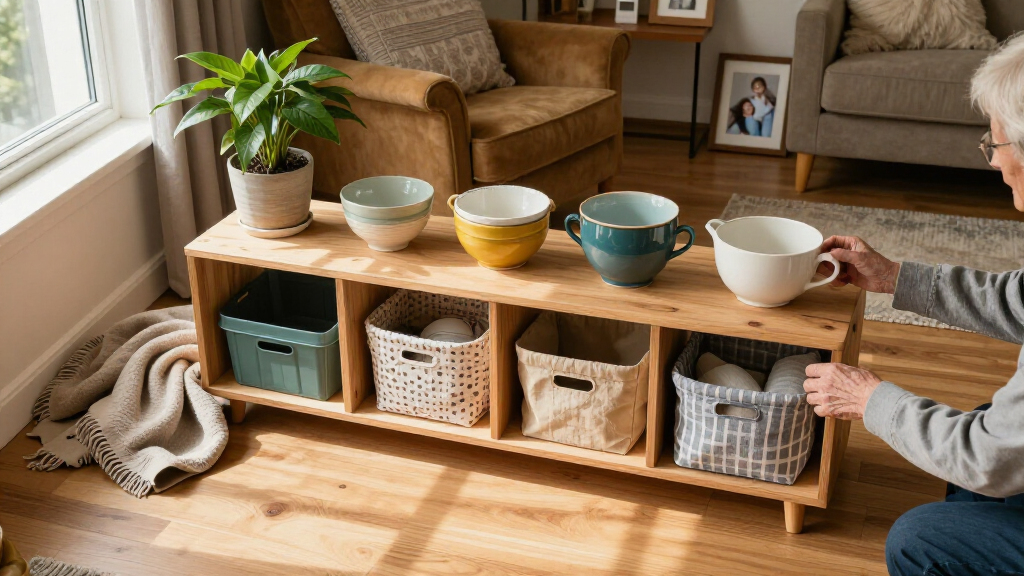
Prioritize storing items at waist to chest height—roughly 12 to 48 inches from the floor—for easier, safer access.
Use adjustable shelves and pull-out organizers to adapt your storage as your needs evolve.
Avoid relying on overhead or very low shelves for everyday objects to prevent strain and falls.
Test reach while sitting and standing to ensure shelves are truly accessible for all users.
Incorporate lighting and labels to make objects easier to find and reduce unnecessary reaching or bending.
Lowering Shelves and Rearranging for Easy Reach
Put everyday objects where natural movement can reach them. A few thoughtful changes can reduce stretching, bending, fatigue, and fall risk while making the home work better for people of different heights and abilities.
Design around natural movement
Organize by frequency of use rather than tradition. Daily items belong in the safest reach zone; rarely used, lightweight objects can occupy less convenient storage.
Keep daily dishes, medicines, cookware, toiletries, and frequently used supplies visible and reachable without tiptoeing, deep bending, twisting, or leaning.
A five-stage upgrade path
Begin with reversible changes. Move to installation work only when simpler adjustments do not provide safe access.
Identify
List what each person reaches for daily and note awkward locations.
Reposition
Move frequent and heavy items into existing waist-level storage.
Add access
Use bins, dividers, turntables, risers, and pull-out organizers.
Adjust
Replace fixed shelves with adjustable shelves or full-extension drawers.
Rebuild
Lower or replace cabinets only when other changes remain inadequate.
Put each object near its point of use
Shorter reaches and shorter carrying distances improve control. Tailor each room to the people who actually use it.
Kitchen
Place daily dishes and small appliances at waist height. Use pull-outs for pots and pantry supplies; keep heavy appliances below shoulder level.
Pantry
Group food by category, use shallow containers, and place heavy bottles on sturdy mid-height shelves. Add large, high-contrast labels.
Closet
Keep everyday clothing between knee and shoulder height. Consider adjustable rods, pull-down rails, open bins, and a stable seat.
Bathroom
Keep toiletries within arm’s reach without leaning across wet surfaces. Use shallow storage and protect clear transfer routes.
Laundry
Store detergent at waist level and keep supplies clear of appliance doors, controls, vents, electrical points, and shutoff valves.
Garage
Place heavy tools between knee and waist height, secure shelving against tipping, and lock chemicals, blades, and hazardous equipment.
Compare common shelf solutions
The best choice balances present access, future flexibility, installation complexity, available space, and budget.
| Feature | Fixed shelves | Adjustable shelves | Pull-out shelves |
|---|---|---|---|
| Customization | ✗ Limited | ✓ High | ✓ Very high |
| Access to the back | ✗ Awkward in deep units | ~ Depends on depth | ✓ Full extension |
| Typical cost | Lower | Moderate | Higher |
| Best application | Stable, permanent storage | Homes with changing needs | Deep or corner cabinets |
| Future flexibility | ✗ Low | ✓ Strong | ✓ Strong access |
Reach, grasp, lift, and replace without strain
A shelf is not truly accessible if the user must twist, overreach, balance on tiptoes, or pull an object from an overcrowded stack.
Check reach while both seated and standing.
Keep frequent objects at the front or use pull-outs.
Divide bulky supplies into manageable containers.
Add lighting, clear bins, and high-contrast labels.
Confirm every shelf is rated for its intended load.
Avoid tight packing that encourages awkward lifting.
Small placement changes create lasting benefits
A reachable layout supports safer posture today and makes the home easier to adapt as mobility, strength, or household needs change.
Why Lowering Shelves Can Transform Your Home for Safety and Comfort
Lowering shelves isn’t just about convenience—it’s about safety and reducing strain. When shelves are too high, you risk overreaching, which can lead to falls, shoulder injuries, or back strain. Moving frequently used items to a comfortable height keeps them within easy reach, reducing the need for dangerous stretching or bending. For example, someone with arthritis might struggle to open overhead cabinets, but lowering those shelves makes daily routines smoother and safer. This simple change can prevent accidents and make your home more welcoming for everyone.
According to an anonymous researcher, most household objects are best stored between 12 and 48 inches high—roughly from your waist to your chest—because this is the zone that’s easiest and safest to reach repeatedly. Reorganizing your shelves to match this zone adds up to a safer, more ergonomic home environment.
adjustable kitchen shelf organizers
As an affiliate, we earn on qualifying purchases.
As an affiliate, we earn on qualifying purchases.
Step-by-Step: How to Lower and Reorganize Your Shelves Effectively
- Identify your most-used items. Think about what you grab daily—coffee mugs, spices, medicines—and note their current shelf locations.
- Measure your optimal reach zone. For most standing adults, that’s around waist to chest height—roughly 36 to 48 inches from the floor.
- Start with the easiest changes. Move those frequently used items to shelves that fall within this zone. Use a step ladder or sturdy stool for higher shelves if necessary.
- Replace fixed shelves with adjustable ones. This allows you to customize the height as your needs change, without major remodeling.
- Add pull-out baskets, lazy Susans, or turntables. These make reaching items at the back much easier, especially in corner cabinets.
- Limit overhead storage for items you rarely use. Keep heavy or fragile objects at waist level for safety and easy handling.
- Test your new setup. Sit, stand, and reach to ensure everything is accessible without strain or imbalance.
Implementing these steps thoughtfully ensures your home adapts to your needs over time. Moving items to optimal heights isn’t just about convenience; it’s about reducing the risk of accidents caused by awkward reaching or unstable postures. Over time, this approach can help prevent injuries and promote independence, especially for those with mobility issues. Remember, the goal is to create a space that encourages safe movement and minimizes physical strain, which can significantly improve your quality of life.
As an affiliate, we earn on qualifying purchases.
Compare Common Shelf Solutions: Fixed, Adjustable, and Pull-Out Shelves
| Feature | Fixed Shelves | Adjustable Shelves | Pull-Out Shelves |
|---|---|---|---|
| Ease of customization | Limited; requires tools or replacement | High; can be repositioned easily | Very high; fully extendable for full access |
| Cost | Lower | Moderate | Higher |
| Best for | Stable, permanent storage | Flexible homes with changing needs | Maximized accessibility, especially in corner or deep cabinets |
Choosing the right shelf type involves weighing your current needs against future flexibility. Fixed shelves are the most economical and stable but lack adaptability, which can be a problem if your storage needs change over time. Adjustable shelves offer a middle ground—cost-effective and versatile, allowing you to modify heights as your habits or physical capabilities evolve. Pull-out shelves, though more expensive, significantly enhance accessibility in deep or corner cabinets, reducing the need for risky reaching or awkward contortions. Consider your budget, space constraints, and how often your storage requirements might change when choosing between these options. Investing in the right solution can make everyday tasks safer and more comfortable, especially as your needs shift over time.
As an affiliate, we earn on qualifying purchases.
Rearranging Every Room for Maximum Accessibility
Each room needs a tailored approach to make items reachable without risking injury. In the kitchen, keep everyday dishes and utensils at waist height. Use pull-out trays for pots and pantry items. Avoid heavy appliances above shoulder level—think toaster ovens or mixers—unless you can access them safely.
In the closet, place daily clothing within easy reach, preferably on adjustable rods or open shelves. Use bins for lighter items, and avoid stacking so high that you need a step stool. The bathroom should have toiletries within arm’s reach, avoiding high shelves that require leaning or balancing dangerously.
In laundry rooms, store cleaning supplies at waist level, and keep heavy detergent bottles on sturdy, low shelves. Garages benefit from putting heavy tools at knee height and securing all shelving to prevent tipping. Organize each space by how often you use what, and keep the most-used items within a quick stretch away.
Rearranging each room with safety and ease of access in mind isn’t just about comfort. It’s about reducing the risk of falls, strains, and accidents that can happen when reaching for items in awkward positions. Thoughtful placement considers the physical limitations of users and anticipates future needs, making every space more functional and safer over the long term. This proactive approach can help prevent injuries before they occur and support independence in daily routines.
As an affiliate, we earn on qualifying purchases.
Safety and Ergonomics: Make Every Shelf a Safe, Easy Reach
Having a shelf within reach isn’t enough. The goal is to be able to see, grasp, lift, and replace items comfortably. For example, if you have to twist your body or stand on tiptoes to reach your coffee mug, it’s not truly accessible.
Practices to follow include:
- Test reach while sitting and standing. Adjust shelves accordingly.
- Keep frequently used items at the front of shelves.
- Divide large loads into smaller, manageable containers.
- Use lighting and high-contrast colors to improve visibility.
- Ensure shelves are rated for the weight they hold.
Properly positioned shelves can prevent unnecessary physical strain and reduce the risk of accidents. Shelves that are too high or too low force awkward postures, increasing the chance of falls or injuries. Ensuring that each shelf is accessible from a natural standing or sitting position promotes better posture, reduces fatigue, and enhances safety. Additionally, good lighting and clear labels help users quickly identify and access what they need, minimizing unnecessary reaching and bending. Safety isn’t just about the shelf’s position—it’s about creating an environment that supports healthy movement and reduces hazards every step of the way.
Latest Trends in Accessible Storage: Smarter, Safer, More Flexible
Home design is shifting toward inclusive, flexible storage solutions. Modular, adjustable shelves and powered lifts are becoming common. These innovations help everyone access their home more easily, regardless of age or ability. For example, powered cabinet lifts can raise or lower heavy appliances or pantry shelves at the push of a button.
Other trends include full-extension drawer slides, pull-down upper cabinets, and integrated lighting. These features make finding what you need faster and safer. Incorporating these technologies can significantly reduce physical strain and increase independence, especially for those with limited mobility. The key is to balance technological convenience with straightforward design—simple manual solutions often suffice and are more budget-friendly. Staying informed about these innovations allows you to choose options that best fit your needs, making your home more adaptable and safer for everyone.
What You Need to Know Before You Reorganize
Rearranging and lowering shelves is usually straightforward but requires some planning. Confirm that your shelves and cabinets can support the new setup. Check the weight ratings and anchoring. When in doubt, consult a professional to avoid damage or safety hazards. Remember, even the best layout won’t work if you can’t see or grasp what you need.
Beyond structural considerations, think about long-term usability. Changes should accommodate potential future mobility or health issues, allowing easy adjustments as needs evolve. Designing with flexibility in mind prevents the need for costly re-remodeling later. Proper planning ensures your reorganization enhances safety and functionality, making your space more adaptable over time. Taking the time to evaluate your current setup and potential future needs will lead to a more sustainable, safe, and accessible home environment.
Frequently Asked Questions
What items should I move first when reorganizing?
Begin with items you use daily or weekly—like coffee mugs, medications, or essential pantry staples. Moving these to easily reachable shelves makes your routine safer and more comfortable immediately.How high should my shelves be for easy access?
For standing adults, aim for waist to chest height—about 36 to 48 inches from the floor. For seated users, lower shelves closer to their lap or knee level, and always test the placement with the actual user.Are pull-out shelves safe for heavy or fragile items?
Yes, when properly installed and rated for the weight, pull-out shelves are safe. They make accessing deep or corner cabinets easier and reduce the risk of dropping objects when reaching into tight spaces.Can I lower existing cabinets myself?
Often, but it requires careful planning and possibly professional help. Check wall framing, electrical outlets, and support structures before lowering cabinets to avoid damage or safety issues.What’s the best way to make a rental home more accessible?
Rearranging and adding removable organizers, bins, or turntables can improve access without permanent changes. Always seek permission for any structural modifications from the property owner.Conclusion
A home that’s easy to reach and organized isn’t just more comfortable—it’s safer and more dignified. Small shifts in shelf height and thoughtful reorganization can make daily routines smoother for everyone. Think of each adjustment as a step toward a home that truly works for you, no matter your age or ability. Why not start today—your safer, more accessible home awaits?Flea & tick season Picks
flea and tick prevention
As an affiliate, we earn on qualifying purchases.