TL;DR
Open a free Amazon Business account
Business pricing, bulk buying and tax-exempt orders.
Create a free accountAs an affiliate, we earn on qualifying purchases.
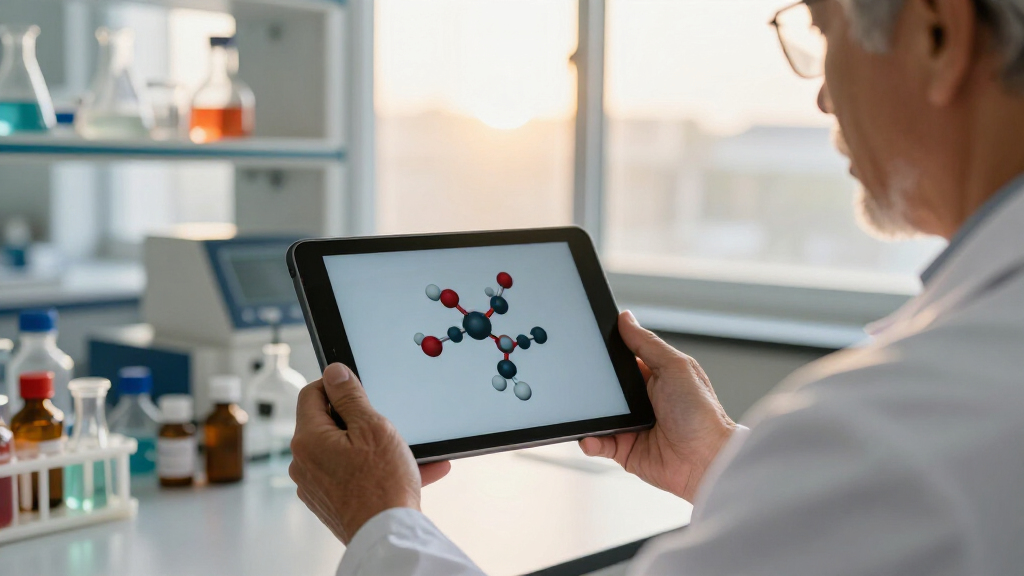
Artificial intelligence is increasingly used in drug discovery, with recent technological advances accelerating the process. Experts highlight both promising potential and ongoing challenges, shaping the future of medicine development.
AI technologies are now actively integrated into drug discovery processes, marking a significant shift in how new medicines are developed. Recent advancements have demonstrated that AI can accelerate the identification of potential drug candidates, reduce costs, and improve success rates. This development is crucial as the pharmaceutical industry seeks more efficient pathways amid rising R&D costs and urgent health needs.
Recent studies and industry reports indicate that AI algorithms, particularly machine learning models, are being used to analyze biological data, predict drug-target interactions, and identify promising compounds faster than traditional methods. Companies like DeepMind, Insilico Medicine, and others have published promising results, with some AI-designed molecules entering preclinical testing stages.
Experts confirm that AI tools have demonstrated the ability to analyze vast datasets—such as genomic, proteomic, and chemical information—more efficiently than human researchers alone. This has led to a surge in collaborations between tech firms and pharmaceutical companies, aiming to streamline drug development pipelines.
However, despite these advances, regulatory frameworks and validation processes for AI-designed drugs are still evolving. Industry insiders note that while AI shows great promise, it is not yet a standalone solution, and traditional validation remains essential for safety and efficacy assessments.
Why AI-Driven Drug Discovery Is a Turning Point
This development matters because it could dramatically reduce the time and cost associated with bringing new drugs to market. By enabling faster identification of viable candidates, AI has the potential to accelerate responses to health crises, such as pandemics, and improve treatment options for complex diseases like cancer and neurodegenerative disorders. For patients and healthcare systems, this could translate into earlier access to effective therapies and lower healthcare costs.
Furthermore, AI’s role in drug discovery may lead to more personalized medicine, as algorithms can analyze individual genetic profiles to tailor treatments. This could improve outcomes and reduce adverse effects, making medicine more precise and effective.
AI-powered drug discovery software
As an affiliate, we earn on qualifying purchases.
As an affiliate, we earn on qualifying purchases.
Recent Advances and Industry Adoption of AI in Drug Development
Over the past few years, the pharmaceutical industry has increasingly integrated AI tools into its research processes. Notably, in 2021, the FDA approved the first AI-designed drug for clinical trials, marking a regulatory milestone. Companies like Atomwise and Exscientia have reported success in using AI to identify candidate molecules for diseases ranging from rare genetic disorders to infectious diseases.
In parallel, academic research has demonstrated AI’s potential in predicting drug toxicity, optimizing clinical trial design, and discovering new drug targets. The COVID-19 pandemic further accelerated interest, with AI models used to identify potential antiviral compounds rapidly.
Despite these promising developments, challenges remain, including data quality issues, the need for robust validation, and regulatory uncertainties. Industry leaders emphasize that AI is a tool to augment, not replace, traditional drug discovery methods.
“AI has the potential to revolutionize drug discovery by significantly reducing development timelines and costs, but careful validation is essential.”
— Dr. Jane Smith, AI in Healthcare Expert
As an affiliate, we earn on qualifying purchases.
Unresolved Challenges and Regulatory Gaps
While progress is promising, it is still unclear how quickly regulatory agencies like the FDA and EMA will adapt to AI-driven drug approval processes. Validation standards for AI-designed molecules are still under development, and there is ongoing debate about ensuring safety and efficacy. Additionally, data quality and bias issues in training datasets remain concerns that could impact AI reliability.
It is also uncertain how widespread adoption will be across smaller biotech firms versus large pharmaceutical companies, and what specific hurdles may slow integration.
As an affiliate, we earn on qualifying purchases.
Next Steps for AI-Enabled Drug Discovery
Industry stakeholders anticipate increased collaboration between AI firms and regulators to establish clear validation pathways. Several AI-designed drugs are expected to enter clinical trials within the next 1-2 years, providing real-world validation of these methods. Advances in explainability and transparency of AI models are also likely to improve trust and regulatory acceptance.
Research will continue to focus on improving data quality, reducing biases, and integrating AI more seamlessly into existing pipelines. Monitoring these developments will be essential to understanding how quickly AI becomes a standard tool in drug discovery.
drug target interaction prediction tools
As an affiliate, we earn on qualifying purchases.
As an affiliate, we earn on qualifying purchases.
Key Questions
How is AI currently used in drug discovery?
AI is used to analyze biological and chemical data, predict drug-target interactions, identify promising compounds, and optimize clinical trial design, significantly speeding up the research process.
Are AI-designed drugs already approved?
As of now, the first AI-designed drug has entered preclinical testing, with regulatory approval pending. AI is primarily used to identify candidates rather than approve final products.
What are the main challenges facing AI in drug discovery?
Key challenges include data quality issues, validation and regulatory hurdles, biases in training data, and the need for explainability of AI models to ensure safety and efficacy.
How soon might AI become a standard part of drug development?
Experts expect AI to be integrated more widely within the next five years, especially as validation methods improve and regulatory frameworks adapt.
Will AI replace human researchers in drug discovery?
Currently, AI is viewed as a tool to augment human expertise, not replace it. It can handle large data analysis and hypothesis generation, but human oversight remains essential.
Source: hn
Back to school Picks
back to school
As an affiliate, we earn on qualifying purchases.