TL;DR

Turn quiet afternoons into listening time
- Thousands of audiobooks, podcasts and originals
- Listen on your phone, tablet or Echo — also offline
- Cancel anytime
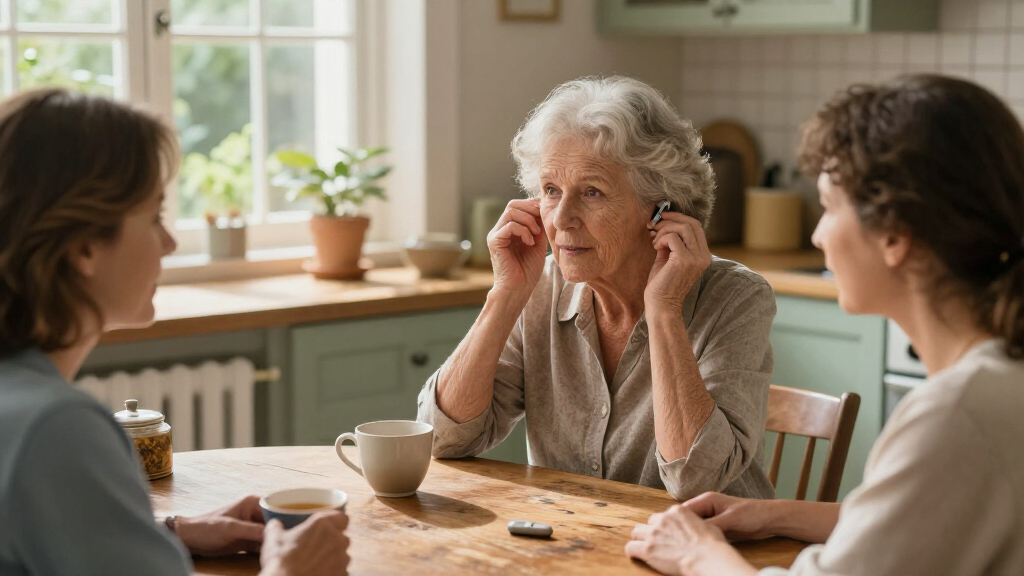
A 2025 study of 567 older adults in rural South Africa found an association between sensory impairment and dementia risk; geriatrician Brent Tipping says hearing loss more than doubles the odds. The research does not establish cause and effect or show that treating hearing loss prevents dementia, but it supports attention to sensory health as part of broader care.
A 2025 study of 567 older adults in rural South Africa linked hearing and vision impairment with dementia risk, prompting geriatrician Dr. Brent Tipping to argue that sensory health deserves attention in efforts to support brain health. The findings do not show that hearing loss causes dementia or that treating it prevents the condition, but they add to the case for identifying and addressing sensory difficulties as people age.
The research examined hearing, vision and dementia among older adults in Agincourt, Mpumalanga. Participants were part of HAALSI, the Health and Aging in Africa: A Longitudinal Study of an INDEPTH Community in South Africa. The findings were published in the journal Alzheimer’s & Dementia in 2025, in a paper by Muqi Guo and colleagues.
According to Tipping, a geriatrician at Wits Donald Gordon Medical Center, hearing loss more than doubles the odds of dementia; visual impairment, including problems with near and far vision, was also associated with elevated risk. These are reported associations, not proof that sensory loss is a direct cause. The study also does not establish that hearing aids, vision correction or other interventions reduce dementia incidence.
Medical Xpress’s Oct. 6 report places the findings within a broader account of dementia care and prevention. Tipping says clinicians consider a range of factors that can affect cognition and daily functioning, including chronic health conditions, sleep, medication, activity and alcohol use. Persistent or worsening memory changes warrant assessment, since forgetfulness can have multiple explanations.
Why Sensory Health Belongs in Dementia Care
Hearing loss can affect communication and participation in everyday life, while visual impairment can make ordinary tasks more difficult. The study does not establish whether either impairment contributes to dementia, reflects other health changes, or operates alongside other risk factors. Still, identifying sensory problems gives patients and clinicians an issue to discuss within a wider review of health and functioning.
The public-health stakes are considerable. The source report cites a Global Burden of Disease projection that the number of people living with dementia could rise from about 57 million in 2019 to 153 million by 2050, driven in part by population growth and aging. Those figures are projections, not a count of future cases that can be prevented. The Lancet Commission estimate cited in the report says addressing 14 modifiable risk factors could prevent or delay around 45% of dementia cases worldwide; it does not attribute that estimate to hearing treatment alone.
Earlier attention also matters for families. As dementia progresses, relatives may take on tasks such as managing medication, preparing meals and driving. Tipping says care should support independence and comfort, while recognizing the growing demands on caregivers. Sensory assessment may be one part of a broader approach, not a stand-alone dementia-prevention measure.
Products Worth Considering

Bose Lifestyle Ultra Wireless Home Speaker

Philips Hue Bridge Pro Smart Lighting Hub

Dyson Car+Boat Cordless Handheld Vacuum
As an affiliate, we earn on qualifying purchases.
Study Findings and Wider Risk Factors
The study drew participants from HAALSI, a longitudinal research project in the Agincourt area of Mpumalanga. Its authors examined the relationship between sensory impairment and dementia risk among 567 older adults. The Medical Xpress report does not provide further methodological detail, such as the specific measures used or the size of each association beyond Tipping’s statement about hearing loss.
Dementia risk is not limited to sensory health. The report describes attention to blood pressure, cholesterol, diabetes, weight, physical activity and excessive drinking, as well as sleep and medication review when patients have confusion or difficulty functioning during the day. It also cites evidence that educational opportunity from early childhood relates to later cognitive decline, an issue with particular relevance in South Africa, where access to education is unequal.
Tipping says cognitive engagement need not mean doing puzzles: learning a skill or pursuing an absorbing interest can also be worthwhile. The report presents this as part of lifelong brain health, not as a proven way to prevent dementia in an individual.
“But learning is lifelong. You don’t need to do crosswords or sudoku if you don’t enjoy them. Learning a new skill or pursuing any absorbing interest is good enough.”
— Dr. Brent Tipping
What the Study Cannot Establish
The reported findings show an association, not a causal pathway. It remains unclear whether hearing or vision impairment contributes to dementia risk, whether other factors explain some or all of the relationship, or whether correcting sensory loss changes that risk. The source report does not provide enough detail to assess the study’s methods or quantify the visual impairment findings.
It is also not clear from the report how broadly the results apply beyond older adults in the Agincourt study population. The evidence should not be read as a prediction that an individual with hearing loss will develop dementia, or as proof that hearing interventions prevent it. More research is needed to answer those questions.
What Further Research and Care Need
The study’s findings support continued research into how sensory impairment and dementia risk are related, including whether interventions affect cognitive outcomes. The supplied report does not announce a follow-up trial or a new clinical guideline, so no specific next study or policy change is confirmed.
For now, clinicians can consider hearing and vision alongside other health and functional concerns when assessing older adults. The source describes a shortage of geriatric specialists in South Africa and says only two funded training positions exist nationally, according to Tipping. Expanding training and research relevant to local communities are proposals raised by Tipping and Dr. India Butler in an earlier opinion article, not changes reported as already approved.
Key Questions
Does hearing loss cause dementia?
The study reported an association between hearing impairment and dementia risk. It does not establish that hearing loss causes dementia.
Does treating hearing loss prevent dementia?
The supplied report does not show that hearing aids or other hearing interventions prevent dementia. Whether treating sensory loss changes dementia risk remains uncertain.
Who took part in the study?
Researchers examined 567 older adults in Agincourt, Mpumalanga, drawn from the HAALSI study in South Africa.
What other factors does the report identify?
The report discusses blood pressure, cholesterol, diabetes, weight, physical activity, excessive drinking, sleep, medication and educational opportunity as relevant to brain health or cognitive assessment. It does not say that any one measure guarantees dementia prevention.
Source: rss