
TL;DR

Turn quiet afternoons into listening time
- Thousands of audiobooks, podcasts and originals
- Listen on your phone, tablet or Echo — also offline
- Cancel anytime
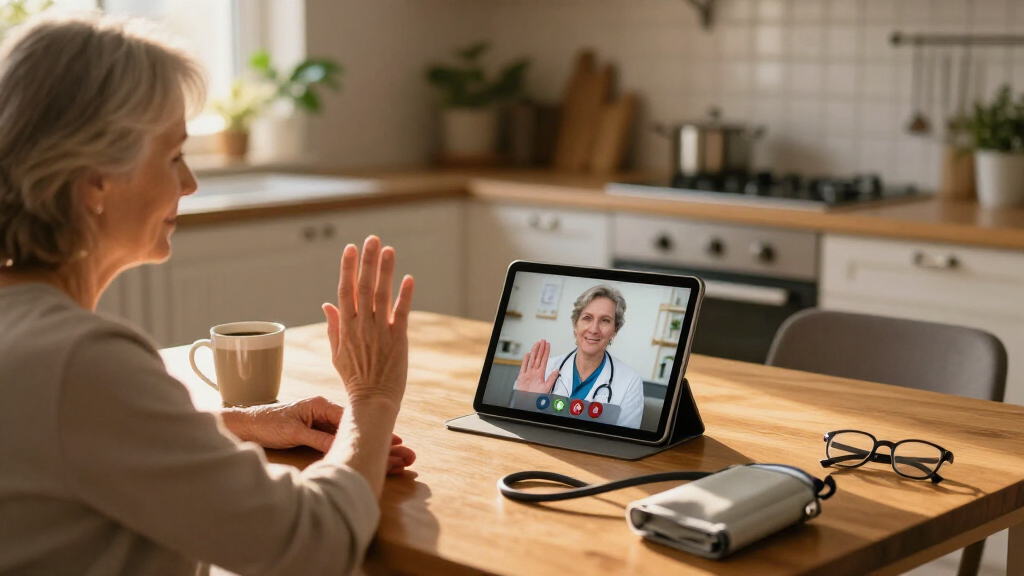
CMS is asking whether artificial intelligence should play a larger role in Medicare’s annual wellness visit, citing mixed evidence on the visit’s outcomes and low usage. A final physician payment rule is expected around Nov. 1; the AAFP supports AI as a support tool but opposes third parties independently providing preventive care.
The Centers for Medicare and Medicaid Services (CMS) is formally asking whether artificial intelligence should take on a larger role in the Medicare annual wellness visit (AWV), arguing in its proposed physician payment rule that evidence on the visit’s impact is mixed and that only about half of eligible seniors use it. A final version of the payment regulation is expected around Nov. 1, making the question an active policy decision rather than a hypothetical.
In the proposed rule issued this past summer, CMS wrote that although the importance of prevention is widely agreed upon, “evidence regarding the impact of the AWV on outcomes is mixed.” The agency noted that some studies found AWV receipt is associated with increased use of preventive services but may not sufficiently close gaps in preventive care, while other studies found no substantive association between AWV adoption and improvements in evidence-based screening, acute care utilization, or spending — and in some cases potentially increased downstream low-value services.
Because of those mixed findings, CMS said it wants to know whether clinical AI tools could change the AWV from a single, point-in-time assessment into “a more continuous, data-driven, and beneficiary-specific preventive care function.” The agency specifically cited possible AI uses including pre-visit collection of beneficiary-reported information for the health risk assessment, identifying beneficiaries who may warrant additional assessment, and generating suggested follow-up steps for clinicians to review.
CMS emphasized that under current policy the AWV must be performed by a physician or other health professional, or a team supervised by a Medicare-enrolled physician. The agency said it is interested in what barriers, if any, those requirements create for innovative AWV delivery models in which an AI technology company develops or operates clinical AI tools and affiliates with a Medicare-enrolled provider. CMS Deputy Administrator and Chief Clinical AI Officer Stephanie Carlton echoed the proposal at the Health Datapalooza conference in Washington, D.C., saying low usage and weak outcome evidence represent “a huge opportunity for AI.”
Stakes for Seniors and Primary Care
The AWV is a core preventive benefit for the more than 60 million Americans on Medicare, and Carlton said only about half of seniors use it. If CMS restructures the visit around AI tools, it could change who delivers preventive care, how health risk assessments are collected, and how follow-up is coordinated — with implications for access, care continuity, and physician workload.
The proposal also signals CMS’s broader interest in embedding AI into federally financed care delivery. For technology companies, the agency’s openness to models in which an AI vendor affiliates with a Medicare-enrolled provider could open a new market. For physicians, it raises the question of whether clinical accountability stays with the patient’s established care team or shifts partly to vendors.
Products Worth Considering

Blueair Blue Pure 511i Max Smart Air Purifier

Levoit Core 400S-P Smart Air Purifier for Large Rooms

iRobot Roomba Max 715 Pet Robot Vacuum with AutoEmpty Dock
As an affiliate, we earn on qualifying purchases.
How the Wellness Visit Works Now
The annual wellness visit, a benefit created under the Affordable Care Act, is designed as a yearly preventive planning appointment covering a health risk assessment, screening schedule review, and personalized prevention plan. Under existing policy, CMS requires it to be furnished by a physician or other health professional, or by a team directly supervised by a Medicare-enrolled physician.
The AI question is embedded in CMS’s annual physician fee schedule proposed rule, the yearly regulation that sets Medicare payment rates and policy for clinician services. The comment period drew responses including a formal letter from the American Academy of Family Physicians (AAFP), whose members administer many AWVs.
“Only about half the seniors use [the AWV], and we don’t have good evidence that it’s actually resulting in better outcomes. That’s a huge opportunity for AI.”
— Stephanie Carlton, CMS deputy administrator and chief clinical AI officer
Open Questions Before the Final Rule
CMS has not proposed a specific AI-driven AWV model; it has only sought input on whether such tools could transform the visit and what barriers current supervision requirements create. Whether the final rule will include concrete policy changes, further requests for information, or no action at all is not yet known.
It also remains unclear how oversight, liability, and data privacy would work if AI companies affiliate with Medicare providers to furnish parts of the visit, and whether AI-assisted AWVs would improve the weak outcome evidence that prompted the question in the first place. CMS has not said which AI tools, if any, are under consideration.
Watching the November Final Rule
CMS is expected to release the final physician payment regulation around Nov. 1, which will show whether the agency acts on the AI question or defers it. Stakeholders including the AAFP will be watching for whether any final language addresses vendor-affiliated delivery models or leaves current supervision requirements intact.
If CMS proceeds, further developments could include pilot models, requests for applications from AI vendors, or revised coverage and payment guidance for technology-enabled AWVs. Physician groups have signaled they will push to ensure any approach strengthens rather than bypasses the patient’s existing primary care team.
Key Questions
Is Medicare replacing the annual wellness visit with AI?
No. CMS has only asked for input on whether AI tools could make the AWV more continuous and data-driven. The final rule, expected around Nov. 1, will determine whether any policy changes follow.
Who can perform a Medicare annual wellness visit right now?
Under current policy, the AWV must be performed by a physician or other health professional, or by a team of medical professionals directly supervised by a physician enrolled as a Medicare provider, according to CMS.
What AI uses is CMS considering for the wellness visit?
CMS cited pre-visit collection of beneficiary-reported information for the health risk assessment, identifying beneficiaries who may need additional assessment, and generating suggested follow-up steps for clinicians to review.
What does the American Academy of Family Physicians think?
The AAFP supports AI tools that identify eligible patients, summarize information, flag care gaps, and support documentation — but opposes models in which AI companies or other third parties independently furnish significant portions of preventive care outside a patient’s primary care relationship.
Why does CMS think the AWV needs to change?
CMS says evidence on the AWV’s impact on outcomes is mixed and that only about half of eligible seniors use the visit, according to CMS official Stephanie Carlton.
Source: rss