
TL;DR
Listen free for 30 days with Audible
Thousands of audiobooks and originals — cancel anytime.
Start your free trialAs an affiliate, we earn on qualifying purchases.
Choosing a digital thermometer involves balancing accuracy, speed, and ease of use. Modern options like infrared and smart thermometers offer convenience, but knowing what fits your needs ensures safe, reliable readings for your family.
Ever tried taking a child’s temperature with a traditional thermometer and felt like you needed a degree in engineering? Digital thermometers have simplified everything — but with so many options, how do you pick the right one for your family? Whether you’re monitoring a child’s fever or keeping track of your own health, choosing the right thermometer makes all the difference.
This guide walks you through the most important factors, recent tech advancements, and practical tips. By the end, you’ll know exactly what to look for — so your next temperature check is fast, accurate, and stress-free.
Choose a thermometer suited to your household’s age range and comfort preferences, like non-contact for quick checks or rectal for infants.
Recent innovations, especially infrared and smart models, boost convenience and accuracy but require proper technique and calibration.
Proper cleaning and storage extend your device’s lifespan and keep readings trustworthy.
Always consider features like speed, ease of use, and safety when selecting a thermometer for home use.
Reading reviews and following instructions ensures you get the most reliable, stress-free results.
How to Pick the Perfect Thermometer for Your Household
Choosing a digital thermometer for home use starts with understanding your specific needs. Do you need something fast for kids? Or a precise device for monitoring health conditions? Knowing this helps narrow your options.
For example, if you’re often measuring a sleeping infant, a non-contact forehead thermometer can give quick readings without waking them. If precision matters—say, tracking illness—then a rectal thermometer might be best.
Here’s a quick checklist to guide your choice:
- Type suited for your age group and comfort level
- Accuracy and error margins
- Speed of readings
- Ease of use, especially in low-light or stressful moments
- Safety features like waterproofing and disposable tips
- Extra features such as memory or connectivity
Remember, each feature involves tradeoffs. For instance, non-contact thermometers are quick and hygienic but may require careful technique to ensure accuracy. Invasive methods like rectal thermometers are highly accurate but might be uncomfortable or intimidating, especially for children. Your choice should balance convenience, comfort, and precision based on your household’s priorities.

Digital Thermometer for Adults and Kids, No Touch Forehead Thermometer for Baby, 2 in 1 Body Surface Mode Infrared Thermometer with Fever Alarm and Instant Accuracy Readings
- Non-contact Measurement: Measures without touching, 2-3.15 inch distance
- Fast and Accurate: Reads in 1 second with 0.2℃ precision
- Intelligent Display: LCD backlight with color alerts and warnings
As an affiliate, we earn on qualifying purchases.
As an affiliate, we earn on qualifying purchases.
Recent Tech Advances Make Home Temperature Checks Easier
Technology has transformed home thermometry in just a few years. Non-contact infrared thermometers have surged in popularity, especially during the pandemic, because you can measure temperature without touching the skin. They’re quick — often under a second — and reduce cross-contamination risks, which is crucial for infectious disease control. However, their accuracy heavily depends on proper technique, like maintaining the correct distance and calibration, highlighting that convenience shouldn’t come at the expense of reliability.
Smart thermometers that connect to your phone bring new convenience. They allow you to track temperature trends over days or weeks, providing valuable insights into your health patterns. Sharing data directly with healthcare providers can streamline diagnosis and treatment. These devices also incorporate better sensors, boosting accuracy to within ±0.2°F, according to recent tests. Nonetheless, users should be aware that more features mean more complexity — choosing a device with an intuitive interface is essential to avoid frustration.
Plus, some models now measure at multiple sites — oral, ear, forehead — with a single device, making them versatile for all ages and situations. This versatility can save money and space, but it also means understanding the limitations and proper usage for each site to ensure accurate readings. Staying updated on these innovations helps you choose a thermometer that’s both reliable and future-proof, capable of adapting to your evolving needs.
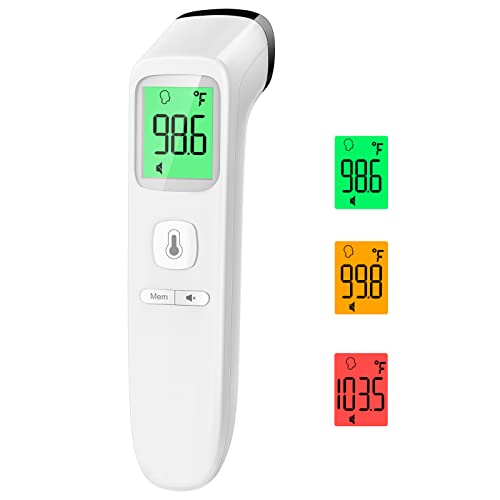
No-Touch Thermometer for Adults and Kids, Accurate Digital Baby Thermometer
- Reliable & Accurate: Clinically tested for accuracy
- Fast & Easy Readings: Point and press for quick results
- Infrared Technology: Displays in Celsius or Fahrenheit
As an affiliate, we earn on qualifying purchases.
As an affiliate, we earn on qualifying purchases.
Comparison Table: Which Type of Digital Thermometer Fits Your Needs?
| Type | Best For | Pros | Cons |
|---|---|---|---|
| Digital Oral | Adults, older children | Easy to read, widely available | Can be uncomfortable for some; requires mouth placement |
| Rectal | Infants, young children | Most accurate for infants; quick readings | Invasive, needs careful handling; may cause discomfort or anxiety |
| Axillary (underarm) | Quick checks, less invasive | Safe, simple, generally affordable | Less accurate; affected by sweat, positioning, and environmental factors, which can lead to misleading readings |
| Forehead (temporal artery) | All ages, quick checks | Non-contact, fast, hygienic, suitable for restless children | Potentially less accurate if not used properly; requires proper technique and calibration |
| Ear (tympanic) | Fast, reliable readings in children and adults | Quick, fairly accurate when used correctly | Requires correct positioning; probe can be uncomfortable; sensitive to ear canal shape and cleanliness |
Understanding these nuances helps you choose a thermometer that aligns with your specific needs and comfort levels. For example, if you prioritize speed and hygiene, a non-contact forehead thermometer might be ideal, but if you need the most precise readings for medical concerns, a rectal thermometer is often preferred. Recognizing the tradeoffs ensures you select a device that offers reliable results without unnecessary discomfort or complexity.
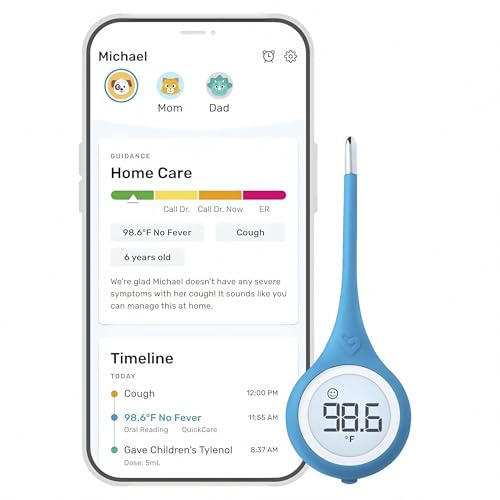
Kinsa QuickCare Smart Digital Thermometer, FDA Cleared
- App-Connected Fever Tracking: Monitor symptoms and recovery via app
- Guided Care Recommendations: Personalized advice based on age and symptoms
- Multi-Use Design: Suitable for oral, rectal, and underarm use
As an affiliate, we earn on qualifying purchases.
As an affiliate, we earn on qualifying purchases.
How to Use a Digital Thermometer for Accurate Results
Using your thermometer correctly is key to trustworthy readings. Here’s a simple step-by-step:
- Wash hands and clean the probe with alcohol or soap and water.
- If using a contact thermometer, position it correctly—under the tongue, in the ear, or on the forehead—as per instructions.
- Hold still until the device signals that the reading is complete.
- Read the digital display. Some models save previous readings, so check if you need to clear or review past data.
- Always clean the probe after each use to prevent cross-contamination.
For non-contact devices, aim the sensor at the center of the forehead, keeping the device steady for an accurate scan. Ensuring proper technique is vital because even slight deviations in positioning or timing can lead to inaccurate readings, especially with infrared or ear thermometers. Familiarizing yourself with the correct procedures for each device type minimizes errors and ensures consistent, reliable results every time.

Frida Baby Digital Rectal Thermometer for Babies, Newborns & Infants
- Fast Temperature Readings: Provides accurate results in 10 seconds
- Memory Recall: Stores up to 10 previous readings
- Comfortable, Flexible Tip: Ensures gentle and accurate measurements
As an affiliate, we earn on qualifying purchases.
As an affiliate, we earn on qualifying purchases.
Safety Tips to Keep Your Thermometer in Top Shape
Keeping your thermometer clean and functioning correctly is simple but crucial. Always follow these tips:
- Use disposable covers or clean probes after each use to prevent cross-contamination, which can lead to false readings or infections.
- Store the device in a dry, cool place away from direct sunlight to prevent damage to sensitive sensors and batteries.
- Replace batteries as soon as they run out—don’t wait for the device to stop working—since a weak power source can cause inaccurate readings.
- Calibrate if the device offers that option, or compare readings with a known accurate device periodically to catch drift or errors.
- Replace your thermometer if it’s physically damaged or consistently gives inconsistent readings, as continued use of faulty equipment can jeopardize health assessments.
Proper maintenance not only extends your device’s lifespan but also ensures that each reading remains trustworthy, avoiding unnecessary worry or misdiagnosis.
Final Tips for Choosing the Right Thermometer Today
Select a thermometer that matches your lifestyle and needs. If you want quick, non-invasive readings, a forehead or ear thermometer works well. For infants, choose one with soft probes and easy handling, considering models that minimize discomfort and are easy to operate in stressful situations. Consider smart features if you like tracking trends or sharing data with a doctor, but prioritize ease of use and reliability over bells and whistles.
Always read reviews and follow manufacturer instructions carefully. A reliable thermometer is a small investment in peace of mind and health. Remember, the most important factor is choosing a device that you will use consistently and correctly, as accuracy depends heavily on proper technique.
And remember — the best thermometer is the one you’ll actually use correctly and regularly.
Frequently Asked Questions
Which type of thermometer is best for infants?
Rectal thermometers are generally most accurate for infants because they provide core body temperature readings. However, non-contact forehead thermometers are also safe, quick, and less invasive, making them popular choices for busy or sensitive little ones.
Are non-contact thermometers accurate enough for home use?
When used properly, infrared forehead thermometers can be accurate within ±0.2°F, according to recent testing. Proper technique, such as maintaining the right distance and calibration, is essential to ensure reliable readings.
How often should I replace or calibrate my thermometer?
Replace your thermometer if it shows signs of damage or gives inconsistent results. Calibration isn’t usually necessary for digital devices but check manufacturer guidance. Regularly compare with a trusted device if you’re monitoring health closely.
Can I use the same thermometer for everyone in my family?
Yes, as long as it’s suitable for all ages and you practice good hygiene. Use disposable covers or clean probes between users to prevent cross-contamination, especially if multiple family members are sharing.
What features should I prioritize for home use?
Speed, ease of operation, accuracy, and safety features like waterproofing or disposable tips are most important. Consider if extra features like memory recall or Bluetooth syncing fit your needs.
Conclusion
Picking the right digital thermometer doesn’t have to be complicated. Focus on your family’s specific needs, stay aware of the latest tech, and use your device correctly. That way, those quick temperature checks become simple, reliable tools in your health toolkit.
Think of your thermometer as a small but mighty health partner — always ready, always accurate, always there when you need peace of mind.
Back to school Picks
back to school
As an affiliate, we earn on qualifying purchases.