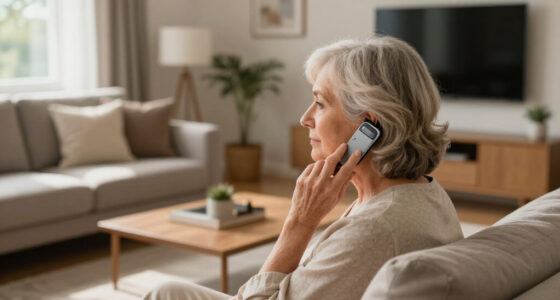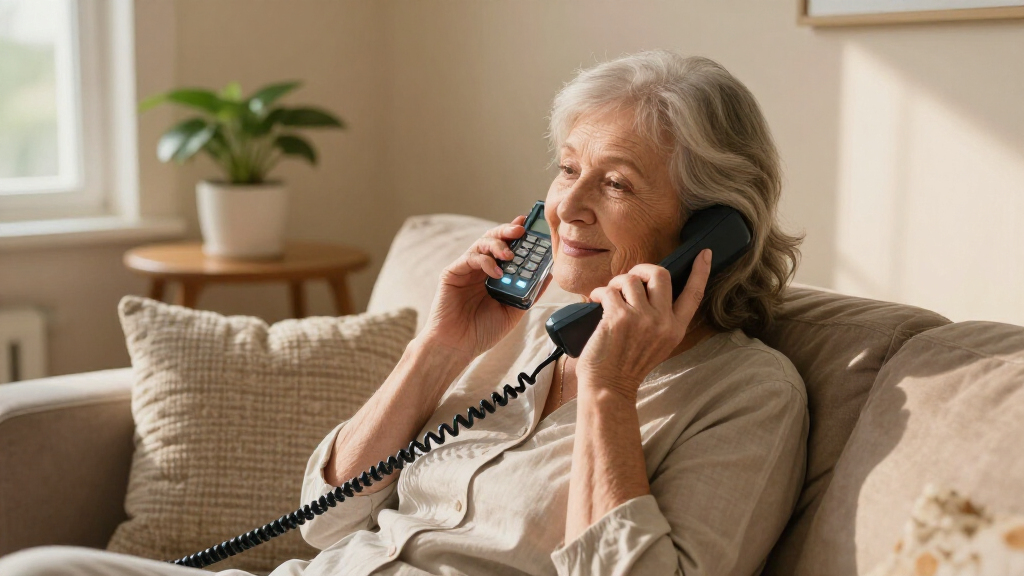
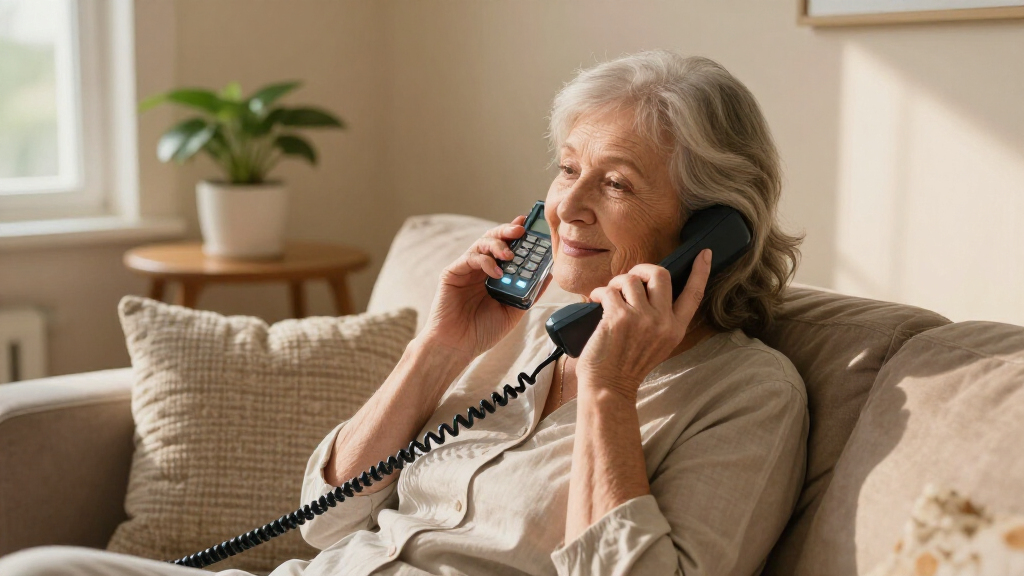
Amplified landline phones for seniors solve three problems at once: quiet conversations, fiddly buttons, and missed calls. After comparing 13 models, the Clarity XLC3.4+ stands out as the best overall pick because it combines a genuine 50+ dB amplification boost with tone control and hearing aid compatibility, all in a cordless handset that still feels simple. Close behind, the Panasonic KX-TGM420W offers a more polished everyday experience with its digital answering machine and slow-talk feature, while the budget-friendly HePesTer P-46 delivers impressive loudness in a corded design that never needs charging. The main tradeoff you’ll face in this category is corded versus cordless simplicity, and how much amplification you actually need — 40 dB is plenty for mild hearing loss, while severe loss demands the louder, more specialized units. Read on for the full breakdown of all 13 phones.

Turn quiet afternoons into listening time
- Thousands of audiobooks, podcasts and originals
- Listen on your phone, tablet or Echo — also offline
- Cancel anytime
Complete the kit


Key Takeaways
- True amplification varied widely: specialized models like the Clarity XLC3.4+ and Clarity E814CC deliver 40-50+ dB boosts, while mainstream brands like standard VTech and AT&T units only add 10-20 dB of volume — a real gap for severe hearing loss.
- Corded models dominated for dementia and memory support: the One-Touch Photo Dial phone and the 100dB Large Button dementia-focused model offered picture-based dialing that no cordless handset in this lineup matched.
- Answering machines came standard on mid-range picks (Panasonic KX-TGM420W, both VTech amplified models, Clarity E814CC), but were absent on the simplest corded phones — a hidden cost if call screening matters.
- Extra loud ringers (90-100dB) appeared only on the purpose-built senior models, not on general-purpose cordless phones from the same brands, so missed calls remain a risk if you buy a standard phone.
- The biggest value plays were the HePesTer P-46 for pure loudness on a budget and the VTech SN5147 for combining a corded base with a cordless handset at a mid-tier cost.


More Details on Our Top Picks
Clarity XLC3.4+ DECT 6.0 Landline Amplified Cordless Phone
This option stands out for balancing serious amplification with everyday usability, which is why it earns the top spot. Unlike the Panasonic KX-TGM420W, which leans on feature depth, the Clarity keeps things simple: big buttons, talking caller ID, and DECT 6.0 reception that stays clear even in homes with lots of wireless interference. The dual power battery means calls survive a power outage — something corded picks like the photo-dial phones can’t claim, since their advantage is the opposite tradeoff. Compared with the corded models in this lineup, the freedom to walk around with the handset matters for seniors who don’t sit still. The tradeoff is that it skips modern conveniences like an answering machine or call blocking, and the handset runs bulkier than sleeker mainstream phones.
Pros:- Amplified sound tuned for clarity, not just loudness
- Talking caller ID announces who’s calling before you answer
- Dual power battery keeps the phone alive during outages
- DECT 6.0 avoids interference from Wi-Fi and microwaves
Cons:- No answering machine or voicemail integration
- Bulky handset compared with standard cordless phones
Best for: Seniors with moderate hearing loss who want a portable, no-fuss amplified phone that works during outages
Not ideal for: Buyers who want an answering machine, call blocking, or smartphone-style features — this stays deliberately basic
- Technology:DECT 6.0
- Amplification:Amplified sound with extra-loud ringer
- Caller ID:Talking caller ID
- Buttons:Large, high-visibility buttons
- Power:Dual power battery backup
- Battery Life:30% more talk time
Our verdict“The safest all-around pick for seniors who need loud, clear calls and simple controls without extra complexity.”
Corded Landline Phone for Seniors with One-Touch Photo Dial and Amplified Sound
Where most phones in this roundup compete on volume, this one competes on cognitive simplicity. Its nine photo memory keys let a senior call family by pressing a familiar face — no numbers to remember, no menus to navigate. That focus makes it a better fit for dementia care than the Amplified 100dB Large Button Phone, which shares photo dialing but adds a digital answering system many cognitively impaired users will never use. The ringtone tops 110 dB with visual alerts, beating the Panasonic’s 100 dB ringer. Its smartest trick is needing no batteries or power outlet at all — it draws everything from the phone line, so it never goes dead. The tradeoff is stark: no caller ID, no voicemail, nothing beyond dialing and talking.
Pros:- Nine photo keys make dialing possible without remembering numbers
- 110 dB+ ringer with visual call alerts
- Works with zero batteries or power — immune to outages
- Hands-free speakerphone aids limited mobility
Cons:- No caller ID, voicemail, or message recording at all
- Requires a traditional RJ11 landline; won’t work with internet-based setups
Best for: Caregivers supporting seniors with dementia or memory loss who only need simple, reliable calls to familiar people
Not ideal for: Anyone who wants caller ID, voicemail, or an answering machine — this phone deliberately omits all of them
- Photo Memory Keys:9 one-touch keys
- Ringtone Volume:Over 110 dB
- Earpiece Volume:Exceeds 90 dB
- Power Supply:None required (phone-line powered)
- Connectivity:RJ11 traditional landline
- Alerts:Visual call alerts
Our verdict“The most dementia-friendly pick here if basic voice calling is genuinely all that’s needed.”
Amplified 100dB Landline Phone for Seniors with Photo Speed Dial and Volume Control
This model makes sense for buyers who want 100 dB amplification and hearing aid compatibility without paying for the portability of the Clarity XLC3.4+ or the expandability of the Panasonic KX-TGM420W. It covers the amplification basics well: a flashing LED alerts users to incoming calls, large buttons reduce dialing errors, and photo speed dial keeps frequent contacts one press away. Compared with the similarly styled Amplified 100dB Large Button Phone for Dementia, this one adds a digital answering system — useful for seniors who still manage their own messages. The compromises are real, though. Volume tops out around 100 dB, so it suits moderate hearing loss, not profound loss, and programming the photo keys reportedly takes patience and repeated attempts.
Pros:- 100 dB amplification with hearing aid compatibility
- Flashing LED visual call alerts
- Photo speed dial plus large buttons for easy operation
- Digital answering system included
Cons:- Not powerful enough for profound hearing loss
- Photo memory programming can take multiple attempts
- Single-line operation only
Best for: Budget-conscious seniors with mild to moderate hearing loss who want a corded phone with answering built in
Not ideal for: Seniors with severe or profound hearing loss — 100 dB isn’t enough amplification for them
- Amplification:Up to 100 dB
- Hearing Aid Compatible:Yes
- Answering System:Digital
- Power Source:Corded electric
- Compatibility:PSTN landline
- Dimensions:7 x 3.4 x 7.9 inches
- Warranty:1-year support service
Our verdict“A sensible low-cost entry point into amplified phones, provided hearing loss stays on the milder side.”
Amplified 100dB Large Button Landline Phone for Seniors with Dementia
This phone’s defining strength is reliability when everything else fails. It runs entirely without batteries, so during a power outage — exactly when falls and emergencies happen — it keeps dialing while battery-dependent cordless systems like the Panasonic KX-TGM420W eventually run flat. Its high-contrast white body and large buttons are easier to see than the black Amplified 100dB Photo Speed Dial Phone, a small but meaningful difference for low-vision users. Photo memory dial and adjustable volume round out a package built around one scenario: a senior who needs to reach help or family with minimal steps. The price of that focus is a bare feature set — no caller ID, no voicemail, no call recording — and the same fiddly memory programming that plagues its sibling model.
Pros:- Operates with no batteries — fully functional during power outages
- High-contrast white design with large buttons for low vision
- Photo memory dial for quick, familiar calling
- Adjustable volume and loud ringer with hearing aid support
Cons:- No caller ID, voicemail, or call recording
- Memory key programming is tricky and may need repeated attempts
Best for: Seniors with low vision or early dementia whose priority is a phone that always works, even in an outage
Not ideal for: Tech-comfortable users who expect caller ID, voicemail, or any modern phone features
- Amplification:Up to 100 dB
- Power Source:Corded electric (no batteries)
- Hearing Aid Compatible:Yes
- Dialer:Large-button keypad
- Answering System:Digital
- Lines:Single-line
- Color:White
Our verdict“Choose this when fail-safe emergency communication matters more than any modern convenience.”
Panasonic KX-TGM420W + 1 KX-TGMA44W Amplified Cordless Phone with Digital Answering Machine and Voice Volume Booster up to 40 dB
This is the pick for seniors who want amplification plus everything else: a digital answering machine, 250-number call blocking, six voice tone levels, and a slow-talk feature that replays voicemail at reduced speed — genuinely useful when fast talkers blur together. Compared with the Clarity XLC3.4+, the Panasonic trades some simplicity for depth, expanding to six handsets so a multi-room household never races for the phone. Battery backup, 13-hour talk time, and a 100 dB ringer cover the fundamentals well. The honest tradeoff is complexity: with this many settings, an initial setup helper — usually a family member — is close to required, and the handsets and base eat more counter space than a single corded unit like the photo-dial phones.
Pros:- 40 dB volume boost with noise reduction and slow-talk playback
- Expandable to six handsets for whole-home coverage
- Built-in digital answering machine and 250-number call block
- Large backlit LCD with 13-hour talk time and battery backup
Cons:- Feature-rich menus can overwhelm users who want simplicity
- Base plus handsets take up more space than single corded units
Best for: Seniors with mild to moderate hearing loss living in larger homes who want answering, call blocking, and multi-room coverage in one system
Not ideal for: Seniors who get overwhelmed by menus and settings — the feature depth works against simple, hands-off use
- Amplified Caller Volume:Up to 40 dB
- Ringer Volume:Up to 100 dB
- Voice Tone Settings:6 levels
- Expandable Handsets:Up to 6
- Talk Time:13 hours
- Standby Time:9 days
- Call Block Capacity:250 numbers
- Answering Machine:17 minutes of voice messaging
- Languages:English and Spanish
Our verdict“The most complete amplified system here, ideal when a family can help with initial setup.”
VTech SN5147 Amplified Corded and Cordless Senior Phone
This option stands out for pairing a corded base that keeps working during power outages with a cordless handset for moving around the house — a combination most seniors’ families specifically want. Compared with the HePesTer P-46, which is desk- or wall-only, the SN5147 gives freedom without giving up the security of a hardwired line. The 90dB ringer and flashing visual alerts make missed calls far less likely, and spoken caller ID means a senior doesn’t need to squint at the screen. Four photo speed-dial slots are fewer than dedicated photo-dial models in this roundup offer, so anyone who relies heavily on picture-based calling may want more. The tradeoff for all this capability is a bulkier footprint and a feature set tuned almost entirely to seniors rather than general household use.
Pros:- Corded base with backup power keeps calls working during outages
- 90dB ringer plus flashing visual alerts so calls are never missed
- Spoken caller ID removes the need to read a small screen
- Blocks up to 1,000 numbers to cut down on robocalls
Cons:- Bulky base takes up considerable table space
- Only 4 photo speed-dial slots versus more on photo-focused models
- No touchscreen or smart features for tech-comfortable users
Best for: Seniors living alone whose families want power-outage reliability plus cordless convenience in one system
Not ideal for: Households wanting one phone for everyone — the senior-focused design and bulky base feel limiting for general use
- Type:Amplified corded/cordless senior phone
- Ringer Volume:90dB extra-loud
- Audio Assist:50dB
- Caller ID:Spoken and visual
- Call Blocking:Up to 1,000 numbers
- Photo Speed Dial:4 slots
- Answering Machine:22-minute digital
- Expandable Handsets:Up to 4
Our verdict“Buy this if you want the safety of a corded base and the flexibility of cordless in a single senior-ready package.”
HePesTer P-46 Amplified Corded Phone for Seniors with Large Buttons and Loud Speakerphone
The P-46 makes the list as the simplest, most affordable way to get true one-inch buttons — larger and easier to target than the keypads on either VTech model here. Its 13 total speed-dial memories (3 one-touch, 10 two-touch) actually beat the VTech SN5147’s four photo slots in raw capacity, which matters for seniors with a long list of family and caregivers. Wall-mounting is a real plus for wheelchair users or anyone who can’t reach a desk phone. The tradeoffs are honest ones: 40dB amplification is gentler than the SN5147’s 50dB Audio Assist, there’s no cordless handset or visual ringer alerts, and the microcassette-style answering system feels dated next to digital units like the AT&T BL102-2.
Pros:- One-inch square buttons are among the largest available
- 13 speed-dial memories for caregivers and family
- Wall-mountable for wheelchair-accessible placement
- Adjustable amplified volume up to 40dB
Cons:- No cordless handset — calls only where the phone is
- Basic answering system lags behind digital rivals
- Bulky footprint for small nightstands or kitchens
Best for: Low-vision or low-mobility seniors on a budget who need maximum button size and simple desk or wall placement
Not ideal for: Anyone wanting cordless roaming, strong amplification beyond 40dB, or a modern digital answering system
- Button Size:1.0 x 1.0 inches
- Amplified Volume:Up to 40dB
- Speed Dial Memory:3 one-touch + 10 two-touch
- Power Source:Corded electric
- Answering System:Microcassette, 22 minutes
- Mounting:Desk or wall
- Dimensions:7.87 x 7.87 x 2.76 inches
Our verdict“This is the right pick when button size and simplicity matter more than range or recording capacity.”
VTech Cordless Home Phone with Answering Machine, Full-Duplex Speakerphone, Large Display, Big Buttons, Caller ID
What separates this VTech from the SN5147 in the same lineup is its M4/T4 hearing aid compatibility rating — the strongest coupling performance in this batch, meaning users with hearing aids get clean sound without the whine cheaper phones produce. The full-duplex speakerphone also lets both parties talk at once naturally, which half-duplex models cut off awkwardly. Compared with the AT&T BL102-2, it falls short on robocall defense and answering capacity (14 minutes versus 22), and its 50-contact phonebook fills up fast for large families. The ECO mode and ENERGY STAR certification keep operating costs low. This pick makes the most sense for moderate hearing loss rather than severe impairment, since it lacks the SN5147’s dedicated Audio Assist boost.
Pros:- M4/T4 hearing aid compatibility for interference-free sound
- Full-duplex speakerphone allows natural two-way conversation
- Large backlit display with oversized buttons
- 5-day standby battery with ENERGY STAR efficiency
Cons:- Only 14 minutes of answering machine recording
- 50-contact and 50-caller-ID limits feel tight for big families
- No smartphone or Bluetooth connectivity
Best for: Hearing-aid wearers with moderate hearing loss who prioritize clean, hands-free conversation
Not ideal for: Seniors with severe hearing loss who need heavy amplification, or spam-call-weary users who need heavy call blocking
- Speakerphone:Full-duplex
- Answering Machine:14-minute digital
- Display:Large backlit
- Caller ID Storage:50 entries
- Phonebook:50 contacts
- Battery Life:7 hours talk / 5 days standby
- Hearing Aid Compatibility:M4/T4 rated
- Energy Efficiency:ECO mode, ENERGY STAR certified
Our verdict“Choose this one specifically for the hearing aid rating and speakerphone quality — not for maximum amplification.”
Clarity E814CC Amplified Corded/Cordless Phone with Answering Machine
Clarity built its reputation on amplification for serious hearing impairment, and the E814CC is the strongest hearing-focused system in this batch — a step up from the Panasonic KX-TGM420W crowd for users who struggle even with 40dB-class phones. The dual-keypad corded base plus cordless handset layout mirrors the VTech SN5147’s approach, but the E814CC adds multi-line operation, which makes it viable for a small business or a household juggling two lines. Battery performance is a standout: 10 hours of talk time and 7 days of standby beat every cordless model compared here. The downsides are real — a 3-pound footprint that eats desk space, AAA batteries required for some functions, and an 18-minute recording capacity that trails the AT&T BL102-2’s 22 minutes.
Pros:- Serious amplification tuned for severe hearing loss
- Corded base plus cordless handset with dual keypads
- Multi-line operation for busy households or small offices
- 10-hour talk time and 7-day standby lead this lineup
Cons:- Largest and heaviest phone in the batch
- Requires 2 AAA batteries for backup functions
- 18-minute recording capacity trails rivals
Best for: Seniors with significant hearing loss, and small offices or two-line households needing amplified clarity
Not ideal for: Apartment dwellers or cramped nightstands — the 3-pound base is the largest in this group
- Type:Amplified corded/cordless with answering machine
- Dialer:Dual keypad
- Multiline Operation:Yes
- Answering System:Digital, 18 minutes
- Talk Time:10 hours
- Standby Time:7 days
- Power Source:Corded electric, 2 AAA backup batteries
- Dimensions:7.5 x 8.9 x 5.3 inches, 3 lbs
Our verdict“If hearing difficulty is the primary problem — not just convenience — this Clarity is the most capable amplified system of the group.”
AT&T BL102-2 DECT 6.0 Cordless Phone System with 2 Handsets, Answering Machine, Call Blocking, Caller ID Announcer, and Range
Where the Clarity E814CC prioritizes amplification, the BL102-2 prioritizes coverage and robocall defense — two handsets out of the box, expansion to five, and blocking for up to 1,000 numbers. The caller ID announcer speaks incoming names aloud, a genuine safety feature for seniors who shouldn’t rush to read a screen. Its 22-minute answering machine matches the VTech SN5147 and beats both the E814CC and the smaller VTech cordless. The tradeoff: amplification here is modest Audio Assist territory rather than true hearing-loss-grade sound, so it’s a better fit for aging-in-place convenience than diagnosed hearing impairment. Setup also involves more menu navigation than the button-simple HePesTer P-46, so a family member may need to handle installation.
Pros:- Two handsets included, expandable to five for whole-home coverage
- Blocks up to 1,000 numbers to silence robocalls
- Caller ID announcer reads names aloud
- 22-minute answering machine capacity
Cons:- Amplification falls short of dedicated hearing-loss phones
- Setup and menus are more complex than simple big-button models
- Handsets depend on batteries with no corded backup base
Best for: Seniors in multi-room or multi-story homes who are pestered by robocalls and want handsets throughout the house
Not ideal for: Seniors with significant hearing loss — amplification is lighter than Clarity or dedicated amplified models
- Handsets:2 included, expandable to 5
- Answering Machine:22-minute digital
- Call Blocking:Up to 1,000 entries
- Display:2-inch high-contrast screen
- Caller ID:Announcer (spoken)
- Extra Features:Audio Assist, intercom, ECO mode, silent ringer
- Connectivity:DECT 6.0 landline only
Our verdict“This is the pick for whole-home convenience and spam protection — just not for severe hearing loss.”
VTech Cordless Phone with DECT 6.0, Full-Duplex Speakerphone, Lighted Display, Backlit Keypad
Not every senior household needs 90-plus decibels of amplification, and this VTech model makes the most sense for buyers whose hearing is only mildly challenged. Its DECT 6.0 range of up to 1,000 feet outperforms the Panasonic Cordless Phone with Amplified Sound on paper, which matters for seniors who like to carry a handset into the garden or garage. The full-duplex speakerphone also allows natural, interruption-free conversation — something cheaper corded options like the HePesTer P-46 can’t match without shouting over each other. The tradeoff is honesty about its limits: this is hearing aid compatible, not amplified, so anyone with moderate to severe hearing loss should step up to the VTech SN5127 or Clarity XLC3.4+ instead. It also lacks an answering machine, so missed-call management falls to caller ID alone.
Pros:- DECT 6.0 technology delivers clear sound at up to 1,000 feet from the base
- Backlit display and keypad make dialing easy in dim rooms or at night
- Full-duplex speakerphone supports natural two-way conversations
- Simple wall-mount option keeps counters clear and the phone within reach
Cons:- No volume amplification beyond standard handset levels
- No answering machine or call blocking built in
- Setup and menu navigation can frustrate users who want a truly plug-and-play phone
Best for: Seniors with mild hearing concerns who want a lightweight, affordable cordless handset with strong range and a bright display
Not ideal for: Anyone with moderate to severe hearing loss — there’s no amplification boost, only hearing aid compatibility
- Technology:DECT 6.0
- Range:Up to 1,000 ft
- Display:Backlit
- Keypad:Backlit
- Speakerphone:Full-duplex
- Caller ID / Call Waiting:Yes
- Hearing Aid Compatible:Yes
- Wall Mount:Yes
Our verdict“A sensible low-cost choice for seniors who need visibility and range more than raw volume, but skip it if hearing loss is the primary concern.”
VTech Amplified Cordless Senior Phone with Answering Machine, Call Blocking, 90dB Ringer, Audio Assist, Big Buttons
This VTech SN5127 sits in the sweet spot between the no-frills VTech cordless above and pricier dedicated amplifiers like the Clarity XLC3.4+. Its 90dB ringer with a visual indicator addresses the most common missed-call problem, while Audio Assist and volume boost add temporary loudness when a call turns muffled — a feature the basic VTech B0CTQDMHBH simply doesn’t offer. The photo speed dial buttons give it a genuine advantage over the Panasonic amplified model, letting users call family with a single press instead of scrolling. Compared with the corded HePesTer P-46, the cordless freedom is a real quality-of-life gain, though the five-day standby battery demands consistent docking habits. Tradeoffs are real: single-line operation only, and the feature set — answering machine, call blocking, three-way calling — may overwhelm a user who just wants to hear the phone ring.
Pros:- 90dB ringer with visual ring indicator so calls are never missed
- Large buttons and bright display designed specifically for low vision
- Photo speed dial plus call blocking reduce frustration and robocalls
- Digital answering machine with 22 minutes of recording built into the base
Cons:- Single-line operation only, limiting small-office or dual-line homes
- 5-day standby battery requires disciplined charging habits
- Layered feature set can feel complex for users with memory difficulties
Best for: Seniors with moderate hearing and vision challenges who want one phone that amplifies, blocks spam calls, and offers photo one-touch dialing
Not ideal for: Households needing multiline support or users who find multi-feature menus confusing — a simpler photo-dial corded phone would serve them better
- Ringer Volume:90 dB
- Answering System:Digital, 22-minute recording capacity
- Batteries:1 (battery powered)
- Standby Time:5 days
- Conference Calling:3-way
- Line Operation:Single-line
- Expandable Handsets:Compatible with SN5307 and SN5107
- Special Features:Audio Assist, volume boost, photo speed dial, call blocking, big buttons
Our verdict“The most well-rounded pick for seniors who need real amplification and convenience features without paying specialist-brand prices.”
Panasonic Cordless Phone with Amplified Sound and Large Display
When hearing loss is the deciding factor, the 40dB volume boost and 100dB ringer here outmuscle both VTech models in this lineup — the SN5127’s 90dB ringer gets close, but the extra amplification headroom matters for serious impairment. Features like Slow Talk and Talking Caller ID translate specs into outcomes: voicemails play at a slower, digestible pace and the phone announces who’s calling, so users don’t need to squint at the 1.8-inch display. The expansion to six handsets beats every option here except adding separately to the SN5127, making whole-home coverage realistic. Tradeoffs exist, though: power backup is needed to keep the phone alive during outages, unlike a corded model like the Clarity E814CC, and there’s no cellular fallback. Compared with the Panasonic KX-TGM420W bundle, this one skips the answering machine, so buyers needing message storage should look there.
Pros:- 40dB amplified volume and 100dB ringer lead this lineup for loudness
- Slow Talk, Talking Caller ID, and talking keypad support users with low vision
- Expandable up to six handsets for whole-home coverage
- Noise reduction keeps boosted calls clear rather than just loud
Cons:- Lacks a built-in answering machine, unlike the Panasonic KX-TGM420W
- Requires power backup to operate during outages
- Landline only — no cellular connectivity for households dropping traditional service
Best for: Seniors with severe hearing loss who need maximum amplification, talking features, and multi-room handset coverage
Not ideal for: Buyers who need a built-in answering machine or a phone that works during power cuts without backup batteries
- Volume Boost:Up to 40 dB
- Ringer Volume:100 dB
- Display:1.8-inch backlit
- Expandability:Up to 6 handsets
- Special Features:Slow Talk, Talking Caller ID, Talking Keypad, Noise Reduction
- Intercom:Yes
- Power Backup:Yes (required for outage operation)
- Call Blocking:Yes
Our verdict“The strongest choice here for serious hearing loss, provided an answering machine isn’t a must-have.”
How We Picked
I ranked these phones around a single question: does this model actually make phone calls easier for someone with hearing loss and limited dexterity? That meant weighing real amplification levels (measured in decibel gain, not marketing language), heearing aid compatibility, ringer loudness, and button and display size. I also factored in ease of setup — a phone that requires a family member to program it every month defeats its purpose — plus practical extras like photo speed dial, answering machines, and speakerphone quality.
The ranking order reflects specialization. Purpose-built amplified phones from Clarity and dedicated senior models landed at the top because amplification is their core engineering, not a feature checkbox. Mainstream brands like Panasonic, VTech, and AT&T filled the middle and lower tiers: their build quality and feature sets are strong, but their amplification levels and senior-specific touches vary widely between models. Corded one-touch phones earned their spots on simplicity and reliability rather than raw volume.
Factors to Consider When Choosing Amplified Landline Phones For Seniors
Before settling on a specific model, it helps to understand what actually drives satisfaction with amplified phones. Many buyers fixate on the loudest decibel number and overlook setup complexity, compatibility with hearing aids, or whether the phone fits the layout of the home.Amplification Level: Match the Decibels to the Hearing Loss
Amplification gain is the single most misunderstood spec in this category. A phone advertised at “100dB ringing” tells you nothing about voice volume — that number refers to the ringer, not the handset speaker. For voice clarity, look for decibel gain: 20-30 dB suits mild hearing loss, 40 dB handles moderate to severe loss, and 50+ dB (like the Clarity XLC3.4+) serves profound loss. Buying more amplification than needed has a real downside — maximum volume can distort and become uncomfortable, so the goal is matching, not maximizing. If the user wears hearing aids, a phone with an M4/T4 rating and a speakerphone mode will often beat raw volume.Corded, Cordless, or Both: A Decision That Outranks Features
Corded phones never lose their charge, never wander off to another room, and always sit in the same spot — which matters enormously for anyone with memory issues. Cordless handsets offer freedom and can live next to a favorite chair, but they introduce charging discipline and the risk of a dead battery during an emergency call. Hybrid systems like the VTech SN5147 and Clarity E814CC split the difference by pairing a always-powered corded base with a cordless companion handset. A common mistake is buying three or four cordless handsets for one person; a single corded base plus one cordless unit usually serves seniors better than a multi-handset system spread across rooms.Tone Control Matters as Much as Volume
Most age-related hearing loss hits high frequencies first, which is why voices sound muffled rather than simply quiet. A phone with adjustable tone or frequency control lets you emphasize treble, making speech sharper without raising overall volume — often the difference between hearing words and just hearing noise. Models without tone adjustment can be turned to maximum volume and still leave conversation unintelligible. If the primary user complains that people “mumble on the phone,” tone control should be a higher priority than another 10 dB of gain. This is one of the clearest separators between purpose-built amplified phones and repurposed standard phones.Dialing Design: Photo Buttons Versus Number Pads
For seniors with dementia, early memory loss, or low vision, the dialing interface matters more than any audio spec. Photo speed dial — where a picture of a family member is pressed once to place the call — removes the need to remember or read numbers entirely. Large, well-spaced, high-contrast buttons help anyone with tremors or limited dexterity, and backlit keypads extend usable hours for evening calls. When evaluating phones, check the button spacing: some “large button” models cramp the keys together, negating the size advantage. Also confirm whether emergency numbers can be locked in so they can’t be accidentally erased.Ringer Loudness and Visual Alerts
Missed calls are a safety issue, not just an inconvenience. Standard phones ring at 60-70dB, which many hearing aid users simply cannot hear from another room. Purpose-built senior phones push ringers to 90-100dB and add flashing lights on the handset or base. Wall placement helps carry sound through a home, so check whether the model supports wall mounting if counter space is limited. A useful trick: models with adjustable ringer patterns let you pick a higher-pitched ring that cuts through hearing loss better than the default chime.Answering Machines and Call Screening
A built-in answering machine serves two purposes for seniors: slow, repeatable playback of messages (often with adjustable speed, like the Panasonic’s slow-talk feature) and a paper trail for doctors’ appointments and family updates. Not every phone in this category includes one, and the models that lack it are often the cheapest — adding a separate answering device can erase that savings. Check whether the machine announces messages through the speakerphone loudly and whether playback speed is adjustable. For seniors bothered by robocalls, call-blocking features (found on the Panasonic KX-TGM420W, AT&T BL102-2, and VTech amplified models) reduce both nuisance and confusion.Frequently Asked Questions
How much amplification does my parent actually need?
Start with their hearing situation rather than the phone’s maximum spec. For mild loss where the TV volume has crept up but conversations still work, 20-30 dB of gain — found on mainstream amplified models like the Panasonic KX-TGM420W — is usually enough. Moderate to severe loss calls for 40+ dB, which is where the Clarity XLC3.4+ and E814CC earn their premium positioning. If they already wear hearing aids, prioritize hearing aid compatibility (M4/T4 ratings) and speakerphone quality over raw volume, since blasting sound next to a hearing aid causes distortion and feedback. When in doubt, buy more adjustability rather than more maximum volume — a phone with a wide volume range and tone control will grow with changing hearing needs.
Is a corded or cordless amplified phone safer for a senior with dementia?
For dementia or significant memory loss, a corded phone is almost always the safer choice. It stays in one fixed location, never needs charging, and can’t be misplaced under a cushion or in another room — three failure modes that routinely defeat cordless handsets. Models with one-touch photo dial, like the corded One-Touch Photo Dial phone and the 100dB dementia-focused model, go further by removing number recall entirely. That said, a hybrid like the VTech SN5147 gives you a corded base for reliability plus a cordless handset for when the user is mobile and lucid. If wandering is a concern, keep the primary phone in the room where they spend the most time and skip multi-handset systems that scatter equipment around the house.
Do amplified phones work with hearing aids and cochlear implants?
Most phones in this lineup carry an M4 or T4 rating, meaning they work in microphone mode (M) and telecoil mode (T) with hearing aids. Telecoil coupling is the key feature to look for — it streams the call directly into the hearing aid and eliminates the whistling feedback that amplified speakers can cause near a worn device. Cochlear implant users generally get better results through telecoil or a direct-audio-input connection than through maximum speaker volume. The Clarity models tend to handle this best because telecoil support is part of their core design rather than a compliance checkbox. One caution: if feedback occurs, lower the handset volume before adjusting the hearing aid, since the phone’s gain is usually the culprit.
Can I buy one amplified phone and add handsets later, or should I buy a multi-handset bundle?
It depends on how the home is used. If the senior mostly stays in one or two rooms, a single phone plus one expansion handset covers the need, and you can add compatible handsets later — Panasonic systems like the KX-TGM420W explicitly support add-on units such as the KX-TGMA44W. However, verify compatibility before buying a third-party handset, because amplified features sometimes degrade or disappear on non-matching extensions. For a caregiver’s peace of mind, a hybrid corded-plus-cordless setup beats scattering four identical handsets, since the corded base guarantees a working phone even if every cordless battery dies. Also check that any expansion handsets carry the same amplification and big-button design — some bundles mix an amplified base with standard satellite handsets, which quietly defeats the purpose.
Are cheap amplified corded phones under $40 worth it, or will we end up replacing them?
Budget corded models like the HePesTer P-46 are legitimate picks, not placeholders — they deliver genuinely loud volume, simple controls, and zero charging requirements, which is why this roundup ranks one as a value leader. What you give up at the low end is refinement: tone control, answering machines, slow-talk playback, and sophisticated hearing aid coupling tend to be absent or basic. The realistic failure mode isn’t the phone breaking; it’s discovering six months later that a family member needs message playback or better high-frequency clarity. If hearing loss is mild and stable, the budget option may serve indefinitely. If hearing is declining, spending more upfront on a model with adjustable tone and higher gain headroom usually saves a second purchase.
Conclusion
The right pick here depends less on budget and more on the severity of hearing loss and how the phone will be used day to day. For best overall, the Clarity XLC3.4+ earns the top spot with the strongest combination of amplification, tone control, and hearing aid compatibility in a package that remains genuinely simple. The Panasonic KX-TGM420W is my pick for best premium thanks to its polished slow-talk answering machine and expandable handsets, while the HePesTer P-46 takes best value by delivering real loudness in a no-nonsense corded design.
For beginners — someone overwhelmed by menus and buttons — the corded One-Touch Photo Dial phone strips calling down to a single press. For specific needs: the 100dB Large Button model is the clear choice for dementia care, the VTech SN5147 for households wanting corded reliability plus cordless freedom, and the Clarity E814CC for profound hearing loss that still requires an answering machine. Whatever you choose, match the decibel gain to the actual hearing loss rather than chasing the biggest number on the box.
Evergreen bestsellers Picks
bestsellers
As an affiliate, we earn on qualifying purchases.