
TL;DR
Listen free for 30 days with Audible
Thousands of audiobooks and originals — cancel anytime.
Start your free trialAs an affiliate, we earn on qualifying purchases.
Garden seats reduce fatigue during long tasks, while kneelers protect knees and bring you closer to the ground. Convertible models combine both features for versatile gardening. Choosing the right depends on your tasks, mobility, and comfort needs.
Choose a garden seat for long, extended tasks like harvesting or pruning, especially if you want to avoid squatting.
Opt for a kneeler if your priority is close ground access and knee protection, especially in uneven or damp soil.
Convertible models offer a balanced solution, adapting to various tasks but may be less comfortable than dedicated tools.
Prioritize stability, quality construction, and weather resistance over flashy features to ensure safety and durability.
Always check weight capacity and inspect tools regularly to prevent accidents and extend their lifespan.
Garden Seats and Kneelers Compared
A garden seat reduces fatigue during long tasks. A kneeler protects your knees and places you close to the soil. Convertible models bridge both positions—but the best support is the one that matches your body, terrain, and most frequent gardening work.
Best for pruning, potting, and harvesting.
Best for planting, weeding, and soil-level work.
Convertible frames switch between two postures.
A broad, rigid base outranks convenience features.
Sit, kneel, or switch between both?
Start with the working position your usual tasks require. Then consider mobility, comfort, storage, and the surfaces across which the support must travel.
Garden seat
Keeps you roughly 30–50 cm above the ground, limiting squatting and reducing pressure on the legs and lower back.
Choose it for:- Long pruning or harvesting sessions
- Raised beds and potting areas
- Reduced tolerance for kneeling
Garden kneeler
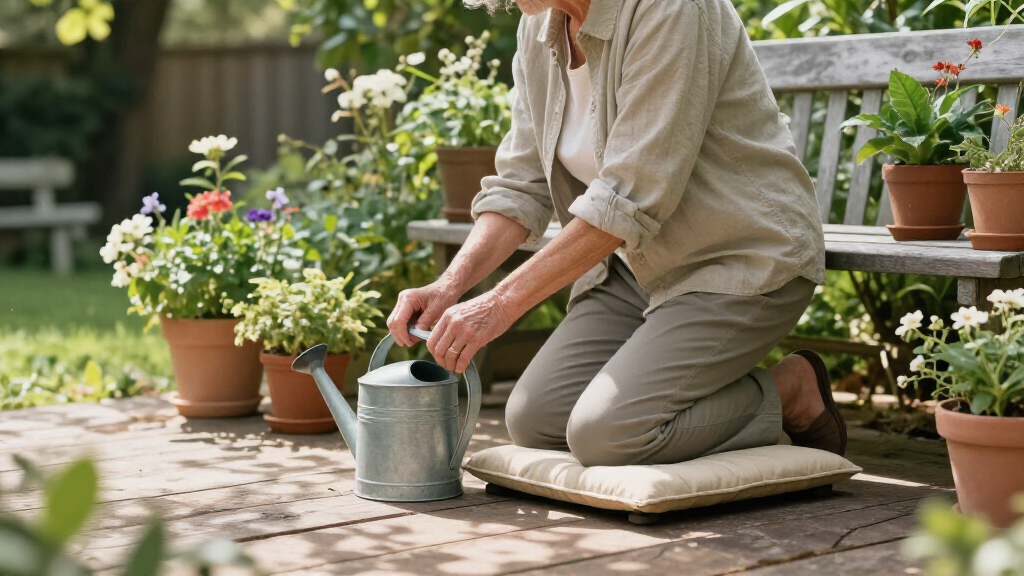
Cushions the knees while keeping hands close to seedlings, weeds, and soil. It also limits contact with damp or rough ground.
Choose it for:- Planting and detailed weeding
- Narrow or densely planted beds
- Uneven ground that defeats wheels
Convertible model
Functions as a seat in one orientation and a padded kneeler when inverted. Side rails may also assist with rising.
Choose it for:- Regularly changing garden tasks
- Compact, foldable storage
- Balanced versatility over specialization
Three tools, three different strengths
Convertible models cover the widest range of tasks, but dedicated seats and kneelers often deliver better comfort in their specialist position.
| Aspect | Garden seat | Garden kneeler | Convertible seat-kneeler |
|---|---|---|---|
| Best for | Extended work Pruning, potting, and harvesting |
Close work Planting, weeding, and soil care |
Mixed work Frequent changes between tasks |
| Position | Seated, usually 30–50 cm above ground | Kneeling close to the soil | Seated or kneeling after inversion |
| Main benefit | Reduces squatting and leg fatigue | Protects knees from pressure and moisture | Combines support, padding, and flexibility |
| Mobility | Wheeled versions move well on firm surfaces | Usually carried and positioned precisely | Often lightweight and foldable |
| Stability | Depends on wheelbase, terrain, and height | Generally stable on firm, level ground | Side frames can support controlled rising |
| Storage | Rolling models can be bulky | Pads and mats require minimal space | Folding models store compactly |
| Trade-off | May be too high for close ground work | Still requires repeated kneeling and rising | May compromise on width, height, or padding |
Invest in support, not flashy extras
The relative weighting below reflects practical buying importance. Stability and ergonomic fit should lead every purchase decision.
Follow the task from posture to purchase
A reliable choice connects four questions. Skipping any one of them can leave you with a tool that feels comfortable in the shop but performs poorly in the garden.
Identify the task
Separate long raised work from detailed soil-level work.
Choose the posture
Select seated, kneeling, or convertible support.
Inspect the terrain
Account for slopes, mud, gravel, narrow beds, and paths.
Verify the build
Check dimensions, locks, feet, padding, and load rating.
Fatigue is the problem
You work for long periods, avoid squatting, or need reduced pressure on knees and legs.
Access is the priority
You need close contact with the soil and protection from rough, cold, or damp ground.
Your tasks keep changing
You value compact versatility and accept a possible compromise in specialized comfort.
The best design depends on the user
Physical comfort, balance, storage, and garden layout should shape the final choice—not a universal product ranking.
Simple kneeling pad
Light, inexpensive, and easy to store. Best when the user can kneel and rise without side supports.
Framed kneeler
Useful for frequent planting and weeding. Raised rails can assist controlled movement between positions.
Rolling seat
Efficient on broad, firm, level areas such as patios, paths, raised beds, and greenhouse aisles.
Folding convertible
A practical balance of seating, knee protection, portability, and compact storage for mixed routines.
A support tool is only safe when it stays stable
Inspect the tool before every session and replace damaged components promptly. Side rails are useful supports, but they are not medical mobility aids unless the manufacturer states otherwise.
What’s the main difference between a garden seat and a kneeler?
A garden seat is a sturdy, raised platform that keeps you off the ground, reducing leg fatigue during long tasks like pruning or harvesting. A kneeler, on the other hand, is designed to bring you close to ground level, cushioning your knees and protecting them from damp or rough soil. Think of a seat as your comfortable throne and a kneeler as your knee shield.
Understanding this fundamental difference helps you choose a tool that aligns with your most common gardening activities. If your work involves extended periods of standing or sitting, a seat offers sustained comfort and reduces strain on your legs and back. Conversely, if your tasks require close contact with the soil—such as planting seedlings or weeding—kneelers provide necessary knee protection and reduce discomfort caused by prolonged kneeling. Recognizing these distinctions allows you to optimize your gardening posture, minimize fatigue, and prevent injury, ultimately making your gardening experience more enjoyable and efficient.
As an affiliate, we earn on qualifying purchases.
How do garden seats and kneelers compare side by side?
| Aspect | Garden Seat | Garden Kneeler | Convertible Seat-Kneeler |
|---|---|---|---|
| Best for | Pruning, harvesting, extended work | Planting, weeding, ground-level tasks | Mixed tasks, versatility |
| Working position | Seated, 30–50 cm above ground | Kneeling close to soil | Seat or kneeling, depending on orientation |
| Benefit | Reduces fatigue, keeps you off the ground | Protects knees, cushions contact | Supports both positions, multi-purpose |
| Mobility | Wheeled models move easily | Carried, less mobile | Foldable, lightweight |
| Stability | Depends on wheels and terrain | Stable on firm ground | Supports standing and kneeling |
| Storage | Bulkier, with trays or baskets | Compact, easy to store | Folds, minimal space needed |
| Drawbacks | May be too high for close work | Repetitive kneeling still needed | May be less comfortable than dedicated seat |
garden kneeling pad with knee protection
As an affiliate, we earn on qualifying purchases.
As an affiliate, we earn on qualifying purchases.
What should you consider when buying a garden seat or kneeler?
Comfort and ergonomics top the list. For seats, choose height that matches your typical gardening tasks to avoid excessive reaching or bending. For kneelers, look for thick, supportive padding that cushions your knees without bottoming out. Wider platforms and larger seats accommodate different body sizes and work angles.
Beyond comfort, the choice of materials impacts durability and safety. A sturdy frame made from rust-resistant metal or high-quality plastic ensures your support lasts through seasons of use. The stability of the base prevents tipping, especially on uneven ground. Weather resistance is crucial—materials like powder-coated steel, aluminum, or waterproof plastics help your tools withstand the elements, reducing maintenance and replacement costs. Portability also matters; lightweight, foldable designs facilitate easy transport and storage, making them ideal for gardeners who work in multiple locations or have limited space. Considering these features ensures you select a support that not only feels good but also endures and performs reliably over time.
adjustable garden seat for pruning
As an affiliate, we earn on qualifying purchases.
As an affiliate, we earn on qualifying purchases.
Which type suits different kinds of gardeners?
Inexpensive kneeling pads are perfect if you want quick knee protection and have little storage space. Framed kneelers are your go-to if you often work close to the ground, especially with side supports for standing up. A garden seat shines for long, extended tasks like potting or harvesting, while rolling seats excel in large, flat areas like paved gardens or raised beds.
For those who do a bit of everything, a convertible seat-kneeler offers versatility. It’s like having a Swiss Army knife — ready for any task. However, if mobility is limited due to arthritis or balance issues, it’s important to choose tools that provide sufficient stability and support. Some multi-functional tools may require more balance or strength to switch between modes safely. Recognizing your specific needs ensures you select tools that enhance your gardening experience rather than hinder it.
multi-position garden support tools
As an affiliate, we earn on qualifying purchases.
As an affiliate, we earn on qualifying purchases.
What are the latest trends in garden support tools?
Design improvements focus on durability and convenience. Modern models feature fold-flat frames in steel or aluminum, thicker water-resistant padding, and wider, more stable platforms. Some include side handles to help with rising, and many now offer integrated storage like trays or pouches.
Innovations also target adaptability — height-adjustable seats, larger wheels for uneven ground, and multi-purpose models that switch between seat, kneeler, or low workbench. Premium rolling seats now resemble mini carts, with pneumatic tires and swivel seats for added comfort. These trends aim to make gardening safer, easier and less physically demanding, especially for older or less mobile gardeners. The focus on ergonomic design, lightweight construction, and multi-functionality reflects a broader understanding of gardeners’ needs, emphasizing safety, convenience, and efficiency in modern gardening tools.
How to stay safe when using garden seats and kneelers
Always inspect hinges, locks, and welds before use. Place your tools on firm, level ground to avoid tipping. Lock foldable legs securely and never use a kneeler or seat as a step stool. Be cautious on slopes or uneven terrain, especially with wheeled models to prevent rolling or tipping.
Keep your fingers clear of folding joints and regularly clean mud or debris from wheels and feet. Replace worn padding or damaged frames promptly. Following these simple habits keeps gardening safe and enjoyable for everyone. Additionally, be mindful of your physical limits; avoid overreaching or straining, and take breaks to prevent fatigue. Using tools correctly and maintaining them properly reduces the risk of accidents and prolongs their lifespan, ensuring you can enjoy your gardening activities safely for years to come.
Your common questions answered
- Is a garden seat or kneeler better for bad knees? It depends. A padded kneeler offers knee protection but still requires bending, which can be uncomfortable for severe conditions. A raised seat allows you to work while standing or sitting, significantly reducing pressure on your knees and back. The best choice depends on your specific mobility level and the type of tasks you perform most often. For some, alternating between both may provide optimal relief and flexibility, helping to prevent strain and discomfort.
- Are convertible garden kneelers worth buying? Yes, if you want versatility. They combine both functions, saving space and money, but may be less specialized than dedicated tools. Consider your typical gardening activities—if you often switch between ground-level work and longer periods of standing, a convertible offers a practical compromise. However, if you perform specific tasks that require optimal comfort or support, dedicated tools might serve you better in those scenarios.
- How thick should a kneeling pad be? Aim for dense foam that supports rather than compresses under pressure. Thickness varies, but a pad around 1-2 inches thick generally provides a good balance of cushioning and stability. Higher-quality padding made from memory foam or gel-infused materials can offer enhanced comfort and durability, especially on rough or uneven surfaces. Choosing the right thickness and material ensures your knees are protected without sacrificing mobility or comfort during prolonged use.
- Can side handles support my full weight? Usually not. Handles are primarily designed to assist with balance and rising, not to bear your entire weight. Always check the weight limit specified by the manufacturer and use handles as intended. Overloading or relying solely on handles to lift or support your full weight can cause damage or lead to falls. Proper technique and choosing a tool rated for your weight are essential for safe use.
- Are wheeled garden seats safe? Yes, on flat, solid ground and within their weight limits. Soft soil or slopes increase risk of tipping or rolling unexpectedly, which can cause injuries. Always lock wheels when stationary and avoid moving on uneven terrain. For added safety, use models with brakes or stability features designed for outdoor use. Being aware of your environment and operating within the tool’s limits will help you garden safely and confidently.
Frequently Asked Questions
Can a garden kneeler help with arthritis?
It can provide knee cushioning and reduce strain, but it’s not a medical device. For arthritis, consult a healthcare professional to find the safest and most effective support tools tailored to your needs. Properly designed kneelers can alleviate discomfort, but they should complement other treatments or therapies prescribed by your doctor.
Is a lightweight garden seat easier to handle?
Generally, yes. Lighter models are easier to move around and store, making them more convenient for frequent repositioning. However, ensure that the lightweight design does not compromise stability or durability. The ideal balance is a seat that is easy to handle but sturdy enough to support your weight and the tasks you perform.
How often should I replace my garden kneeler or seat?
Check regularly for cracks, loose joints, or worn padding. Proper maintenance extends the lifespan of your tools, but eventually, wear and tear will necessitate replacement. Typically, with proper care, quality garden support tools can last several seasons. Replacing damaged or compromised equipment promptly maintains safety and ensures continued comfort during gardening activities.
Conclusion
Your garden tools should support your comfort and safety — not complicate it. A well-chosen seat or kneeler can turn hours of work into moments of joy. Remember, the best tool is the one that fits your body, your space, and your gardening style. Keep it simple, stay safe, and enjoy your garden’s bounty.Flea & tick season Picks
flea and tick prevention
As an affiliate, we earn on qualifying purchases.